
MONKS JOURNAL · BLOOD SUGAR & WELLNESS
Monk Fruit
and Diabetes
A clear look at what monk fruit does — and doesn’t do — when blood sugar management matters.
↓ WHAT THE RESEARCH SAYS
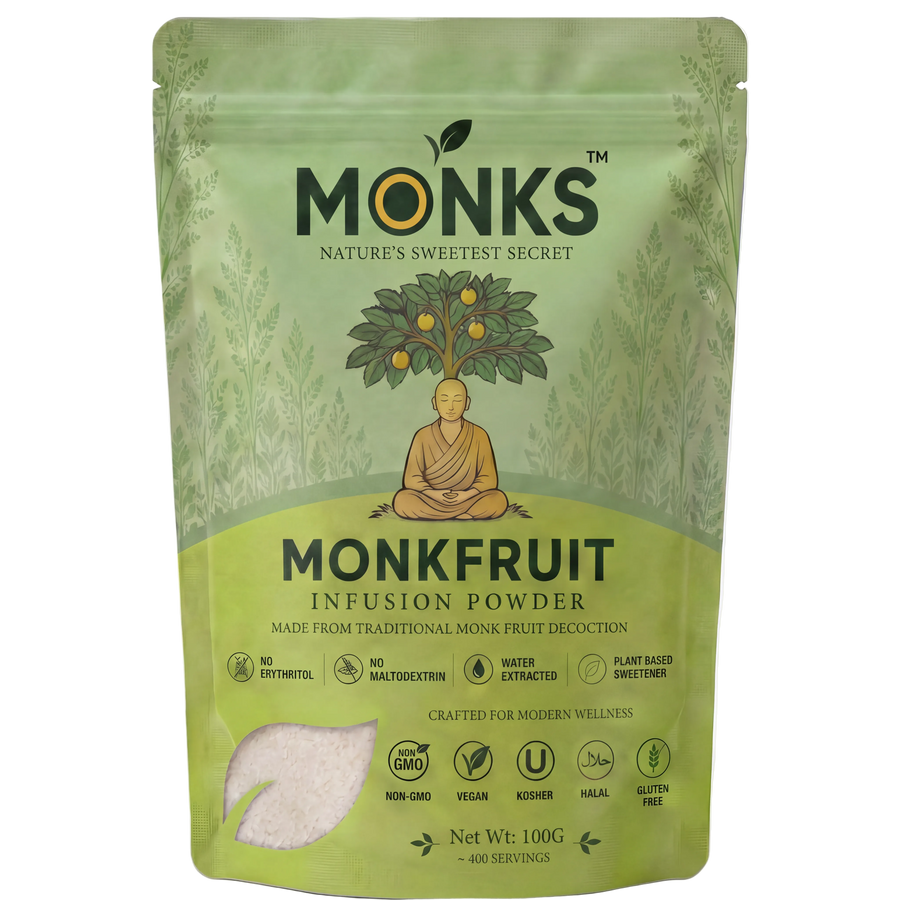
If you're managing diabetes, “natural sweetener” claims can feel like a minefield — plenty of products promise blood-sugar-friendly sweetness and quietly fall short once you dig into the ingredient panel.
Monk fruit is one of the few that genuinely holds up under scrutiny. Here's what's actually established, and where the nuance lives.
01 · THE METABOLIC DIFFERENCE
Why Monk Fruit Doesn't Spike Blood Sugar
Monk fruit's sweetness comes from mogrosides, a group of naturally occurring compounds extracted from the fruit through decoction — a gentle, traditional simmering process.
Unlike sucrose or fructose, mogrosides aren't metabolized as sugars in the body. They don't get converted to glucose, and they don't trigger a corresponding insulin response.
This is a fundamentally different metabolic pathway. Sugar is broken down and absorbed as glucose; mogrosides simply aren't processed the same way.
02 · EVERYDAY TERMS
What This Means Day to Day
For someone monitoring blood sugar closely — whether managing type 1 diabetes, type 2 diabetes, or prediabetes — monk fruit can typically be used to sweeten coffee, tea, and food without needing to factor it into carbohydrate counts or insulin dosing calculations the way you would with sugar, honey, or agave.
CONVERSION
CARB COUNTING
WITHOUT TRADE-OFF
That said, individual metabolic responses can vary, and monk fruit isn't a substitute for medical guidance. If you're on insulin or any blood-sugar-affecting medication, it's worth discussing dietary changes with your doctor or diabetes care team.
03 · THE RESEARCH LANDSCAPE
What the Research Really Says
Mogrosides have been the subject of a growing body of research, much of it building on monk fruit's centuries-long history of traditional use in Chinese medicine.
Blood sugar impact
Studies examining mogrosides' effects on blood glucose generally support the conclusion that they do not raise blood sugar in the way caloric sweeteners do.
Broader benefits
Some early research has explored antioxidant properties of mogrosides, but this is separate from the better-established blood sugar findings.
It's worth being straightforward about the distinction between well-established claims and areas still under active research.
04 · LABEL CHECK
What to Watch For On Labels
Some monk fruit products are cut with maltodextrin or dextrose as bulking agents, added to make the intensely sweet pure extract easier to measure. These fillers do carry carbohydrates and can affect blood glucose.
Monk fruit extract
Primary or sole active sweetening ingredient.
Maltodextrin / dextrose
Fillers that carry carbohydrates and can affect blood glucose.
Read the full ingredient list, not only the front-of-pack branding.
05 · SIDE BY SIDE
Common Sweeteners Compared
None
Zero
Blend composition varies by brand
None
Zero
Bitter aftertaste for some users
Minimal
Near zero
Digestive discomfort in larger amounts
Significant
High
Often marketed as “natural” despite impact
Significant
High
Frequently mislabeled as diabetic-friendly
06 · WHY IT RESONATES
Beyond the Diabetes Community
Even for people without diabetes, stable blood sugar supports better energy, mood, and appetite regulation throughout the day.
For the diabetes community specifically, monk fruit represents something rare among sweeteners: one that doesn't require compromise between taste and blood sugar safety.
GLUCOSE CONTROL
QUESTIONS, ANSWERED
Frequently Asked Questions
Can diabetics use monk fruit safely?−
Yes, in its pure form, monk fruit is widely regarded as a safe sweetening option for people managing diabetes, as it doesn't raise blood glucose or trigger insulin release. Always check with your healthcare provider regarding your specific situation and medication.
Does monk fruit affect insulin dosing?+
Pure monk fruit extract shouldn't need to be factored into insulin dosing calculations the way sugar or high-carb sweeteners would, but any dietary change should be discussed with your care team.
Are all monk fruit sweeteners diabetic-friendly?+
Not necessarily — some blended products contain fillers like maltodextrin or dextrose that do affect blood sugar. Always check the ingredient list.
THE BOTTOM LINE
Blood Sugar Friendly. Label Smart.
Monk fruit is one of the most well-supported natural sweeteners available for blood sugar management, provided you're choosing a product where monk fruit extract is genuinely the primary ingredient — not a small addition to a carbohydrate-laden filler.
Discover MONKS →MONKS Monk Fruit Decoction Powder is produced through traditional decoction with straightforward, transparent ingredients — always worth checking for yourself.