
MONKS JOURNAL · SWEETENER GUIDE
Monk Fruit vs.
Stevia vs. Erythritol
Three popular sugar alternatives. Three very different taste and tolerance profiles.
↓ COMPARE THE DIFFERENCE
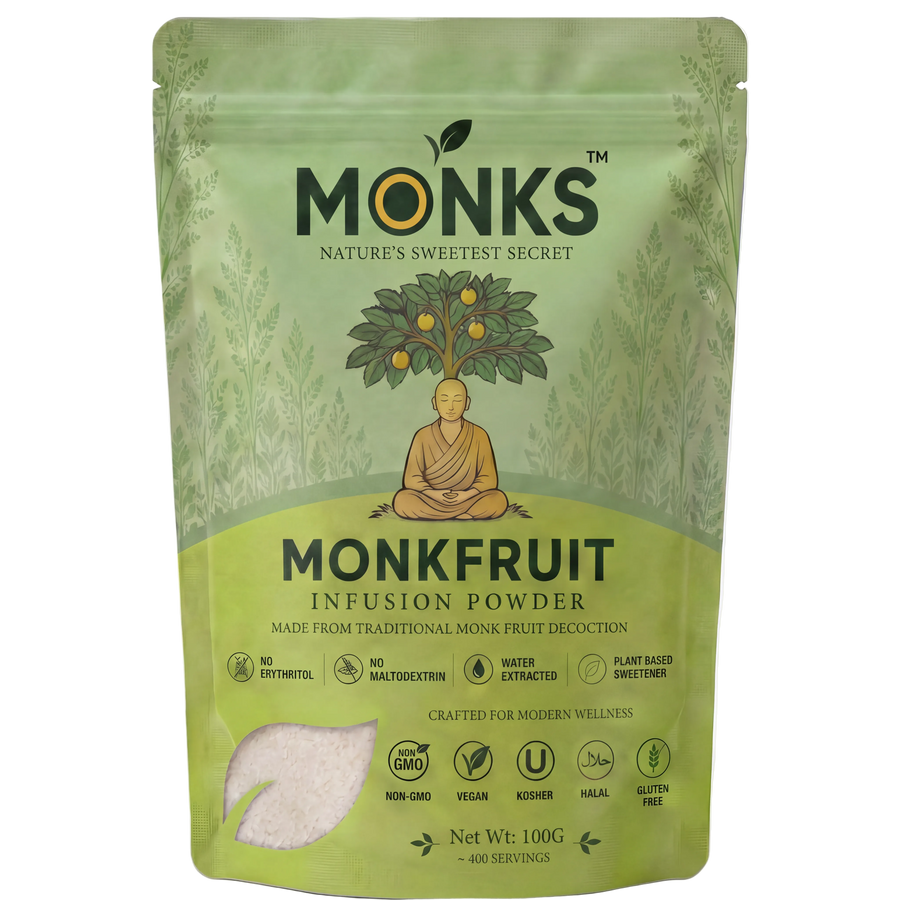
Monk fruit, stevia and erythritol are often grouped together as natural sugar alternatives. But they come from entirely different sources, behave differently in the body and taste noticeably different.
This guide compares the three side by side so you can choose the sweetener that best fits your everyday routine.
01 · WHERE THEY COME FROM
Fruit, Leaf or Sugar Alcohol?
Monk fruit's sweetness comes from naturally occurring mogrosides. Stevia relies on steviol glycosides. Erythritol occurs naturally in trace amounts in some fruits, but commercial erythritol is produced at scale through fermentation.
02 · TASTE & AFTERTASTE
Where The Difference Is Easiest to Notice
Taste is personal, but aftertaste is one of the biggest reasons people switch between sweeteners. Monk fruit is generally chosen for a cleaner sweetness without stevia's bitterness or erythritol's cooling effect.
03 · CALORIES & BLOOD SUGAR
A Near Three-Way Tie
All three are low-to-zero calorie options with minimal to no meaningful impact on blood sugar. Compared with sugar, honey or agave, this is the fundamental advantage they share.
Low-calorie sweetness
For keto, low-carb and diabetes-conscious eating, the more meaningful differences are usually taste, ingredients and digestive tolerance.
04 · DIGESTIVE TOLERANCE
A Meaningful Point of Difference
Erythritol can cause bloating, gas or digestive discomfort in some people, particularly in larger quantities. Monk fruit and stevia are not sugar alcohols and generally do not carry the same digestive risk at typical usage levels.
Generally well tolerated at typical usage levels.
Can cause GI discomfort for some people in quantity.
05 · SWEETNESS INTENSITY
Why So Many Blends Exist
Pure monk fruit and stevia are intensely sweet, so many commercial products blend them with erythritol as a bulking base. That makes the product easier to scoop and pour, but it also means the product is a blend rather than standalone monk fruit extract.
06 · WHICH ONE WINS?
The Best Choice Depends On What You Value
Best overall taste for most people: monk fruit, for a clean profile without stevia's bitterness or erythritol's cooling effect.
Longest Western research track record: stevia.
Best for baking bulk and texture: erythritol, often used as the base of sweetener blends.
DIFFERENT STRENGTHS
AT A GLANCE
Side-by-Side Comparison
| Monk Fruit | Stevia | Erythritol | |
|---|---|---|---|
| Source | Fruit extract | Leaf extract | Fermented sugar alcohol |
| Sweetness | 150–250× | 200–300× | 0.6–0.8× |
| Calories | Zero | Zero | Near zero |
| Aftertaste | Clean, fruit-forward | Bitter/licorice for some | Cooling sensation |
| Digestive tolerance | Generally good | Generally good | Can cause GI upset in quantity |
QUESTIONS, ANSWERED
Frequently Asked Questions
Which is healthier: monk fruit, stevia or erythritol?−
All three are considered low-calorie options with minimal blood sugar impact. The biggest differences are taste preference and digestive tolerance.
Can I combine monk fruit with erythritol?+
Yes. Many commercial products do this to combine monk fruit sweetness with erythritol's sugar-like bulk for baking.
Why does erythritol feel cold in my mouth?+
Erythritol absorbs heat as it dissolves, producing its characteristic cooling sensation on the tongue.
THE BOTTOM LINE
Choose Sweetness That Works For You
For most everyday uses — coffee, tea, cooking and casual baking — monk fruit tends to stand out for people prioritising clean taste, digestive comfort and a simple ingredient profile.
Discover MONKS →MONKS Monk Fruit Decoction Powder and drops are built around traditionally produced monk fruit extract — no cooling aftertaste, no bitterness, just sweetness.