
MONKS JOURNAL · UK SUGAR INTAKE
18 Teaspoons
of Sugar a Day
That’s roughly three times the UK’s recommended daily limit for free sugars.
↓ WHERE IT ALL COMES FROM
The average person in the UK eats about 18 teaspoons of sugar every day — including both the sugar you can see and the sugar hidden inside everyday processed foods.
For context, that is roughly three times the UK’s recommended daily limit.
01 · RECOMMENDATION VS REALITY
What the UK Recommends Compared With Reality
The UK recommendation for free sugars is approximately 30g per day for an average adult — roughly 6 teaspoons.
About three times the recommended daily amount.
02 · WHERE IT COMES FROM
18 Teaspoons Across an Ordinary Day
It is rarely a single dramatic source. It is the accumulation of smaller contributions across drinks, breakfast, processed foods, snacks and condiments.
Drinks
Tea, coffee, soft drinks and juices.
Breakfast
Cereals, pastries and sweetened options.
Sugary drinks
Still a major contributor to daily intake.
Processed foods
Sauces, dressings, bread and ready meals.
Snacks
Biscuits, chocolate and confectionery.
Condiments
Ketchup and sauces that quietly add up.
03 · WHY THE GAP IS SO LARGE
Sugar Is Hiding Beyond Sweet Foods
Much of the gap comes from how thoroughly sugar has become integrated into processed and packaged foods, well beyond the obviously sweet categories most people mentally count.
Sugar stirred into tea, coffee, porridge and baking.
Sugar in sauces, dressings, bread, ready meals and condiments.
04 · WHAT IT MEANS FOR HEALTH
The Concern Is the Daily Pattern
An occasional treat is not the problem. The concern is a sustained daily pattern running well above the recommended level, repeated across months and years.
Weight gain
Excess energy intake can accumulate over time.
Type 2 diabetes
Long-term excess sugar intake is one contributing risk factor.
Dental decay
Frequent sugar exposure feeds oral bacteria.
Cardiovascular strain
High-sugar dietary patterns can affect wider metabolic health.
05 · PRACTICAL WAYS TO CLOSE THE GAP
Start With the Easiest Wins
Start with drinks
Tea, coffee and soft drinks are direct, easy-to-control sources.
Check savoury foods
Sauces, dressings and bread are commonly overlooked.
Read labels
Check the “of which sugars” line rather than relying on front-of-pack claims.
Cook from scratch
Control the sugar added to sauces, meals and dressings.
06 · THE SIMPLEST SWAP
Take Sugar Out of Your Daily Drinks
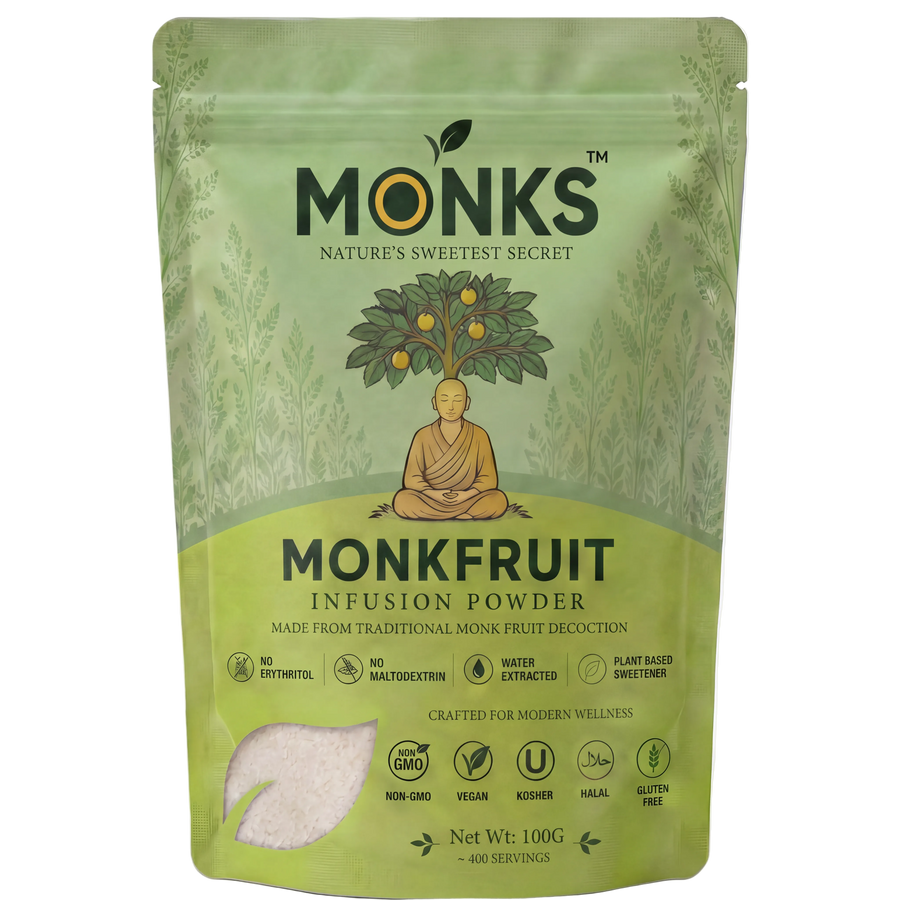
Swapping the sugar in tea, coffee and similar drinks for a natural sweetener such as monk fruit removes one of the easiest daily contributions without removing sweetness itself.
QUESTIONS, ANSWERED
Frequently Asked Questions
Is 18 teaspoons really the UK average?−
This figure reflects typical adult intake including visible and hidden sugar sources across the day.
Has the sugar tax made a difference?+
It helped reduce sugar intake, particularly from soft drinks, but average consumption still remains above the recommended level.
What is the easiest first step?+
Addressing sugar in tea, coffee and soft drinks is often one of the simplest high-impact changes.
THE BOTTOM LINE
Know Where Sugar Hides. Swap Where It Matters.
Closing the gap does not require eliminating sweetness. It starts with identifying where the sugar is coming from and replacing it in the easiest places first.
Discover MONKS → MONKS Monk Fruit Decoction Powder helps close that gap in the easiest place to start — your daily tea, coffee and cooking.