

Keto chocolate mousse is all about the ingredients: use cream, cocoa or dark chocolate, and a low-carbohydrate sweetener instead of sugar. For a keto chocolate mousse recipe in the UK, choose a sweetener that dissolves smoothly and adjust it to taste. This quick version takes 10 minutes from start to finish and makes 2 servings.
You can make keto chocolate mousse that’s rich and softly whipped without a complicated method. The key is balancing the chocolate’s depth with enough sweetness, then choosing flavours you enjoy. This guide explains what makes the mousse keto, how to prepare it, which sweeteners and flavour additions work well, and how to assess the nutrition per serving. With simple ingredients, a little whisking and time to chill, this chocolate treat is easy to make at home.
Key Takeaways
- Choose ingredients carefully: the chocolate, cream and sweetener all shape whether your mousse fits your keto approach.
- Use a powdered sweetener for a smoother texture, and taste as you go to find the sweetness you prefer.
- Try a subtle flavour twist, such as espresso, to deepen the chocolate without changing the simple method.
- Keep serving size in mind when reading nutrition information, as the figures depend on the ingredients and portions used.
- Make this quick recipe in 10 minutes for 2 servings, then chill any leftovers in an airtight container.
Nutrition per serving
- Divide the mousse evenly before estimating nutrition. The quick recipe makes 2 servings, so split the finished mixture between 2 dishes. A larger portion contains more of every ingredient than a smaller one. Nutrition figures from other keto mousse recipes vary because their ingredients and serving sizes differ. Treat each recipe’s figures as specific to its own quantities, rather than as a fixed value for every chocolate mousse.
- Use the figures for the exact version you prepare. One reported serving contains 308 kcal, 5 g of carbohydrates, 2 g of net carbohydrates, 28 g of fat and 3 g of fibre. A different recipe lists 262 kcal, 2 g of net carbohydrates and 4 g of protein per serving. These are separate examples, not figures to combine. Cream, chocolate, cocoa and sweetener choices all affect the final calculation.
- Check the serving’s carbohydrate total, not just its sweetness. Chocolate and cocoa can contribute carbohydrates, while toppings add their own ingredients. Net carbohydrate figures also depend on how a recipe accounts for fibre. If you track macros, use the nutrition information for your chosen ingredients and portion. A large mixing bowl makes it easier to combine the mousse evenly before dividing it, helping each serving receive a similar share.
- Choose a topping that suits the portion. Add a light dusting of cocoa, a few chocolate shavings or a small spoonful of whipped cream. For a sharper contrast, finish with a few raspberries. Each addition changes the dessert’s nutrition, so include it when calculating the serving. Keep the base portion consistent and toppings modest, rather than covering the mousse with several extras.
- Serve it chilled, with texture added just before eating. Spoon the mousse into individual dishes and refrigerate leftovers in an airtight container for up to three days. For extra lift, whisk egg whites to stiff peaks with an electric mixer and fold them in gently. This changes the texture and may affect the yield, so divide the finished mousse into portions again before serving. A light cocoa dusting keeps the presentation simple.
Other reported keto chocolate mousse figures also differ: each serving contains 373 calories, while the recipe lists 620 calories per serving of keto chocolate mousse and makes six servings.
Nutrition profiles vary between recipes, so treat each as specific to its own ingredients and serving size. Keep these figures attached to their own recipe and serving size; they are not additional values to combine with the examples above.
What Makes This Chocolate Mousse Keto?
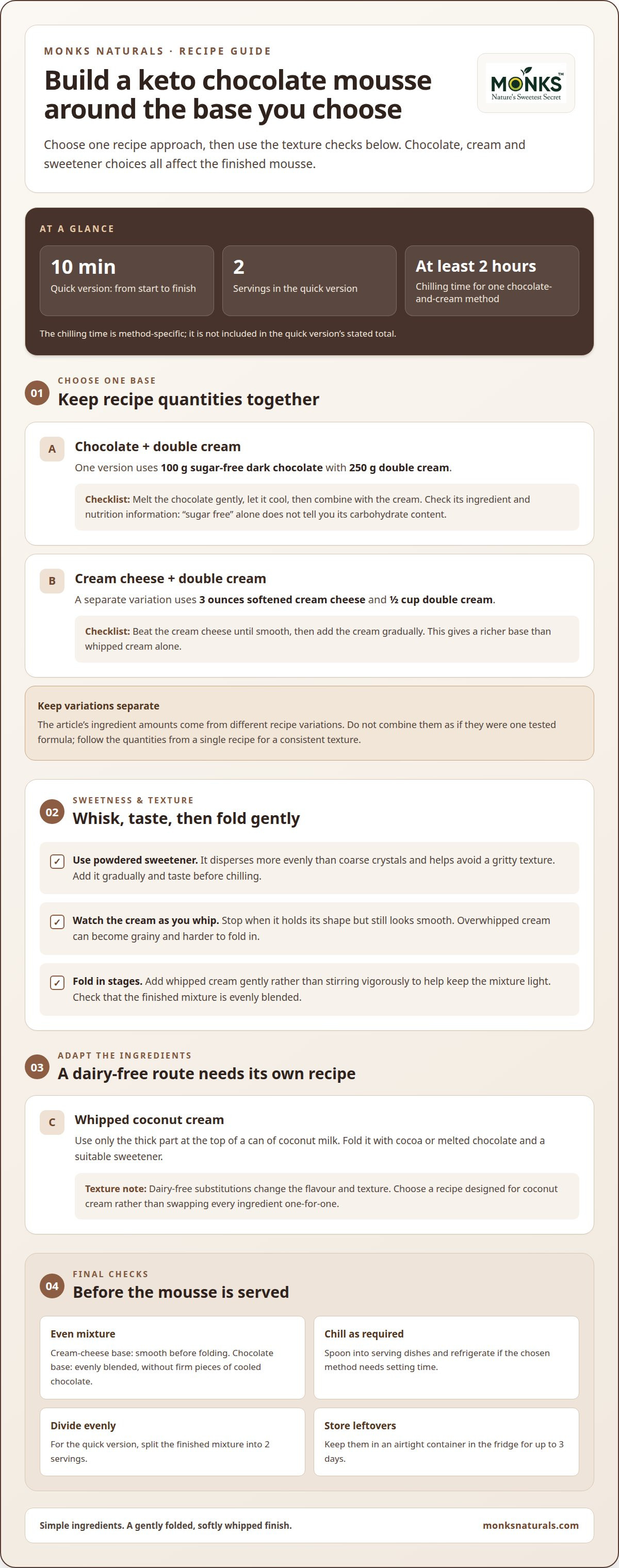
A quick version takes 10 minutes to prepare and 10 minutes in total. Chilling depends on the method: a chocolate-and-cream mixture may need at least 2 hours in the fridge before whipping.
- Choose chocolate and cream as your base. One version uses 100 g of sugar-free dark chocolate with 250 g of double cream. Melt the chocolate gently, then let it cool before combining it with the cream. Read the chocolate’s ingredient and nutrition information, since “sugar free” alone doesn’t tell you its carbohydrate content. The type and quantity of chocolate both affect the finished mousse.
- Try cream cheese for a thicker mixture. A separate recipe variation combines 3 ounces of softened cream cheese with ½ cup of double cream. Follow the recipe’s stated quantities rather than converting them by guesswork. Beat the cream cheese until smooth, then add the cream gradually. This approach gives you a richer base than whipped cream alone.
- Keep a three-ingredient version simple. For a minimal mixture, use cream cheese, double cream and sugar-free dark chocolate. The listed quantities of 3 ounces of cream cheese, ½ cup of double cream, and 100 g of chocolate come from different recipe variations, so don’t treat them as one tested formula. Use a single recipe’s quantities together for consistent texture.
- Whip the cream to the right stage. Use an electric mixer and watch for peaks to form. Stop when the cream holds its shape but still looks smooth. Overwhipped cream can turn grainy and become harder to fold into chocolate or cream cheese. Add it in stages, folding gently to keep the mixture light instead of stirring vigorously.
- Adapt the ingredients for a dairy-free dessert. Whipped coconut cream is one alternative to dairy cream. For this mousse, use only the thick part at the top of a can of coconut milk. Fold it with cocoa or melted chocolate and a suitable sweetener. Dairy-free substitutions change the texture and flavour, so choose a recipe designed for coconut cream rather than swapping every ingredient one-for-one.
- Check the texture before serving. A cream-cheese mixture should be smooth before you fold in whipped cream. A chocolate-based mixture should be evenly blended, without firm pieces of cooled chocolate. Spoon it into serving dishes and chill it if your method requires setting time. These checks help give the mousse a soft, even finish.
Sweetener options
Whisk cocoa, powdered sweetener and vanilla into the base, then fold in whipped cream once it forms stiff peaks. For a smooth result, use powdered sweetener and add it gradually. Taste the mixture before chilling.
- Start with a powdered sweetener. A recipe may call for ¼ cup of powdered sweetener, but sweetness varies by product. Check the pack directions before measuring, especially if the sweetener is designed to replace sugar measure for measure. Powder disperses more evenly than coarse crystals, helping prevent a gritty texture. Sift it with the cocoa first to avoid dry pockets.
- Adjust the quantity to your chocolate. Dark chocolate and cocoa powder bring different levels of bitterness. Start with less sweetener than the recipe allows, mix thoroughly, then taste. Add small amounts until the flavour feels balanced. Sweeter chocolate may need less, while more intense cocoa may need more. Gradual adjustments are easier than correcting a mixture that’s too sweet.
- Add vanilla with the dry ingredients. Use ½ teaspoon of vanilla extract for a subtle aroma, or follow a version using 1 teaspoon. Stir it through the cocoa and sweetener before folding in whipped cream. Keep the mixture smooth and evenly coloured. If cocoa clumps, press them against the bowl with a spatula before adding more cream.
- Choose a sweetener that suits your recipe. Monkfruit decoction with soluble tapioca fibre Powder is one option for sweetening a mousse. Add it according to its pack directions, then taste the mixture before serving. Monkfruit sweetener powder can be considered when you want a spoonable format for mixing into ingredients.
- Use substitutions carefully. A powdered sweetener that measures one-for-one like sugar can simplify recipe conversions, but its texture still matters. Avoid adding granulated crystals without allowing them to dissolve, as they can leave a sandy finish. Butter is not a substitute for sweetener or whipped cream: it adds richness, but not sweetness or the same airy structure.
- Fix texture problems before chilling. If the mousse feels gritty, keep mixing until the powder is dispersed, then let the mixture stand briefly before tasting again. If the whipped cream becomes loose, stop adding liquid ingredients and fold gently. Don’t beat it after stiff peaks form, as overmixing can make it grainy. Once smooth, spoon the mousse into dishes and chill.
Flavour variations
- Make an espresso version. Add espresso powder to the chocolate mixture before folding in the cream for a coffee note. It deepens the flavour without making the mousse taste strongly of coffee. For a gentler lift, use ¼ teaspoon of instant coffee instead. Mix thoroughly to avoid powdery specks, then taste before chilling, as coffee intensity varies between products.
- Add peppermint for a cool finish. Mix a small amount of peppermint extract into the chocolate base, then taste before adding more. Its flavour can quickly overpower dark chocolate. Pair the mousse with a little unsweetened whipped cream or a few chocolate shavings. Add the topping just before serving so the cream stays distinct and the mint remains the main accent.
- Bring in orange zest. Finely grate orange zest into the chocolate mixture and fold it through evenly. Its fragrant oils add a bright contrast to rich cocoa. Avoid orange juice, which can loosen a cream-based mixture. For a simple finish, grate a little more zest over each dish. Orange and dark chocolate work well together without requiring a change to the method.
- Try coconut for a rounded variation. Fold thick coconut cream into a dairy-free mousse, or sprinkle unsweetened desiccated coconut over the top. Coconut changes both flavour and texture, so keep other additions restrained. A few chocolate curls add contrast. If you use coconut cream in the base, choose a recipe designed for it rather than replacing double cream without adjusting the method.
- Top with strawberries for freshness. Slice strawberries just before serving and arrange them over each portion. Their bright, fruity flavour balances rich chocolate and cream-cheese mousse. Keep the topping modest if you want the chocolate to remain prominent. Alternatively, serve berries on the side so everyone can choose how much fruit to add.
- Whip a lighter texture with egg whites. Whisk 3 egg whites to stiff peaks, then fold them gently into the prepared mousse. Use a clean bowl and add the whites gradually, keeping as much air as possible in the mixture. Stop folding once the colour looks even. This variation creates a lighter finish than a mousse made with cream alone; chill it before serving.
- Keep toppings and flavour balanced. Choose one main addition, such as espresso, peppermint, orange, coconut or strawberries. Finish with a contrasting texture, such as a cocoa dusting or chocolate shavings. Small changes bring variety without rebuilding the base. To prepare several versions, divide the plain mousse first, then flavour each portion separately.
Keto-friendly chocolate mousse
- Choose one recipe structure before measuring. A quick mousse can use cream, cocoa and a suitable sweetener. Another version uses separated eggs and dark chocolate chips. Don’t combine quantities from different recipes without adapting the method. A recipe with eggs, for example, gets its structure differently from one based on whipped cream. Your ingredient choices affect both texture and carbohydrate content.
- Prepare the chocolate base with care. One version uses 30 g of dark chocolate chips, while another uses cocoa powder. Melt chocolate gently, then let it cool until fluid but not hot. Stir cocoa into a smooth paste if using powder. This helps avoid dry pockets in the mixture. Choose unsweetened cocoa or dark chocolate with nutrition information that suits your own approach.
- Separate eggs if following an egg-based method. One recipe uses 2 large eggs, separated. Keep the yolks away from the whites, then whisk the whites until they hold their shape. Fold them into the chocolate base gradually. This creates an airy texture without relying on double cream. Use a recipe designed for raw or cooked eggs, and follow its handling instructions.
- Whip cream for a richer, softer mousse. Pour cold double cream into a clean mixing bowl and whisk until it thickens. Stop before it turns grainy. Fold the cream into the chocolate in stages, using a spatula and gentle strokes. The mixture should look even, without pale streaks. Avoid stirring quickly, which can knock air out of the whipped cream.
- Sweeten in small additions. Add a low-carbohydrate sweetener gradually, tasting the combined mixture as you go. Include 1 teaspoon of vanilla extract for a rounded chocolate flavour. If using cocoa, sift it first, then mix until no powder remains on the bowl’s sides. Smooth blending matters: lumps of cocoa or sweetener can interrupt the mousse’s delicate texture.
- Make a quick version when time is short. The quick recipe takes 10 minutes in total and makes 2 servings. Divide it between two dishes for even portions. The stated timing applies to that quick version, not every mousse method. A recipe using chilled chocolate and cream may need extra refrigeration before whipping, so plan around its specific instructions.
- Keep the keto-friendly choice ingredient-led. Chocolate chips, cocoa, cream and sweetener all contribute to the final nutrition. Check their labels, then calculate portions using the exact products and quantities in your recipe. Coffee or espresso powder can deepen the chocolate flavour without changing the basic method. Serve the mousse plain or with a light cocoa dusting, and include extras in your portion calculation.
MONKS
MONKS offers monk fruit sweeteners for adjusting the sweetness of homemade chocolate mousse. Choose Monkfruit decoction with soluble tapioca fibre Powder for a spoonable option, Monkfruit decoction Drops for liquid sweetening, or The Monks Set. The decoction is made from whole fruit using a traditional method of gently simmering monk fruit, creating a clean sweetness without a cooling aftertaste. The powder and drops are free from erythritol, maltodextrin and fillers. Add your chosen sweetener gradually, mix well, then taste before serving. This makes it easier to balance the sweetness with cocoa or dark chocolate. For a sweetener that fits your mousse-making routine, explore the MONKS range. Contact MONKS to discuss which format may suit your kitchen.
Make your next batch your own
Treat your first attempt as a starting point, then note which chocolate and flavour combination you’d like to try next. A simple kitchen note can help you recreate a favourite or make one thoughtful adjustment. For a keto chocolate mousse recipe in the UK, choose an approach that’s easy to repeat in your own kitchen.
If you’re considering monk fruit sweetener for future baking and desserts, contact MONKS to discuss your project. You can explore a sweetening option that fits your routine and your preferred way of cooking. Keep experimenting gently, enjoy the process, and let each batch guide the next.
Frequently Asked Questions
How long will it last in the fridge?
Store keto chocolate mousse in an airtight container in the refrigerator for up to three days. Cover individual dishes too, so they don’t absorb aromas from other foods. Serve chilled and return leftovers promptly to the fridge. If the mousse develops an unusual smell or appearance, discard it rather than serving it.
What sweetener do you use?
Use a powdered, low-carbohydrate sweetener that suits the recipe and your taste. Monkfruit decoction with soluble tapioca fibre Powder is spoonable, while Monkfruit decoction Drops offer a liquid option. Start with a small amount, mix thoroughly, then taste before adding more. Adjust according to the chocolate’s bitterness and the flavour you prefer.
What ingredients are needed for a keto chocolate mousse recipe?
For a keto chocolate mousse recipe in the UK, start with chocolate or cocoa, cream and a suitable sweetener. Some versions also use vanilla extract or cream cheese for extra richness. One variation combines 100 g sugar-free dark chocolate with double cream. Another uses cocoa powder. Follow one recipe’s quantities rather than mixing ingredients and amounts from different methods.
What quantities and serving sizes does the recipe use?
The quick version makes 2 servings and takes 10 minutes in total. Other recipes use different quantities and yields, so serving size depends on the specific formula. For example, one version uses 240 ml double cream and 100 g sugar-free dark chocolate. Divide the finished mixture evenly between dishes to keep portions consistent.
How many calories, net carbs, fat and protein are in a serving?
Nutrition varies with the ingredients and portion size. One reported serving contains 308 kcal, 2 g net carbohydrates and 28 g fat. That set doesn’t include a protein figure. A separate recipe lists 262 kcal, 2 g net carbohydrates and 4 g protein per serving. Treat these as separate examples, not values to combine.
Which UK-available sweeteners work best in keto chocolate mousse?
Choose a sweetener that dissolves smoothly and complements cocoa. Monkfruit decoction with soluble tapioca fibre Powder can be stirred into the mixture, while Monkfruit decoction Drops suit recipes where liquid sweetener blends easily. For other options, read the pack’s ingredient and nutrition information. A powdered texture can help prevent crystals remaining noticeable in a chilled dessert.
What UK chocolate has the lowest net carbs for keto mousse?
For a keto chocolate mousse recipe in the UK, compare current chocolate labels rather than relying on a fixed brand recommendation. Check carbohydrates per 100 g, then calculate the amount used in your recipe and divide it by the number of portions. One recipe suggests dark chocolate with at least 70% cocoa to keep carbohydrates lower. Include sweetener in your calculation.
Can you make keto chocolate mousse without eggs or dairy?
Yes. Choose a recipe based on whipped coconut cream instead of dairy cream, and avoid egg-based methods. For a coconut milk version, use only the thick part at the top of the can. Cocoa powder, sweetener and vanilla provide the chocolate flavour. Follow the recipe’s proportions, since coconut cream behaves differently from double cream.


