

You can sweeten coffee without adding sugar by choosing a non-sugar sweetener and adjusting it to your taste. A sugar substitute for coffee that tastes real is one that complements your usual brew rather than overwhelming it. The finish matters: some options leave a clean sweetness, while others have a flavour you notice after each sip.
Look beyond a sweetener’s name. Consider how you take your coffee, whether you drink it black or with milk, and whether you want sweetness alone or an added flavour note. A substitute that works in one morning routine may not suit a different roast or preparation.
This guide compares popular choices by taste and explains what to consider about blood sugar and digestion. It also outlines a simple way to taste-test options at home, so your choice is based on the cup in front of you. Use the comparisons to find a sweetness level and flavour balance you’ll enjoy, without making your daily coffee a complicated experiment.
Key Takeaways
- Compare sweeteners in your usual coffee, as roast and brewing style can change how their flavours come through.
- Start with a small amount of a highly sweet option, then adjust to suit your taste.
- Consider blood sugar effects separately from taste, and check what ingredients make up a sweetener blend.
- Notice how your digestion responds; some sweeteners may cause discomfort, particularly in larger amounts.
- Try a pinch of salt to soften bitterness and bring out the coffee’s natural sweetness.
1. How can I sweeten my coffee without sugar?
Try a non-sugar sweetener, start with a small amount, then adjust to taste. Stevia and monk fruit are options; a pinch of salt can also soften bitterness without adding sweetness. For a sugar substitute for coffee that tastes real, consider both the sweetener’s flavour and your coffee’s profile.
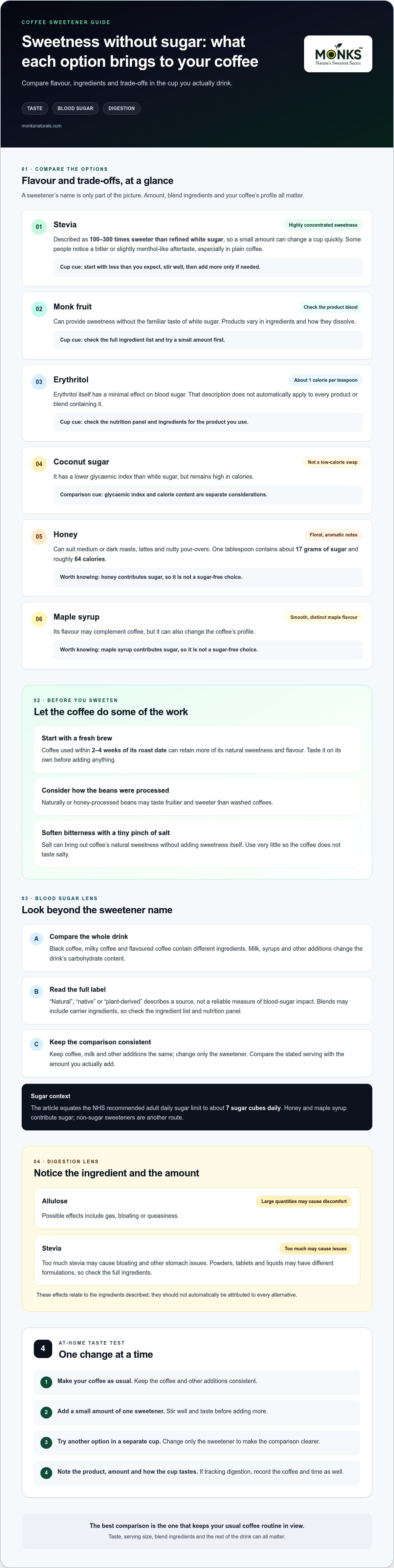
Stevia is intensely sweet, described as 100 to 300 times sweeter than refined white sugar. That means a small amount can change a cup quickly. Some people notice a bitter or slightly menthol-like aftertaste, especially in plain coffee. Start with less than you expect, stir well and add more only if needed.
Monk fruit sweeteners can provide sweetness without the familiar taste of white sugar. Products differ in their ingredients and how they dissolve, so check the label and test a small amount. Erythritol has about 1 calorie per teaspoon, while coconut sugar has a lower glycaemic index than white sugar but remains high in calories. These comparisons show why taste, calories and glycaemic impact are separate considerations.
Honey brings floral, aromatic notes that can suit medium or dark roasts, lattes and nutty pour-overs. It still contributes sugar: one tablespoon contains about 17 grams of sugar and roughly 64 calories. Maple syrup adds a smooth, distinct maple flavour, which may complement coffee but can also change its profile. Neither is a sugar-free choice.
Freshness matters too. Coffee used within 2-4 weeks of its roast date can retain more of its natural sweetness and flavour. Naturally or honey-processed beans may taste fruitier and sweeter than washed coffees. Before adding a sweetener, taste a fresh brew on its own; the beans may need less help.
For a simple test, make coffee as usual and add a small amount of one sweetener. Taste it before adding more, then repeat with another option in a separate cup. A pinch of salt can reduce bitterness and bring out natural sweetness, but use very little so the coffee doesn’t taste salty.
The National Health Service equates the recommended adult daily sugar limit to about 7 sugar cubes daily. Honey and maple syrup contribute sugar, while non-sugar sweeteners offer another route. Popular UK coffee sweeteners don’t have one fixed cost per serving: the amount used and the pack’s price both affect the calculation. The best choices include stevia or monk fruit for concentrated sweetness, and honey or maple syrup when their flavour and sugar content suit your preferences.
2. Potential effects on blood sugar
Sweetness alone doesn’t show how a drink may affect blood sugar. Consider the whole drink: black coffee, milky coffee and flavoured coffee contain different ingredients. Milk, syrups and sweetened additions change the drink’s carbohydrate content, so compare sweeteners with the rest of the recipe unchanged.
Erythritol contains almost no calories and has a minimal effect on blood sugar. That describes erythritol itself, not every product that might include it. Blends can contain other ingredients, so read the full label rather than relying on a prominent front-of-pack claim. Check that the serving information reflects how much you actually add to your mug.
“Natural”, “native” or “plant-derived” describes a source, not a reliable measure of blood-sugar impact. Refined sugar and a plant-derived sweetener can behave differently, but a product’s origin alone doesn’t tell you its carbohydrate content. For a useful comparison, check the ingredient list and nutrition panel for the exact product.
Pay attention to the difference between a sweetener and the carrier ingredients in a powdered product. A blend may be designed to measure or pour like sugar, so its other ingredients matter too. Compare the stated serving with your usual spoonful and check the carbohydrates listed for that serving. This is a clearer basis for choosing than taste alone.
Preparation also changes the comparison. Black filter coffee sweetened at home differs from a café latte with flavoured syrup. To understand how one ingredient fits your routine, keep the coffee, milk and other additions consistent. Change only the sweetener, and note the product and amount. This makes it easier to identify what caused a difference between cups.
Weight and blood-sugar considerations relate to your wider eating pattern, not just the taste of one cup. A sweetener’s calorie content, the amount used and what else goes into the drink all contribute to the comparison. Don’t treat a “zero-calorie” or “natural” label as a complete account of a product; its ingredients and serving details still matter.
If you monitor blood glucose, use your established routine and record the drink’s full ingredients alongside your readings. A single tasting won’t show a pattern, especially if the milk or syrup changes between cups. For a monk fruit option to assess by its ingredients and nutrition information, explore MONKS’ monk fruit sweeteners as part of your comparison.
3. Digestive side effects
Common sugar substitutes don’t share one digestive profile. Large quantities of allulose may cause gas, bloating or queasiness. Too much stevia may cause bloating and other stomach issues. These effects are associated with those ingredients and shouldn’t automatically be attributed to every alternative.
Identify the sweetener in the product, not just the name on the front label. A processed blend may combine a named sweetener with other ingredients, so compare full ingredient lists when switching forms. Powders, tablets and liquids can have different formulations. The product name alone won’t tell you which ingredients you’re adding to coffee.
Keep a simple record when trying a new option. Note the product, amount, coffee and time you drank it, then record any digestive discomfort. This gives you useful context if symptoms follow a particular cup. Avoid changing several ingredients at once, such as the sweetener and milk, because that makes the comparison harder to interpret.
Serving size matters when considering reported effects. The fact that large quantities of allulose may cause discomfort doesn’t establish a threshold that applies to everyone. Follow the product’s serving directions and don’t add more simply because the first taste seems mild. Stir the drink thoroughly before deciding whether it needs further sweetening.
Separate a bitter aftertaste from a digestive response. Some people find stevia bitter, but that taste is distinct from bloating or other stomach symptoms. Record flavour and physical effects separately. For example, note “bitter finish” as a taste observation and “bloating later” as a separate response, rather than treating one as proof of the other.
For a clearer comparison, use the same coffee and preparation each time. Keep milk and other additions unchanged, then test one sweetener on its own. If discomfort occurs after adding an alternative, pause the test instead of trying another new product in the same drink. This makes it easier to identify the ingredients involved.
There is no blanket safety answer for common substitutes: effects depend on the ingredient and amount, and reported digestive effects differ between stevia and allulose. Too much stevia may be associated with bloating and stomach issues; large quantities of allulose may cause gas, bloating or queasiness. This doesn’t mean every sweetener causes these effects.
If digestive symptoms are severe or keep returning, seek medical advice rather than relying on coffee tastings to explain them. Bring the ingredient list and notes about the drink, including the sweetener and amount. Those details can help distinguish a possible connection from other ingredients or changes in your routine.
4. Sugar replacement
Replacing sugar works best as a gradual change, not a one-cup test of willpower. A sugar packet in coffee contains about 4 grams of sugar. Two cups daily, with two packets in each, provide 16 grams before breakfast. That example shows how small additions across a routine can accumulate.
There isn’t one reliable teaspoon-for-teaspoon conversion for every sweetener. Stevia and monk fruit can be far sweeter than refined sugar, while sorbitol has about 60% of white sugar’s sweetness. Follow the product’s serving guidance, then add less than you think you need. Stir, taste and adjust in small steps.
For a teaspoon of sugar, choose an amount based on the sweetener’s strength and the product directions. Concentrated drops or powders may need much less than a spoonful, while a less sweet option may need more. Start small and adjust to taste; the coffee’s roast and milk also affect how sweet it seems.
Consider what you want to preserve in the cup. White sugar adds sweetness with little flavour impact, while raw sugar brings a slightly darker taste. Maple syrup adds its own maple character; flavoured syrups can bring caramel, vanilla or hazelnut notes. A natural sweetener can still contain sugar, so “natural” doesn’t mean sugar-free.
Check the ingredient list if choosing a sugar alcohol, such as sorbitol or xylitol. These differ from artificial sweeteners such as aspartame and saccharin. Date sugar is another option, but it doesn’t dissolve completely and may leave a granular texture. The form matters as much as the ingredient when you want a smooth coffee.
To reset your palate, reduce added sugar gradually. One practical transition is to halve the sugar in your usual coffee for a week, then taste the cup before adding anything. After two to three weeks without added sugar, some people find sweetened coffee tastes too sweet. Let your preference guide each small adjustment.
For a simple comparison, make two identical cups. Keep the coffee and milk the same, then sweeten one with your usual amount and the other with a measured serving of a substitute. Note the sweetness, aftertaste and texture. Repeat on another day before deciding; a caramel-flavoured syrup, for example, changes the coffee’s flavour as well as its sweetness.
Replacing sugar is about matching sweetness, taste and texture, not copying the teaspoon measure. Follow the label for concentrated products, reduce sweetness gradually and give your palate time to adapt. This helps you find an amount that suits your coffee without adding more out of habit.
5. Taste-testing sugar substitutes in coffee
A fair tasting compares the sweetener, not a changing recipe. Brew the same coffee for every sample, use the same milk, and keep each serving consistent. A published test used an 8-ounce Keurig brew and two measured tablespoons of half and half in each sample. The author and a friend blind-tasted the lineup twice.
For a simple home test, label cups underneath so you don’t know which sweetener you’re tasting. Use the same coffee and serving size, then let each sample cool for a minute. The test used two packets in each paper cup. Record sweetness, aftertaste, texture and how clearly you can still taste the coffee.
Stevia, sucralose, monk fruit and erythritol don’t have one universal flavour profile. Stevia can taste bitter or astringent in plain coffee, while erythritol is listed at about 1 calorie per teaspoon. Monk fruit extract is described as 150 to 200 times sweeter than sugar. Sucralose’s taste depends on its product formulation, so compare the actual sweetener you use.
White sugar has little impact on coffee flavour, while raw sugar makes only a minor difference. Use them as a baseline: taste one cup with white sugar, then compare it with a sweetener derived from stevia or monk fruit. Note whether the coffee’s roast character remains clear or the substitute leaves a distinct finish.
Powders, granules and liquid drops behave differently in a cup. Stir powders into hot coffee and check for residue at the bottom; add drops gradually and stir before tasting. No single form guarantees no aftertaste. Stevia’s bitter or astringent notes can remain noticeable, while a monk fruit product’s ingredients and serving size shape its taste.
Coconut sugar brings its own flavour and calories, rather than acting as a neutral, sugar-free substitute. Artificial sweeteners also vary: sucralose and other blends can contain additional ingredients, so read the label before comparing them. A useful tasting note includes the product form, ingredients, amount and whether the coffee was black or milky.
For a powder-based monk fruit comparison, try Monkfruit decoction with soluble tapioca fibre Powder in the same brew you use daily. Compare its sweetness and finish with your usual cup, changing only the sweetener. Repeat the tasting on another day before choosing a favourite. That simple method helps identify a sugar substitute for coffee that tastes real to you.
MONKS: Monkfruit decoction with soluble tapioca fibre Powder
Monkfruit Powder, made with soluble tapioca fibre, offers a spoonable way to sweeten coffee with monk fruit. It is made from a whole-fruit decoction using a traditional method of gently simmering the fruit, for clean sweetness without a cooling aftertaste.
Turn to it if you want a powder to stir into your daily brew, rather than a highly processed sweetener or refined sugar. For a liquid format, MONKS decoction drops offer another way to add sweetness. The MONKS set brings the named MONKS offerings together for those considering the range.
Try a small amount in your usual coffee, stir, then adjust to your taste. To explore the monk fruit options, visit monksnaturals.com.
Make your next cup your own
Your preferred sweetness can shift with the coffee you brew and the flavours you enjoy. Treat the choice as part of shaping your daily cup, not a permanent rule. A sugar substitute for coffee that tastes real should suit the coffee’s character and leave you looking forward to the next sip.
Let your palate lead. Keep track of what makes a cup feel balanced, then bring that preference into your coffee routine. A small, thoughtful change can make the morning ritual feel more like yours.
If monk fruit is the direction you’d like to explore, discover MONKS’ options and find a format that fits your coffee routine. Explore monk fruit sweeteners from MONKS and enjoy finding a flavour that feels right in your cup.
Frequently Asked Questions
How can I sweeten my coffee without sugar?
Try stevia or monk fruit, or bring out coffee’s flavour with cinnamon instead of adding sweetness. For a different approach, use a small pinch of salt to soften bitterness. Keep the coffee and milk consistent while testing options so you can identify what changes the taste. If you prefer syrup, remember that honey and maple syrup add sugar, even though they bring distinct flavours.
Are sugar alternatives better for you?
Not automatically: it depends on what you’re replacing and what matters to you. Swapping a sugary drink for a non-sugar sweetener can reduce sugar in that drink, but the sweetener’s ingredients and your overall diet still matter. Check the nutrition panel, serving guidance and ingredient list. A natural source doesn’t establish a health benefit by itself, and a sweetener may change the taste without changing other parts of your diet.
How can I replace sugar in my diet?
Start with one routine you can change easily, such as the sugar in your morning coffee. Choose a sweetener that suits the drink, or gradually reduce sweetness until you’re comfortable with less. Then check other regular sources, including breakfast cereal, yoghurt and flavoured drinks. Compare labels for sugars and serving sizes, and make one change at a time so you can tell which swaps fit your habits.
Which sugar substitutes taste most like real sugar in coffee?
No substitute tastes exactly the same to everyone. White sugar has little impact on coffee’s flavour, while monk fruit has its own naturally sweet profile. Stevia can taste bitter or astringent to some drinkers, so try a small amount in your usual roast before choosing. If you want a sugar substitute for coffee that tastes real to you, compare the finish as well as the initial sweetness.
Do sugar substitutes change coffee’s flavour or texture?
Yes. A sweetener can add its own flavour, leave an aftertaste or affect the cup’s texture. Honey brings floral notes, maple syrup adds a recognisable maple character, and date sugar may feel slightly granular because it doesn’t dissolve completely. Liquid drops avoid loose granules, while powders need stirring. Compare them in the same coffee, with the same milk, to notice the differences clearly.
Which coffee sweeteners are suitable for people with diabetes or following a low-carb diet?
Stevia and monk fruit are options to compare, and erythritol has a minimal effect on blood sugar. Monk fruit products vary, so check the ingredients and nutrition panel for the specific product rather than assuming every blend is alike. MONKS’ monk fruit options are suitable for keto lifestyles. If you monitor blood glucose, use your usual monitoring routine when trying a different sweetener.


