

Erythritol isn’t the only way to sweeten a bake. If you’re deciding what to use instead of erythritol in baking, xylitol is a sugar alcohol option, while date or fig purée can replace sugar cup for cup. Date syrup is another fruit-based choice, but its liquid form can change the recipe’s moisture.
If erythritol’s texture or sweetness isn’t giving you the result you want, the right swap depends on the bake. Compare dates, date syrup and other sugar alcohols, then learn how to adjust sweetness, browning, moisture and spread. A few small changes can help you choose an alternative that suits the recipe, whether you’re making cookies, cakes or something softer and richer.
Key Takeaways
- Choose a substitute to suit the bake: fruit purées add moisture, while sugar alcohols behave differently from sugar.
- Date purée can replace sugar cup for cup, but date syrup may change the mixture’s liquid balance.
- Liquid sweeteners can affect browning and moisture, so adjust other ingredients and watch the bake as it cooks.
- Erythritol doesn’t caramelise like sugar and may recrystallise as it cools, which can alter colour and texture.
- Compare xylitol, stevia and monk fruit carefully; sweetness levels and ingredients vary, so the best choice depends on the recipe.
1. What are the top tips for sugar-free baking?
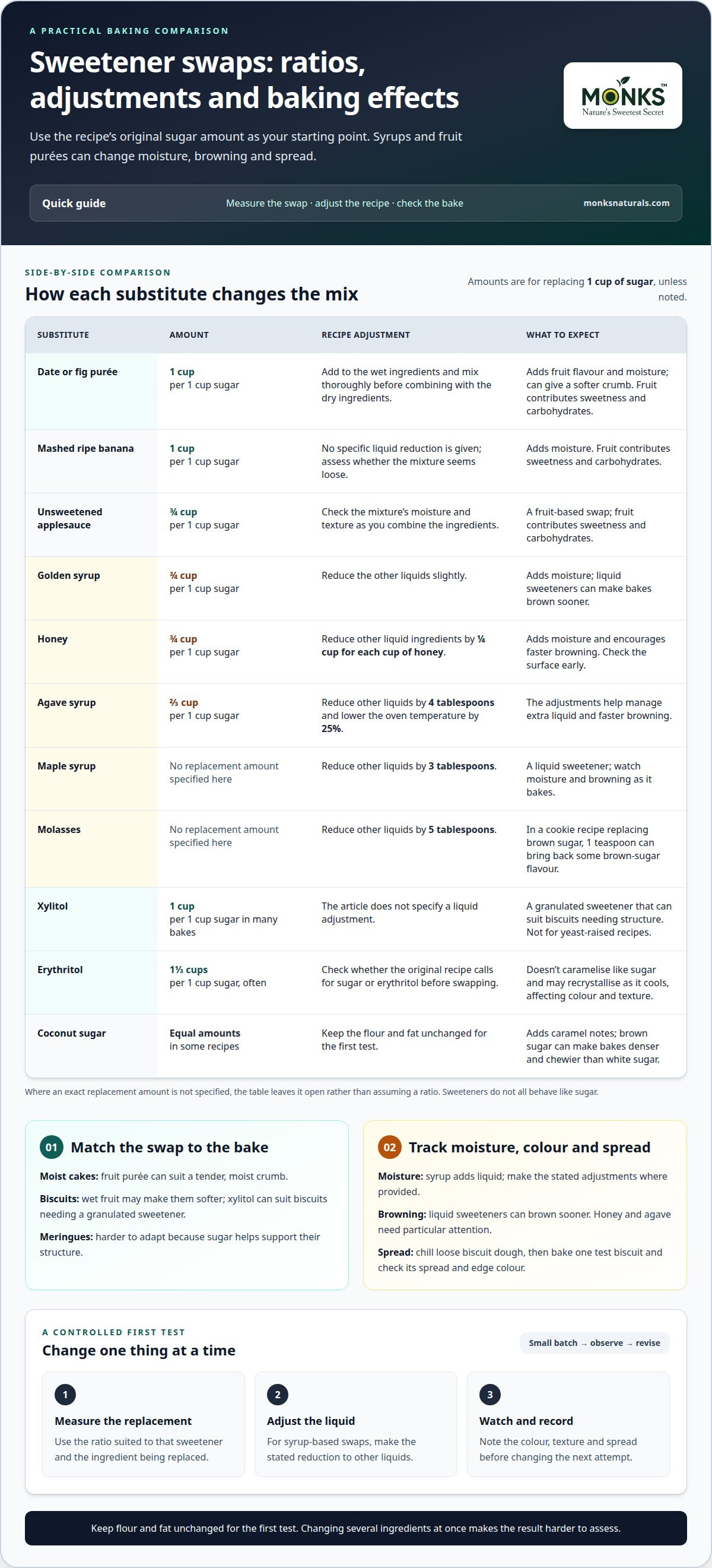
Start with the texture you want, not just the sweetness. Mashed ripe banana adds moisture and can replace sugar cup for cup; unsweetened applesauce uses three-quarters of a cup for each cup of sugar. Date or fig purée can also replace sugar cup for cup, adding fruit flavour and a softer crumb. These are sugar alternatives, not sugar-free ingredients: fruit contributes sweetness and carbohydrates.
Grated carrot, courgette or mashed pumpkin can add moisture, but they don’t sweeten like fruit purée. Pair them with a sweetener, then adjust the other wet ingredients if the mixture seems loose. For a refined sugar alternative with a deeper flavour, coconut sugar adds caramel notes and suits recipes calling for brown sugar. Brown sugar can make bakes denser and chewier than white sugar.
Fruit purée can work well in cakes where a tender, moist crumb is welcome. Biscuits need enough structure to hold their shape, so replacing all the sugar with wet fruit may make them softer. Meringues rely on sugar for more than sweetness; erythritol or fruit purée may not recreate the same structure. Choose a substitute to suit the bake.
Can I replace erythritol with stevia, monk fruit or allulose in baking? Yes, but they aren’t interchangeable spoon for spoon: concentrated stevia and monk fruit products need less, while allulose behaves more like a bulk sweetener. Check the product ingredients and directions, as some monk fruit products contain erythritol.
Does allulose behave differently from erythritol when baking? Yes. Allulose can brown more readily, while erythritol doesn’t caramelise like sugar and can recrystallise as it cools. Watch the colour and texture as the bake progresses.
For a recipe written with sugar, use one cup of xylitol for one cup of sugar in many bakes, but not yeast-raised recipes. Erythritol is often used at one and one-third cups for each cup of sugar. The amount depends on whether the recipe calls for sugar or erythritol, so check the original ingredient before swapping.
Which erythritol alternatives work best for cakes, biscuits and meringues? Fruit purée suits moist cakes, while xylitol can suit biscuits that need a granulated sweetener. Meringues are harder to adapt because the sweetener also helps support their structure.
UK supermarket alternatives to look for include dates, date syrup, coconut sugar, xylitol and stevia products. Availability varies by shop, and blends may contain other sweeteners.
To reduce grittiness, use a fine or powdered sweetener and stir out lumps before measuring. Grind small batches of granulated sweetener for 30 to 60 seconds; batches of 100g to 200g can powder more evenly. Store substitutes in an airtight container at room temperature, and wrap sugar-free bakes to help prevent drying.
Erythritol provides 0.24 calories per gram, compared with 4 calories per gram for table sugar. Check each product’s nutrition label for its carbohydrate content; calories and carbohydrates aren’t the same measure.
2. Adjusting recipes for browning, moisture and spread
Liquid sweeteners change more than flavour. They add moisture, coat flour differently and can make baked goods brown sooner. Treat each swap as a recipe adjustment, not a simple replacement. Start with a small batch, then note the texture and colour before changing the next attempt.
For golden syrup, use three-quarters of a cup for each cup of sugar. It can make the bake moister, so reduce the other liquids slightly. Honey also adds moisture and encourages faster browning. Use three-quarters of a cup for each cup of sugar, then reduce other liquid ingredients by a quarter-cup for each cup of honey. Check the surface early, especially on biscuits and small cakes.
Agave syrup calls for a different balance: use two-thirds of a cup for each cup of sugar. Reduce the recipe’s other liquids by four tablespoons and lower the oven temperature by 25 per cent. These adjustments help manage extra liquid and faster browning. For maple syrup, reduce other liquids by three tablespoons. With molasses, reduce them by five tablespoons. Make one change at a time, so you can see which adjustment affects the crumb.
Spread needs separate attention. In a cookie comparison, the batch made with granulated sugar spread to three inches. A liquid sweetener can soften dough and change how far biscuits spread, so chill loose dough, then bake one test biscuit. Use its spread and edge colour to guide the rest of the tray. If the recipe replaces brown sugar, remember that its molasses contributes a chewier, denser result. A teaspoon of molasses in a sugar-replacement cookie recipe can bring back some brown-sugar flavour.
Coconut sugar can replace sugar in equal amounts in some recipes, including coconut cake, but its caramel notes affect the flavour. Don’t expect every sweetener to brown or spread like the original sugar. Keep the flour and fat unchanged for the first test; changing several ingredients at once makes the result harder to assess.
Use this practical sequence for a more controlled bake:
- Measure the replacement carefully, using the ratio suited to that sweetener.
- Adjust liquid ingredients where the substitute is syrup-based.
- Watch browning and spread, then record what happened before revising the recipe.
If you’re exploring a different sweetener for your next bake, monk fruit sweetener options offer another route to consider.
3. Dates and date syrup for baking
Dates offer two options: blend them into a purée or use date syrup. Purée adds fruit sweetness and body; syrup adds sweetness as a liquid ingredient. Neither behaves exactly like erythritol, so choose according to the recipe’s texture. Consider whether you’re making a soft loaf cake, chewy flapjack or crisp biscuit before choosing a substitute.
As a starting point, use one cup of date or fig purée for each cup of sugar. To make purée, remove the date stones, soften the fruit in warm water, then blend until smooth. Add it to the wet ingredients and mix thoroughly before combining with the dry ingredients. A smooth blend distributes more evenly than chopped dates, which can leave sticky pockets.
Date purée adds moisture as well as sweetness. In a cake, this can make the crumb tender and dense; in a biscuit, it may soften the texture and reduce crispness. If the batter looks looser than the original, gradually reduce another liquid ingredient rather than adding extra flour straight away. For flapjacks, a thicker mixture helps the oats hold together, so stir and assess the consistency before baking.
Date syrup is pourable, so it changes the wet-to-dry balance more than granulated sugar. Stir it into the wet ingredients first, then mix with the flour or oats. If the mixture looks loose, adjust the other liquids in small amounts. Don’t assume maple syrup or golden syrup will work identically: each liquid sweetener affects flavour and moisture differently.
Dates add a deep, caramel-like flavour and a darker colour. That suits spiced cakes, oat bars and chocolate bakes, but can overwhelm delicate vanilla sponge. A date-sweetened bake may brown differently from one made with erythritol, which doesn’t caramelise like sugar. Judge doneness by the centre and texture as well as the surface colour.
For your first test, change only the sweetener and keep the other ingredients steady. Note whether the cake sinks, the biscuit spreads or the flapjack feels soft after cooling. That gives you a clear next step: adjust the moisture if the batter is loose, or use less purée if the finished texture is too dense. Date purée suits bakes where fruit flavour and a moist crumb work well; date syrup fits recipes that already use liquid sweeteners.
4. Erythritol's use in baked goods
Erythritol can sweeten cakes, biscuits and pancakes, but it doesn’t act like sugar in every part of a recipe. In tested bakes, sugar replacements supplied sweet flavour but didn’t provide structure. That matters because the finished texture also depends on ingredients such as flour, eggs and butter. A direct substitute may taste sweet yet still produce a different crumb, rise or bite.
Heat changes erythritol’s behaviour. It melts during baking but doesn’t caramelise like sugar, so the surface may stay pale even when the centre is cooked. Judge doneness by the cake’s set centre or a biscuit’s firm edges, as well as its colour. Erythritol also dissolves less readily than sugar, which can affect moist, gooey recipes. Other ingredients need to provide the liquid balance the bake requires.
Cooling brings another change. Erythritol can recrystallise, leaving sauces, custards, caramel or glazes grainy rather than smooth. A chocolate sauce, for example, may feel gritty after standing, even if it looked glossy when warm. Baked sweets can also develop a cool sweetness after a day or two. Taste a cooled portion as well as a fresh one before deciding whether the flavour suits your recipe.
For chewy cookies made with a brown erythritol blend, chill the dough for 30 minutes before baking. Chilling firms the dough and gives you a more controlled start, though it won’t make erythritol caramelise. Bake a test biscuit first. Check its spread, edge colour and texture after cooling, then adjust the next tray rather than changing several ingredients at once.
Yeast dough needs special care. Yeast can’t feed on erythritol, so it won’t perform sugar’s role in a standard yeasted bread recipe. Use a recipe developed for low-carbohydrate yeasted baking rather than replacing sugar in ordinary bread dough. This matters in enriched doughs, where a sweetener swap can affect more than the final sweetness.
Storage also affects the result. Sugar-replacement scones have a shorter shelf life than standard-sugar versions, and erythritol-based baked sweets are best eaten on the day they’re made. Wrap leftovers to limit drying, and compare their texture when fresh with how it changes in storage. This simple test helps you decide whether erythritol suits a bake you plan to keep.
Choose erythritol when its clean sweetness suits the recipe and a pale finish is acceptable. Choose another substitute if you need caramel colour, a smooth cooling glaze or dependable yeast activity. For pancakes or chocolate bakes, test a small portion first; the best choice depends on whether sweetness, structure or a smooth finish matters most.
5. What are the best substitutes for erythritol in baking?
The best alternative depends on erythritol’s role in your recipe. For a cup-for-cup granulated swap, xylitol is a practical option in many bakes. For intense sweetness with little volume, stevia or monk fruit extract requires a different approach. Match the sweetener to the bake’s flavour, texture and structure.
Xylitol: Use it as a one-to-one sugar substitute in many recipes. It can replace erythritol in many bakes, but it isn’t suitable for yeast-raised recipes. Like erythritol, xylitol is a sugar alcohol, so switching between them may preserve more of the recipe’s bulk than using a concentrated sweetener. Test a small batch to assess sweetness and texture.
Monk fruit: Extract is estimated to be 100 to 250 times sweeter than sugar, so pure extract and spoonable products aren’t equivalent. One suggested monk fruit sweetener measure is half a cup for each cup of sugar, but product strength varies. Check the label and follow its baking guidance. Some monk fruit products contain erythritol, so read the ingredient list if you’re avoiding it.
Stevia: Stevia is very concentrated, with estimates placing its sweetness at 200 to 400 times sugar. A tiny amount can sweeten a recipe, but it won’t automatically replace the volume erythritol provides. Some baking guidance pairs one cup of sugar alcohol with a quarter-teaspoon of pure stevia extract for each cup of sugar. That combination adds sweetness and bulk separately.
Sorbitol or maltitol: These sugar alcohols can also be used in baking blends. One suggested formula combines one cup of sugar alcohol with a quarter-teaspoon of pure stevia extract for each cup of sugar. Treat that as a starting point for the blend, not a universal erythritol-to-sweetener conversion. The recipe’s original sweetener and the product formulation affect the result.
Choose by bake type. Xylitol’s one-to-one ratio suits recipes that need granulated bulk, while concentrated monk fruit or stevia may suit recipes where intense sweetness matters more. Cakes and biscuits need enough volume for their expected texture; a small amount of extract alone may leave the batter short of structure. Meringues are particularly sensitive to sweetener choice because sugar helps create their form.
Before mixing, identify whether the recipe measures erythritol or sugar. Those amounts don’t automatically match. Check whether a product is pure extract or a blend, then weigh or measure according to its directions. Bake a small test portion and assess sweetness, spread and crumb after cooling. That gives you a useful adjustment point without changing several ingredients at once.
Xylitol may be an alternative to erythritol in some bakes, though results can vary by recipe.
MONKS: Monkfruit decoction with soluble tapioca fibre Powder
Monkfruit decoction with soluble tapioca fibre Powder offers a spoonable option when you want sweetness without erythritol. It’s made with monk fruit decoction and soluble tapioca fibre, with no erythritol or maltodextrin. Use it in recipes where a powder is easier to measure and mix than a liquid sweetener. Start small and adjust to taste, then test how it affects the bake’s sweetness and texture.
For liquid use, Monkfruit decoction Drops offer another format, while The Monks Set brings the named offerings together. Choose the form that best fits how you bake. Visit monksnaturals.com to explore the monk fruit options.
Make your next bake your own
Choosing what to use instead of erythritol in baking gives you a chance to shape the result around what matters most. Before mixing, decide whether you value familiar sweetness, a tender crumb or a crisp edge. That priority gives you a clear way to judge each substitute, rather than expecting one ingredient to mimic every quality of sugar.
For your next bake, keep a simple recipe note. Record the sweetener, the texture you wanted and what you’d change next time. A small, considered adjustment can make a favourite recipe more reliable and help you develop a version that suits your kitchen. Stay curious and let each bake teach you something.
If you’d like help choosing a monk fruit option for your baking, contact MONKS for help. Take the next step at your own pace, and enjoy discovering what works for you.
Frequently Asked Questions
Why Substitute Sugar?
People substitute sugar to suit their preferred ingredients, flavour or way of eating. In baking, the choice can also change a recipe’s colour, moisture and structure, so consider why you’re making the swap. For example, someone seeking a fruit-forward loaf might choose date purée, while a baker who wants sweetness without fruit flavour may prefer another sweetener. Decide what you want to change before choosing a replacement, and remember that sugar contributes more than sweetness.
What are the top tips for sugar-free baking?
Begin with a recipe that suits your chosen sweetener, then measure carefully and change one ingredient at a time. For example, when adapting a muffin recipe, mix the wet and dry ingredients separately before combining them. Check the batter’s consistency before baking, then assess the cooled muffin rather than judging it straight from the oven. Note the sweetener and result to give your next batch a clear starting point.
How do erythritol substitutes affect sweetness, browning and texture in baked goods?
Each substitute affects the finished bake differently. If you’re deciding what to use instead of erythritol in baking, consider both sweetness and the ingredient’s role in the mixture. A concentrated sweetener adds little bulk, while fruit purée brings moisture and flavour. Bake a small test portion, then assess its colour, crumb and sweetness after cooling. This helps you see whether the recipe needs a different sweetener or an adjustment to its liquid balance.
Are erythritol substitutes suitable for keto or low-carb baking?
Some alternatives suit keto or low-carb baking, but suitability depends on the sweetener and the full ingredient list. Dates and date syrup contain fruit sugars, so they may not fit every low-carb recipe. MONKS’ monk fruit options are described as keto-friendly, including Monkfruit decoction with soluble tapioca fibre Powder and Monkfruit decoction Drops. Check the specific product’s nutrition information and consider the other ingredients in your bake before choosing.
Can xylitol replace erythritol in baking, and is it safe for dogs?
Yes. Xylitol can replace erythritol in many recipes and can replace sugar one-to-one in many bakes, but not yeast-raised recipes. Xylitol is highly toxic to dogs, so keep products made with it out of their reach.


