

Monk fruit can sweeten a cake without behaving like sugar, so a direct swap may change its bulk, crumb and perceived moisture. If you’re wondering why your monk fruit cake tastes dry, the cause may be the recipe’s texture as well as the sweetness.
A dry-tasting slice is frustrating, especially when the cake looks perfectly baked. Monk fruit’s sweetness, ingredient choices and baking conditions can all affect how the crumb feels and tastes. Here’s how to distinguish a dry texture from an unbalanced flavour and decide what to adjust.
Key Takeaways
- Sweetness and moisture are separate parts of a cake’s texture, so a sweet-tasting slice can still seem dry.
- Check what else is in your monk fruit sweetener before swapping it for sugar; the blend can affect how it behaves in a recipe.
- Make small, thoughtful recipe adjustments and assess the crumb rather than changing several ingredients at once.
- Moisture-rich ingredients and careful baking can help address a dry crumb without masking the cake’s flavour.
- MONKS Monkfruit decoction with soluble tapioca fibre Powder offers a spoonable option to consider when choosing a sweetener for baking.
How does monk fruit sweetener affect cake moisture and texture?
Monk fruit sweetener can make cake seem dry without removing moisture. Sweetness and softness are separate sensations. Sugar adds sweetness and bulk to cake batter, while some monk fruit sweeteners provide sweetness without the same volume. That difference can affect the crumb. If you’re wondering why your monk fruit cake tastes dry, check the sweetener’s ingredients and the finished texture.
The sweetener’s form matters. A concentrated sweetener used alone adds less bulk than granulated sugar, while a blend may include ingredients that add volume or affect handling. These products may behave differently in a Victoria sponge and a traybake. Read the ingredient list and compare the product’s form with the sugar used in your recipe.
Bulk affects the batter’s balance. Sugar crystals disperse through flour, eggs and fat, while a small amount of concentrated sweetener may not provide the same structure. The batter can feel thinner or produce a tighter crumb. A dense crumb may seem dry even when it contains moisture. Compare the slice’s texture with the recipe’s usual result, not just its sweetness.
Flavour also shapes the impression of dryness. Sweetness can make a cake taste rounded, while sharper or bitter notes may make the crumb seem less soft. Cocoa and citrus, for example, can make flavour balance more noticeable. Consider both the crumb and the flavour when diagnosing a dry-tasting slice.
Moisture is sensed through texture as well as taste. A cake that crumbles readily can feel dry on the tongue, even if it tastes sweet. A fine, tender crumb usually feels softer than a coarse one. Compare a tight, crumbly muffin centre with a moist banana loaf: sweetness alone doesn’t explain the difference.
Check the recipe’s structure before changing ingredients. In a sponge, flour, eggs and fat work together to form the crumb. Replacing sugar with a concentrated sweetener may shift that balance. Before baking, note whether the batter seems unusually loose or thick. Record the result, then adjust one factor in a later bake.
Separate flavour clues from texture clues. If the cake is tender but leaves a dry impression, sweetness or flavour balance may be contributing. If it breaks into dry crumbs, investigate the recipe’s bulk and baking conditions. A chocolate cake, for instance, may taste less sweet than expected while still having a soft crumb. Describe both sensations before deciding what to change.
For a clearer diagnosis, note the sweetener type, batter consistency and crumb. Compare these details across recipes, such as a loaf and a sponge. This can reveal whether the issue follows a particular sweetener or cake style. It also helps you make a measured adjustment instead of changing several ingredients at once.
Can monk fruit sweetener replace sugar 1:1 in cake recipes?
Not automatically. A 1:1 swap works only when the product’s instructions and form suit that recipe. Monk fruit sweeteners vary: some are concentrated, whilst others include ingredients that add bulk. A spoonful of one product may not match a spoonful of another in sweetness or volume. Check the pack instructions before measuring, and don’t assume the same weight or volume behaves identically.
Sugar does more than sweeten a Victoria sponge. When creamed with butter, sugar crystals help create air pockets that support a lighter crumb. A concentrated sweetener may not provide the same physical structure. The batter can mix and bake differently, even if the sweetness seems right. Notice how the mixture looks after creaming instead of judging the substitution by taste alone.
Volume and weight are different measures. A cup-for-cup swap doesn’t necessarily equal a gram-for-gram swap, particularly when comparing fine powder with granulated sugar. For a recipe measured in grams, use the product’s weight guidance rather than assuming a spoon conversion. Follow the packaging directions, then note the result for that cake.
Recipe type matters, too. A Victoria sponge relies on a light, aerated mixture, while a dense chocolate traybake has a different crumb. A sweetener that works in one may leave another less tender or differently browned. Start with a small, familiar recipe, such as a simple loaf, before changing a celebration cake with several carefully balanced ingredients.
Sweetness is another variable. Concentrated monk fruit may taste much sweeter by volume than sugar. Matching sugar’s amount without following the product guidance could overpower vanilla or cocoa. Taste batter only if its ingredients are safe to eat raw; otherwise, assess the baked cake. Record the amount used and each slice’s flavour.
Check the ingredient list, too. Some monk fruit products are blended with bulking ingredients, which affect their volume and baking behaviour. The blend’s composition can make a 1:1 replacement more practical, but it still doesn’t guarantee identical results. Compare the product’s stated use with the recipe’s measurement method before mixing flour, eggs and fat.
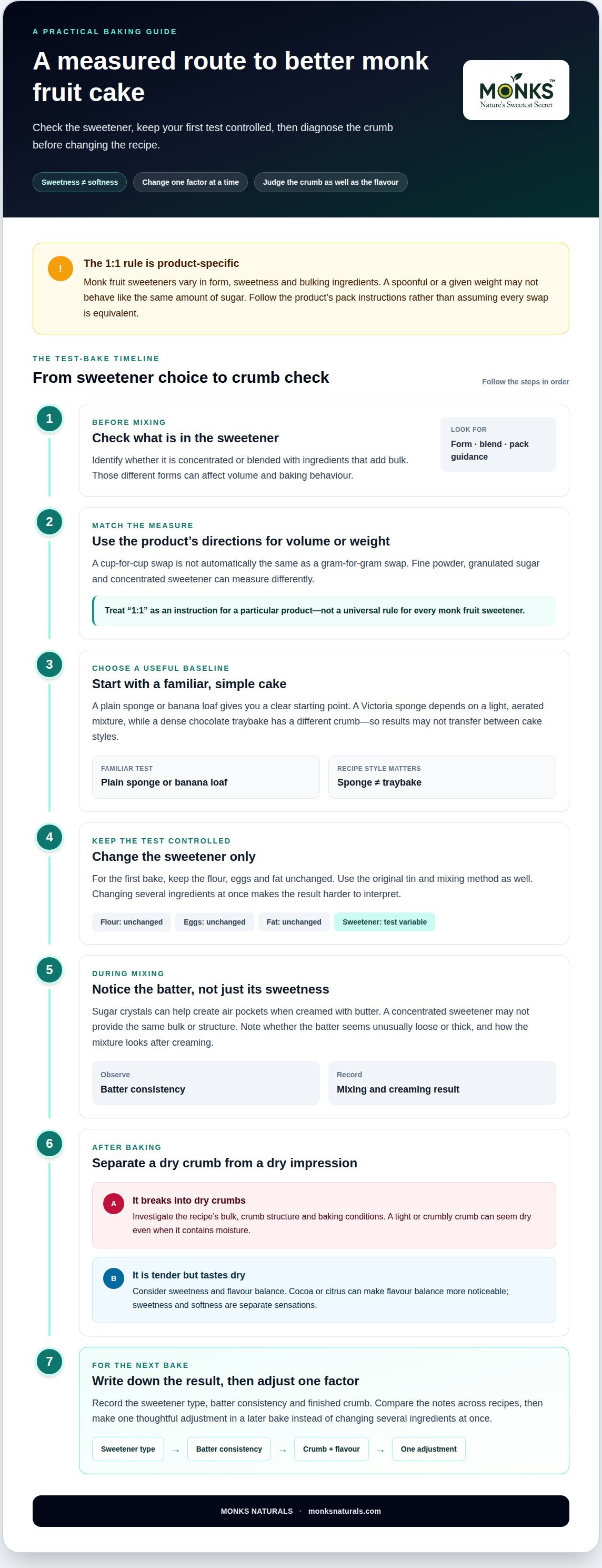
For a first trial, change only the sweetener. Keep the tin, mixing method and other ingredients consistent with the original recipe. If the cake turns out dry or dense, you’ll have clearer evidence that the substitution needs adjusting. Changing the flour and liquid at the same time makes the result harder to interpret.
Think of 1:1 as a product-specific instruction, not a universal rule for every monk fruit sweetener. Review monk fruit sweetener options as you compare formats, then use the relevant product guidance alongside your recipe. A measured test bake gives you a useful baseline before adapting a favourite cake.
How can I adjust a cake recipe to use monk fruit sweetener?
Begin with a familiar recipe, such as a plain sponge or banana loaf. Choose a monk fruit sweetener intended for baking and follow its pack directions. Products differ in sweetness, form and ingredients. Don’t assume concentrated drops replace sugar in the same measure. Keep the recipe’s flour, eggs and fat unchanged for the first test.
Before mixing, write down the original recipe’s sugar quantity and measurement method, whether it uses grams, tablespoons or another measure. Then check the sweetener’s instructions for the matching unit. If the pack gives a conversion, follow it. If it describes drops for drinks rather than baking, don’t guess a cake measurement.
Keep the first bake controlled: change one thing at a time. Use this sequence:
- Choose one cake recipe with familiar ingredients, such as butter, flour and eggs.
- Measure the sweetener according to its baking directions, not an assumed sugar equivalent.
- Mix using the recipe’s usual method, including creaming butter if instructed.
- Record the batter’s appearance and the baked cake’s crumb before changing anything else.
Look closely at the batter after mixing. A Victoria sponge mixture that seems unusually stiff may need a different approach from a loose banana loaf batter. Don’t add liquid automatically. First check whether the sweetener’s other ingredients affect consistency. If you adjust liquid in a later test, change only that ingredient and record the result.
Use the recipe’s stated oven setting and tin for the first comparison. A different tin can change how quickly the centre bakes. Check the cake near the suggested finish time, then assess the centre with a skewer or by observing its structure. If it seems dry, note whether the crumb is crumbly, dense or simply less sweet.
Keep a note for each bake. Record the sweetener form, amount, mixing method and result. For example, compare a plain sponge made with powder with a later bake using drops. Don’t change the flour, eggs and sweetener together, or it will be difficult to identify which adjustment affected the texture.
Once the first cake gives you a clear baseline, make one modest adjustment at a time. If the crumb is tender but the flavour feels unbalanced, review sweetness before changing moisture. If it crumbles, consider batter consistency or baking conditions. A recipe that works with one monk fruit product may need different handling with another, so repeat the method before drawing conclusions.
Which ingredients make sugar-free cakes moister
Moisture-rich ingredients can soften a cake’s crumb, but each changes more than moisture. Plain yoghurt, sour cream and buttermilk add liquid and tenderness. Their acidity can also affect raising agents. Yoghurt may suit a lemon loaf, while its tang may be noticeable in a delicate vanilla sponge. Choose ingredients that fit the recipe’s structure and flavour.
Mashed banana and apple purée add moisture, natural sweetness and fruit flavour. Banana works well in banana loaf, while apple purée can complement cinnamon or spice. Both make batter heavier, so adding them without adjusting the recipe can leave the centre dense. Follow a recipe designed for fruit purée rather than adding it freely to another sponge.
Grated courgette can work in a chocolate loaf. It adds water and soft texture, while cocoa helps balance its mild flavour. Grate it finely and consider whether the recipe accounts for excess liquid. A watery batter may bake unevenly, especially in a deep tin. Courgette suits robust cakes better than a light, airy sponge.
Fat affects how moist a cake feels. Oil coats flour particles and can leave a tender impression, while butter contributes flavour and helps create structure when creamed. Oil pairs naturally with grated carrot in carrot cake. Swapping butter for oil changes the mixing and crumb, so choose a recipe designed for that fat rather than making a direct substitution.
Other ingredients can support softness, but they serve different roles:
- Eggs bind ingredients and help a sponge hold its shape.
- Milk or unsweetened plant drink adds liquid to a batter.
- Ground almonds can give a cake a tender, rich crumb.
- Chia or flax mixture can bind some egg-free batters, but may make them denser.
Choose additions to suit the cake. Ground almonds, for example, work in an almond loaf but can weigh down a light Victoria sponge. Extra milk may loosen a thick batter, but it won’t replace the structure supplied by eggs or flour. The recipe’s balance matters as much as an ingredient’s moisture.
Change one ingredient at a time. If a chocolate cake feels dry, compare your usual version with a suitable yoghurt-based recipe. Keep the tin and mixing method consistent, then note whether the crumb becomes softer or simply denser. Avoid adding fruit purée, oil and extra milk together; the result won’t show which change helped.
Finally, distinguish a dry crumb from a dry-tasting flavour. A tender cake with strong cocoa or tart fruit can seem less sweet and less moist. Taste a plain crumb beside a flavoured slice. The comparison helps separate texture from flavour, so your next adjustment targets the right ingredient.
How do baking time and oven temperature affect a dry monk fruit cake
An oven that runs hotter than expected can dry a cake’s edges before its centre finishes baking. Extra time in the oven also gives moisture longer to escape. Monk fruit sweetener doesn’t prevent this drying. If a chocolate loaf has a firm crust and crumbly centre, check the baking conditions as well as the ingredients.
Start with the temperature and timing specified for your recipe. Fan and conventional oven settings can differ, so use the setting the recipe names. Avoid changing the temperature simply because you changed the sweetener. A different setting can alter browning and how quickly the cake sets, making it harder to identify the cause of a dry result.
Ovens can vary from their displayed settings. If the same Victoria sponge repeatedly browns too quickly, an oven thermometer can help compare the actual heat with the dial. Position it centrally and away from the tin. Use the reading to understand your oven rather than adjusting the recipe based on appearance alone.
Tin size and material affect how heat reaches the batter. A shallow traybake exposes more surface area than a deep loaf tin. A dark metal tin may brown the edges differently from a pale one. Follow the recipe’s tin guidance, and expect the baking time to change if you use a different shape.
Use visual and physical cues together. The top should look set, and the centre should no longer wobble when you move the tin gently. A skewer inserted near the middle can show whether wet batter remains. Moist crumbs differ from liquid batter. Removing a cake while its centre is raw won’t solve dryness; leaving it until completely dry can make it worse.
Check progress near the recipe’s suggested finish time, then assess the centre. Open the oven door briefly and carefully, as a sudden disturbance can affect a delicate sponge. If the cake needs longer, continue baking and reassess rather than leaving it unattended. Note the actual finish point for that oven and tin.
After baking, cool a loaf in its tin as the recipe directs. Turning it out too soon can damage the crumb, while leaving it in a hot tin too long can continue cooking the edges. Store the cooled cake in an airtight container to limit further drying. Compare a covered slice with one left exposed to spot moisture loss after baking.
For a more controlled test, keep the recipe, tin and sweetener consistent whilst observing oven behaviour. Explore monk fruit sweetener options as part of your baking preparation, then follow the chosen product’s guidance and your recipe’s oven instructions.
MONKS: Monkfruit decoction with soluble tapioca fibre Powder
MONKS Monkfruit Powder is a spoonable option for home bakers exploring monk fruit in cake recipes. It is made from whole fruit decoction using a traditional method of gently simmering the fruit, and includes soluble tapioca fibre. It has no erythritol and no artificial fillers. Use it in baking, cooking or sprinkled over food, and start small, adjusting to your preferred sweetness.
Consider it when you want a powder format rather than liquid drops. A different sweetener won’t, by itself, correct a cake that’s overbaked or poorly balanced, so keep an eye on the recipe’s texture and baking cues. To explore the powder and other monk fruit options, visit MONKS online.
Make your next bake a useful test
If you're still asking why does my monk fruit cake taste dry, treat the next bake as a fresh experiment. Choose one recipe and change one variable. Note the sweetener, batter consistency and crumb, then use those observations to guide your next adjustment. A small, clear test can teach you more than changing several ingredients at once.
The right sweetener format depends on how you bake. MONKS offers Monkfruit decoction with soluble tapioca fibre Powder, Monkfruit decoction Drops and The MONKS Set. Explore the options and decide which fits your kitchen routine. For help choosing a starting point, contact MONKS to discuss your project.
Every bake is a chance to refine the balance. Keep your notes close, trust what the crumb tells you, and enjoy finding a version that feels right for your table.
Frequently Asked Questions
Why does monk fruit sweetener make cakes taste dry?
Monk fruit sweetener can change flavour balance and crumb, so dryness isn’t always caused by lost moisture. A cake may taste less rounded than a sugar-sweetened version even when the crumb remains soft. Compare a cooled slice with the recipe’s usual texture: if it feels tender but tastes dry, the sweetness profile may influence your impression. If it crumbles, review the recipe and baking result.


