

Why does your favourite "diabetic-friendly" treat still leave you feeling bloated, sluggish, or disappointed? You have likely tried the usual sugar alternatives, only to be met with a sharp metallic aftertaste or unexpected blood sugar spikes. Finding a reliable monk fruit sweetener for diabetics shouldn't feel like a complex chemistry experiment. It is frustrating to find hidden maltodextrin or gut-disrupting polyols in products that promise to support your wellbeing. You deserve a way to sweeten your tea, bake your treats, and enjoy your morning without the guilt or the gut pain.
In the UK, the secret to a stable metabolic response lies in the method of preparation. Whilst many brands rely on harsh chemical extracts, a traditional decoction offers a purer, more transparent path to sweetness. This guide explores how this whole-fruit approach maintains stable glucose levels and provides a clean label you can trust. We will examine the science of mogrosides, the benefits of avoiding sugar alcohols, and how to use these clean options in your kitchen. Discover why a simple, water-based infusion is the most effective tool for managing your blood sugar whilst keeping life sweet.
Key Takeaways
- Learn how monk fruit sweetener for diabetics maintains a zero-glycaemic index, allowing you to enjoy sweetness without impacting your insulin levels or glucose stability.
- Understand why the traditional decoction method is the cleanest choice in the UK, bypassing harsh chemical extractions to preserve the fruit's natural essence.
- Discover how to avoid digestive bloating and the cooling aftertaste common in other alternatives by choosing a formula free from erythritol and artificial fillers.
- Master the art of sugar-free baking and on-the-go sweetening with simple 1:1 conversion tips for your favourite British recipes.
- Identify the essential markers of a clean-label product so you can shop with confidence and keep your kitchen free from hidden sugars.
Understanding Monk Fruit: A Natural Ally for Blood Sugar
Monk fruit, biologically known as Siraitia grosvenorii, is a small, green melon native to the high-altitude mountain regions of Southern China. For centuries, it was harvested by Buddhist monks for its soothing properties and intense, clean sweetness. Today, it's becoming a cornerstone of mindful kitchens across the UK. Unlike traditional fruits, monk fruit doesn't rely on fructose or glucose for its flavour. Instead, it's classified as a "non-nutritive" sweetener. This means it provides the sweetness you crave without the caloric load or carbohydrate impact that typically disrupts a balanced diet.
Finding a reliable monk fruit sweetener for diabetics involves looking past the marketing and into the fruit's unique composition. It's naturally calorie-free and doesn't impact blood sugar levels. This makes it an ideal addition to a diabetic meal plan, offering a way to enjoy daily rituals like morning tea or home-baked treats without compromise. It's a simple, elegant solution for those seeking purity in their ingredients.
The Glycaemic Index and Diabetic Safety
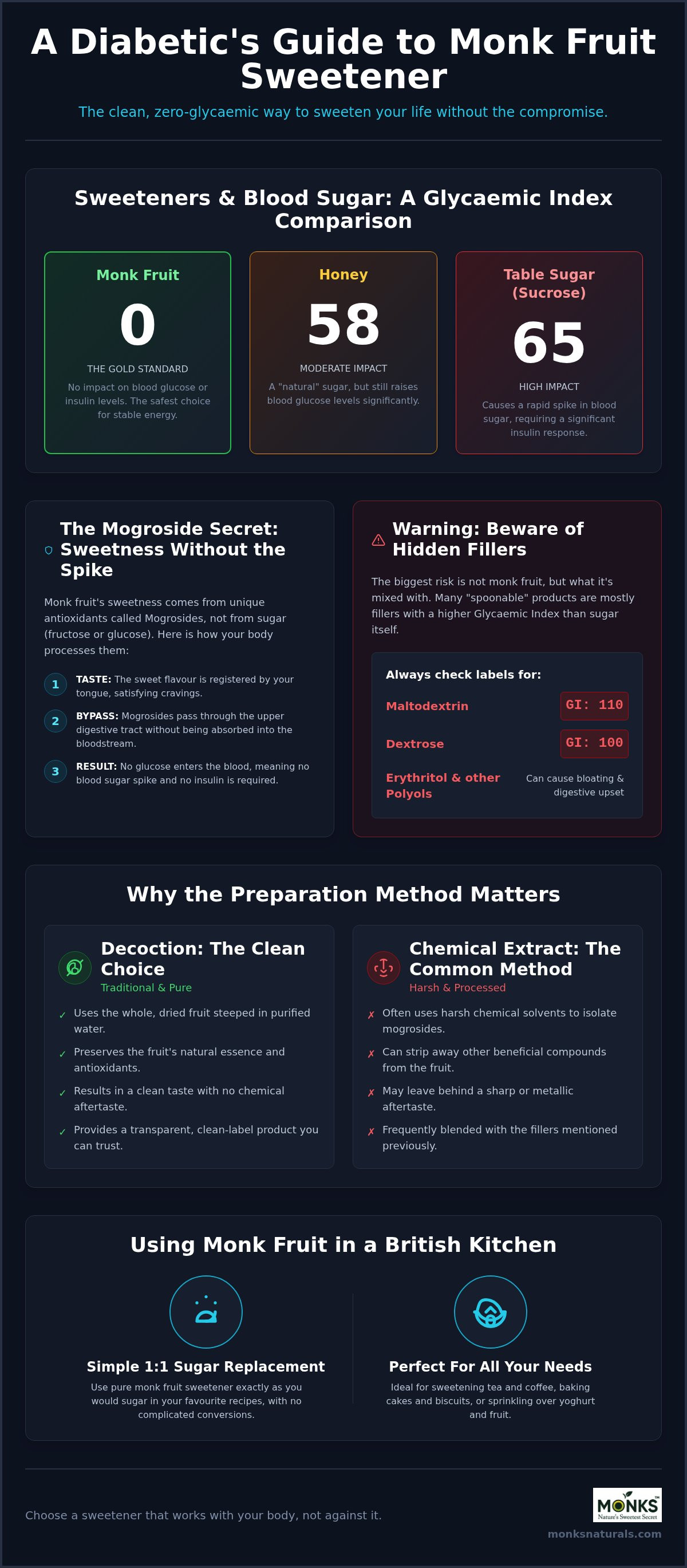
The Glycaemic Index (GI) measures how quickly carbohydrate-containing foods raise blood glucose levels. For anyone managing insulin sensitivity, a score of zero is the gold standard. Monk fruit achieves this perfectly. When you compare it to other common sweeteners, the difference is stark. Table sugar sits at a GI of 65, whilst even "natural" alternatives like honey carry a GI of 58. By choosing monk fruit, you effectively remove the "sugar crash" cycle from your day. It provides a stable, gentle experience that keeps your energy levels consistent and your insulin response quiet.
Mogrosides: Sweetness with Antioxidant Benefits
The secret to monk fruit's sweetness lies in compounds called mogrosides. These are unique antioxidants that the body processes differently from standard sugars. When you consume glucose, your body absorbs it into the bloodstream for fuel. Mogrosides are different. They pass through the upper digestive tract without being absorbed as energy. This is why they don't spike blood glucose levels; your body simply doesn't recognise them as a fuel source. Beyond sweetness, recent metabolic studies suggest mogrosides may offer anti-inflammatory properties, adding a layer of wellness to your daily routine. It's sweetness that works with your body, not against it.
How Monk Fruit Impacts Insulin and Glucose Levels
When you consume monk fruit, your body treats it with remarkable indifference. Standard sugars are broken down in the small intestine, flooding the bloodstream with glucose. Monk fruit's sweet mogrosides take a different path. They bypass the upper digestive system entirely. They reach the colon, where natural gut bacteria break them down without releasing sugar into your blood. This unique metabolic pathway is why pure monk fruit doesn't require insulin for transport or storage. It simply exists as sweetness, not fuel.
Some people worry about the "Cephalic Phase Insulin Response". This occurs when the brain tastes sweetness and signals the pancreas to release insulin in anticipation of sugar. Research suggests that Monk Fruit Sweeteners for Diabetes are safer in this regard than many artificial alternatives. It provides the flavour you love without triggering the metabolic alarms that lead to insulin resistance. This makes it a dependable tool for maintaining a steady, calm internal environment.
Type 1 vs. Type 2: Tailoring Your Approach
For Type 1 diabetics, every gram of carbohydrate requires a precise calculation. Using monk fruit sweetener for diabetics simplifies this process. It allows you to bake, stir, and season without adding to your insulin-to-carb ratio. For those with Type 2 diabetes, the focus often shifts to weight management and improving insulin sensitivity. Replacing high-GI sugars with a zero-calorie alternative helps reduce the overall burden on your pancreas. It's always wise to monitor your blood sugar when introducing a new food, but monk fruit remains one of the most stable choices available.
The Danger of Hidden Fillers: Maltodextrin and Dextrose
The biggest risk isn't the monk fruit itself; it's what some manufacturers hide in the packet. Many supermarket "spoonable" powders are actually 99% maltodextrin or dextrose. These fillers have a glycaemic index higher than table sugar. They cause the very spikes you are trying to avoid. Always check UK labels for these hidden carbohydrates. At MONKS, we take a different approach. We never use bulking agents that compromise your safety. Our clean-label alternatives, such as our Monkfruit decoction with soluble tapioca fibre Powder, focus on purity, safety, and flavour. This ensures your blood sugar stays exactly where it should be.
Decoction vs. Extract: Why the Method Matters
Choosing a monk fruit sweetener for diabetics often means choosing between a laboratory and a kitchen. Most commercial brands rely on industrial chemical extraction. This process uses harsh solvents to isolate mogrosides, stripping away the fruit's natural profile. The result is often a sharp, intense sweetness followed by a lingering metallic or cooling aftertaste. It feels clinical, artificial, and detached from nature. The cooling sensation, similar to menthol, can ruin the flavour of a delicate Earl Grey or a light sponge cake.
A traditional decoction is different. We simmer the whole fruit in water, allowing the essence to infuse naturally. This gentle method preserves the broader profile of the monk fruit. It delivers a rounded, clean sweetness that mimics the experience of real food. This minimalist approach ensures a cleaner label and a product that feels right in a health-forward home. A decoction is transparent. It reflects our commitment to purity and traditional wisdom. It is a refined secret that we are proud to share with the UK wellness community.
The Erythritol Problem: Bloating and Gut Health
Erythritol is a sugar alcohol, or polyol, found in nearly every keto sweetener in the UK. Whilst it has a low glycaemic index, it often triggers significant digestive distress. Many diabetics report bloating, gas, and gut pain after consuming erythritol-based blends. These symptoms occur because polyols aren't fully absorbed and can ferment in the gut. We believe your sweetener should be clean, stable, and kind. This is why MONKS is entirely erythritol-free. Protecting your gut microbiome is as vital as managing your blood sugar. You shouldn't have to choose between a sweet treat and digestive comfort.
Soluble Tapioca Fibre: A Diabetic-Friendly Bulk
To create our Monkfruit decoction with soluble tapioca fibre Powder, we use a carrier that actually supports your wellbeing. Soluble tapioca fibre is a prebiotic that nourishes beneficial gut bacteria. It doesn't cause the spikes associated with maltodextrin or other hidden sugars. Instead, this fibre helps to slow the absorption of glucose from other parts of your meal. It provides the perfect spoonable texture whilst acting as a functional ingredient for your metabolic health. It is a thoughtful addition that makes our monk fruit sweetener for diabetics both practical and nourishing. You can stir it into your morning coffee or fold it into a bake, knowing it supports your body's natural rhythm.
Practical Tips: Using Monk Fruit in a British Kitchen
Integrating a new sweetener into your daily routine should be effortless. Our Monkfruit decoction with soluble tapioca fibre Powder is designed for simplicity. It works as a 1:1 replacement for table sugar by volume. If a recipe calls for a tablespoon of sugar, simply use a tablespoon of powder. Unlike artificial sweeteners like aspartame, monk fruit is remarkably heat-stable. It won't lose its sweetness or develop a bitter edge in a hot oven. This makes it a superior choice for traditional British baking, from light sponges to crisp biscuits.
Sweetening the Daily Ritual: Tea and Coffee
The morning cuppa is a sacred ritual. For many, finding a monk fruit sweetener for diabetics that doesn't ruin the character of the tea is a priority. Our liquid drops offer a clean, instant sweetness that integrates seamlessly into your favourite brew. They are designed to be portable, precise, and pure.
- Use 3-4 drops to replace one teaspoon of sugar.
- Enjoy a smooth finish without milk splitting or curdling.
- Carry the compact bottle for coffee shop visits or office breaks.
This method preserves the delicate floral notes of a Darjeeling or the robust body of a dark roast. You can discover our pure Monkfruit decoction Drops to elevate your daily brew with ease. It's the simplest way to maintain your habits whilst supporting your health goals.
Breakfast and Baking: Porridge to Victoria Sponge
Breakfast often presents the first blood sugar challenge of the day. Stirring our powder into warm porridge or overnight oats provides a comforting sweetness without the mid-morning crash. For more complex bakes like a Victoria Sponge, keep in mind that sugar provides both bulk and moisture. When you swap it out, your batter might feel slightly drier than usual. Add an extra splash of milk or a teaspoon of yogurt to maintain that signature tender crumb. It's a small adjustment that yields beautiful results.
Achieving the perfect texture is a process of quiet discovery. For more detailed advice on mastering your oven, read our guide on sugar alternatives for baking UK. You can now enjoy sweet treats that are kind to your body and your kitchen. Ready to start your journey? Explore the Monks collection today for a cleaner way to sweeten.
Choosing the Best Monk Fruit Sweetener in the UK
Finding a reliable monk fruit sweetener for diabetics in the UK requires a keen eye for detail and a commitment to label-reading. Many products on the high street use the term "natural" loosely, often masking ingredients that can disrupt your metabolic health. To ensure you are choosing a product that supports your wellbeing, follow a simple clean-label checklist. A truly diabetic-friendly sweetener should be transparent about its origins and its impact on your body.
- Avoid erythritol and other sugar alcohols that cause digestive bloating.
- Reject fillers like maltodextrin and dextrose that spike blood glucose.
- Ensure there are no artificial colours, flavours, or preservatives.
By focusing on these three pillars, you can protect your insulin sensitivity whilst enjoying the flavours you love. Purity is not just a marketing term; it is a fundamental requirement for maintaining a stable, healthy lifestyle. When you choose a monk fruit sweetener for diabetics, you are investing in your long-term vitality. It is about making a choice that feels right for your kitchen and your body.
The MONKS Difference: Purity You Can Taste
We have positioned ourselves as the UK's leading monk fruit specialist by refusing to follow industrial shortcuts. Our "whole fruit" philosophy is at the heart of everything we create. We don't rely on lab-isolated chemicals or harsh solvents. Instead, we use a traditional decoction method that respects the natural integrity of the fruit. This results in a cleaner sweetness that lacks the bitter aftertaste of mass-produced extracts. For your convenience, you can find our signature range at our Amazon UK store for quick and easy ordering. It is the gold standard for those who value minimalist processing and genuine health benefits.
Your Path to Sugar-Free Success
Recalibrating your palate is a process of quiet discovery. We often suggest a "slow swap" approach to help your taste buds adjust to a life without sucrose. Start by sweetening your morning tea, then move to your breakfast porridge, and finally your favourite weekend bakes. This gradual transition makes the process feel like an effortless upgrade rather than a restrictive chore. Over time, the benefits of reducing sugar will become clear through more consistent energy levels and improved gut comfort. It is a rewarding shift that supports your health goals without sacrificing the joy of a sweet treat. Explore the full MONKS collection today and take the first step toward a cleaner, more balanced way of living.
Embrace a Sweeter, Cleaner Future
Managing blood sugar doesn't mean leaving sweetness behind. You now understand that the method of preparation is as vital as the fruit itself. By choosing a traditional decoction over industrial chemical extracts, you avoid the sharp aftertaste and metabolic confusion of artificial blends. A pure monk fruit sweetener for diabetics ensures your insulin remains stable whilst your gut health stays protected from the bloating caused by common polyols. It is about finding a balance that feels effortless and sustainable for your daily routine.
It is time to simplify your kitchen with a brand that values transparency and purity. Our range is entirely erythritol-free and crafted using a traditional simmering method to ensure the highest quality. We offer free UK delivery on selected sets to help you begin your journey with ease. Shop the UK's purest Monk Fruit Sweetener at MONKS today. Your path to better health is a series of small, mindful choices. Start today and rediscover the joy of a balanced, naturally sweet life.
Frequently Asked Questions
Is monk fruit truly safe for people with Type 2 diabetes?
Monk fruit is considered safe for those with Type 2 diabetes because it contains zero calories and zero carbohydrates. It does not raise blood glucose levels, which is a primary concern for metabolic management. Unlike table sugar, the sweetness comes from mogrosides rather than fructose. This allows you to enjoy sweet treats whilst maintaining a stable glycaemic profile. It's a clean, reliable alternative that fits seamlessly into a diabetic-friendly lifestyle without the risk of spikes.
Does monk fruit sweetener cause insulin resistance?
Pure monk fruit does not cause insulin resistance. In fact, it is often used as a tool to help reverse it. Because monk fruit isn't metabolised as a carbohydrate, the body doesn't need to release insulin to process it. This prevents the frequent insulin spikes that contribute to cellular desensitisation over time. By choosing a high-quality monk fruit sweetener for diabetics, you are giving your pancreas a rest whilst still satisfying your natural craving for sweetness.
Why do some monk fruit sweeteners contain erythritol, and should I avoid them?
Many manufacturers add erythritol to monk fruit products to act as a bulking agent or to lower production costs. You should consider avoiding these blends if you experience digestive bloating, gas, or gut discomfort. Erythritol is a sugar alcohol that can be difficult for some people to digest. At MONKS, we believe in purity. We exclude all sugar alcohols and fillers to ensure our products remain kind to your gut and your blood sugar.
How much monk fruit can a diabetic have in a day?
There is no specific daily limit for monk fruit, but moderation is always the best approach. The mogrosides in monk fruit are processed by your gut bacteria rather than being absorbed into the bloodstream. This makes it very safe for daily use in tea, coffee, or meals. However, it is important to remember that a balanced diet remains the priority. Focus on using it to replace refined sugars rather than simply increasing your total intake of sweet foods.
Can I use monk fruit for baking if I have diabetes?
You can certainly use monk fruit for baking, and it is a favourite amongst diabetic home cooks in the UK. Unlike aspartame, which can break down and lose sweetness when heated, monk fruit is remarkably stable at high temperatures. Our Monkfruit decoction with soluble tapioca fibre Powder works as a 1:1 replacement for sugar by volume. It allows you to create classic sponges and biscuits that won't compromise your glucose management or your family's health.
Does monk fruit have a bitter aftertaste like stevia?
High-quality monk fruit does not have the bitter or metallic aftertaste often associated with stevia. The taste profile depends heavily on the extraction method. Whilst some lab-isolated extracts can have a slight cooling sensation, our traditional decoction method preserves a more rounded, natural flavour. This simmering process ensures a clean finish that mimics the experience of real sugar. It integrates beautifully into delicate drinks like matcha or Earl Grey without altering the underlying notes.
Is monk fruit better for diabetics than sucralose or aspartame?
Monk fruit is often considered a better choice for diabetics because it is a natural, plant-based alternative. Artificial sweeteners like sucralose or aspartame are lab-created chemicals that some studies suggest may impact gut health or insulin sensitivity. Monk fruit offers a cleaner label and greater heat stability for cooking. By choosing a monk fruit sweetener for diabetics, you are opting for a minimally processed ingredient that supports your long-term wellness goals without the chemical baggage of synthetic substitutes.
Where can I buy pure, erythritol-free monk fruit in the UK?
You can buy pure, erythritol-free monk fruit directly from our website or through our Amazon UK store. MONKS is the leading specialist in the UK, focusing on the traditional decoction method to ensure the highest purity. We don't use maltodextrin, artificial fillers, or sugar alcohols in any of our products. Whether you need liquid drops for your coffee or a spoonable powder for your baking, we provide clean-label solutions that are delivered straight to your door.


