

What if the very thing you use to stay healthy is actually upsetting your balance? It's a common frustration for anyone trying to cut sugar whilst maintaining their energy. You might have tried every natural low glycemic sweetener on the market, only to be left with a metallic aftertaste, a sudden energy slump, or uncomfortable bloating. Finding a truly clean alternative often feels like a trade-off between your health and your taste buds.
We understand that you want a simple, honest way to sweeten your morning tea or favourite home-baked treats. You deserve a solution that supports your gut health, keeps your blood sugar stable, and tastes exactly like it should. In this guide, we'll show you how to move beyond lab-isolated extracts and hidden maltodextrin. Discover the traditional method of whole-fruit decoction that offers a perfect 1:1 sugar replacement. It's time to embrace a cleaner, more mindful approach to sweetness that fits effortlessly into your daily ritual.
Key Takeaways
- Understand how the Glycemic Index influences your daily energy and why certain "natural" labels don't always guarantee a low insulin response.
- Learn to avoid the bitter aftertastes of stevia and the bloating often associated with sugar alcohols like erythritol and xylitol.
- Discover the benefits of choosing a natural low glycemic sweetener made through traditional whole-fruit decoction rather than lab-heavy isolation.
- Gain practical tips for integrating clean sweeteners into your favourite morning rituals and home cooking without sacrificing texture or flavour.
- Explore why a minimalist approach to ingredients, free from fillers and artificial additives, is essential for long-term blood sugar balance.
Understanding Glycemic Index and Why Your Sweetener Choice Matters
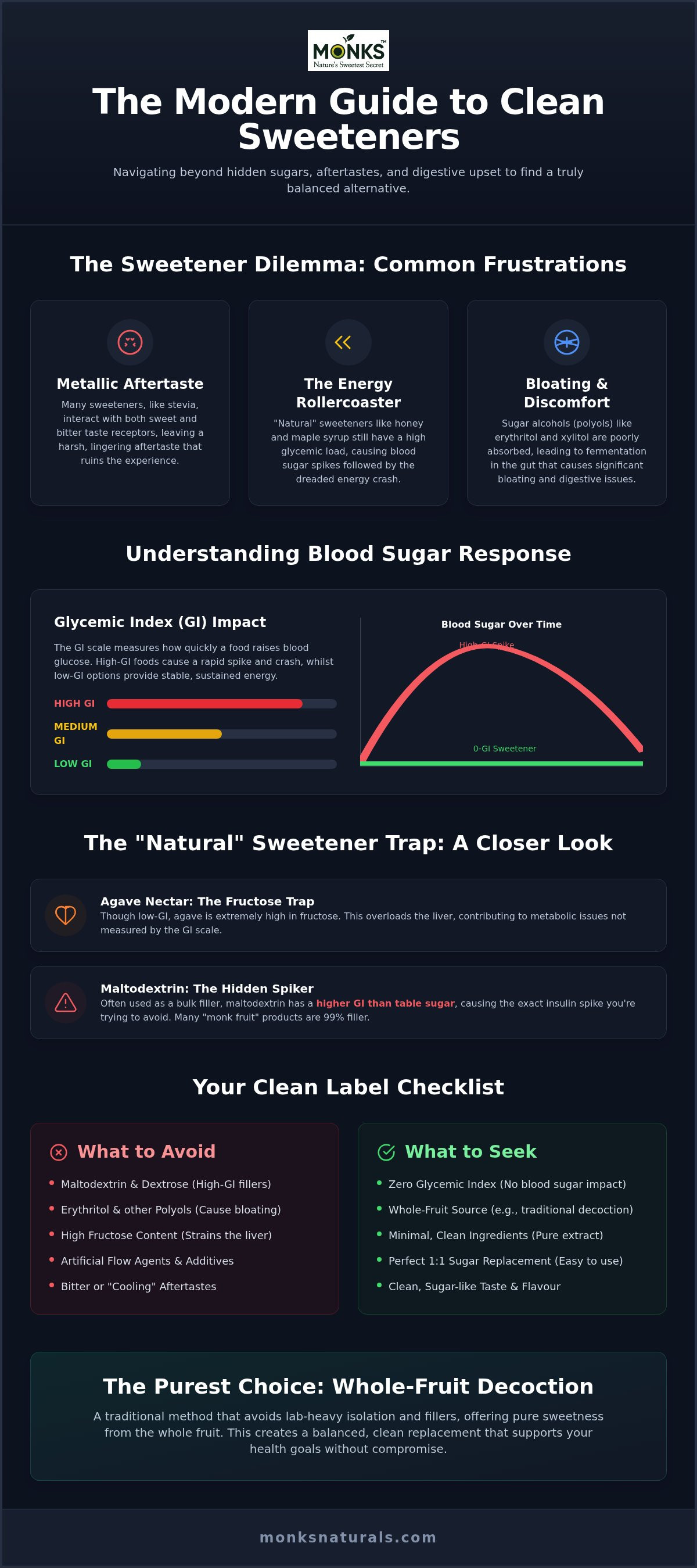
The Glycemic Index (GI) is a simple scale that ranks carbohydrates based on how quickly they raise your blood sugar. It's a vital tool for anyone looking to maintain steady energy levels throughout the day. When you consume high-GI foods, your body experiences a rapid surge in glucose. This forces the pancreas to release insulin to bring those levels back down. Whilst this is a normal biological process, modern diets often keep us on a constant roller coaster of spikes and crashes.
Choosing a natural low glycemic sweetener isn't just about avoiding calories. It's about protecting your metabolic health. A "natural" label can be misleading. Ingredients like coconut sugar, honey, and maple syrup are technically natural, but they still carry a significant glycemic load. They cause the very insulin response that leads to the dreaded afternoon slump. For true balance, you need alternatives that offer a slow release of energy or, ideally, no glycemic impact at all.
The Science of Glucose Spikes
Refined sugars are designed for speed. They hit your bloodstream almost immediately, causing a sharp peak in glucose. This rapid rise is often followed by a hypoglycemic dip, leaving you tired, hungry, and reaching for more sugar. Over time, these frequent spikes can lead to chronic insulin elevation and systemic inflammation. This is why selecting a monk fruit sweetener for diabetics and health-conscious individuals is a vital strategy. It provides the sweetness you crave in your favourite morning tea without the biological cost of a glucose surge.
Fructose vs Glucose: The Hidden Trap
Many people switch to agave nectar believing it's a healthier choice because of its low GI score. However, this hides a significant metabolic trap. Agave is low-GI because it's exceptionally high in fructose. Unlike glucose, which fuels every cell in your body, fructose is processed almost exclusively by the liver. Overloading the liver with fructose can lead to fatty liver issues and metabolic dysfunction that the GI scale simply doesn't measure. A superior natural low glycemic sweetener should be low in both glucose and fructose. This dual approach ensures you support your blood sugar whilst keeping your liver healthy and functional.
The Problems with Popular Natural Alternatives
Many people start their health journey by trying supermarket stevia. It's often the first natural low glycemic sweetener they encounter. However, the experience is frequently disappointing. Stevia is notorious for a sharp, metallic aftertaste that lingers long after your coffee is finished. This bitterness occurs because the plant's sweet compounds, steviol glycosides, interact with both sweet and bitter receptors on your tongue. It's a natural option, but it rarely feels like a treat.
Then there's the "cooling" effect. If you've ever eaten a keto-friendly dessert and felt a strange, icy sensation, you've experienced sugar alcohols. Erythritol and xylitol absorb heat from your mouth as they dissolve. It feels unnatural and distracting. Beyond the taste, these polyols are famous for causing significant bloating and digestive distress. They aren't fully absorbed by the small intestine, which leads to fermentation in the gut. For many, the trade-off for zero calories simply isn't worth the discomfort.
The Erythritol Debate in 2026
By 2026, the conversation around sugar alcohols has shifted. Recent insights into the gut microbiome suggest that frequent consumption of polyols may disrupt delicate bacterial balances. Many consumers are now actively seeking an erythritol-free sweetener in the UK to avoid these side effects. To protect your wellbeing, you must become a label detective. Look for terms like "polyols" or "sugar alcohols" in the nutritional table. Often, a product marketed as "Monk Fruit" is actually 99% erythritol with just a hint of fruit extract.
Why Bulk Fillers Ruin Clean Labels
Supermarket brands often use bulk fillers to make their product look and pour like granulated sugar. The most common culprit is maltodextrin. Despite being plant-derived, maltodextrin has a glycemic index higher than table sugar. It causes the exact insulin spikes you are trying to avoid. These fillers dilute the quality of the primary sweetening agent and compromise your metabolic goals. Seeking a "clean label" ensures you are getting a pure product without hidden starches, dextrose, or artificial flow agents.
Finding a truly natural low glycemic sweetener requires looking past the marketing hype. You want something that tastes like sugar but behaves like a whole food. If you are ready to move away from lab-made chemicals and digestive upsets, you might find that switching to a whole-fruit decoction provides the purity your morning routine has been missing.
Monk Fruit Decoction: A Traditional Approach to Low-GI Sweetness
Monk fruit, or Luo Han Guo, carries a heritage of wellness that stretches back centuries. Originally cultivated by Buddhist monks in the steep, mist-shrouded mountains of Southern China, this small green melon was prized for its longevity-boosting properties. It remains a staple in traditional practices today. This elusive fruit grows only in specific sub-tropical climates, making it a rare and precious find for those seeking purity. Unlike common fruits that rely on fructose or glucose for sweetness, monk fruit offers a completely different biological experience. It provides a deep, satisfying flavour without the metabolic burden of traditional sugars.
To bring this sweetness to your table, the method of production is everything. Most commercial brands rely on extracts. This lab-isolated approach often involves ethanol or other chemical solvents to strip away everything but the sweet molecules. It's efficient, but it's far from natural. A monk fruit decoction honours the fruit's origins. By gently simmering the whole fruit in water, we capture the essence of the melon without harsh processing. The process is slow, methodical, and entirely transparent. It creates a natural low glycemic sweetener that retains the plant's inherent integrity and complex flavour profile.
The Power of Mogrosides
The secret to this sweetness lies in mogrosides. These are powerful antioxidants that give the fruit its incredible intensity. Because the body doesn't metabolise mogrosides as sugar, they pass through the system without affecting insulin levels. Traditional simmering preserves these delicate compounds alongside the fruit's natural vitamins. This results in a cleaner, more sophisticated taste. You won't find the artificial bite common in mass-produced powders. It's a balanced, wholesome sweetness that feels right in your morning coffee.
Soluble Tapioca Fibre: The Clean Carrier
Pure monk fruit is hundreds of times sweeter than sugar. To make it practical for home cooking, it needs a clean carrier. Whilst others use hidden starches or gut-irritating sugar alcohols, we utilise soluble tapioca fibre. This plant-derived carrier allows for an easy 1:1 replacement in your favourite recipes. It's gentle on the digestive system and provides a subtle hint of texture. It ensures your natural low glycemic sweetener remains keto-friendly and gut-focused. It's a simple, transparent way to enjoy the treats you love.
By choosing a method rooted in tradition, you are opting for a sweetener that works with your body, not against it. This simple shift in production creates a profound difference in how you feel after every meal. It allows you to satisfy your sweet tooth whilst maintaining the minimalist clarity your health journey deserves.
How to Integrate Natural Low-GI Sweeteners into Your Daily Rituals
Your morning coffee is more than a caffeine hit. It's a quiet ritual that sets the tone for your entire day. Using a natural low glycemic sweetener ensures this moment supports your focus rather than inviting a mid-morning crash. Stir, sip, and enjoy the clean sweetness that complements your favourite roast. Unlike sugar, which masks the delicate notes of the bean, a whole-fruit decoction allows the true profile of your coffee or tea to shine through.
Baking at home often feels like a compromise between health and texture. Standard extracts lack the bulk needed to keep sponges light and moist. By choosing a powder blended with soluble fibre, you can maintain the structural integrity of your biscuits and cakes. This approach ensures your treats remain keto-friendly whilst providing a satisfying mouthfeel. Bake, share, and nourish your family without the hidden starches found in supermarket alternatives.
The earthy, vibrant notes of matcha or the heartiness of a morning porridge also benefit from a minimalist touch. These foods have complex flavours that are easily overwhelmed by artificial sweeteners. A few drops of monk fruit can round out the bitterness of green tea or add a gentle warmth to oats. It’s a simple way to create a low-glycemic start for the whole family that keeps everyone satiated until lunch.
The Art of the 1:1 Swap
Replacing caster sugar in your kitchen doesn't have to be a mathematical puzzle. When you use monk fruit with tapioca fibre, you can simply swap it gram-for-gram in most recipes. This 1:1 ratio removes the guesswork from traditional home cooking. For those who prefer liquid convenience, drops are ideal for instant dissolving in cold drinks or smoothies. Just two drops of monk fruit decoction provide the equivalent sweetness of one teaspoon of granulated sugar. This precision allows you to control your sweetness levels with total clarity.
Sweetening Without the Aftertaste
Traditional simmering eliminates the need for the "masking agents" often found in ultra-processed sweeteners. Because the decoction process captures the whole fruit's essence, you avoid the bitter sting common in lab-isolated stevia. This clean profile makes it exceptionally versatile for pairing with acidic ingredients like lemon or vinegar. Try a hint of monk fruit in a savoury vinaigrette or a spicy marinade to balance the heat. It provides a sophisticated depth that enhances your cooking without leaving a metallic trail on the palate.
Ready to elevate your daily routine with a cleaner alternative? Discover the perfect balance for your kitchen by exploring The Monks Set today.
Why MONKS is the Purest Low Glycemic Choice for 2026
MONKS stands apart by refusing to follow the industry crowd. Whilst many brands hide behind "natural" labels while using lab-made fillers, we prioritise total transparency. As a leading monk fruit brand in the UK, our commitment is simple: no erythritol, no maltodextrin, and no artificial compromises. We provide a natural low glycemic sweetener that honours your gut health as much as your blood sugar levels. It's a refined secret we're proud to share with a community that values purity.
Our journey begins with the whole fruit, not a laboratory. We use a traditional simmering method to create a decoction that retains the fruit's inherent integrity. This process ensures that every batch reaching your kitchen is clean, potent, and delicious. British consumers trust MONKS because we don't cut corners. We value quality over quantity. We choose transparency over hype. Our products are designed to fit effortlessly into your daily routine, making better choices feel like a natural habit rather than a chore.
If you're looking for a complete transition to a sugar-free lifestyle, The Monks Set offers the ultimate solution. It combines our versatile powder with our convenient drops, ensuring you have the right tool for every culinary occasion. From morning bakes to evening teas, it provides a comprehensive approach to clean sweetening. It's the perfect way to explore our range and discover how simple blood sugar balance can be in 2026.
Minimalist Ingredients, Maximum Flavour
Our Monkfruit decoction with soluble tapioca fibre Powder is crafted for those who love to cook. By using plant-derived fibre instead of starch, we've created a 1:1 replacement that supports your digestion. For those on the go, our Monkfruit decoction Drops offer pure, concentrated sweetness in a portable glass bottle. These drops dissolve instantly, leave no residue, and contain zero hidden additives. We believe that the absence of fillers is our greatest strength. Every ingredient serves a purpose. Every bottle reflects our commitment to minimalist clarity.
Join the Clean Sweetening Movement
MONKS is redefining the sugar alternative market across the UK. We invite you to move away from the bloating of sugar alcohols and the bitterness of isolated extracts. It's time to embrace a more mindful, wholesome way to enjoy the sweetness in life. You can start your journey today when you visit our website to explore our full range. If you prefer the convenience of your regular shop, you can also find our Monk Fruit Powder on Amazon.
Choosing a low-glycemic lifestyle doesn't mean giving up what you love. It means choosing ingredients that love you back. Refine your rituals. Balance your energy. Trust the purity of the whole fruit.
Embrace Lasting Balance Today
Achieving stable blood sugar doesn't require you to sacrifice the simple joy of sweetness. By understanding the impact of the Glycemic Index and moving away from lab-isolated extracts, you can reclaim your energy and focus. Choosing a natural low glycemic sweetener rooted in tradition allows you to enjoy your favourite morning rituals without the discomfort of bloating or the frustration of a sudden crash. It’s about purity, transparency, and wellness.
As the UK’s leading monk fruit brand, MONKS offers a gut-friendly alternative that is entirely erythritol-free. Our traditional whole-fruit decoction method ensures you receive a clean, premium product that fits seamlessly into your daily life. Whether you are baking for the family, sweetening your afternoon tea, or whisking a morning matcha, our minimalist approach provides the clarity you deserve. It is time to move beyond hidden fillers and embrace a more mindful way of living.
Discover the MONKS range of clean, low-GI sweeteners and start your journey towards effortless balance. You have the power to refine your habits, nourish your body, and enjoy every sip along the way.
Frequently Asked Questions
Is monk fruit really a natural low glycemic sweetener?
Monk fruit is indeed a natural low glycemic sweetener because it contains zero sugar and zero calories. The sweetness comes from mogrosides, which are unique antioxidants that the body doesn't process as carbohydrates. This means it doesn't raise blood glucose or trigger an insulin response. It's an ideal choice for anyone following a ketogenic diet or simply looking to maintain steady energy levels without the traditional sugar crash.
Does monk fruit sweetener have a bitter aftertaste like stevia?
Unlike stevia, which often leaves a metallic or bitter sting on the palate, monk fruit has a much cleaner profile. This is especially true for a whole-fruit decoction. The simmering process captures the rounded, melon-like sweetness of the fruit without extracting the bitter compounds found in the leaves of the stevia plant. You can enjoy a sophisticated sweetness that complements your coffee or tea without needing masking agents.
Can I use monk fruit powder for baking in the UK?
You can certainly use monk fruit powder for baking in the UK. Our specific blend uses soluble tapioca fibre as a clean carrier, which allows for an easy 1:1 replacement for caster sugar. It maintains the texture and moisture of your favourite sponges and biscuits. Because it's heat-stable, the sweetness doesn't break down in the oven, ensuring your home-baked treats taste exactly as they should.
Is monk fruit sweetener safe for people with diabetes?
Monk fruit is widely considered safe and beneficial for people living with diabetes. Since it has a glycemic index of zero, it doesn't cause the rapid spikes in blood glucose associated with table sugar or honey. It allows for a satisfying sweet taste whilst supporting long-term metabolic health. However, we always recommend that individuals manage their specific dietary needs in consultation with a qualified healthcare professional or dietitian.
Why should I choose an erythritol-free sweetener?
Choosing an erythritol-free sweetener helps you avoid the common digestive upsets associated with sugar alcohols. Many people experience bloating, gas, or a strange "cooling" sensation when consuming erythritol-based blends. By opting for a cleaner alternative, you protect your gut microbiome and enjoy a more natural mouthfeel. It's a simple way to ensure your sugar-free journey remains comfortable and focuses on whole-food integrity rather than lab-made chemicals.
What is the difference between monk fruit extract and decoction?
The difference lies in the production method and the final purity. Standard extracts are often created using chemical solvents to isolate sweet molecules in a lab. In contrast, a decoction involves gently simmering the whole fruit in water, following a traditional Chinese method. This slower approach preserves the fruit's natural antioxidants and vitamins. It results in a more complex, rounded flavour that avoids the harshness of industrial processing.
Does monk fruit sweetener cause bloating or digestive issues?
Pure monk fruit doesn't typically cause bloating or digestive distress. Most issues reported with "natural" sweeteners actually stem from hidden fillers like erythritol, xylitol, or maltodextrin. Because MONKS products are entirely free from these sugar alcohols and bulk starches, they are much gentler on the stomach. Using soluble tapioca fibre as a carrier further supports gut health, making it a comfortable choice for those with sensitive digestive systems.
How much monk fruit should I use to replace one teaspoon of sugar?
The amount you use depends on which product you choose for your daily ritual. For our spoonable powder, you can use a simple 1:1 ratio, meaning one teaspoon of monk fruit replaces one teaspoon of sugar. If you prefer our concentrated drops, just two drops provide the same sweetness as a single teaspoon of granulated sugar. This precision makes it easy to organise your recipes and achieve the perfect level of sweetness every time.


