

You finish your morning coffee or a slice of home-baked cake, expecting a gentle energy lift. Instead, within minutes, your stomach feels tight, heavy, and uncomfortably inflated. It is a frustrating cycle that many face when switching to sugar-free options. Finding a sugar alternative without bloating shouldn't feel like a constant compromise between your sweet tooth and your digestive comfort. You want sweetness that feels light, clean, and natural.
We understand the frustration of "natural" labels that still hide gut-disrupting fillers like maltodextrin or sugar alcohols. Most common sweeteners rely on lab-isolated extracts that ferment in the gut, causing the very distress you are trying to avoid. This guide will show you exactly why these ingredients fail your digestion. You will discover how to identify truly gut-friendly sweeteners, avoid the unpleasant cooling aftertaste of erythritol, and find a 1:1 baking replacement using soluble fibre. We are moving beyond industrial processing to embrace a simpler, more wholesome way to sweeten your daily rituals.
Key Takeaways
- Identify the hidden culprits in "natural" sweeteners, including sugar alcohols and synthetic fillers that trigger abdominal discomfort.
- Discover why a monk fruit decoction is a reliable sugar alternative without bloating, offering sweetness without the typical "cooling" aftertaste.
- Compare the digestive impact of various sweeteners to understand how mogrosides and soluble fibres support a happy, healthy gut.
- Learn a simple two-step process to audit your pantry and transition your diet for long-term digestive ease.
- Explore the benefits of whole-fruit processing methods that preserve purity and eliminate the need for gut-disrupting additives.
Understanding Why Most Sugar Substitutes Cause Bloating and Gas
"Sugar-free" is often marketed as a healthy choice. Yet, for many, it leads directly to abdominal distension and sharp pains. This happens because the search for a sugar alternative without bloating usually ends with industrial ingredients that the body wasn't designed to process. Regulatory bodies may label these substances as "safe for consumption," but safety is not synonymous with gut-friendliness. There is a vast difference between an ingredient that won't kill you and one that will help you feel your best.
Your gut microbiome is a delicate ecosystem. It thrives on simplicity. When you consume certain non-nutritive sweeteners, they bypass the small intestine entirely. They arrive in the colon largely untouched. Here, they interact with trillions of bacteria, often with disruptive results. This interaction is where the comfort ends and the bloating begins.
The Fermentation Factor: How Sweeteners Interact with Gut Bacteria
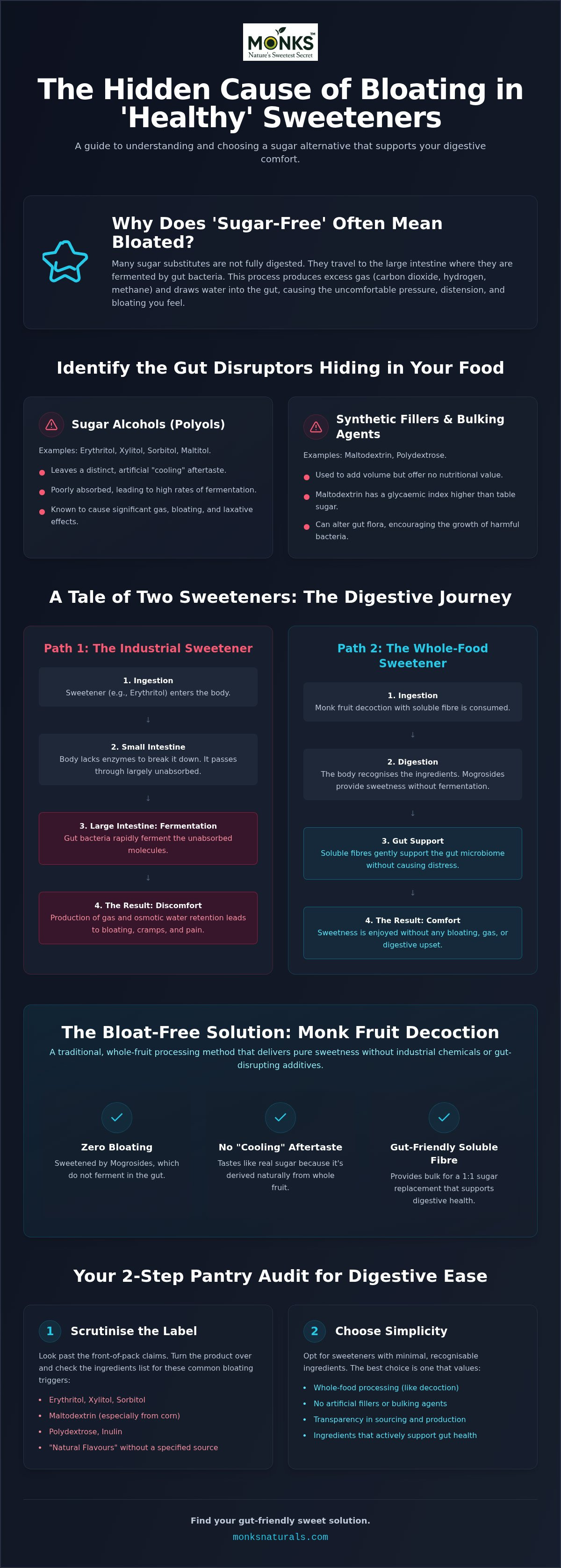
Most modern sweeteners are lab-isolated compounds. Sugar alcohols, or polyols, are particularly problematic. Because the human body lacks the enzymes to fully break them down, they sit in the large intestine. Bacteria then begin a process of rapid fermentation. This creates carbon dioxide, hydrogen, and methane gases. Osmotic pressure occurs when these unabsorbed molecules pull excess water into the intestinal tract, leading to a heavy, bloated sensation. It's a physical reaction to chemical complexity.
Common "Hidden" Ingredients That Trigger Digestive Distress
Labels can be deceptive. You might see "natural" on the front, but the back reveals a different story. Maltodextrin is a common filler used to provide volume to high-intensity sweeteners. It is often derived from corn or wheat. It has a glycaemic index higher than table sugar and can significantly alter gut flora by encouraging the growth of harmful bacteria. "Natural flavours" are another concern; they often mask chemical solvents or gut irritants that aren't legally required to be named.
Brands often use bulking agents to make a tiny amount of sweetener look like a spoonful of sugar. These agents, like polydextrose or certain synthetic fibres, can cause:
- Sudden gas production.
- Increased transit time.
- Persistent abdominal tightness.
Finding a sugar alternative without bloating requires looking past the marketing and scrutinising the ingredient list for these hidden disruptors. True gut health comes from transparency, minimal processing, and ingredients that your body recognises as food.
The Science of Sugar Alcohols: Why Erythritol and Xylitol Disrupt the Gut
Sugar alcohols, or polyols, are unique molecules that share the chemical traits of both sugar and alcohol. They aren't actually alcohol, but they aren't fully sugar either. This hybrid structure is what allows them to provide sweetness without the calories. However, it is also the reason they are so difficult for your body to digest. If you are searching for a sugar alternative without bloating, understanding how these molecules behave in your system is the first step toward comfort.
You've likely noticed a strange, chilly sensation on your tongue when eating sugar-free mints or keto-friendly treats. This "cooling effect" is a hallmark of lab-processed sugar alcohols. It occurs as the polyol dissolves in your saliva, creating a chemical reaction that mimics cold. It's a clear sign that you're consuming a highly processed ingredient rather than a whole-food source. Tolerance for these substances varies significantly. Your existing gut flora, the speed of your digestion, and the specific type of polyol all determine your personal threshold for pain.
Erythritol: The Keto Favourite with a Bloating Secret
Erythritol is often praised because about 90% of it is absorbed into the bloodstream before it reaches the large intestine. However, the remaining 10% stays in the gut. For those with sensitive systems, this small amount is enough to trigger gas. Recent research from UC Davis Health highlights how these unabsorbed compounds can disrupt the delicate microbial balance in your digestive tract.
By August 2026, researchers have also intensified their focus on how high-purity polyols interact with blood platelets, raising questions about long-term cardiovascular safety. This increased scrutiny makes finding an Erythritol-Free Sweetener UK option more important than ever for wellness-conscious shoppers. You deserve a sweetener that supports your heart as much as your waistline.
Xylitol and Sorbitol: The High-Fermentation Risk
Unlike erythritol, xylitol and sorbitol are poorly absorbed by the body. They act as osmotic agents, drawing excess water into the bowel. This often leads to sudden, urgent trips to the bathroom and persistent abdominal tightness. These ingredients are notoriously difficult for the gut-brain axis to manage, often causing a sense of general malaise alongside physical discomfort. Because of this high fermentation rate, they are strictly avoided in gut-friendly protocols like the Low FODMAP diet.
The bloating, gas, and disruption caused by these polyols can make a healthy lifestyle feel like a chore. Switching to a cleaner sugar alternative without bloating can restore your morning routine and keep your stomach flat. It's about choosing ingredients that work with your biology, not against it.
Comparing Natural Sweeteners: Monk Fruit, Stevia, and the Gut Response
Choosing a natural sweetener isn't just about avoiding calories. It's about how your body processes the sweet compounds. Stevia and monk fruit are often grouped together, but their impact on your digestion is remarkably different. Stevia is known for a lingering bitter aftertaste. To mask this, manufacturers often blend it with gut-irritating fillers or erythritol. This ruins the promise of a clean sugar alternative without bloating. In contrast, monk fruit offers a rounded, clean sweetness that doesn't require chemical masking.
The method of extraction matters. Many commercial sweeteners use chemical solvents like ethanol or hexane to isolate sweetness. These residues, even in tiny amounts, can disrupt sensitive systems. Traditional methods, such as water-based decoctions, preserve the integrity of the fruit. This ensures a purer product that respects your body's natural processes. It's a return to simplicity that your gut will appreciate.
Why Monk Fruit is Superior for Sensitive Stomachs
Monk fruit, or Luo Han Guo, contains unique antioxidants called mogrosides. Unlike the sugar alcohols that often cause distress, mogrosides are absorbed in the small intestine. They don't travel to the colon to ferment. This absence of fermentation is why many consider it the ultimate sugar alternative without bloating. Beyond sweetness, monk fruit shows anti-inflammatory potential within the digestive tract. It's a gentle choice for those with IBS or general sensitivity. For a truly clean experience, look for Monkfruit Without Erythritol.
Soluble Tapioca Fibre: The Gut-Friendly Bulking Agent
Pure monk fruit is 200 times sweeter than sugar. To make it practical for baking, it needs a carrier. Most brands use maltodextrin or erythritol, but premium options use soluble tapioca fibre. This ingredient provides the necessary bulk whilst acting as a gentle prebiotic. It feeds beneficial gut bacteria without the aggressive gas production associated with inulin. Whilst corn-based fibres are often highly processed and potentially inflammatory, tapioca-based fibre is derived from the cassava root and offers a much cleaner digestive profile. It provides a 1:1 sugar replacement that keeps your stomach flat and your energy stable.
By choosing a sweetener that uses this superior carrier, you avoid the hidden traps of industrial baking. You get the texture you want without the abdominal pressure you don't. It's a mindful way to enjoy your favourite treats whilst supporting your long-term wellness goals.
How to Organise a Bloat-Free Sugar-Free Diet
Transitioning to a cleaner lifestyle shouldn't feel like a chore. It is about making informed choices that respect your body's natural rhythm. To find a truly effective sugar alternative without bloating, you must first clear the path. This involves a methodical approach to your kitchen and your daily rituals. Start by auditing your current pantry. Look for anything containing erythritol, xylitol, or maltodextrin. These are the primary triggers for the discomfort we've explored.
Once you've cleared the disruptors, transition slowly. Even when using a superior sugar alternative without bloating, your gut needs time to adapt to new prebiotic fibres. Introduce these changes over a fortnight to allow your enzymes to adjust. For your morning coffee or afternoon tea, choose liquid drops. They contain zero bulking agents and offer the purest form of sweetness. For baking, switch to fibre-based powders that mimic the physical structure of sugar without the digestive cost.
Reading Labels Like a Pro: UK Regulations and Names
Identifying disruptors is easier when you know the codes. UK food labels often list polyols as E-numbers rather than by their full names. Keep a watchful eye for E968 (erythritol), E967 (xylitol), and E420 (sorbitol). Be wary of "No Added Sugar" claims on packaging. Whilst technically true, these products often hide synthetic fillers to maintain volume and sweetness. Seek out clean-label brands that prioritise transparency and list every ingredient clearly.
Baking Without the Bloat: Tips and Ratios
Baking without traditional sugar often results in dry, brittle textures. This is usually because lab-isolated sweeteners don't hold moisture well. Using a monk fruit powder with soluble tapioca fibre provides a simple 1:1 replacement for your favourite recipes. It retains the moisture and structure your cakes require without the heavy, inflated feeling afterwards. You can order MONKS Powder to ensure your home-baked treats stay light and gut-friendly.
By following these steps, you create a sustainable routine that supports your wellness goals. Explore our full range of gut-friendly sweeteners to start your journey toward a flatter, more comfortable stomach today.
Why MONKS Monk Fruit Decoction is the Ultimate Bloat-Free Choice
Most sugar-free products rely on lab-isolated extracts. These chemicals are often stripped from the fruit using harsh industrial solvents. At MONKS, we take a different path. We believe a sugar alternative without bloating should be as close to nature as possible. Our process begins with the whole fruit, not a refined white powder from a laboratory. We use a traditional decoction method that respects the integrity of every ingredient.
We've consciously excluded the fillers that cause digestive distress. You won't find erythritol or maltodextrin in our products. Instead, our powder uses soluble tapioca fibre. This provides a familiar, spoonable texture whilst supporting your digestive health. It is a clean-label approach that meets the highest British health standards. Choosing this sugar alternative without bloating means you can enjoy the sweetness you love without the physical cost.
A Tradition of Purity: The MONKS Simmering Method
Our method is rooted in ancient wisdom. We gently simmer whole monk fruit in water to create a rich, natural decoction. This slow, careful process preserves the complex flavour profile of the fruit. It eliminates the sharp, chemical cooling effect that defines most erythritol-based blends. Using the whole fruit ensures that the sweetness remains balanced and wholesome, just as nature intended. It is a refined secret we are proud to share with those seeking better health.
Premium Sweetening for Every Daily Ritual
Integrating better choices into your routine shouldn't feel like a chore. Add our powder to your morning matcha or afternoon tea for a seamless, bloat-free experience. It dissolves beautifully, leaving only a clean taste behind. If you're on the go, our liquid drops provide instant sweetness without any bulking agents. They fit perfectly into a busy lifestyle, whether you're at the office or the gym. You can finally enjoy your favourite rituals with total confidence in your comfort.
Explore the MONKS collection for a happier gut and discover how simple pure sweetness can be.
Embrace a Lighter Daily Ritual
You now understand why industrial sweeteners often fail your digestion. By identifying hidden polyols and choosing whole-fruit decoctions, you protect your gut from disruptive fermentation. Transitioning to a truly clean sugar alternative without bloating allows you to enjoy morning coffee, afternoon tea, and home-baked treats whilst maintaining a flat stomach. It is a simple shift that prioritises clarity, purity, and comfort.
It is time to simplify your kitchen with ingredients your body recognises. Our products are entirely erythritol-free and crafted using a traditional whole-fruit decoction method. We provide free UK shipping on all orders over £30, making it easier than ever to integrate better choices into your routine. Experience the difference of a sweetener that values transparency, quality, and your wellbeing.
Switch to a bloat-free lifestyle with MONKS Monk Fruit
Rediscover the joy of sweetness without the compromise. Your journey toward a happier, healthier gut starts with a single, mindful choice.
Frequently Asked Questions
Is monk fruit better than stevia for bloating?
Monk fruit is generally better for bloating because it provides a rounded sweetness without the need for gut-irritating fillers. Stevia often has a bitter aftertaste, which manufacturers mask by blending it with sugar alcohols like erythritol. These blends are the primary cause of digestive distress. Choosing a whole-fruit monk fruit decoction ensures you avoid these hidden triggers, making it a superior sugar alternative without bloating for those with sensitive systems.
Why does erythritol cause stomach pain in some people?
Erythritol is a sugar alcohol that the human body cannot fully digest. Whilst most of it enters the bloodstream, the remaining portion travels to the large intestine. Here, it can pull excess water into the gut or undergo fermentation by bacteria. This process creates gas and osmotic pressure, leading to sharp pains and abdominal distension. People with lower tolerance levels often experience these symptoms even after consuming small amounts in healthy snacks.
Can I use monk fruit if I have IBS or a sensitive stomach?
Monk fruit is an excellent choice for those with IBS or general sensitivity. The sweet compounds, known as mogrosides, are absorbed in the small intestine and do not reach the colon to ferment. This prevents the gas production and bloating typically associated with other sweeteners. It provides a gentle way to enjoy sweetness without triggering a flare-up. Always ensure your monk fruit is free from bulking agents like maltodextrin for the best results.
What is the best sugar alternative for a low FODMAP diet?
Pure monk fruit is considered one of the best options for a low FODMAP diet. It is not a sugar alcohol and doesn't contain fermentable carbohydrates that disrupt the gut. Many people on this protocol struggle to find a sugar alternative without bloating because most commercial brands contain xylitol or sorbitol. MONKS liquid drops or powder with tapioca fibre provide a safe, high-intensity sweetness that aligns perfectly with restrictive digestive protocols without causing discomfort.
Does soluble tapioca fibre cause gas like other fibres?
Soluble tapioca fibre is much gentler on the digestive system than common fibres like inulin or chicory root. Whilst inulin ferments rapidly and often causes aggressive gas, tapioca fibre acts as a slow-fermenting prebiotic. It supports beneficial bacteria without the sudden bloating or urgency. This makes it the ideal bulking agent for premium sweeteners, providing a 1:1 sugar replacement that maintains moisture in baking whilst remaining remarkably kind to your stomach.
How much monk fruit can I consume daily without digestive issues?
There is no specific restrictive limit for monk fruit consumption because it doesn't have the same laxative effect as sugar alcohols. Most people tolerate it well even in larger quantities. However, it's always wise to introduce any new ingredient gradually to allow your gut microbiome to adapt. Because it is 200 times sweeter than sugar, you only need a small amount to achieve your desired taste, which naturally limits your daily intake.
Are there any sugar-free sweeteners that do not cause a laxative effect?
Monk fruit decoctions and high-quality stevia extracts are the primary sweeteners that do not cause a laxative effect. This effect is almost exclusively linked to sugar alcohols like xylitol, sorbitol, and erythritol, which draw water into the bowel. By choosing a pure monk fruit liquid or a powder blended with tapioca fibre, you avoid these osmotic triggers entirely. This ensures you can enjoy sweet treats whilst maintaining a comfortable, predictable digestive rhythm throughout the day.


