

The "natural" sweetener currently sitting in your kitchen cupboard might be the hidden cause of your digestive distress. It's a frustrating irony that many health-conscious choices lead directly to the bloating and discomfort we try so hard to avoid. You likely made the switch to feel lighter and healthier, yet you're still dealing with a stubborn, cooling aftertaste and an unsettled stomach. Finding a reliable prebiotic sweetener UK residents can trust shouldn't feel like a complex chemistry experiment.
We agree that your morning coffee ritual should be a moment of quiet, wholesome discovery. This 2026 comparison guide promises to reveal which sugar alternatives truly support your microbiome and which ones trigger unnecessary sensitivity. We will explore the difference between lab-isolated sugar alcohols and whole-fruit extracts paired with prebiotic fibre, focusing on clean, erythritol-free solutions. You will learn how to choose products with no fillers, no chemicals, and no bloating. Simple. Clean. Wholesome.
Key Takeaways
- Understand the link between "sugar-free" labels and digestive distress to stop the cycle of bloating.
- Identify a clean-label prebiotic sweetener UK options provide to support your microbiome whilst enjoying your morning brew.
- Contrast the impact of lab-isolated polyols against traditional whole-fruit simmering methods for better gut comfort.
- Learn practical steps to replace sugar in your favourite daily rituals without the bitter chemical aftertaste of artificial blends.
- Discover why choosing erythritol-free and maltodextrin-free ingredients is the gold standard for long-term digestive wellness.
Understanding Gut Health and the "Sugar-Free" Bloat
A gut-friendly sweetener in the 2026 UK wellness landscape is defined by its transparency. It doesn't just lack sugar; it respects your microbiome. Many people switch to sugar-free diets to improve their health, yet they often encounter a sudden onset of digestive distress. This "sugar-free bloat" is a physical reality for those sensitive to industrial additives. While many sweeteners are approved by the NHS for safety, this doesn't guarantee they will be comfortable for your specific digestion. Safety and comfort are two very different standards.
Your gut microbiome plays a vital role in how you process these alternatives. Some molecules pass through the system unnoticed, whilst others trigger a cascade of reactions. Finding a high-quality prebiotic sweetener UK brands offer can transform your morning coffee from a source of anxiety into a daily ritual of comfort. Integrating a prebiotic sweetener UK experts recommend is a simple step toward a happier gut. It's about moving away from lab-grown chemicals and toward ingredients that feel familiar to the body.
The Mechanism of Digestive Discomfort
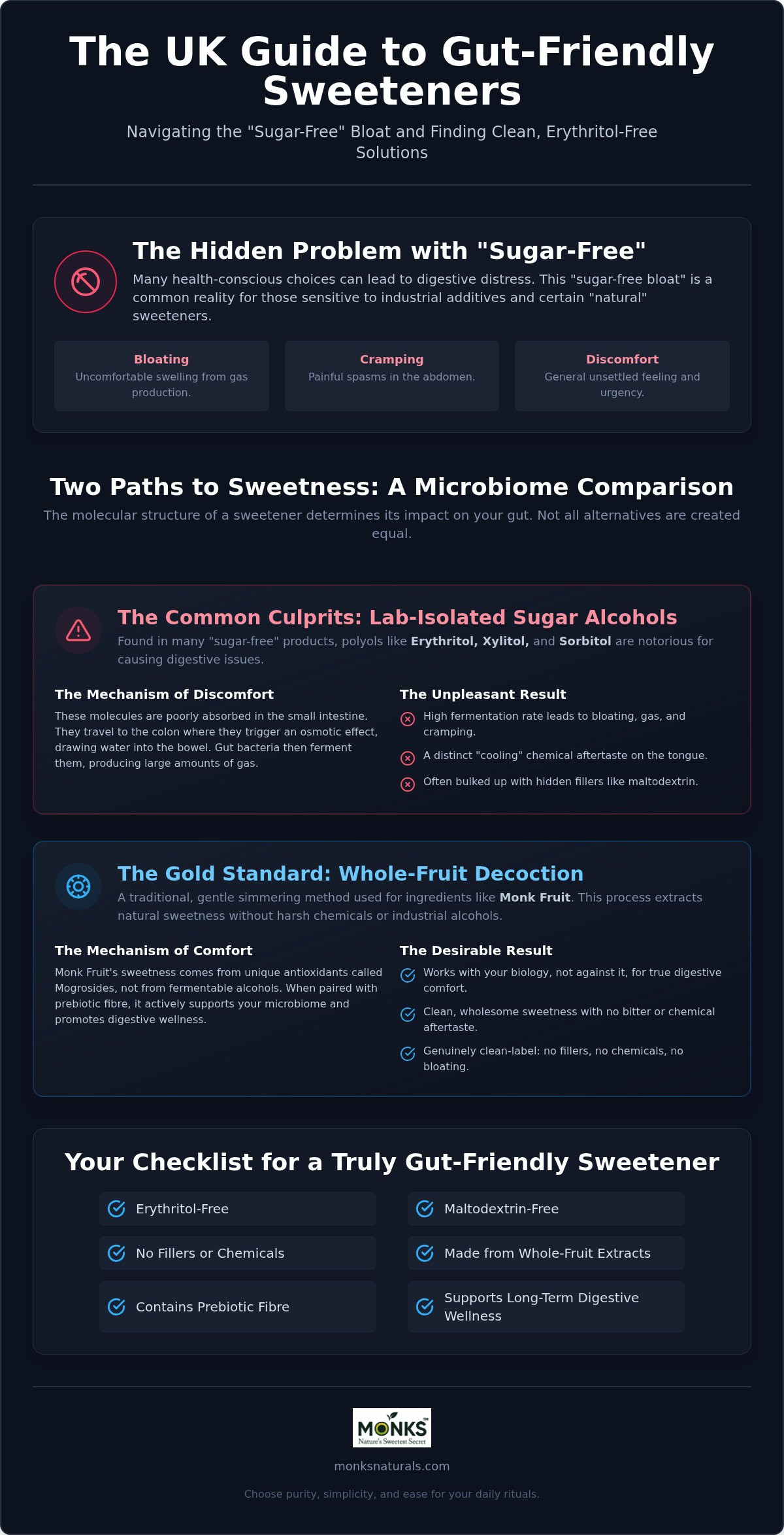
When you consume certain sugar alternatives, they often remain unabsorbed in the small intestine. These molecules reach the colon and draw water into the bowel through an osmotic effect. This process can lead to urgency and discomfort. Once there, gut bacteria begin to break them down. This fermentation process produces gas, leading to the familiar symptoms of bloating, cramping, and wind. Understanding What are prebiotics? helps clarify why some fibres support this process whilst others disrupt it. True gut health relies on balance.
Why the UK is Shifting Towards Erythritol-Free Options
British consumers are increasingly wary of sugar alcohols like erythritol and xylitol. Recent discussions around heart health and long-term microbiome diversity have sparked a movement toward cleaner labels. We want sweetness without the chemical aftertaste or the hidden fillers. There is a clear preference for an erythritol free sweetener UK residents can use daily without worry. This shift is about more than just avoiding calories. It's about choosing purity, simplicity, and ease.
Choosing a clean-label product means looking beyond the front of the packet. You deserve a solution that is keto-friendly, vegan, and free from maltodextrin. Your morning tea or porridge should be a moment of nourishment, not a trigger for digestive distress. By selecting a whole-fruit decoction, you avoid the harsh chemical solvents used in many mass-market alternatives. It's a more refined way to sweeten your life. No fillers. No chemicals. No bloating.
Sugar Alcohols vs. Whole Fruit Decoction: The Microbiome Impact
Not all sugar alternatives are created equal. The molecular structure of what you use to sweeten your tea determines how your body reacts. Polyols, such as xylitol and erythritol, are sugar alcohols. They possess a specific chemical architecture that the human digestive system often struggles to break down. In contrast, monk fruit contains mogrosides. These are unique antioxidants that provide intense sweetness without the caloric load or the structural baggage of industrial alcohols. Understanding these differences is the first step toward true digestive comfort.
Many people assume that "natural" labels guarantee gut-friendliness. This is a common myth. Xylitol is natural, yet it is highly fermentable and can be toxic to pets. A sophisticated prebiotic sweetener UK consumers can rely on must go beyond simple plant-based origins. It should actively support your internal ecosystem. By choosing a prebiotic sweetener UK specialists recommend, you ensure that your sweetening solution works with your biology, not against it.
The Problem with Polyols (Xylitol, Sorbitol, Erythritol)
Sugar alcohols are notorious for their high fermentation rates in the large bowel. Because they are only partially absorbed, they sit in the gut and become fuel for gas-producing bacteria. This often results in a distinct cooling effect on the tongue, a hallmark of lab-processed isolates. This sensation is a physical reminder that you are consuming a substance your body doesn't fully recognise. For a deeper look at avoiding these triggers, see our guide on a sugar alternative without bloating. Clean living shouldn't come with a side effect of discomfort.
The Benefit of Monk Fruit Decoction
Decoction is a traditional, gentle method of simmering whole fruit to extract its essence. This process is fundamentally different from the harsh chemical solvent extraction used for most stevia or erythritol blends. A recent review of sweeteners and gut microbiota suggests that how we process these ingredients matters for our long-term health. Because mogrosides are absorbed differently, they are less likely to undergo colonic fermentation. This reduces the risk of gas and bloating significantly.
When this decoction is paired with a carrier like soluble tapioca fibre, the benefits are doubled. This fibre acts as a prebiotic, providing a source of nourishment for beneficial gut flora. It is a functional, minimalist approach to wellness. No fillers. No chemicals. No cooling aftertaste. If you are ready to upgrade your morning routine, you might consider how a pure monk fruit extract fits into your kitchen. It is about making better choices, one cup at a time.
Comparing Popular UK Sweeteners for Digestive Comfort
Selecting the right sugar alternative in the UK requires looking past the front of the packet. Whilst many options claim to be natural, their impact on your digestive comfort varies wildly. Stevia is a popular plant-based choice, yet it often carries a lingering bitter aftertaste that many find unpleasant. Xylitol is frequently praised for its dental benefits, but it remains a calorie-dense sugar alcohol that can cause significant digestive issues if consumed in large quantities. For those seeking a prebiotic sweetener UK brands now offer more sophisticated, fruit-based alternatives that prioritise both flavour and gut health.
Recent research into the impact of artificial sweeteners on gut microbiome suggests that synthetic options may lead to dysbiosis. This makes the choice of filler just as important as the sweetener itself. Common bulking agents like maltodextrin are often derived from corn or wheat and can cause rapid spikes in blood sugar, potentially irritating the gut lining. A truly clean-label product avoids these hidden nasties entirely. It's about finding a balance that feels effortless and wholesome.
Stevia and the "Blended" Trap
Supermarket shelves in the UK are often filled with stevia products that are misleading. Many of these "natural" options are actually 99% erythritol or maltodextrin, with only a tiny fraction of stevia extract. These blends defeat the purpose of a gut-friendly diet by reintroducing the very sugar alcohols that cause bloating. Learning how to identify monkfruit without erythritol is essential for anyone with a sensitive stomach. Always check the ingredients list for "polyols" or "bulking agents" before you buy. Pure extracts should be the priority.
The Rise of Prebiotic Carriers
Modern wellness is shifting away from empty fillers towards functional ingredients. Soluble tapioca fibre is a superior alternative to dextrose or corn-based carriers. It provides a familiar, spoonable texture whilst acting as a source of nourishment for your beneficial gut bacteria. Using a high-quality prebiotic sweetener UK residents can trust allows for a seamless 1:1 sugar replacement in your kitchen. This is particularly useful for creating a keto baking sweetener without aftertaste. You can enjoy your favourite treats without the chemical cooling effect or the subsequent digestive distress. Simple. Clean. Wholesome.
How to Choose and Use Prebiotic Sweeteners in Your Daily Routine
The first step to a bloat-free kitchen is a simple cupboard audit. Take a moment to check the labels on your current "sugar-free" staples. If you find ingredients ending in "-itol", such as erythritol, xylitol, or sorbitol, you've likely found the source of your digestive distress. These sugar alcohols are common irritants that can disrupt your microbiome. Replacing them with a high-quality prebiotic sweetener UK residents can use daily is a small change that yields significant results. It's about choosing ingredients that feel familiar to your body.
Consistency is the secret to long-term gut health. You don't have to sacrifice the sweet flavours you enjoy to protect your digestion. By choosing a prebiotic sweetener UK specialists recommend, you can maintain a wholesome routine without the fear of sudden discomfort. Transitioning to better alternatives should feel like a quiet discovery, not a complex lifestyle overhaul. Focus on purity, simplicity, and ease. No fillers. No chemicals. No bloating.
Sweetening Your Morning Ritual
Your morning coffee, tea, or matcha should be a source of calm. For these delicate beverages, liquid extracts are often the superior choice. Monkfruit decoction Drops integrate effortlessly into both hot and cold liquids without altering the texture of your brew. Because they are highly concentrated, they provide intense sweetness without adding any fermentable bulk to your system. This makes them the cleanest way to sweeten your morning ritual whilst maintaining complete digestive peace. Just a few drops are all you need for a refined, clean taste.
Baking Without the Bloat
Adapting your favourite British bakes is straightforward with the right ingredients. When using a 1:1 spoonable powder, you can replace sugar directly in recipes for sponge cakes, biscuits, and even your morning porridge. It's helpful to monitor moisture levels, as fibre-based sweeteners can absorb liquid slightly differently than traditional granulated sugar. Soluble tapioca fibre helps maintain structural integrity without sugar. This functional fibre ensures your cakes have a soft crumb and a pleasant mouthfeel without the cooling aftertaste of erythritol. It's a mindful way to enjoy home cooking.
Making the switch to a cleaner lifestyle is a journey of better choices. By removing hidden fillers and artificial nasties from your diet, you allow your gut flora to thrive. If you're ready to refresh your kitchen staples, you can explore the full range of monk fruit extracts to find your perfect match. Embrace the ease of a bloat-free routine today. Simple. Clean. Wholesome.
Why MONKS Decoction is the Gold Standard for Gut Sensitivity
Choosing the right sweetener is about more than just avoiding sugar. It's about how that ingredient is made. MONKS stands apart by returning to traditional methods. We use a gentle, whole-fruit simmering process known as decoction. This technique extracts the natural sweetness of the fruit using only water. It avoids the harsh chemical solvents and industrial processing found in most mass-market extracts. By prioritising this traditional approach, we ensure that the final product remains as close to nature as possible. Simple. Clean. Wholesome.
Most competitors rely on lab-isolated mogroside V, a highly refined compound that lacks the complex profile of the whole fruit. Our decoction preserves the integrity of the monk fruit, providing a more balanced sweetness. This is why MONKS is the prebiotic sweetener UK families can trust for their daily needs. It's a sophisticated choice for those who value transparency and quality. When you choose a prebiotic sweetener UK experts recommend, you are investing in your long-term digestive comfort. No fillers. No chemicals. No bloating.
The MONKS Difference: Purity and Tradition
The taste profile of our extracts is intentionally refined. You won't find the strange, metallic bitterness of stevia or the distracting cooling effect of erythritol. Instead, you get a clean, rounded sweetness that enhances your food without overpowering it. Our Monkfruit decoction with soluble tapioca fibre Powder offers a premium, spoonable texture that fits seamlessly into your kitchen routine. It's the gold standard for those with sensitive systems. For your convenience, you can find our range at the Amazon UK shop for fast national delivery. Experience the ease of a truly clean, British-led brand.
Your Journey to a Happier Gut
We invite you to experience the difference for yourself. Try a 7-day trial of erythritol-free sweetening and monitor how your body responds. Many of our customers report a significant reduction in daily bloating and digestive noise within the first week. It's a quiet discovery that can change how you feel every morning. For a deeper look into our history and process, explore our pillar on monk fruit decoction. It's time to choose a sweetener that loves your gut back. Start your journey today with a product that prioritises your wellness. No artificial nasties. Just pure, fruit-based goodness.
Embrace a Wholesome, Bloat-Free Future
Your journey to a healthier microbiome begins with small, mindful changes in your kitchen. We've explored how lab-isolated sugar alcohols and hidden fillers like maltodextrin can disrupt your digestive peace. Choosing a high-quality prebiotic sweetener UK residents can rely on means prioritising purity over industrial convenience. By switching to a traditional whole-fruit decoction, you eliminate the chemical aftertaste and the uncomfortable cooling effect of erythritol.
Our erythritol-free formulation is designed for those who value both flavour and function. The inclusion of soluble tapioca fibre provides genuine prebiotic benefits, nourishing your gut flora whilst you enjoy your favourite tea or morning porridge. It's a simple, sophisticated upgrade to your daily ritual. You don't have to settle for digestive distress when nature offers such a refined solution.
Take the first step toward a lighter, more comfortable version of yourself today. Switch to a bloat-free lifestyle with MONKS Monk Fruit Decoction and feel the difference of a truly clean label. Your gut will thank you for the extra care. Simple. Clean. Wholesome.
Frequently Asked Questions
Is monk fruit sweetener actually good for gut health?
Monk fruit is a gentle choice for your gut because it doesn't feed harmful bacteria or cause rapid fermentation. Unlike sugar alcohols, it's absorbed in the small intestine, which prevents it from reaching the colon where bloating occurs. Choosing a high-quality prebiotic sweetener UK residents trust ensures you get the benefits of whole-fruit antioxidants. It's a clean, non-glycemic option that supports a balanced internal environment without the digestive distress found in synthetic alternatives.
Why does erythritol cause bloating and gas in some people?
Erythritol is a polyol that your body cannot fully digest. When it remains unabsorbed, it travels to the large intestine and draws water into the colon through an osmotic effect. This often leads to feelings of heaviness and urgency. Whilst it's less fermentable than other sugar alcohols, many people still experience sensitivity. Avoiding these isolates is the most effective way to prevent the "sugar-free bloat" that disrupts your daily routine.
What is the best sweetener for IBS sufferers in the UK?
For those managing IBS, a whole-fruit monk fruit decoction is often the most comfortable option. It's naturally low-FODMAP and lacks the fermentable bulk of polyols like xylitol or sorbitol. By selecting a prebiotic sweetener UK specialists recommend, you avoid common triggers that cause cramping and wind. It's about finding a solution that respects your sensitivity whilst allowing you to enjoy sweet flavours in your favourite morning tea or coffee without the fear of discomfort.
Can I use monk fruit with tapioca fibre if I am on a keto diet?
You can absolutely use monk fruit with tapioca fibre on a keto diet. Soluble tapioca fibre is a functional carbohydrate that doesn't cause the blood sugar spikes associated with maltodextrin or dextrose. It provides a source of nourishment for your gut flora whilst keeping your net carb count low. This combination is ideal for keto baking, as it maintains structural integrity without the chemical cooling effect of standard erythritol blends.
Does monk fruit sweetener contain any hidden sugar alcohols?
MONKS products are strictly erythritol-free and contain no hidden sugar alcohols. However, many mass-market brands in the UK blend monk fruit with polyols to reduce costs. You should always examine the nutritional table for "polyols" or "sugar alcohols". If the ingredient list includes anything ending in "-itol", it's not a pure extract. We prioritise a clean label to ensure your sweetening experience is entirely free from any hidden digestive irritants.
How does soluble tapioca fibre benefit the gut microbiome?
Soluble tapioca fibre acts as a mindful fuel source for your beneficial gut bacteria. It's a prebiotic that encourages the growth of healthy flora without the aggressive gas production often triggered by inulin. This fibre provides a smooth, spoonable texture to our powder whilst supporting regular bowel habits. It's a functional addition that turns a simple sweetener into a tool for long-term microbiome health and daily digestive comfort. Simple. Clean. Wholesome.
Is monk fruit safer for the gut than stevia?
Monk fruit is frequently better tolerated than stevia because it lacks the bitter aftertaste that can indicate heavy processing. Whilst stevia is a plant-based extract, it's almost always blended with erythritol or maltodextrin in UK supermarkets. These fillers are the primary cause of gut sensitivity. Pure monk fruit decoction offers a cleaner taste profile and a more predictable impact on your digestion, making it a more reliable choice for sensitive systems.
What should I look for on a UK label to ensure a sweetener is gut friendly?
Look for negative descriptors such as "erythritol-free" and "maltodextrin-free" on the packaging. You should avoid any ingredients ending in "-itol", as these are sugar alcohols known for causing bloating. A truly gut-friendly option will list whole-fruit extracts and functional prebiotic fibres like soluble tapioca fibre. Check for a clear 1:1 sugar replacement ratio, which indicates a well-balanced formulation designed for both flavour and digestive ease. No fillers. No chemicals. No bloating.


