

Have you ever wondered why your hot coffee suddenly feels like a menthol sweet on your tongue? It is a jarring experience that leaves many health-conscious tea drinkers asking: why does my sweetener taste cold? This phenomenon, often called the "keto chill," happens because most modern sugar substitutes rely on sugar alcohols that physically pull heat from your mouth. Instead of a comforting brew, you are left with a distracting, icy sensation that lingers long after the cup is empty.
It feels unfair to choose wellness only to lose the authentic flavour of your favourite drinks. You want a clean, gut-friendly alternative that does not cause bloating or ruin your baking with artificial aftertastes. This article explains the science of this cooling effect and introduces the traditional method of monk fruit decoction. You will learn how a simple, centuries-old simmering process creates a pure sweetness without the chemical chill. We will help you reclaim your morning ritual with a sweetener that tastes, feels, and acts just like sugar.
Key Takeaways
- Understand the science of the "Heat of Solution" and how certain sugar substitutes physically absorb warmth from your mouth.
- Discover why erythritol is the most common hidden filler in UK blends and the primary cause of the distracting "keto chill".
- Uncover the definitive answer to why does my sweetener taste cold and how to identify ingredients that preserve the heat of your coffee.
- Learn to choose gut-friendly bases like soluble tapioca fibre that provide a natural mouthfeel without the risk of bloating.
- Explore how traditional monk fruit decoction uses a gentle simmering method to deliver clean sweetness without any icy aftertaste.
What Causes the Cooling Aftertaste in Sweeteners?
The sensation of an icy breeze on your palate while sipping a hot brew is more than a trick of the mind. It is a tangible, physical event. When you ask why does my sweetener taste cold, you are actually identifying a literal drop in temperature on your tongue. This sensation, which often spreads to the throat, is known as a cooling aftertaste. Unlike traditional sugar, which dissolves without altering the thermal energy of your drink, certain substitutes actively change the environment of your mouth.
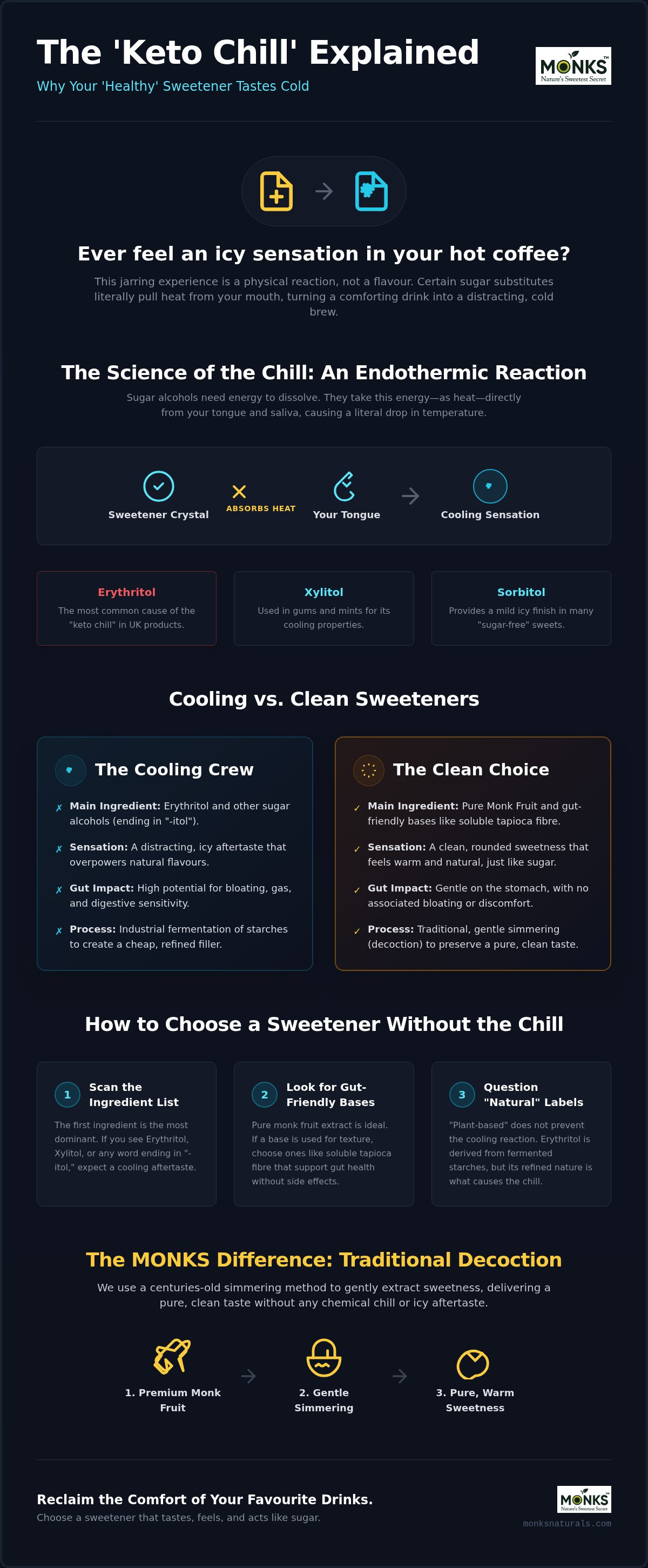
The primary reason for this involves three common sugar alcohols:
- Erythritol: The most frequent cause of the "keto chill" in UK products.
- Xylitol: Often found in chewing gums and mints for its cooling properties.
- Sorbitol: Used in many "sugar-free" sweets, providing a mild icy finish.
These substances differ significantly from sucrose. Sugar is thermally neutral on the palate. It adds sweetness without demanding energy. In contrast, sugar alcohols are endothermic. They require heat to dissolve; they take that heat directly from your body. This is why your coffee might taste sweet, but your tongue feels like it has just touched an ice cube.
The Science of the Endothermic Reaction
The cooling effect of erythritol is rooted in its crystalline structure. To break these crystals down, the substance must absorb energy. As the sweetener meets your saliva, it "steals" heat from your taste buds to facilitate the dissolving process. This creates a genuine, measurable chill. Even in a steaming cup of tea, the reaction is powerful enough to be felt instantly. Many people mistake this for a minty or "chemical" flavour, yet it is actually a thermodynamic process. Your brain interprets this rapid loss of heat as a cold, tingling sensation. It is a physical reaction rather than a simple flavour profile.
Why "Plant-Based" Labels Can Be Deceiving
You might see "natural" on the packaging and assume the product will behave like fruit. However, being plant-derived does not prevent a chemical cooling reaction. Most erythritol in the UK is produced through the fermentation of starches, resulting in a highly refined isolate. This white powder lacks the rounded, wholesome profile of whole-fruit extracts. Many brands rely on these agents because they are cheap and provide bulk for baking. If you have ever wondered why does my sweetener taste cold despite the "natural" label, the answer lies in this industrial processing. These fillers are designed for volume, not for a clean, comforting taste.
The Erythritol Myth: Why Your "Clean" Sweetener Feels Chilly
Many "clean label" products on UK supermarket shelves hide a chilly secret. If you have ever checked the back of a monk fruit pouch and seen erythritol listed as the first ingredient, you have found the reason why does my sweetener taste cold. Brands often use this sugar alcohol as a bulk filler because it is inexpensive and provides a texture similar to granulated sugar. However, this industrial convenience comes at a significant cost to both flavour and digestive comfort.
Erythritol is not a neutral carrier. It brings a sharp, icy sensation that can easily overpower the delicate notes of your morning tea or coffee. Beyond the distracting taste, scientific studies on sweeteners highlight that sugar alcohols often cause digestive upset. For many people, even a small serving leads to bloating, gas, or general gut sensitivity. To avoid the "keto chill," start scanning your labels for any ingredient ending in "-itol." These are the primary culprits behind that artificial coldness.
The Problem with Bulk Fillers
Most commercial sweeteners are designed to be "spoonable." To achieve a one-to-one ratio with sugar, manufacturers add bulk fillers like maltodextrin or erythritol. These additives do more than just add volume; they dilute the authentic, complex sweetness found in natural fruits. They transform a potentially pure product into a highly processed blend. If you want to experience sweetness without the side effects, looking for an erythritol free sweetener UK is the first step toward a more refined and comfortable pantry.
Busting the "Zero Aftertaste" Marketing Claim
We have all seen the "no bitter aftertaste" promise on colourful packaging. In many cases, this is a clever distraction. While the product might lack the metallic tang associated with some stevia extracts, it simply replaces it with a cooling aftertaste. When you ask why does my sweetener taste cold, the answer is often found in these hidden agents used to mask poor quality extracts. This "keto chill" alters the mouthfeel of your bakes, making a warm sponge cake feel strangely cold on the tongue.
A better path exists. By choosing a whole-fruit monk fruit decoction, you move away from lab-isolated white powders and toward a traditional, simmered extract. This method preserves the natural sweetness of the fruit without the need for icy fillers or gut-irritating chemicals. It is the difference between a processed substitute and a genuine, wholesome ingredient that respects your palate.
Cooling vs. Clean: A Comparison of Sugar Alternatives
Choosing a sugar substitute is often a trade-off between health goals and sensory pleasure. While many focus solely on the calorie count, the physical experience on the tongue is what truly defines a high-quality alternative. If you have ever wondered why does my sweetener taste cold, you are likely noticing the stark difference between various plant-based and fermentation-derived options. Not all sweeteners are created equal; their chemical structures dictate whether they feel like a warm hug or an icy blast.
To understand the landscape, we can rank common alternatives based on their sensory impact. A scientific comparison of sugar alcohol demonstrates that erythritol and xylitol sit at the top of the "chill" scale. Stevia sits lower for cooling but higher for bitterness. Monk fruit decoction remains the outlier, offering a neutral thermal profile that closely mimics the behaviour of traditional sugar.
Mouthfeel is equally vital for a satisfying experience. Many sugar alcohols provide a thin, watery texture that lacks the "body" of sugar. This is why selecting a sugar alternative without bloating often involves looking for natural bases like soluble tapioca fibre. This ingredient provides the necessary bulk and rounded mouthfeel without triggering the endothermic reaction or digestive distress associated with polyols.
Stevia: The Bitter Alternative
Stevia is widely available but remains a divisive choice. It often leaves a persistent metallic or liquorice-like lingering taste that can be difficult to mask. This happens because stevia interacts with both your sweetness and bitterness receptors simultaneously. In delicate drinks like matcha or white tea, this bitterness can easily overwhelm the subtle floral notes of the leaves. It provides sweetness, but it lacks the clean finish required for a truly premium brew.
Monk Fruit: The Neutral Champion
Pure monk fruit stands apart because it derives its sweetness from mogrosides, not sugar alcohols. These antioxidants provide a natural, warm sweetness that integrates seamlessly into both hot and cold recipes. Because it does not rely on an endothermic reaction to dissolve, it never leaves you asking why does my sweetener taste cold. For those seeking a refined pantry, consulting a guide on monkfruit without erythritol is essential. It ensures you are getting the whole-fruit benefits without the icy fillers that ruin the flavour of home-baked treats and morning rituals.
How to Choose a Sweetener Without the "Chill"
Reclaiming your favourite flavours shouldn't feel like a chemistry experiment. If you are tired of asking why does my sweetener taste cold, it is time to simplify your pantry. You can avoid the "keto chill" by following a few clear, practical steps. These choices ensure your morning tea remains comforting and your home-baked treats taste exactly as intended. By focusing on purity and traditional methods, you can enjoy a sweet life without the icy distractions.
- Step 1: Eliminate "-itols". Scan your ingredient labels for erythritol, xylitol, or sorbitol. These sugar alcohols are the primary sources of thermal distraction in your drinks.
- Step 2: Prioritise soluble tapioca fibre. Look for this as a natural base. It provides a smooth mouthfeel and gentle sweetness without the icy aftertaste or digestive upset.
- Step 3: Choose decoction over extract. Traditional simmering creates a fuller, rounder flavour profile. It captures the essence of the fruit rather than just a lab-isolated chemical.
- Step 4: The hot liquid test. Stir a small amount into hot water. If the liquid feels cold on your tongue despite the steam, it contains hidden cooling agents.
Best Options for Coffee and Tea
Liquid sweeteners are often the best choice for your daily brew. They integrate instantly, leaving no gritty residue or unappealing oily film on the surface of your cup. Many low-quality drops use artificial thickeners that coat the tongue, but pure monk fruit decoction drops avoid this entirely. They maintain the warmth and integrity of your drink, allowing the natural notes of your coffee beans or tea leaves to shine. It is a clean, effortless way to enjoy your morning ritual without any lingering chemical taste.
Baking Without the Cooling Effect
Baking with sugar alcohols often leads to a strange crunch or a cold sensation in cakes once they have cooled. This happens because erythritol recrystallises as the sponge reaches room temperature. To achieve a soft, moist texture, you need a 1:1 spoonable replacement that mimics the physical properties of sugar. Using a Monkfruit decoction with soluble tapioca fibre Powder is an ideal solution for keto baking. It provides the necessary bulk for structure whilst keeping your sponges light, warm, and delicious. You no longer have to choose between your health goals and a slice of cake that actually tastes like cake.
Discover a better way to sweeten your day. You can explore the MONKS collection to find a truly clean, heat-stable alternative for your kitchen.
The MONKS Difference: Traditional Decoction for a Clean Taste
The solution to an icy aftertaste isn't found in a laboratory. It is found in tradition. At MONKS, we use a gentle simmering method to extract sweetness from the whole fruit. This process, known as decoction, preserves the natural complexity and warm profile of monk fruit. It is a stark contrast to the highly processed, lab-isolated white powders found in most UK supermarkets. By choosing a method that respects the ingredient, we ensure you never have to ask why does my sweetener taste cold again.
Our approach prioritises purity, transparency, and flavour. We don't rely on chemical shortcuts. Instead, we offer a premium sugar-like experience that feels right in your morning coffee. This is the MONKS difference. It is sweetness, refined. It is a commitment to quality over quantity. It is the secret to a better routine.
From Whole Fruit to Spoonable Powder
Maintaining the fruit's natural colour and complexity is essential. Our powder combines this rich decoction with soluble tapioca fibre. This creates a gut-friendly mouthfeel that mimics the body of sugar without the bloating associated with erythritol or maltodextrin. Our "Clean Label" promise is simple. We exclude hidden fillers, artificial cooling agents, and bitter extracts. You get a product that is keto-friendly, vegan, and genuinely delicious. It is designed for those who value what is absent just as much as what is included.
- No erythritol chill.
- No maltodextrin spikes.
- No digestive discomfort.
Join the Clean Sweetening Movement
Transitioning your kitchen to a cooling-free environment is a simple act of self-care. It starts with replacing industrial blends with whole-food alternatives. There is a profound psychological benefit to enjoying a treat that actually tastes like one. When your sweetener behaves like sugar, your wellness journey feels less like a chore and more like a ritual. It is time to reclaim your palate and enjoy the warmth of a truly natural choice. If you have been wondering why does my sweetener taste cold, the answer is usually found in the processing. MONKS offers a path back to purity.
Ready to master the art of clean sweetness? Explore our Monk Fruit Decoction Guide to learn more about this traditional method and how it fits into your daily life.
Reclaim Your Morning Ritual
You now understand the science of the "keto chill." It is a physical reaction, not a flaw in your palate. When you ask why does my sweetener taste cold, the answer lies in the crystalline structure of sugar alcohols that pull heat from your mouth. By removing these additives, you can enjoy the comforting warmth of your coffee and the soft texture of your home baking once again. You no longer have to settle for a distracting, icy finish in your favourite treats.
It is time to transition to a cleaner pantry. You can switch to MONKS: The UK’s Cleanest Erythritol-Free Sweetener to experience the difference. Our process relies on traditional whole fruit decoction. It is entirely free from erythritol and maltodextrin. We use gut-friendly soluble tapioca fibre to ensure a smooth, rounded mouthfeel in every cup. This approach respects the integrity of your ingredients whilst supporting your wellness goals.
Embrace a better way to sweeten your life. You deserve a daily routine that feels as good as it tastes. Start your journey toward a warmer, more natural sweetness today.
Frequently Asked Questions
Why does erythritol taste like mint or feel cold?
Erythritol feels cold because it has a high negative heat of solution. This means it physically absorbs energy from your tongue to dissolve. It is an endothermic reaction that creates a genuine drop in temperature. While people often describe it as a minty flavour, it is actually a physical sensation. This is the most common reason why people ask why does my sweetener taste cold when using supermarket blends.
Is there a keto sweetener that does not have a cooling aftertaste?
Yes, monk fruit decoction provides a clean sweetness without any cooling sensation. Unlike sugar alcohols, it is thermally neutral and doesn't require heat from your mouth to dissolve. This makes it ideal for keto and vegan diets. It offers a warm, sugar-like experience in both hot drinks and cold recipes. By choosing a product free from erythritol and xylitol, you can enjoy your favourite treats without the distracting "keto chill."
Does monk fruit have a cooling effect like xylitol?
Pure monk fruit does not have a cooling effect. Xylitol is a sugar alcohol that triggers a physical temperature drop on the palate. In contrast, monk fruit derives its sweetness from mogrosides, which are antioxidants. These compounds provide a natural, stable flavour profile. If your "monk fruit" sweetener feels cold, it likely contains hidden xylitol or erythritol fillers. Always check the label for ingredients ending in "-itol" to ensure a clean taste.
What is the best sweetener for coffee that doesn’t change the temperature sensation?
Monk fruit decoction drops are the best choice for coffee. They integrate instantly into hot liquids without altering the thermal sensation. Because they are erythritol-free, they don't cause the icy aftertaste that ruins a warm brew. These drops provide a rounded, domestic sweetness that complements coffee beans perfectly. They leave no oily film or gritty residue. It is a simple, effective way to maintain the integrity and warmth of your morning ritual.
Why does my sweetener cause bloating and gas?
Most sugar alcohols, including erythritol and xylitol, are not fully absorbed by the body. They travel to the large intestine where they ferment, often leading to bloating, gas, and digestive upset. This is a common side effect of "spoonable" supermarket blends that use polyols as bulk fillers. Choosing a sweetener with soluble tapioca fibre provides a gut-friendly alternative. It offers the same bulk and texture without the risk of uncomfortable digestive sensitivity.
Can I bake with monk fruit without it tasting "fake" or cold?
You can bake delicious treats without any "fake" or cold aftertaste by using monk fruit decoction powder. The key is to avoid blends containing erythritol, which recrystallises and feels icy in cooled cakes. A powder made with soluble tapioca fibre maintains a soft, moist crumb and a warm mouthfeel. It behaves like traditional sugar in the oven. Your sponges will stay light, your biscuits will stay crisp, and the flavour will remain authentic.
Is stevia or monk fruit better for avoiding a bitter aftertaste?
Monk fruit is significantly better for avoiding a bitter aftertaste. Stevia often leaves a persistent metallic or liquorice-like lingering flavour that can be difficult to mask. This happens because stevia triggers both sweetness and bitterness receptors. Monk fruit decoction offers a much cleaner, more neutral profile. It provides a deep, natural sweetness that integrates seamlessly into delicate flavours like matcha or white tea. It is the refined choice for a truly sugar-like experience.
What should I look for on a label to avoid the cooling effect?
To avoid the cooling effect, you should scan the ingredients list for anything ending in "-itol." Erythritol, xylitol, and sorbitol are the primary culprits. Instead, look for "monk fruit decoction" and "soluble tapioca fibre." These indicate a traditional, clean-label product. If you are still wondering why does my sweetener taste cold, checking for these hidden polyols is the first step. Prioritising whole-fruit extracts ensures a premium, thermally neutral sweetness in every dish.


