

What if your search for a healthier brew is actually masking the delicate, floral notes of your favourite tea? Many of us want to reduce our sugar intake, yet we find that most healthy sugar alternatives for tea come with a heavy price. You might be familiar with that sharp metallic tang, the strange cooling sensation, or the digestive bloating that often follows a "natural" swap. It's frustrating when a simple wellness choice feels like a compromise on flavour and comfort.
You deserve a daily ritual that is clean, transparent, and genuinely nourishing. This article explores how to achieve a perfectly balanced sweetness that supports stable blood sugar without the hidden fillers or artificial additives found in mass-market blends. We will preview five premium options that deliver a smooth profile and a refined finish. Discover the secrets to a guilt-free cup that tastes exactly as nature intended, allowing you to sip, relax, and thrive. It is time to simplify your routine, elevate your standards, and enjoy the purity of a well-made brew.
Key Takeaways
- Identify the "teaspoon trap" and learn how small daily choices impact your long-term wellness and energy levels.
- Evaluate the most popular healthy sugar alternatives for tea to avoid the metallic aftertastes and digestive bloating of artificial blends.
- Discover how traditional decoction methods preserve whole-fruit flavour without the bitter notes or cooling effects of common extracts.
- Learn to pair specific sweeteners with your favourite blends to complement everything from robust black teas to delicate greens.
- Identify hidden additives like maltodextrin and erythritol to ensure your daily ritual remains simple, pure, and gut-friendly.
What are Healthy Sugar Alternatives for Tea?
Healthy sugar alternatives for tea are plant-based, low-glycemic options that provide sweetness without the disruptive blood sugar spikes. These choices focus on purity. They offer a way to enjoy your daily brew whilst maintaining stable energy levels. Unlike baking, where sugar influences texture and volume, tea requires a sweetener that disappears into the liquid without altering the mouthfeel or masking the tea's character. It is about finding a balance that is clean, pure, and transparent.
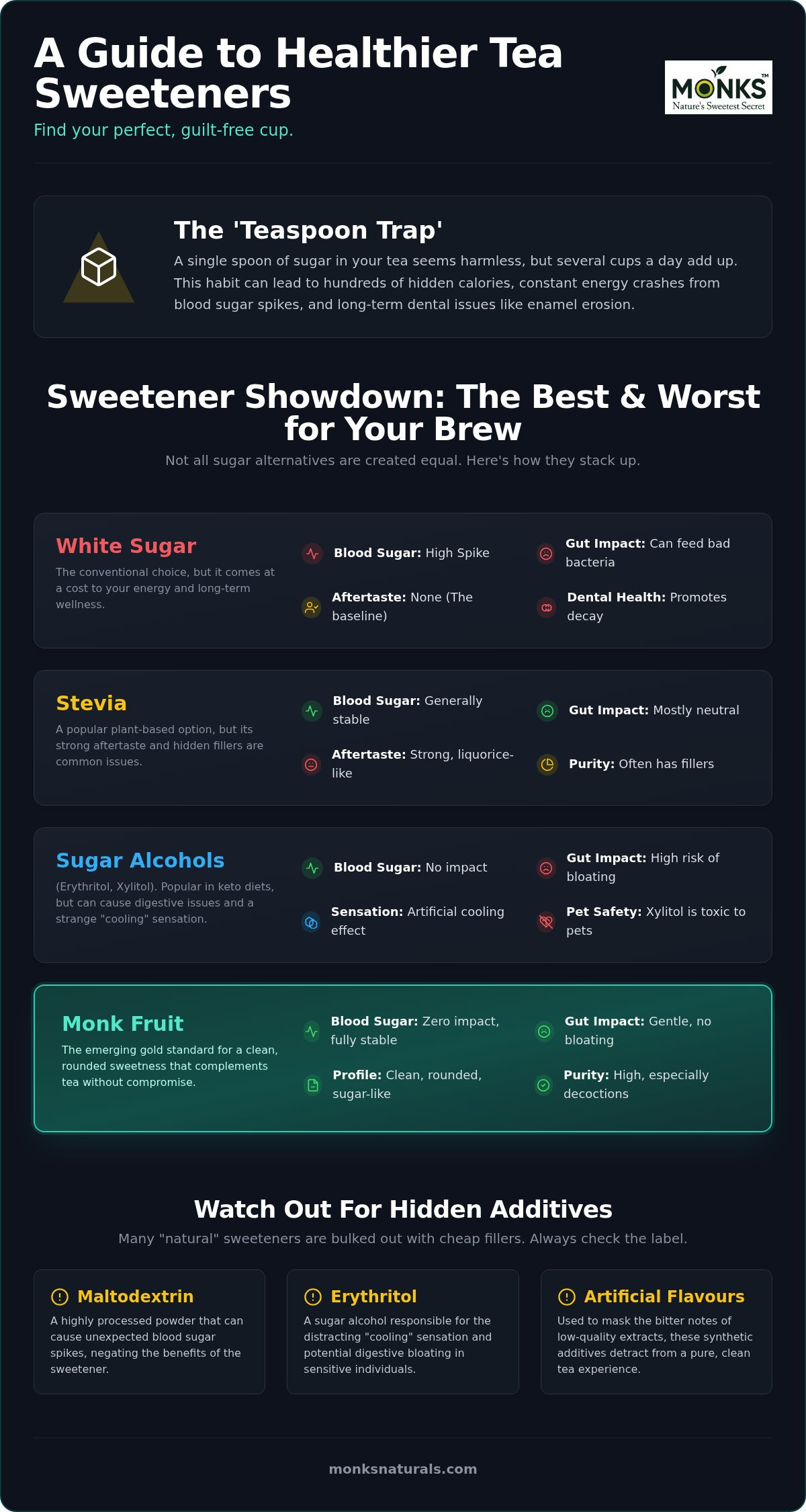
Many tea drinkers fall into the "teaspoon trap". A single spoon of sugar seems harmless. However, when multiplied by three or four cups throughout the day, the cumulative effect is significant. This habit introduces hundreds of hidden calories and constant insulin fluctuations into an otherwise healthy routine. Choosing the right alternative means looking at how a sweetener behaves in hot water. You must distinguish between bulk sweeteners, like xylitol, which require a 1:1 ratio, and high-intensity sweeteners like monk fruit that provide potent sweetness in concentrated amounts. It's a simple shift that protects your energy, your teeth, and your long-term health.
The Problem with Traditional White Sugar
White sugar is a simple carbohydrate that hits the bloodstream fast. This causes a rapid rise in insulin, followed by a sharp crash. This "afternoon slump" often happens just an hour after your tea break, leaving you tired and craving more. For the regular tea drinker, the risks are also physical. Frequent sipping of sugary tea creates an acidic environment in the mouth. This leads to enamel erosion, dental sensitivity, and plaque buildup. Refined sugar is a cycle of energy crashes, dental concerns, and hidden calories. Moving away from it is the first step toward a more mindful ritual.
Natural vs. Artificial: Making the Right Choice
Artificial sweeteners like aspartame and saccharin are falling out of favour. They often carry a bitter, chemical aftertaste that ruins a delicate Darjeeling or a light Green tea. Modern tea drinkers prefer plant-based options that feel closer to nature. Stevia, Monk Fruit, and Yacon syrup have become the preferred healthy sugar alternatives for tea because they offer a cleaner profile. A clean label sweetener is one that is entirely free from synthetic fillers, artificial flavours, or lab-isolated chemicals. By choosing transparent ingredients, you ensure your daily ritual remains a genuine moment of wellness. No fillers. No chemicals. No spikes.
Comparing the Best Natural Sweeteners for Your Brew
Finding the right balance in your cup is a delicate process. Whilst many products claim to be healthy sugar alternatives for tea, few actually preserve the integrity of the leaves. Most options on the high street focus solely on calorie reduction. They ignore the sensory experience of the brew itself. To choose wisely, you must understand how different sweeteners interact with heat and tannins.
Stevia: The Common Contender
Stevia is a well-known plant-based choice amongst healthy sugar alternatives for tea. It is incredibly sweet, yet it often fails the tea test. The primary issue lies in the steviol glycosides. These compounds interact poorly with tea tannins, especially in black teas. This reaction creates a sharp, liquorice-like aftertaste that lingers unpleasantly. Most supermarket stevia isn't pure, either. It's frequently bulked with maltodextrin or dextrose. These hidden fillers can cause the very blood sugar spikes you're trying to avoid. Dosing is another hurdle. Because stevia is so potent, achieving a subtle sweetness in a single cup of Earl Grey is nearly impossible without overdoing it.
Sugar Alcohols: Erythritol and Xylitol
Sugar alcohols are common in keto circles. Erythritol is popular because it's calorie-free. However, it possesses a unique physical property called a high negative heat of solution. In simple terms, this creates a "cooling effect" on the tongue. When you sip a hot cup of tea, the erythritol makes it feel strangely cold. It's a confusing sensation that clutches at the back of the throat. Xylitol offers a more traditional sugar taste, but it comes with a warning. It is notorious for causing digestive distress. Bloating, gas, and discomfort are common after your second cup. Xylitol is also famously toxic to pets, making it a risky addition to a busy household. For a more settled stomach, many are switching to clean monk fruit blends that skip these alcohols entirely.
Monk fruit is emerging as the 2026 gold standard for clean sweetness. It provides a complex, rounded profile that mirrors sugar without the metallic or bitter baggage. It doesn't ferment in the gut, so the bloating associated with xylitol is absent. It's a transparent choice for those who value both flavour and physical comfort. By choosing a whole-fruit approach, you protect the delicate notes of your brew whilst supporting your wellness goals.
Why Monk Fruit Decoction is the Ultimate Tea Companion
The secret to a perfect cup lies in the method of preparation. Whilst most healthy sugar alternatives for tea rely on harsh chemical processing, monk fruit offers a more traditional path. At MONKS, we use a traditional Chinese simmering method known as decoction. This process involves gently heating the whole fruit in water to release its natural sweetness. It is a slow, mindful approach that respects the ingredient. The result is a clean, liquid sweetness that integrates seamlessly into any brew, from a robust breakfast tea to a delicate herbal infusion.
Choosing a decoction over a standard extract changes the entire sensory experience. Many mass-market sweeteners feel thin or artificial on the palate because they only use isolated mogrosides. By contrast, a whole-fruit decoction maintains a complex, rounded profile. It provides a depth of flavour that mirrors the mouthfeel of traditional sugar. It's a transparent, premium choice for those who refuse to settle for the chemical aftertastes of the past. For a deeper look at this process, explore our Monk Fruit Decoction: The Traditional Guide.
Decoction vs. Extract: A Flavour Revolution
Isolated mogrosides often taste "thin" or chemical because they lack the natural supporting compounds of the fruit. This is why some extracts leave a sharp, lingering sensation that clashes with the tannins in your tea. Decoction preserves the fruit’s natural essence through gentle simmering. This creates a "clean" finish that doesn't overstay its welcome on your palate. Your tea remains the star of the show. You enjoy the sweetness without the distraction of a synthetic coating or a metallic tang. It's about enhancing your favourite blend, not masking it.
Gut-Friendly Sweetening with Tapioca Fibre
Texture matters just as much as taste. To create a "spoonable" powder that mimics the ritual of using sugar, we use soluble tapioca fibre. This ingredient serves a dual purpose. It provides the familiar crystalline structure you expect, whilst offering significant prebiotic benefits. Unlike erythritol, which can cause digestive distress and bloating after just a few cups, tapioca fibre is gentle on the system. It supports gut health whilst you enjoy your daily ritual.
This commitment to purity means you won't find any maltodextrin or artificial fillers in our blends. It is a simple, effective way to include more fibre in your diet without compromising on the quality of your brew. Learn more about how we balance flavour and function in The Ultimate Guide to Monk Fruit with Tapioca Fibre. By switching to a fibre-based sweetener, you're choosing a ritual that is as kind to your body as it is to your taste buds.
The Tea Pairing Guide: Choosing the Right Alternative
Tea is a nuanced beverage. A robust Assam demands a different approach than a light Silver Needle. When selecting healthy sugar alternatives for tea, you must consider the profile of the leaf. Sweetness should enhance, not dominate. It should lift the notes of the brew without introducing a chemical shadow. It's about finding the perfect partner for your favourite blend.
Sweetening Your Morning Black Tea
Black teas like English Breakfast are bold and tannic. They require a sweetener that can stand up to a splash of milk. Our Monkfruit decoction powder is the ideal choice here. The soluble tapioca fibre provides a "spoonable" experience that mirrors the ritual of traditional sugar. It adds a rounded mouthfeel that makes milky tea feel satisfying and complete. Use a simple 1:1 ratio to replace your usual spoonful. For the best results in milky brews, add the powder before the milk. Stir gently. Watch it dissolve perfectly, leaving behind only clean, transparent sweetness. It's a simple way to elevate your daily ritual with a premium, clean-label alternative.
Enhancing Green and Matcha Teas
Delicate greens and whites require a lighter touch. High-intensity sweeteners like stevia often clash with green tea catechins. This creates a sharp, bitter edge that ruins the floral notes of a high-quality matcha. Monkfruit decoction Drops are the superior choice for these fragile blends. They provide a neutral sweetness that brightens the tea whilst remaining invisible. These drops are also perfect for cold-brewed teas as they integrate instantly without heat. Use them to:
- Brighten fresh peppermint or spearmint.
- Soften the earthy notes of ceremonial matcha.
- Elevate iced citrus infusions and berry blends.
Herbal infusions benefit from this purity too. You can enhance the natural fruitiness of a blend without adding "fake" chemical flavours. The goal is a brew that feels wholesome, refreshing, and entirely guilt-free. By matching the right sweetener to your specific tea, you preserve the integrity of the leaf and the joy of the ritual. Your tea should be a moment of quiet discovery, not a compromise on flavour.
Switching to MONKS: The Cleanest Choice in the UK
MONKS is the UK’s leading brand for erythritol-free monk fruit. We provide a solution for those who seek healthy sugar alternatives for tea without the chemical baggage of mass-market products. Our commitment is simple. No maltodextrin. No artificial flavours. No synthetic chemicals. By focusing on traditional decoction, we preserve the integrity of the fruit whilst supporting sustainable, whole-fruit processing. It is a choice that respects your body, your palate, and the planet. This is sweetness as nature intended.
Our products are designed for versatility. Whilst they are the perfect companion for your morning brew, they also excel in keto-friendly baking and home cooking. They stand up to heat. They maintain their flavour. They won't let you down. By choosing a whole-fruit approach, you avoid the "thin" sweetness of lab-isolated extracts. You get a rounded, complex profile that enhances everything from a simple cuppa to a refined dessert. It's about quality over quantity and transparency over hype.
The MONKS Difference: Purity You Can Taste
Our flagship product, the Monkfruit decoction with soluble tapioca fibre Powder, is designed specifically for the British tea ritual. It offers the familiar "spoonable" texture of sugar without the digestive distress of sugar alcohols. It dissolves easily. It tastes clean. It feels right. For on-the-go tea drinkers, our Monkfruit decoction Drops provide the same premium sweetness in a portable, liquid format. They are perfect for travel, office breaks, or dining out. You can easily find MONKS on Amazon to start your journey toward a cleaner brew today.
Join the Clean Sweetening Movement
Changing your habits doesn't have to be a chore. Start by replacing one teaspoon of sugar at a time. This gentle approach helps recalibrate your palate to appreciate the subtle, rounded notes of natural fruit sweetness. You'll soon find that the cloying, heavy taste of refined sugar is no longer what you crave. Our blends are an effortless way to integrate better choices into your daily routine without a complex lifestyle overhaul. They are professional, trustworthy, and deeply integrated into a modern, health-forward lifestyle.
If you are ready to commit to a sugar-free lifestyle, The Monks Set offers the ultimate starter kit. It combines our versatile powder and convenient drops, allowing you to experience the full range of clean sweetening in one elegant bundle. It is time to simplify your routine, elevate your standards, and embrace a more mindful way of sipping. Explore the full MONKS range and discover the refined secret to a better, more wholesome daily brew.
Elevate Your Daily Brew with Pure Sweetness
Your tea ritual should be a moment of quiet discovery and genuine comfort. We have explored how the right choices can transform your cup, moving away from the bitter aftertastes of stevia and the digestive bloating of sugar alcohols. By understanding how different sweeteners interact with delicate tannins, you can finally enjoy a brew that is both healthy and delicious. It's about prioritising purity, transparency, and flavour in every sip.
When searching for healthy sugar alternatives for tea, remember that the method of preparation is just as important as the ingredient itself. MONKS is the UK’s leading monk fruit brand, offering a traditional whole-fruit decoction that is entirely free from erythritol and maltodextrin. This slow, mindful process ensures a rounded profile that complements your favourite leaves without masking their natural essence. It is a simple, effortless way to support your wellness goals whilst maintaining the joy of a well-made brew.
It's time to simplify your routine and embrace a cleaner standard. Upgrade your tea ritual with MONKS clean monk fruit and experience the difference that traditional quality makes. Sip, relax, and thrive with a sweetness you can trust.
Frequently Asked Questions
Is monk fruit the healthiest sweetener for tea?
Monk fruit is a premier choice because it's a low-glycemic, plant-based option that doesn't cause blood sugar spikes. Unlike honey or maple syrup, it contains zero calories and zero sugar. This makes it one of the most effective healthy sugar alternatives for tea for those managing weight or insulin levels. It provides a clean, rounded sweetness without the harsh chemical processing found in synthetic alternatives, ensuring your daily ritual remains pure and transparent.
Does monk fruit have an aftertaste in hot drinks?
High-quality monk fruit decoction doesn't have the bitter or metallic aftertaste associated with stevia or saccharin. The traditional simmering method used by MONKS preserves the fruit's natural essence, resulting in a smooth, clean finish. It integrates seamlessly into hot tea without the sharp, liquorice-like notes that can ruin a delicate brew. You enjoy a pure, transparent sweetness that lets the natural flavour of your favourite tea leaves shine through without any distraction.
Can diabetics use monk fruit sweetener in their tea?
Monk fruit is an excellent choice for diabetics as it has a glycemic index of zero. It doesn't impact blood sugar or insulin levels, allowing for a guilt-free tea ritual. Because our powder uses soluble tapioca fibre instead of maltodextrin, you avoid the hidden carbohydrate spikes often found in supermarket blends. It's a safe, reliable, and transparent way to enjoy sweetness whilst maintaining stable health markers throughout your busy day.
Why is MONKS better than supermarket stevia?
MONKS offers a superior experience because it's entirely free from erythritol and maltodextrin. Most supermarket stevia products are bulked with these fillers, which can cause digestive issues or blood sugar fluctuations. Our traditional decoction method delivers a complex, rounded sweetness that doesn't clash with tea tannins. You get a premium, clean-label product that prioritises your gut health and the delicate flavour profile of your favourite British brew, unlike mass-market chemical options.
Does monk fruit cause bloating like erythritol?
Pure monk fruit decoction doesn't cause the bloating, gas, or digestive distress often linked to sugar alcohols like erythritol and xylitol. These polyols can ferment in the gut, leading to discomfort after just a few cups. By using soluble tapioca fibre in our powder, we provide a prebiotic benefit that's gentle on the stomach. It's a mindful choice for those with sensitive digestion who want a comfortable daily routine without any physical compromise.
How much monk fruit should I use to replace one teaspoon of sugar?
Our Monkfruit decoction with soluble tapioca fibre Powder is designed for a simple 1:1 replacement. You can use exactly one teaspoon of powder to replace one teaspoon of traditional white sugar. This makes the transition effortless for your morning routine. If you prefer our liquid drops, just two or three drops are usually enough to match the sweetness of a standard spoonful, allowing you to customise your brew perfectly without any guesswork or complicated measurements.
Is monk fruit vegan and keto-friendly?
All MONKS products are 100% vegan and keto-friendly. We use no animal-derived ingredients or refined sugars, making our blends suitable for plant-based lifestyles. Since monk fruit contains zero net carbohydrates, it fits perfectly into a ketogenic or low-carb diet. It's a versatile, inclusive option that supports various wellness goals whilst ensuring your daily tea remains a moment of pure, uninterrupted enjoyment. It's a simple way to integrate better choices into any modern lifestyle.
Can I use monk fruit powder in herbal teas?
Monk fruit powder is ideal for herbal infusions like peppermint, chamomile, or hibiscus. It dissolves quickly and provides a neutral sweetness that enhances fruitiness without adding "fake" chemical flavours. Because it lacks the bitter aftertaste of other healthy sugar alternatives for tea, it won't mask the subtle botanical notes of your blend. It's a simple way to elevate your evening caffeine-free ritual with a clean, transparent finish that respects the integrity of the herbs.


