

Your morning matcha ritual should be a moment of pure, vibrant calm, not a battle against a metallic aftertaste or a sudden spike in health concerns. Recent 2026 clinical evidence has linked common sugar alcohols like erythritol to increased cardiovascular risks, leaving many wellness enthusiasts searching for a safer, cleaner path. You already know that the wrong choice can ruin a premium bowl of tea, replacing delicate umami notes with a distracting cooling sensation or a bitter, chemical finish.
Finding the right sugar free sweetener for matcha shouldn't feel like a compromise between flavour and function. This guide helps you discover how to perfectly sweeten your latte whilst avoiding gut-disrupting additives and the metallic bite of stevia. You'll learn how traditional monk fruit decoctions provide a gut-friendly, keto-compatible solution that blends seamlessly into your daily routine. We'll examine the best options for 2026, focusing on purity, mouthfeel, and the science of a perfectly balanced brew.
Key Takeaways
- Learn why premium matcha requires a subtle touch to preserve its complex umami and vegetal profile.
- Discover how to select a sugar free sweetener for matcha that avoids the metallic bitterness of stevia or the cooling effect of erythritol.
- Master the art of preparation to ensure your sweetener integrates seamlessly without altering the creamy texture of your latte.
- Explore advanced mixology tips to pair natural sweetness with botanicals like ginger and vanilla for a refined daily ritual.
- Understand the importance of choosing clean, filler-free ingredients that support your gut health whilst maintaining ketosis.
Why Finding the Right Sugar Free Sweetener for Matcha is Essential
Matcha is a nuanced experience. It offers a unique profile of deep umami, fresh vegetal notes, and a characteristic hint of bitterness. Adding standard white sugar often masks these delicate layers, turning a sophisticated drink into a one-dimensional treat. Conversely, choosing a poor sugar free sweetener for matcha can introduce clashing chemical notes that linger unpleasantly on the tongue.
The ultimate goal of your daily ritual is to harness the "calm focus" provided by L-theanine. You want the sustained energy without the jittery spike or the inevitable afternoon crash. For many, this means searching for a way to soften the tea's natural edge whilst keeping the ingredient list clean. You shouldn't have to choose between a delicious beverage and your long-term health goals. A well-chosen sugar free sweetener for matcha bridges this gap perfectly.
The Delicate Balance of Umami and Bitterness
The healthy bitterness in Japanese green tea comes from catechins, specifically EGCG. These powerful antioxidants define the tea's character and provide numerous health benefits. A refined sweetener should round out these sharp corners rather than burying them under a blanket of artificial flavour. The British palate increasingly favours natural, subtle sweetness that respects the integrity of the base ingredient. It's about enhancing, balancing, and elevating the tea. Referencing a comprehensive overview of sugar substitutes reveals how different molecules interact with our taste receptors, often with varying degrees of success when paired with delicate botanicals like green tea.
The Pitfalls of High-Glycaemic Sweeteners
Even "natural" options like honey or agave syrup can disrupt your progress. They carry a high glycaemic load that triggers insulin spikes, which is counterproductive for those following a ketogenic lifestyle or managing diabetic health. In 2026, UK wellness enthusiasts are moving away from these hidden sugars in favour of transparent, functional alternatives. A perfect solution should be:
- Gentle on the gut.
- Stable for blood sugar.
- Pure in flavour.
This shift towards sugar-free living is more than a trend; it's a commitment to purity and clarity. By choosing a high-quality sweetener, you maintain a state of ketosis whilst enjoying the full sensory experience of your favourite brew. It's a simple, effective way to refine your routine without compromise.
Comparing Popular Sugar-Free Options for Green Tea
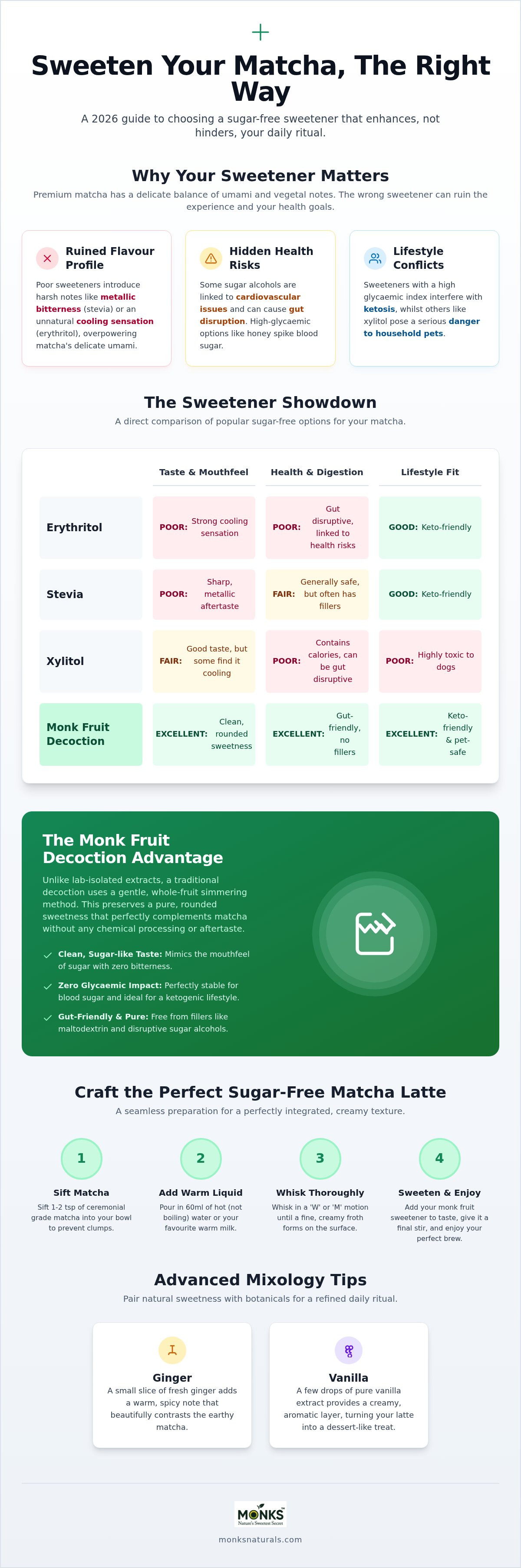
Selecting a sugar free sweetener for matcha requires more than just checking for zero calories. You need a profile that respects the delicate balance of L-theanine and catechins. Many common alternatives fail because their chemical structure competes with the tea's natural aromatics. For instance, stevia is a frequent choice, but its high-purity glycosides often leave a sharp, metallic bitterness on the back of the throat. This lingering note can easily overwhelm the subtle sweetness found in high-grade ceremonial powders.
Xylitol is another option, yet it remains less than ideal for the modern wellness routine. It contains more calories than other non-nutritive substitutes and poses a significant risk to household pets. If you share your living space with dogs, the presence of xylitol in your kitchen requires constant vigilance. For those seeking a truly seamless experience, the search usually narrows down to erythritol or monk fruit.
Why Erythritol and Matcha Do Not Mix
Erythritol is widely used as a bulking agent, but it possesses a physical property that ruins a warm latte. When it dissolves, it creates an endothermic reaction. This produces a noticeable "cooling" sensation in the mouth, similar to the effect of mint but without the flavour. This icy finish clashes aggressively with the comforting warmth of a whisked tea. It distracts the palate and numbs the very taste buds meant to detect the tea's umami depth.
Beyond the taste, many find that sugar alcohols lead to digestive discomfort. You can read more about these effects in our Erythritol-Free Sweetener UK guide. Avoiding these synthetic fillers is essential for maintaining a calm, happy gut whilst enjoying your daily ritual.
The Monk Fruit Decoction Advantage
Traditional monk fruit decoctions offer a superior path. Unlike lab-isolated extracts that rely on chemical processing, a decoction involves a gentle, whole-fruit simmering method. This process captures the mogrosides in their most natural form. The result is a clean, rounded sweetness that mimics the mouthfeel of traditional sugar without the glycaemic impact. It's an ideal sugar free sweetener for matcha because it contains:
- No maltodextrin.
- No artificial fillers.
- No bitter aftertaste.
This "clean label" approach ensures your morning ritual remains pure. It allows the tea to shine whilst providing the perfect level of sweetness. For a reliable reference on safety, you can consult the FDA information on sweeteners to understand how these ingredients are regulated. If you're ready to elevate your tea, consider exploring a traditional monk fruit decoction for your next bowl.
How to Prepare the Perfect Sugar-Free Matcha Latte
The ritual of preparing tea is as important as the ingredients themselves. Achieving a smooth, creamy texture requires a methodical approach that respects the delicate nature of the powder. Many people make the mistake of using boiling water, which scorches the tea and creates a bitter profile that even the best sugar free sweetener for matcha cannot fully fix. Aim for water around 80°C to preserve the vibrant green colour and the complex L-theanine profile.
Choosing your milk alternative is the final piece of the puzzle. Oat milk provides a natural creaminess that pairs beautifully with monk fruit, whilst almond milk offers a lighter, nuttier finish. Understanding the health facts about sugar substitutes ensures that your choice of base and sweetener work together to support your metabolic health without compromising on the sensory experience.
Step-by-Step: The Whisking Method
Start by sifting 1 to 2 grams of ceremonial matcha into your bowl. This simple step removes clumps and ensures a velvet-like consistency. Add a small splash of 80°C water and use a bamboo whisk to create a thick, smooth paste. This is the ideal moment to incorporate your monk fruit sweetener powder or liquid drops. Adding them now allows for complete dissolution before the rest of the liquid is introduced.
Once your base is whisked into a frothy "koicha" or thin "usucha", gently pour in your steamed plant-based milk. If you prefer your latte cold, whisk the matcha with room-temperature water first. Pour this over ice before adding cold milk to maintain a clean, layered appearance. This method ensures the sweetener is evenly distributed, avoiding the "gritty" bottom often found in poorly mixed drinks.
Ratios for Different Matcha Grades
The amount of sweetener you need depends heavily on the grade of tea you use. Ceremonial grade matcha is naturally sweeter and more delicate. It often requires only a few drops of liquid monk fruit to balance the flavour. Culinary grade matcha has a bolder, more vegetal bite. It benefits from a more generous serving of spoonable powder to round out the stronger tannins.
- Ceremonial Grade: Use 2 to 3 drops of liquid decoction to enhance the natural umami.
- Culinary Grade: Use half a teaspoon of powder to balance the robust, grassy notes.
- Iced Preparations: Sweetness is often perceived less intensely when cold. You might need a slightly higher ratio for iced lattes compared to hot ones.
Adjusting these ratios allows you to customise your drink to your specific palate. It's a process of quiet discovery. You'll soon find the exact balance that makes your morning routine feel like a refined secret shared with yourself.
Advanced Tips for Sugar-Free Matcha Mixology
Matcha is a versatile foundation for your daily wellness ritual. It serves as the perfect base for sophisticated, sugar-free drinks that go far beyond the standard latte. When you select a high-quality sugar free sweetener for matcha, you unlock a world of creative possibilities. You can craft beverages that feel like a refined indulgence whilst supporting your health goals. It's about moving from a simple drink to a functional, flavourful experience.
Experiment with botanicals to enhance the tea's natural profile. Freshly grated ginger provides a sharp, warming contrast to the matcha's earthy grassiness. A drop of pure vanilla bean paste adds a creamy, aromatic depth that feels luxurious. These additions work in harmony with monk fruit to create a complex profile. Ginger warms, vanilla deepens, and monk fruit provides the perfect balance.
Boosting the Froth with Tapioca Fibre
Texture is just as important as taste in a premium beverage. Soluble tapioca fibre plays a functional role in your drink's architecture. It acts as a clean stabiliser for the micro-foam, creating a thick, resilient froth that stays stable until the last sip. This is particularly beneficial for keto or "bulletproof" matcha recipes where fats and tea must emulsify perfectly. You can explore the science behind this in our guide on monk fruit with tapioca fibre. It's a transparent, filler-free choice that enhances mouthfeel without the need for synthetic thickeners, gums, or chemical additives.
Sugar-Free Matcha Beyond the Latte
Don't limit your tea to the morning mug. Use a liquid decoction to create sugar-free matcha cocktails with a modern twist. A matcha-infused gin and tonic or a "skinny" matcha martini benefits from the clean sweetness of monk fruit drops. These drinks offer a refreshing alternative for evening socialising without the sugar-induced headache the following morning.
In the kitchen, matcha is a functional powerhouse. It's easy to whisk a few drops of liquid decoction into raw energy balls or morning chia puddings. The drops are incredibly efficient for on-the-go use. They require no stirring and leave no grit, making them ideal for flavouring a cold bottle of water or a quick protein shake. This flexibility allows you to integrate the benefits of green tea into every part of your day effortlessly. If you're ready to expand your repertoire, explore our pure monk fruit collection to start your mixology journey.
The MONKS Difference: Elevating Your Matcha Ritual
At MONKS, we believe your daily brew deserves a sweetener that respects the heritage of the tea leaf. We don't see sweetness as an additive to hide the tea; we see it as a partner to elevate the experience. Our philosophy is rooted in minimalist clarity and a refusal to compromise on purity. By providing a truly sugar free sweetener for matcha that is entirely free from erythritol and maltodextrin, we ensure your drink remains as nature intended. Clean. Transparent. Wholesome.
As a British brand, we're dedicated to helping you navigate the complexities of modern wellness with ease. We avoid the high-pressure tactics of the high street. Instead, we offer a refined solution for those who value quality over quantity. Our focus is on transparency, allowing you to integrate better habits into your morning routine without it feeling like a chore or a complex overhaul.
Why We Avoid Lab-Isolated Extracts
Most commercial alternatives rely on aggressive chemical processing to isolate sweet compounds. We take a different path. Our process involves a traditional monk fruit decoction, which uses a gentle simmering method. This captures the whole-fruit essence. It retains the natural mogrosides. It eliminates the bitter, chemical aftertaste found in lab-made extracts. By supporting an independent British brand, you're choosing a product that prioritises flavour integrity and gut health over industrial efficiency.
Finding Your Perfect Matcha Partner
Choosing between our formats depends on your specific tea ritual. Our spoonable powder, blended with soluble tapioca fibre, is the ideal sugar free sweetener for matcha lattes. It builds a stable foam. It adds a creamy mouthfeel. It dissolves effortlessly into warm milk alternatives. For those who prefer a thin ceremonial tea or need a solution for travel, our pure liquid drops offer a minimalist approach. They provide instant sweetness with zero residue.
We encourage you to experiment with your ratios. Start small. Taste the tea. Find your personal sweet spot. Upgrading your morning routine doesn't require a lifestyle overhaul. It simply requires better ingredients. If you're ready to experience the difference that purity makes, explore our collection and transform your next bowl of matcha into a moment of true calm focus.
Refine Your Daily Ritual
Your morning tea should be a source of pure, vibrant energy. Selecting the right sugar free sweetener for matcha allows you to enjoy that delicate umami profile without the distraction of a chemical aftertaste or the cooling sensation of erythritol. By choosing traditional decoctions over lab-isolated extracts, you protect your gut health whilst maintaining a state of calm focus. You now have the tools to master whisking techniques and temperature control to preserve the tea's integrity.
Our traditional decoction method delivers a pure, rounded flavour that mimics sugar perfectly. It's erythritol-free, keto-friendly, and vegan-certified for a cleaner wellness routine. You don't have to sacrifice flavour for health. It's time to refine your experience and discover how simple, high-quality ingredients transform a simple drink into a sophisticated ritual. Discover the perfect matcha partner at MONKS. We look forward to being part of your journey toward a more mindful, delicious morning.
Frequently Asked Questions
Is monk fruit the best sweetener for matcha lattes?
Monk fruit is widely considered the superior sugar free sweetener for matcha because its clean profile respects the tea's natural umami. Unlike stevia, it doesn't introduce a metallic bite. Traditional decoctions, such as those produced by MONKS, avoid the chemical processing of lab extracts. This ensures your latte remains smooth and balanced. It's an ideal choice for those who want a premium, filler-free experience that complements high-grade ceremonial powders perfectly.
Does monk fruit sweetener have a bitter aftertaste in tea?
Traditional monk fruit decoctions don't carry the bitter aftertaste often associated with synthetic sweeteners. Most bitterness in alternative sweeteners comes from lab-isolated extracts or the addition of fillers like stevia. By using a gentle simmering method, MONKS maintains the fruit's natural sweetness. This process ensures your tea tastes exactly as nature intended. It provides a rounded mouthfeel that enhances the green tea's vegetal notes rather than competing with them for attention.
Can I use monk fruit drops in cold matcha?
You can certainly use monk fruit drops in cold matcha preparations. Liquid drops are actually the preferred choice for iced lattes because they integrate instantly into cold liquids. Unlike granulated alternatives, they won't leave a gritty residue at the bottom of your glass. Just whisk your matcha into a paste with a little room-temperature water first. Then, add your drops and cold milk for a perfectly smooth, refreshing beverage that stays sweet until the final sip.
Will using a sugar-free sweetener break my intermittent fast?
Pure monk fruit decoctions are non-nutritive and don't trigger a significant insulin response; this means they won't break your intermittent fast. This makes it an excellent sugar free sweetener for matcha if you enjoy a morning bowl during your fasting window. Since MONKS products are free from maltodextrin and other high-glycaemic fillers, you can maintain your metabolic state. It's a simple way to enjoy your daily ritual whilst supporting your weight management or longevity goals.
Is monk fruit safe for diabetics who drink matcha?
Monk fruit is a safe and effective option for diabetics as it has a zero glycaemic index. It doesn't cause blood sugar spikes, allowing you to manage your glucose levels whilst enjoying a sweetened beverage. Because MONKS avoids sugar and honey, our decoctions provide the necessary sweetness without the metabolic burden. It's a mindful choice for anyone monitoring their insulin levels. Always consult your healthcare provider if you're making significant changes to your dietary routine.
Why does my sugar-free matcha latte not froth properly?
A lack of stable froth is often caused by the absence of soluble fibre in your sweetener. Many sugar-free alternatives don't provide the structural support needed for a resilient micro-foam. MONKS spoonable powder includes soluble tapioca fibre, which acts as a natural stabiliser for your milk or plant-based alternative. This ensures your latte maintains a creamy, thick head of foam. Using the correct whisking technique at 80°C also helps create the perfect velvet-like texture you desire.
How much monk fruit powder equals one teaspoon of sugar in matcha?
Our spoonable powder is designed to be a simple 1:1 replacement for traditional sugar. One teaspoon of MONKS powder provides the same level of sweetness as one teaspoon of white sugar. This makes it incredibly easy to adapt your favourite recipes without complex calculations. If you're using our pure liquid drops, the concentration is much higher. Usually, just two or three drops are enough to equal the sweetness of a full teaspoon of sugar in your matcha.
Is erythritol-free monk fruit better for my gut health?
Choosing an erythritol-free option is significantly better for your digestive comfort. Sugar alcohols like erythritol are known to cause bloating, gas, and other gut-disrupting issues in many people. By opting for a clean, filler-free decoction, you avoid these unpleasant side effects. MONKS focuses on purity, ensuring our products are gentle on the system. It's a superior choice for wellness enthusiasts who prioritise gut health whilst seeking a refined, natural way to sweeten their daily tea.


