

The "zero-calorie" label on your favourite drink might be a deceptive guide for your metabolic health. Whilst these products promise a guilt-free window, many actually trigger the insulin response you are trying to avoid. Choosing the wrong sweetener for intermittent fasting can stall autophagy, cause bloating, and disrupt your progress before the day has even begun. It's a common frustration that turns a healthy habit into a confusing chore.
You deserve the benefits of a clean fast without sacrificing the small rituals that make your morning bright. It's exhausting to decode labels that hide erythritol, maltodextrin, or artificial fillers behind "natural" branding. This article reveals the science of fasting-safe sweetness and explains why whole fruit decoction protects your metabolic health. We will explore how to enjoy sweetened drinks, avoid gut discomfort, and support your long-term weight loss goals. Discover how to maintain a fast that is clean, transparent, and effortlessly sustainable.
Key Takeaways
- Prioritise insulin stability over calorie counting to maintain a truly clean fast.
- Choose a metabolic-safe sweetener for intermittent fasting to protect autophagy and ensure consistent results.
- Eliminate digestive discomfort by avoiding common bulkers like erythritol and maltodextrin during your window.
- Use Monkfruit decoction Drops to enhance your morning coffee whilst keeping your fast metabolically neutral.
- Rely on traditional simmering methods for a transparent, clean label alternative to processed artificial sweeteners.
The 'Zero Calorie' Fallacy: Does Sweetener Break a Fast?
The logic seems simple: no calories, no problem. If a drink contains zero energy, it cannot possibly interrupt your progress. This "zero calorie" fallacy is the most common reason people fail to see the results they expect. Breaking a fast isn't solely defined by the intake of energy. It's defined by your body's hormonal response, specifically the activation of insulin and mTOR.
Fasting is a period of metabolic repair. When insulin levels drop, your body switches from storing energy to burning it. It also triggers autophagy, the cellular "spring clean" that keeps you healthy. Even if a substance has no calories, it can still spike insulin. This stops fat burning instantly. Many common sugar substitutes found in high-street shops are guilty of this metabolic disruption.
Choosing the right sweetener for intermittent fasting is about finding metabolic neutrality. You want a taste that satisfies without sending a signal to your pancreas. This is the difference between a clean fast and a dirty fast. Whilst a dirty fast might keep calories low, it often keeps insulin high, preventing you from reaching your true potential.
Understanding Metabolic vs Digestive Fasting
Your body is a master of prioritising resources. During a fast, your liver works to deplete glycogen stores so you can access body fat. This process is delicate. Some sweeteners are processed by the liver or trigger digestive enzymes. This signals to your brain that food is coming. Even if no calories arrive, the digestive machinery starts to hum. This can lead to a premature end to your metabolic fasted state. To stay in a deep fast, you must maintain three key states:
- Glycogen depletion: The body clears out stored sugar.
- Fat oxidation: The switch to burning body fat for fuel.
- Autophagy: The cellular repair and renewal process.
Why the Dirty Fast Might Be Stalling Your Progress
A dirty fast often involves "sneaky" ingredients. Many powdered sweeteners use maltodextrin as a bulking agent. This filler has a glycaemic index higher than table sugar. It causes a sharp insulin spike that ruins your progress. Artificial options often trigger the brain's reward centre, leading to intense hunger pangs and cravings later in the day. Clean fasting is a state of zero insulin provocation.
Beyond Calories: How Sweeteners Affect Insulin and Autophagy
Autophagy is the ultimate goal for many fasters. It's a cellular cleanup process where the body recycles old or damaged proteins. This process is highly sensitive to insulin. Even a small rise in insulin levels can halt autophagy instantly. Choosing a specific sweetener for intermittent fasting is about more than just avoiding calories. It's about protecting your cellular progress and maintaining metabolic integrity.
Traditional Monkfruit decoction is uniquely suited for this. Unlike lab-isolated mogroside extracts, which are often stripped of their natural context, a decoction is made by simmering the whole fruit. This traditional method preserves the fruit's integrity. It provides a clean, rounded sweetness without the aggressive chemical processing found in many FDA-approved sweeteners. By choosing a decoction, you are opting for a product that aligns with the body's natural rhythms.
Our Monkfruit decoction with soluble tapioca fibre Powder offers an additional benefit for your routine. Soluble tapioca fibre acts as a prebiotic. It supports gut health during your fasting window without triggering a glycaemic response. It provides the bulk needed for your favourite recipes without the metabolic cost of sugar or the digestive upset common with sugar alcohols. This makes it a gentle, effective choice for those transitioning away from high-sugar diets.
The Cephalic Phase Insulin Response (CPIR) Explained
Can the mere taste of sweetness break your fast? Some research suggests that the brain, sensing sweetness on the tongue, signals the pancreas to release insulin in anticipation of sugar. This is known as the Cephalic Phase Insulin Response. Whilst some artificial sweeteners are notorious for this, pure monk fruit is considered low-risk. Its unique mogrosides don't seem to trigger this anticipatory insulin spike in the same way. This makes it a safer, more reliable choice for those committed to a clean fast. It allows you to enjoy a hint of sweetness without the fear of stalling your fat-burning progress.
Autophagy and the Role of Pure Monk Fruit Decoction
Mogrosides are the active compounds in monk fruit. They interact with cellular signalling pathways in a way that respects the fasted state. They don't activate the mTOR pathway, which is the growth switch that opposes autophagy. Avoiding erythritol is also vital during this time. Many brands blend monk fruit with sugar alcohols, but these can cause gut bloating and disrupt the digestive rest that fasting provides. A pure decoction ensures your system stays quiet, calm, and focused on repair.
For a deeper look into our process, read our Monk Fruit Decoction: The Traditional Guide to see how we maintain this purity. Explore our full range at monksnaturals.com to find the right companion for your morning ritual.
Comparing Fasting-Friendly Sweeteners: Monk Fruit vs the Rest
Finding a suitable sweetener for intermittent fasting amongst the supermarket shelves often feels like a chemistry test. Most UK shops stock sucralose, stevia, or erythritol blends. Whilst these are marketed as healthy, they often carry hidden costs for your gut and metabolism. Sucralose, one of the most common FDA-approved artificial sweeteners, is entirely synthetic. It can alter your gut microbiome and disrupt the very balance you are trying to achieve through fasting.
Many people notice a distinct, icy "cooling effect" when using mass-market sugar alternatives. This sensation is a hallmark of erythritol. It signals a highly processed, lab-created product rather than something found in nature. At MONKS, we consciously exclude erythritol from our range. We want to prevent the bloating and digestive disruption that often ruin the peaceful state of a fast. Purity is our priority. Transparency is our promise.
The difference lies in the method. Most brands use harsh chemical solvents to extract sweetness. We use a traditional simmering process. This whole fruit decoction preserves the natural essence of the monk fruit. It results in a clean, sophisticated flavour profile. It lacks the metallic aftertaste of stevia or the synthetic sweetness of sucralose. It simply fits into your life.
Why Erythritol and Stevia Can Sometimes Disrupt a Fast
Sugar alcohols like erythritol can be particularly harsh on an empty stomach. They often have a laxative effect, causing sudden urgency or discomfort during your fasting window. This is far from the restorative experience fasting should be. Stevia presents its own challenges. Many "pure" stevia powders are actually bulked with dextrose or maltodextrin to make them spoonable. These fillers spike blood glucose and end your fast immediately. For a truly safe option, consult our Erythritol-Free Sweetener UK Guide to understand what to avoid.
The Clean Label Advantage of Whole Fruit Decoction
A whole fruit decoction respects your metabolic health. It provides sweetness without the chemical baggage. This traditional method ensures the final product is transparent, pure, and effective. A clean aftertaste makes your morning rituals more sustainable. You don't have to fight against bitter or cloying flavours. By avoiding fillers, you protect your blood glucose levels. You maintain your fast. You reach your goals.
How to Safely Organise Your Fasting Window with Sweeteners
Integrating a sweetener for intermittent fasting requires a thoughtful approach to timing and format. It isn't just about what you use. It's about how you introduce it into your daily rituals. To maintain a truly clean fast, your goal is to satisfy the palate whilst keeping the metabolic machinery quiet. Start small. Be consistent. Stay pure. By following a structured approach, you can enjoy your favourite drinks without the fear of stalling your progress.
The transition from refined sugar to monk fruit usually takes about seven days. During this first week, your taste buds are recalibrating. You might find that you need fewer drops as the days progress. This is a sign of your palate becoming more sensitive and your insulin levels stabilising. Avoid the temptation to over-sweeten. Instead, use just enough to soften the edges of your morning brew.
Best Practices for Coffee, Tea, and Matcha
Liquid drops are the gold standard for the morning ritual. They dissolve instantly. They leave no residue. They don't require aggressive stirring. For those who find black coffee or strong English breakfast tea too abrasive whilst fasting, our Monkfruit decoction Drops provide a gentle solution. They soften the bitter tannins without adding calories or triggering an insulin response. This makes your fasting window feel like a choice rather than a chore.
Matcha drinkers should exercise similar care. High-quality matcha has a delicate, umami profile that can be easily overwhelmed by synthetic sweeteners. A few drops of pure monk fruit decoction enhance the natural sweetness of the tea. For more specific whisking tips and preparation methods, read our guide on the Best Sugar-Free Sweetener for Matcha. It helps you maintain the antioxidant benefits whilst enjoying a smoother flavour.
Timing Your Sweetness: Fasted vs Fed States
Distinguishing between your fasted and fed states helps you choose the right product for the moment. Use the Monkfruit decoction Drops during your deep fasting hours. They provide pure sweetness with zero metabolic footprint. As you approach the final hour of your fast, you might experience hunger waves or energy dips. A sweetened herbal tea can help you navigate this period with ease. Monk fruit helps stabilise energy levels whilst fasting by providing sensory satisfaction without the subsequent insulin crash.
Once you break your fast, you can transition to our Monkfruit decoction with soluble tapioca fibre Powder. This is perfect for your eating window, whether you are sweetening a bowl of Greek yoghurt or baking a keto-friendly treat. The soluble fibre supports your gut health whilst you refuel. To stay successful, avoid these three common mistakes:
- Using "natural" blends that contain hidden maltodextrin or dextrose.
- Adding "just a splash" of milk or cream, which contains fast-breaking lactose.
- Relying on sugar alcohols that cause digestive bloating during a fast.
Ready to elevate your fasting routine with minimalist purity? Explore the Monks range and discover the difference of traditional decoction.
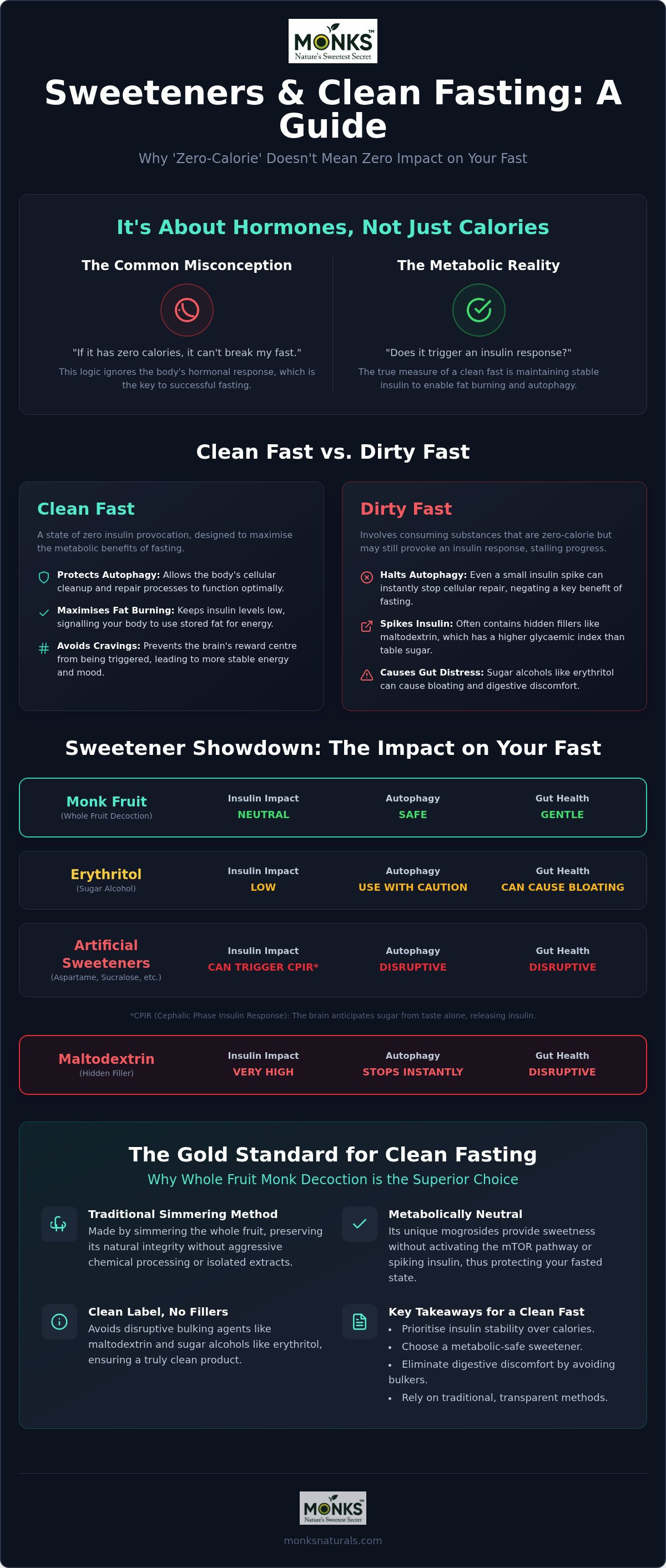
Why MONKS Monk Fruit is the Gold Standard for Clean Fasting
Choosing MONKS is a commitment to a lifestyle that values quality over quantity. It is more than a sugar substitute. It is a mindful wellness tool designed for those who refuse to compromise on their metabolic health. Our traditional simmering method ensures that every drop and spoon of our sweetener for intermittent fasting respects your body's natural state. We believe in transparency. We believe in purity. We believe in the ease of better choices.
By opting for a whole fruit decoction, you are embracing a refined secret used for centuries. This method avoids the harsh chemical solvents and aggressive processing found in mass-market alternatives. It results in a product that feels premium yet accessible. It is a simple addition to your daily routine that delivers maximum efficiency without the metabolic noise of artificial additives. Your fast remains clean. Your progress remains protected.
No Erythritol, No Fillers, No Fast-Breaking Spikes
The UK health community is shifting away from highly processed sugar alcohols for a reason. Erythritol and maltodextrin, whilst common, often cause the very bloating and insulin spikes that fasters work so hard to avoid. We remain dedicated to a clean label. Our products contain no hidden fillers. No cooling aftertaste. No synthetic chemicals. This commitment to traditional Chinese methods ensures your digestive system stays at rest whilst you enjoy a moment of sweetness.
Our spoonable powder is specifically formulated with soluble tapioca fibre. This provides a prebiotic benefit that supports your gut health without disrupting your fast. It is the ideal companion for those transitioning from high-sugar diets who need a reliable 1:1 replacement during their eating window. To understand the science behind this unique blend, explore The Ultimate Guide to Monk Fruit with Tapioca Fibre. It is your roadmap to a cleaner, more sustainable sweetening experience.
Liquid Drops vs Powder: Which Fits Your Routine?
Every faster has unique needs. Our Monkfruit decoction Drops are the ultimate "clean fast" companion for your morning black coffee or herbal tea. They offer minimalist clarity. They dissolve instantly. They provide sweetness without substance. For your baking, cooking, or afternoon snacks, the Monkfruit decoction with soluble tapioca fibre Powder offers the versatility you need to maintain your results whilst enjoying your favourite recipes.
The Monks Set is the perfect way to begin this journey. It provides both the Drops and the Powder, allowing you to curate your habits with ease. You can manage your fasting window with the drops and transition seamlessly to the powder during your fed state. This dual approach ensures you are supported throughout the entire day. It makes wellness feel like a ritual rather than a chore. Ready to upgrade your kitchen? You can Shop the MONKS range on Amazon or visit us at monksnaturals.com to start your cleaner fasting journey today.
Master Your Metabolic Window
Intermittent fasting is a journey of refinement. It requires looking beyond the simple calorie count to understand how your body responds to every taste. By choosing a sweetener for intermittent fasting that respects your insulin levels, you protect the delicate process of autophagy. You maintain your progress. You support your long-term health. A clean fast doesn't have to be a struggle; it simply requires the right tools to keep your routine sustainable and enjoyable.
The transition to a cleaner lifestyle starts with transparency. Traditional whole fruit decoction offers a sophisticated alternative to lab-isolated extracts and synthetic fillers. It provides the cleanest taste in the UK without the cooling aftertaste or digestive discomfort of sugar alcohols. You can enjoy your morning rituals whilst keeping your metabolic machinery quiet and focused on repair. It's about making better choices that feel effortless and natural.
Embrace a fast that is effective, comfortable, and erythritol-free for zero bloating. You deserve a routine that fits seamlessly into your daily life. Start your clean fasting journey with the MONKS range and discover the power of minimalist purity. Your body will thank you for the clarity, and your palate will thank you for the discovery. Keep going; your metabolic success is within reach.
Frequently Asked Questions
Does monk fruit sweetener break intermittent fasting?
Pure monk fruit decoction doesn't break a fast because it has zero calories and zero glycaemic impact. Unlike sugar or honey, it doesn't provide fuel that shifts the body out of fat-burning mode. It's essential to use an erythritol-free version to avoid digestive disruption. Using a clean sweetener for intermittent fasting allows you to maintain metabolic neutrality whilst enjoying a hint of sweetness in your water or herbal tea.
Can I have monk fruit in my coffee whilst fasting?
You can certainly enjoy monk fruit in your coffee during your fasting window. Our Monkfruit decoction Drops are specifically designed for this purpose, as they dissolve instantly without adding calories. They help soften the bitterness of black coffee, making the fasting experience more sustainable for many. Avoid adding milk, cream, or sugar, as these contain lactose and calories that will certainly break your fast and stall your progress.
Does monk fruit trigger an insulin response?
Pure monk fruit is considered low-risk for triggering an insulin response. The sweetness comes from mogrosides, which aren't metabolised like glucose. Whilst some artificial sweeteners can cause a cephalic phase insulin response, pure decoctions are generally metabolically quiet. By choosing a product free from maltodextrin and dextrose, you ensure that your pancreas isn't signalled to release insulin, keeping your fat-burning processes active and undisturbed throughout the day.
Will monk fruit stop autophagy?
Pure monk fruit decoction is unlikely to stop autophagy because it doesn't activate the mTOR pathway. Autophagy is primarily suppressed by insulin and protein intake. Since monk fruit contains no protein and doesn't spike insulin, it allows the cellular cleanup process to continue. It's a mindful choice for those who value the deep cellular benefits of fasting but prefer to avoid the harshness of completely unsweetened beverages during their window.
Is monk fruit better than stevia for fasting?
Many fasters prefer monk fruit because it lacks the bitter, metallic aftertaste often associated with stevia. From a fasting perspective, monk fruit decoction is often cleaner as it doesn't require the aggressive chemical processing used for many stevia extracts. Additionally, supermarket stevia is frequently bulked with maltodextrin, which spikes blood sugar. MONKS provides a pure, traditional alternative that respects your gut health and metabolic goals more effectively than mass-market blends.
What is the best sweetener for a clean fast?
The best sweetener for intermittent fasting is a pure, whole fruit decoction that is free from erythritol and fillers. You should look for a product that mimics water's metabolic neutrality. Our Monkfruit decoction Drops provide this clarity, offering sweetness without substance. This ensures you aren't consuming "sneaky" calories or chemicals that could disrupt your fast. It's the most transparent way to enjoy a sweetened drink whilst maintaining fat oxidation and autophagy.
Does the tapioca fibre in MONKS powder break a fast?
Our Monkfruit decoction with soluble tapioca fibre Powder is best used during your eating window or as you transition out of a fast. Whilst soluble tapioca fibre is a prebiotic and has a low glycaemic impact, it does contain a small amount of caloric value. For a strictly "clean fast" aimed at maximum autophagy, we recommend using our liquid drops. The powder is an excellent tool for maintaining stable energy levels once you begin eating.
How many drops of monk fruit can I use whilst fasting?
You can typically use two to four drops per drink without any metabolic concern. Since the drops are highly concentrated and contain zero calories, they won't accumulate in a way that disrupts your fasted state. Most people find that a small amount is sufficient to satisfy their palate. It's best to start with a single drop and adjust to your preference, keeping your routine minimalist and focused on your long-term wellness goals.


