

You have just whisked a bowl of vibrant matcha or brewed a cup of speciality coffee, only to watch a single squeeze of sweetener ruin the moment with a sharp, metallic tang. It's an all too familiar frustration for anyone searching for a sweetener without bitter aftertaste whilst avoiding the health impact of refined sugar. Most natural alternatives promise purity, yet they frequently leave behind a lingering bitterness or an odd cooling sensation that coats the tongue. You deserve a morning routine that is simple, delicious, and entirely free from chemical aftertastes.
We agree that your wellness journey shouldn't come at the expense of your favourite rituals. This guide will explain why industrial extraction methods trigger specific bitter receptors and how a traditional, water-based decoction offers a cleaner, more rounded path. You will learn to identify hidden fillers, understand why soluble tapioca fibre is a superior choice, and finally find a sugar replacement that dissolves perfectly with zero digestive discomfort. It's time to embrace a sweet life that feels light, looks natural, and tastes exactly like it should.
Key Takeaways
- Understand why high-intensity extracts often trigger a metallic "rebound effect" by overstimulating your tongue's bitter receptors.
- Learn to distinguish between neurological bitterness and the physical "cooling effect" caused by the endothermic reaction of common sugar alcohols.
- Compare popular sugar alternatives to find a clean sweetener without bitter aftertaste that prioritises both flavour and digestive comfort.
- Discover why choosing a whole-fruit decoction over a lab-isolated extract is the secret to achieving a rounded, sucrose-like sweetness.
- Identify gut-friendly ingredients like soluble tapioca fibre that provide the perfect 1:1 baking bulk without the bloating associated with artificial fillers.
Why Do Natural Sweeteners Often Have a Bitter Aftertaste?
Your brain is hardwired for survival. For thousands of years, a bitter flavour served as a vital warning sign for potential toxicity in the wild. When you sip a drink containing high-intensity substitutes, your body often reacts with that same ancient caution. Finding a sweetener without bitter aftertaste is a challenge because most modern alternatives are simply too concentrated for our biological receptors to handle gracefully. They overwhelm the palate, trigger defensive responses, and leave a lingering, unpleasant finish.
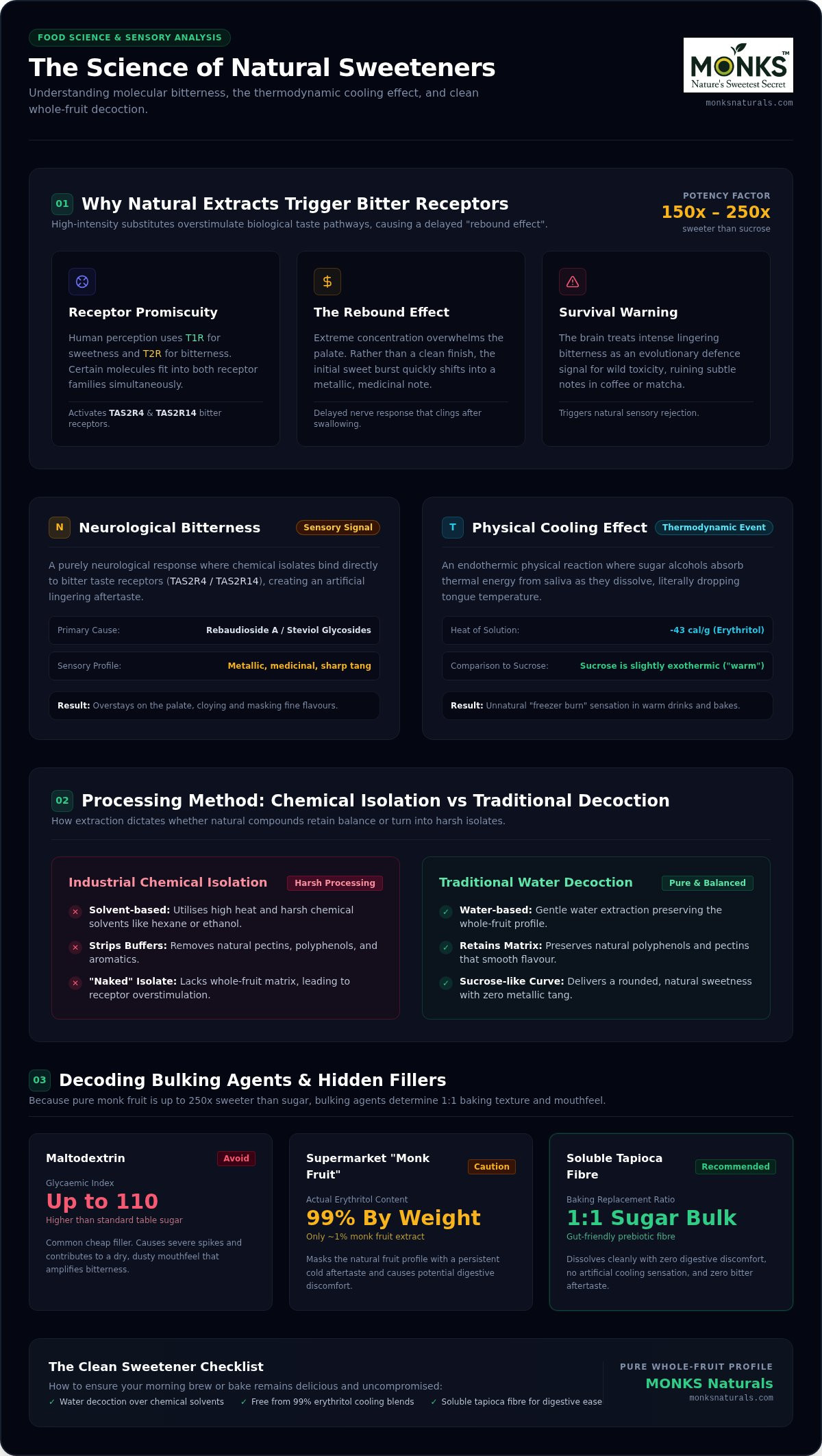
Most natural options are 150x to 250x sweeter than sucrose. This extreme potency causes a "rebound effect" where the tongue's receptors become overstimulated. Instead of a clean, disappearing sweetness, the sensation persists. It clings. It cloys. It eventually shifts into a metallic or medicinal note that ruins the delicate profile of a light roast coffee or a ceremonial grade matcha.
The Molecular Struggle: Sweet vs Bitter Receptors
Human taste perception relies on two primary receptor families: T1R for sweetness and T2R for bitterness. Some molecules are structurally "promiscuous," meaning they fit into both types of receptors simultaneously. The steviol glycosides found in stevia, specifically Rebaudioside A, are notorious for this. They bind to the sweet receptors but also directly activate the TAS2R4 and TAS2R14 bitter receptors on your tongue. This creates a confused flavour perception where the initial sweet hit is immediately followed by a sharp, metallic tang. An aftertaste is defined as a delayed receptor response that persists long after you have swallowed. It is the result of these molecules refusing to let go of your bitter-sensing nerves.
Industrial Extraction: The Flavour Killer
The way a sweetener is processed dictates how it tastes in your cup. Most industrial manufacturers use high-heat chemical isolation, often involving solvents like hexane or ethanol, to pull specific sweet compounds out of plants. This aggressive method strips away the natural pectins, polyphenols, and aromatics that provide a balanced flavour profile. You are left with a "naked" isolate that lacks the buffering compounds found in the whole fruit. These isolates are frequently bulked out with cheap fillers like maltodextrin. With a Glycemic Index of up to 110, maltodextrin is actually higher than table sugar, and it often contributes to a dry, dusty mouthfeel that amplifies bitterness.
It is also important to distinguish between true bitterness and the endothermic cooling effect of erythritol. While bitterness is a neurological response, the cooling sensation is a physical thermodynamic reaction that occurs as the sweetener dissolves. To avoid these sensory defects, many are turning to traditional methods. You can discover how whole-fruit decoctions preserve a natural profile by visiting MONKS, where the focus remains on purity and taste.
Understanding the 'Cooling Effect' vs 'Bitter Aftertaste'
If you have ever eaten a keto-friendly brownie and felt a strange, minty chill on your tongue, you have experienced the "cooling effect." It is a sensation frequently confused with a chemical aftertaste, yet the two are fundamentally different. While bitterness is a neurological signal from your taste receptors, the cooling sensation is a physical, thermodynamic event. When you are searching for a sweetener without bitter aftertaste, it is vital to distinguish between a flavour defect and this specific mouthfeel issue.
This sensation is caused by an endothermic reaction. Sugar alcohols like erythritol and xylitol have a high negative heat of solution, specifically around -43 cal/g for erythritol. As these crystals dissolve in your saliva, they rapidly absorb thermal energy from your mouth. This literally lowers the temperature of your tongue. Sucrose, by contrast, is slightly exothermic, providing a "warm" and familiar sweetness. This physical coldness can be jarring, especially in warm bakes or morning coffee, leading many to perceive the sweetener as artificial or "off."
The Problem with Erythritol Blends
Walk down any supermarket aisle and you will see bags labelled as "Monk Fruit." However, a quick glance at the ingredients often reveals that these products are 99% erythritol by weight. Because pure monk fruit is up to 250 times sweeter than sugar, manufacturers use bulk fillers to create a 1:1 replacement. These blends compromise the delicate, fruity notes of the monk fruit, replacing them with a persistent "freezer burn" sensation. If you want to avoid this, it is best to seek out an Erythritol-Free Sweetener UK: The 2026 Guide to ensure your pantry remains clean and delicious.
Digestive Side Effects and Flavour Perception
Your palate does not exist in isolation; it is deeply connected to your digestive health. Many sugar alcohols are known to cause osmotic distress, leading to bloating and gastric discomfort when consumed in quantities exceeding 0.66 g/kg of body weight. When your gut is unhappy, your perception of flavour can shift, making even mild sweeteners seem cloying or unpleasant. A truly clean label prioritises ingredients that respect your biology. You can find FDA guidance on high-intensity sweeteners that details the safety and intensity of these extracts, but for the best experience, look for carriers like soluble tapioca fibre. This prebiotic alternative provides the necessary bulk for baking without the cooling effect or the digestive aftermath. For a truly refined experience, consider trying MONKS, which focuses on a pure, water-based approach to sweetness.
Comparing Popular Sweeteners Without Bitter Aftertaste
Choosing the right sugar alternative is often a trade-off between health goals and sensory pleasure. To find a sweetener without bitter aftertaste, you must evaluate three key pillars: sweetness intensity, flavour profile, and digestive tolerance. Whilst many brands claim to be "natural," their chemical structures and processing methods tell a different story. Below is a framework for how the most common options compare in a modern kitchen.
- Stevia: Extremely intense (200x sucrose) but frequently triggers a sharp, metallic finish due to its activation of bitter taste receptors.
- Erythritol: Provides 70% of the sweetness of sugar. It offers a clean start but is let down by a significant cooling sensation and potential for gastric distress.
- Sucralose: Highly potent but often described as "cloying." It lingers on the palate in a way that feels distinctly artificial and can dominate delicate recipes.
- Monk Fruit: Naturally sweet (up to 250x sucrose) with a rounded, fruity profile. When prepared correctly, it leaves no metallic or cooling residue.
The carrier ingredient is just as vital as the sweetener itself. Many budget options use maltodextrin as a bulking agent. With a Glycemic Index (GI) between 85 and 110, maltodextrin is actually more disruptive to blood sugar than standard table sugar, which sits at a GI of 65. Choosing a product with soluble tapioca fibre instead ensures a gut-friendly, low-glycemic experience that mimics the texture of sugar without the metabolic cost.
Monk Fruit: The Gold Standard for Flavour
Monk fruit owes its clean sweetness to unique compounds called mogrosides. Unlike stevia, these molecules don't typically bind to the tongue's bitter receptors, making them ideal for light beverages like tea and matcha. For those seeking a truly premium experience, The Ultimate Guide to Monk Fruit with Tapioca Fibre explains how this combination creates a superior, British-made alternative. It provides the perfect balance of sweetness and mouthfeel without the "rebound" bitterness found in lab-isolated extracts.
Stevia and Sucralose: Why They Fall Short
Stevia is a hardy plant, but its sweetness is often aggressive. In hot drinks, the heat can amplify its metallic notes, leading many to use heavy masking agents like natural flavours or extra cream to hide the taste. Sucralose presents a different issue. It lacks the complex aromatics of natural fruit, resulting in a flat, one-dimensional sweetness that doesn't participate in the Maillard reaction during baking. This often leaves cakes pale and cookies crumbly. If you want a result that truly satisfies the palate, these lab-heavy options rarely meet the mark.
How to Select a Clean-Label Sweetener for Your Kitchen
Choosing a sweetener without bitter aftertaste requires more than a quick glance at the front of the packet. Marketing claims often mask industrial fillers that compromise both flavour and health. To ensure your kitchen remains a space of pure, wholesome ingredients, follow this four-step selection process. It focuses on transparency, purity, and the practicalities of British home cooking.
- Step 1: Check for "Erythritol-Free" and "Maltodextrin-Free". Avoid the metallic cooling sensation of sugar alcohols and the high-glycemic spikes of cheap corn-based fillers.
- Step 2: Prioritise "Decoction" over "Extract". Look for products made by simmering whole fruit in water. This traditional method preserves the natural fruit aromatics that lab-isolated mogrosides lack.
- Step 3: Identify the carrier. Seek out soluble tapioca fibre. This prebiotic carrier supports gut health and provides the necessary bulk for baking without the digestive distress of polyols.
- Step 4: Use the "Tea Test". Dissolve a small amount in warm water or a light tea. A truly clean sweetener should vanish into the liquid, leaving only a rounded sweetness behind.
Reading the Small Print on UK Labels
Hidden fillers are common in supermarket aisles. Many "spoonable" sweeteners are bulked with maltodextrin to mimic the volume of sugar, but this often introduces a dry, dusty aftertaste. Be wary of "natural flavourings" that aren't clearly defined. These are often chemical compounds designed to mask the bitterness of poor-quality extracts. Real fruit decoction doesn't need masking. It stands on its own. Always choose products that list simple, recognisable ingredients rooted in nature rather than the laboratory.
Best Uses for Different Formats
Your choice of format depends on your daily rituals. Liquid drops are the most versatile option for the modern British lifestyle. They are perfect for stirring into a morning coffee, whisking into Greek yoghurt, or balancing a sharp lemon cocktail. Because they are already dissolved, they provide an immediate, clean sweetness. Powdered versions are essential for the baker. They provide the structure needed for a golden crumble topping or a light sponge cake. They ensure your bakes remain moist and satisfying. To master these techniques, discover How to Use Monk Fruit Drops in British Life for practical, clean sweetening examples. Ready to transform your favourite recipes? Shop the MONKS range for a truly clean experience.
The Traditional Decoction Method: Why MONKS Tastes Different
Most "natural" sweeteners on the market are the result of intense lab processing. They rely on high-purity isolates that strip the plant of its character. MONKS takes a different path. By choosing whole fruit decoction over industrial isolation, we preserve the complex aromatics that make a sweetener without bitter aftertaste possible. It's a return to simplicity. It's a commitment to flavour.
The process is remarkably similar to making a fine tea or a rich broth. We gently simmer the whole monk fruit in pure water to release its natural sweetness. This method keeps the secondary fruit compounds intact. These compounds act as a natural buffer, rounding out the sweetness and preventing the sharp, metallic spikes common in lab-grown extracts. The result is a "warmer" sweetness that feels familiar and comforting on the palate.
To achieve a perfect spoonable texture, we blend this decoction with soluble tapioca fibre. Unlike erythritol or maltodextrin, this prebiotic carrier provides a clean mouthfeel without the bloating. It dissolves effortlessly. It tastes like sugar. It respects your body's needs whilst delivering a premium culinary experience. It is the final piece of the puzzle for those who refuse to compromise on quality.
From Traditional Wisdom to Modern Wellness
Monk fruit, known traditionally as Luo Han Guo, has been used for centuries in the mountainous regions of Southern China. It was prized by Buddhist monks for its soothing properties and clean, uplifting sweetness. MONKS brings this ancient heritage to the UK market, adapting traditional techniques for the modern health-conscious home. A decoction is a gentle, water-based simmering process that extracts the essence of the fruit without the need for harsh chemical solvents. This method ensures that every drop or spoonful remains as close to nature as possible, bridging the gap between historical wisdom and your daily wellness routine.
A Sweetener Designed for the Connoisseur
Speciality coffee and premium matcha require a delicate touch. A harsh sweetener can easily overwhelm the subtle notes of a light roast or the earthy umami finish of ceremonial green tea. MONKS is the favourite choice for connoisseurs because it offers a neutral, sucrose-like profile. There is no "cooling" effect to distract from your beverage. There is no bitter residue to linger on the tongue. It simply enhances what is already there, allowing the true character of your ingredients to shine. Experience the difference with the MONKS range and rediscover the joy of clean, effortless sweetening.
Embrace a Sweeter, Cleaner Routine
You no longer have to settle for the sharp tang of stevia or the artificial chill of erythritol. By understanding how molecular structures and industrial extraction impact your palate, you can finally choose a sweetener without bitter aftertaste. Redefining natural sweetness through the traditional decoction method ensures that your morning rituals remain pure and satisfying. It's about looking for carriers like soluble tapioca fibre to protect your gut health whilst enjoying a texture that truly mimics sugar. We've mastered the balance of whole-fruit simmering to provide a warmer, more rounded flavour profile that lab-isolated extracts simply can't match.
As the leading UK monk fruit brand, we offer an erythritol-free guarantee that respects both your taste buds and your biology. It is time to simplify your pantry and elevate your daily wellness with a product that values quality over hype. Switch to the UK’s cleanest sweetener at MONKS and discover the refined secret to effortless sweetening. Your journey to better habits just became a lot more delicious.
Frequently Asked Questions
Which sweetener has the least aftertaste for coffee?
Monk fruit liquid drops made via the traditional decoction method are the superior choice for coffee. Unlike stevia, which often clashes with the natural acidity of the beans, a high-quality monk fruit extract provides a clean, sucrose-like profile. It dissolves instantly, preserves the coffee's delicate aromatics, and leaves no lingering film on the tongue. This makes it an ideal sweetener without bitter aftertaste for speciality light roasts or morning brews.
Is there a natural sweetener that does not taste bitter in baking?
Yes, monk fruit powder blended with soluble tapioca fibre is an excellent option for baking. Many natural alternatives like stevia become unpleasantly bitter when exposed to high oven temperatures. However, whole-fruit decoctions remain stable and provide a rounded, warm sweetness. This combination mimics the bulk and moisture-retention of sugar, ensuring your sponge cakes, crumbles, and biscuits stay moist without any medicinal finish or lingering chemical tang.
Why does my sweetener have a weird cooling sensation?
That "weird" cooling sensation is a physical thermodynamic reaction caused by sugar alcohols like erythritol. When these crystals dissolve in your saliva, they absorb heat from your tongue, creating a literal drop in temperature. This is known as an endothermic effect. It is a common trait of polyols but is absent in whole-fruit decoctions, which provide a "warmer" sweetness that feels much more natural in hot drinks and baked goods.
Does monk fruit sweetener have a bitter aftertaste like stevia?
Pure monk fruit decoction does not trigger the same bitter receptors as stevia. Stevia contains glycosides like Rebaudioside A that bind to both sweet and bitter taste nerves on the tongue. In contrast, the mogrosides in monk fruit provide a clean, fruity sweetness that vanishes quickly. If you've experienced bitterness with monk fruit before, it was likely due to cheap fillers like maltodextrin or erythritol rather than the fruit itself.
What is the best erythritol-free sweetener available in the UK?
MONKS is widely considered the best erythritol-free option in the UK. Most supermarket brands bulk their products with sugar alcohols to save costs, but MONKS uses a traditional simmering method to extract sweetness from the whole fruit. By using soluble tapioca fibre as a carrier, it avoids the digestive issues and cooling sensations associated with other brands. It's a clean, keto-friendly choice for anyone prioritising gut health and pure flavour.
Can I use monk fruit decoction as a 1:1 sugar replacement?
You can use monk fruit powder as a 1:1 sugar replacement in most recipes. Whilst the liquid drops are highly concentrated and best suited for beverages, the powder is specifically formulated with tapioca fibre to match the volume of table sugar. This makes it easy to swap in your favourite British bakes. It provides the same weight, texture, and sweetness level, allowing you to reduce calories without recalculating your entire recipe.
Are there any sweeteners that do not cause bloating or bitterness?
Sweeteners that use soluble tapioca fibre as a carrier are the most effective at preventing bloating. Many low-calorie options rely on sugar alcohols like xylitol or maltitol, which are known to cause osmotic distress in the gut. By choosing a whole-fruit decoction that is free from these polyols, you can enjoy a clean sweetener without bitter aftertaste that respects your digestion. It is the perfect solution for a comfortable, bloat-free lifestyle.
How do I stop my sugar-free cakes from tasting chemical?
To stop your cakes from tasting chemical, you must move away from lab-isolated extracts and artificial fillers. These highly processed ingredients lack the complex aromatics of real food, resulting in a flat, medicinal flavour. Instead, use a whole-fruit decoction that retains the natural pectins and polyphenols of the plant. This creates a more authentic, "home-baked" taste that satisfies the palate without the cloying, synthetic finish found in budget supermarket alternatives.


