

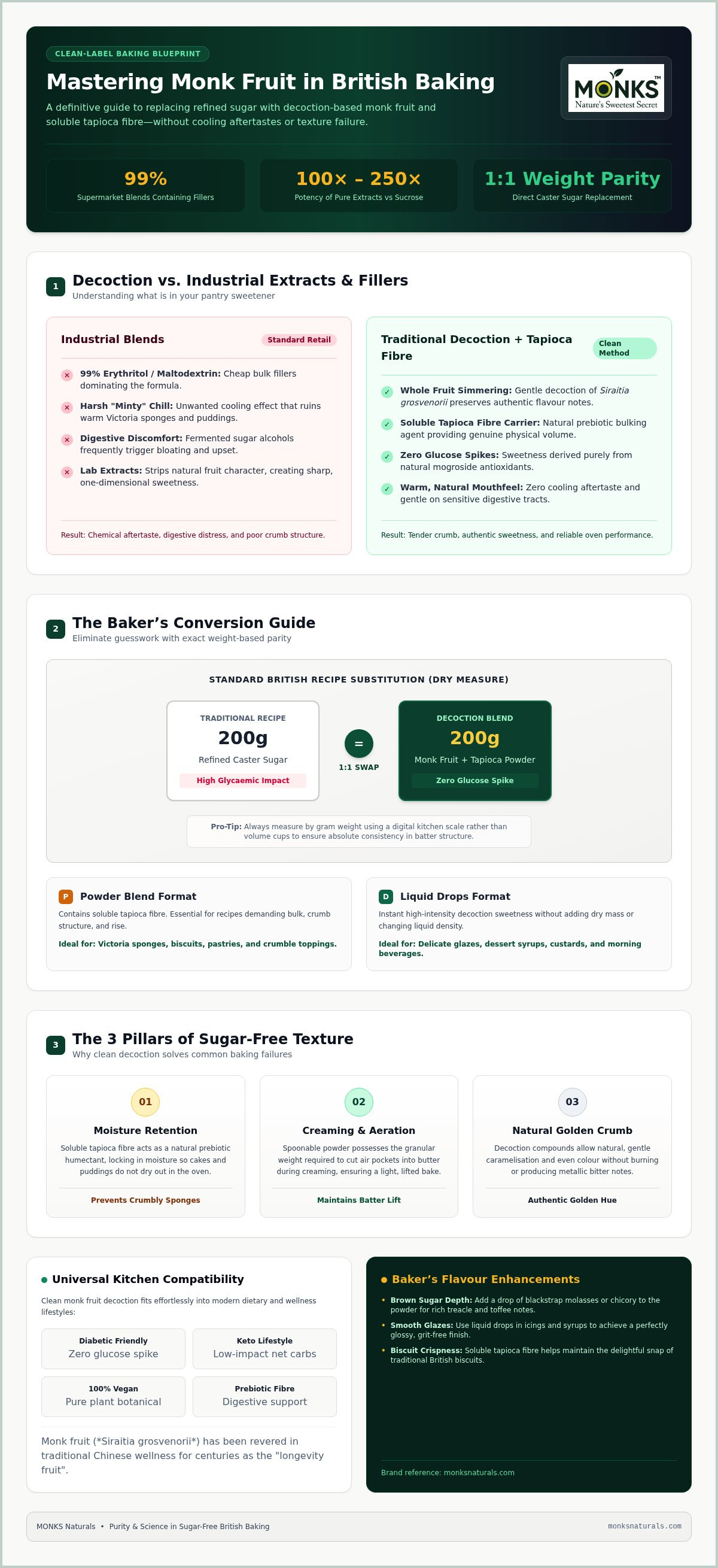
Did you know that 99% of the "monk fruit" sweeteners found on supermarket shelves are actually composed of erythritol or maltodextrin? For many home bakers, this hidden filler is the culprit behind that strange cooling aftertaste and the digestive discomfort that often follows a treat. You want the sweetness of nature without the laboratory side effects. Learning how to bake with monk fruit shouldn't feel like a chemistry experiment gone wrong.
We understand the frustration of a Victoria sponge that won't brown or a biscuit that lacks the perfect snap. It's disappointing when your wellness goals clash with your favourite recipes. This guide promises to help you master the art of sugar-free baking by using clean, decoction-based sweeteners. We will explore precise 3:1 conversion ratios, secrets for achieving a golden crumb, and why soluble tapioca fibre is the essential ingredient for a moist texture. You'll discover how to swap sugar whilst maintaining the structural integrity of your bakes, ensuring every cake is light, wholesome, and truly delicious.
Key Takeaways
- Learn exactly how to bake with monk fruit using a simple 1:1 ratio that preserves the volume and sweetness of your favourite recipes.
- Discover how to achieve a golden browning and perfect crumb without the bitter cooling aftertaste common in industrial blends.
- Understand the functional benefits of soluble tapioca fibre for maintaining moisture, structure, and a delicate mouthfeel in cakes.
- Master the art of aeration and creaming to ensure your sugar-free sponges remain light, airy, and satisfying.
- Explore the purity of traditional decoction-based sweeteners that are entirely free from erythritol, maltodextrin, and artificial fillers.
Why Monk Fruit is the Ultimate Sugar Alternative for British Baking
Monk fruit, or Luo Han Guo, is a small green melon native to the misty mountains of Southeast Asia. Often called the "longevity fruit," it has been a staple in traditional Chinese wellness for centuries. Botanically known as Siraitia grosvenorii, this fruit contains unique antioxidants called mogrosides. These compounds provide a clean sweetness without the glucose spikes associated with refined sugar. It is an ideal choice for keto enthusiasts, vegan bakers, and those managing diabetes. You can enjoy the ritual of a morning tea and biscuit without compromising your metabolic health.
British home bakers are increasingly seeking alternatives that align with a clean-label philosophy. Whilst stevia often carries a bitter metallic note, monk fruit offers a profile that feels familiar and comforting. Many are moving away from artificial options to find ingredients that belong in a real pantry. Learning how to bake with monk fruit allows you to create indulgent treats that support your health goals. It is about making better choices without sacrificing the joy of a homemade cake.
Decoction vs. Extract: Why the Method Matters
Most commercial sweeteners rely on lab-isolated extracts. These industrial processes strip away the fruit’s character, leaving behind a sharp, one-dimensional sweetness. Traditional decoction is different. By gently simmering the whole fruit, we preserve its rounded, complex essence. This method avoids the chemical aftertaste found in high-intensity powders. MONKS uses this traditional simmering process to ensure the final product tastes like nature intended. It is clean, pure, and balanced. It integrates seamlessly into your recipes, providing a depth of flavour that extracts simply cannot match.
The Problem with Erythritol in Your Oven
Many "monk fruit" blends are actually 99% erythritol. This sugar alcohol is notorious for its "minty" cooling sensation. In a warm Victoria sponge or a rich sticky toffee pudding, this artificial chill is jarring. It ruins the sensory experience of home baking. Beyond the taste, erythritol often causes bloating and digestive discomfort. It is a fermented ingredient that many sensitive stomachs struggle to process.
Choosing an erythritol-free alternative is better for your gut and your palate. Instead of fermented alcohols, we use soluble tapioca fibre as a carrier. This prebiotic fibre provides the physical bulk needed for baking whilst supporting digestive health. It creates a tender crumb, keeps cakes moist, and ensures your kitchen stays free from artificial fillers. You can find our clean-label blends at monksnaturals.com. It is time to bake with confidence and clarity.
Mastering the Conversion: Sugar-to-Monk Fruit Ratios
Precision is the foundation of every successful bake. When you learn how to bake with monk fruit, the first challenge is often the conversion ratio. Standard monk fruit extracts are incredibly potent. An FDA review of high-intensity sweeteners notes that these extracts can be 100 to 250 times sweeter than sucrose. This intensity makes direct substitution impossible without a functional bulking agent. You cannot simply remove 200 grams of sugar and replace it with a tiny pinch of powder without ruining the chemistry of your batter.
We solve this through the "spoonable" concept. By blending our decoction with soluble tapioca fibre, we create a 1:1 volume parity. This means you can swap caster sugar for Monkfruit decoction with soluble tapioca fibre Powder without recalculating your entire recipe. It maintains the physical bulk your batter needs to rise and set. For the most consistent results, always weigh your ingredients by gram. Volume measurements like cups vary too much. A digital scale ensures your sponge is perfect every time.
Adjusting for liquid recipes requires a different approach. Whilst the powder is ideal for cakes and biscuits, our Monkfruit decoction Drops are perfect for beverages or smooth sauces. These drops provide instant sweetness without changing the volume of your liquid. Using the right format ensures your recipe remains balanced and delicious. You can explore the full range at monksnaturals.com to find the perfect match for your kitchen.
Converting Common British Measurements
Traditional British recipes often call for specific textures. If your recipe requires 200g of caster sugar, use 200g of MONKS powder. It is that simple. For recipes requiring the deep notes of brown sugar, try adding a tiny drop of blackstrap molasses or chicory to the powder. This adds colour and depth without the refined sugar spike. If you are making a delicate glaze or frosting where grit must be avoided, reach for our Monkfruit decoction Drops. They dissolve instantly for a silky finish.
The Role of Soluble Tapioca Fibre
Sugar does more than just sweeten; it provides the structural bulk that supports air bubbles in your batter. Many competitors use maltodextrin for this, which can spike blood sugar levels. We use soluble tapioca fibre instead. This fibre is the secret to a soft, tender crumb in a classic Victoria sponge. It mimics the mouthfeel of sugar whilst providing a prebiotic boost to your treats. It ensures your bakes aren't just sweet, but structurally sound and satisfying.
The Science of Texture: Browning, Bulk, and Moisture
Sugar does more than provide sweetness. It acts as a structural tenderiser, moisture trap, and browning agent. When you learn how to bake with monk fruit, you must account for these missing functions. Mogrosides do not caramelise or participate in the Maillard reaction like sucrose. This chemical reality means your cakes might look pale even when they're fully cooked. According to the FDA overview of high-intensity sweeteners, monk fruit is significantly more potent than sugar, which means it lacks the physical mass to hold moisture on its own.
Managing the "rise" is also a matter of chemistry. Sugar helps aerate butter during creaming. Without it, you rely more on your leavening agents to create air pockets. pH levels become critical here. A slightly acidic batter can hinder browning and impact the stability of your sponge. Small adjustments are necessary to achieve a bakery-style finish that is light, airy, and moist.
Achieving the Perfect Golden Brown
Traditional browning requires heat, proteins, and reducing sugars. Since monk fruit lacks the latter, you must invite colour through other means. Try lowering your oven temperature by 10 degrees and baking for a few minutes longer. This prevents the outside from drying out before the centre sets. Adding a half-teaspoon of baking soda can also help. It raises the pH of the batter, which encourages the proteins in your flour and eggs to brown more readily. For biscuits and pastries, always use an egg wash or milk glaze. These provide the essential proteins and lactose needed for a rich, golden hue.
Managing Moisture and Shelf Life
Sugar is naturally hygroscopic. It pulls moisture from the air and holds it within the crumb. Monk fruit behaves differently, which can lead to bakes that dry out quickly. To counter this, introduce natural humectants. Apple sauce, Greek yoghurt, or extra egg yolks work beautifully to maintain a soft, luscious texture. These ingredients provide the fat and moisture that sugar usually preserves.
Storage is equally important for sugar-free treats. Without the preservative qualities of sugar, these bakes have a shorter shelf life. Store your cakes in an airtight container and enjoy them within two days. For longer-lasting freshness, freeze individual slices immediately after cooling. You can find more tips and clean-label ingredients at monksnaturals.com.
Best Practices for Biscuits, Cakes, and Puddings
Applying the theory of sugar-free chemistry requires a hands-on approach to different textures. Whether you are aiming for a crisp shortbread or a velvet custard, the technique matters as much as the ingredient. Knowing how to bake with monk fruit effectively means adjusting your methods for each specific category of British classics. Success lies in the subtle shifts you make during the mixing and chilling stages.
For sponge cakes, aeration is your primary goal. Since you lack the abrasive granules of sugar to tear air into the butter, you must spend extra time creaming. Beat your butter and monk fruit powder until the mixture is visibly pale and fluffy. This mechanical aeration provides the lift that sugar usually assists. When handling pastry, remember that sugar normally helps bind the dough. Without it, your pastry may feel more fragile. Handle it gently, keep it cool, and don't skip the resting period in the fridge.
Custards and puddings demand a different strategy. To achieve a silky, professional finish without any risk of graininess, use liquid drops. These integrate instantly into warm dairy or plant-based milks. This ensures your crème anglaise or rice pudding remains perfectly smooth. You can find everything you need for these techniques by exploring our range of monk fruit sweeteners.
The Secret to Crunchy Biscuits
Achieving the perfect "snap" in a biscuit requires patience. Chilling your dough for at least thirty minutes is critical. This firms up the fats and allows the tapioca fibre to hydrate, resulting in a better structure. Using a portion of almond or coconut flour can also enhance the crunch whilst complementing the fruit's profile. It is important to remember that monk fruit biscuits crisp up as they cool, not in the oven. Resist the urge to overbake; they will firm up beautifully on the cooling rack once removed from the heat.
Frostings, Fillings, and Glazes
You don't need refined icing sugar to create a decadent topping. Simply blitz your monk fruit powder in a high-speed blender for thirty seconds to create a fine, powdery consistency. This works perfectly for buttercream or dusting over a lemon drizzle. For clear jellies, fruit compotes, or glazes, use monk fruit drops to maintain transparency and a clean flavour. Understanding how to bake with monk fruit allows you to master everything from the base sponge to the final decorative flourish. For a deeper look at these ingredients, read The Ultimate Guide to Monk Fruit with Tapioca Fibre. It provides the clarity you need for a truly clean British pantry.
Why MONKS is the Baker’s Choice for Clean Sweetening
Choosing the right ingredients is as important as the technique itself. When you discover how to bake with monk fruit, you realise that not all sweeteners are created equal. Most mass-market options rely on ultra-processed extracts and synthetic fillers. We take a different path. Our traditional decoction method uses only heat and water to preserve the fruit's natural essence. This process delivers a rounded, complex sweetness that feels familiar and comforting. It is a refined secret we are proud to share with the British baking community.
Our commitment to purity is absolute. You will never find erythritol, maltodextrin, or artificial "nasties" in our pouches. We avoid the aggressive chemical processes that define industrial alternatives. Instead, we focus on minimalist clarity and wholesome results. Supporting a specialist UK brand means choosing quality, transparency, and ethical sourcing. It is about integrating better habits into your daily ritual without making life a chore. You can begin your sugar-free journey with The Monks Set, which provides the perfect introduction to our liquid and powder formats.
A Clean Label You Can Trust
Transparency is at the heart of everything we do. Our labels are short, honest, and easy to understand. We use only monk fruit decoction and soluble tapioca fibre. This simple blend ensures our products are keto-certified, vegan-friendly, and suitable for diabetics. At MONKS, "natural" isn't a marketing buzzword; it is a promise of purity. We exclude the hidden fillers that cause digestive distress or blood sugar spikes. You get the sweetness you desire and the fibre your body needs. It is inclusive baking at its most sophisticated.
Where to Buy and How to Store
Proper storage ensures your ingredients remain in peak condition. Always keep your powder in a cool, dry place. This prevents the tapioca fibre from clumping and maintains the spoonable 1:1 consistency you need for recipes. Secure the seal after every use to lock out moisture. If you are ready to restock your pantry, you can find our Amazon UK availability for fast, reliable delivery. We also offer direct purchase options through our official store.
We believe that learning how to bake with monk fruit is a shared experience. Once you have mastered your first sugar-free Victoria sponge or shortbread, we want to see it. Share your creations on social media and join a community of mindful innovators. Together, we can redefine British baking for a healthier, more vibrant future. Your kitchen is the centre of your wellness journey. Let’s make it extraordinary.
Bake with Clarity and Confidence
You now have the technical foundation to transform your kitchen into a haven of clean, sugar-free indulgence. Mastering how to bake with monk fruit is about more than just sweetness. It is about understanding the balance between natural decoction and functional fibre. You've learned to navigate the chemistry of browning, the importance of moisture retention, and the ease of 1:1 conversions. Your cakes can be light, your biscuits can be crisp, and your puddings can remain perfectly smooth.
By choosing a sweetener that respects your gut health and your palate, you elevate every treat you create. Leave behind the artificial cooling effects of sugar alcohols. Embrace the purity of traditional methods. Switch to a cleaner bake with MONKS Monk Fruit Powder. Our blend is erythritol-free for gut comfort, provides a spoonable 1:1 replacement, and uses a traditional decoction for a clean taste. Your wellness journey shouldn't mean sacrificing the joy of home baking. Trust your new skills and enjoy every bite.
Frequently Asked Questions
Can I use monk fruit 1:1 for sugar in any recipe?
You can use MONKS powder as a direct 1:1 replacement for caster sugar in most British baking recipes. Our blend includes soluble tapioca fibre to provide the necessary bulk that pure extracts lack. This ensures your sponges and biscuits maintain their intended volume and structure. Whilst it works for most recipes, you may need to adjust moisture levels slightly in very dense bakes. It simplifies the process of learning how to bake with monk fruit.
Does monk fruit have a bitter aftertaste when baked?
Pure monk fruit decoctions do not have the bitter or metallic aftertaste often associated with stevia or lab-isolated extracts. We use a traditional Chinese simmering method to preserve a rounded, clean sweetness. This process avoids the sharp chemical notes found in high-intensity alternatives. Your puddings and cakes will taste natural and wholesome. It is a refined way to enjoy sugar-free treats without any artificial lingering flavours or strange cooling sensations.
Why did my monk fruit cake not brown in the oven?
Monk fruit doesn't undergo the Maillard reaction or caramelisation in the same way that refined sugar does. This means your cakes won't brown naturally at standard temperatures. To encourage a golden crust, you can add a tiny pinch of baking soda to your batter to adjust the pH levels. Alternatively, use an egg wash or a milk glaze on your pastries. These simple adjustments provide the proteins needed for a rich, baked colour and professional finish.
Is monk fruit sweetener safe for keto and diabetic diets?
Our monk fruit sweeteners are entirely safe and highly recommended for both keto and diabetic diets. They have a zero-glycemic index, meaning they won't cause the blood sugar spikes associated with sucrose or maltodextrin. Since our products are erythritol-free, they are also gentler on the metabolic system. You can manage your carbohydrate intake whilst still enjoying traditional treats. It is a clean-label solution for anyone monitoring their insulin levels or following a low-carb lifestyle.
Can I make caramel with monk fruit sweetener?
You cannot make a traditional caramel with monk fruit because it doesn't melt or brown like sucrose. It lacks the chemical properties required for caramelisation. If you need a caramel-like sauce, we suggest blending our monk fruit drops with butter, heavy cream, and a touch of vanilla. This creates a rich, sweet syrup that mimics the flavour and mouthfeel of caramel. It is a clever workaround for sugar-free sticky toffee puddings and decadent dessert glazes.
What is the difference between monk fruit powder and liquid drops for baking?
The primary difference lies in the structural bulk. Our powder is blended with soluble tapioca fibre, making it ideal for sponges and biscuits where volume is essential. It helps you understand how to bake with monk fruit by providing a familiar texture. Liquid drops are highly concentrated and best suited for custards, jellies, or beverages. They dissolve instantly and ensure a silky finish in recipes where a granular texture would be undesirable or unnecessary for the final result.
Does monk fruit cause bloating like erythritol does?
Monk fruit itself does not cause the bloating or digestive distress often associated with sugar alcohols like erythritol. Many people find that fermented polyols trigger gut sensitivity or a laxative effect. Because MONKS is erythritol-free and uses prebiotic tapioca fibre instead, it is much kinder to your digestive system. It offers a clean way to sweeten your food without the uncomfortable side effects found in most supermarket blends. You can enjoy your treats with total gut comfort.
How should I store my monk fruit baking powder?
You should store your monk fruit powder in a cool, dry pantry away from direct sunlight. The soluble tapioca fibre in our blend is sensitive to moisture, so keeping the pouch tightly sealed is essential. This prevents clumping and ensures the powder remains easy to measure for your next bake. If you live in a particularly humid environment, transferring the powder to an airtight glass jar can provide an extra layer of protection for long-term freshness.


