

Why should a mindful choice at tea time leave a cold, chemical trail on your palate? Most bakers seeking a healthier alternative have felt the disappointment of a sponge that turns out flat, dense, or marred by a distracting cooling sensation. You deserve a cake that respects tradition. This sugar free victoria sponge recipe provides exactly that, offering a light, airy crumb and a favourite golden finish. We've removed the erythritol, the digestive upset, and the artificial aftertaste.
You likely agree that a Victoria Sponge is the heart of British baking. It should be simple, honest, and sweet. This guide promises to help you master this iconic dessert using a monk fruit decoction with soluble tapioca fibre powder. We focus on purity, texture, and taste. You'll discover how to achieve a perfect rise with standard UK measurements and clean-label ingredients. This is a refined secret for a modern, health-forward lifestyle. It's time to bake, share, and enjoy without compromise.
Key Takeaways
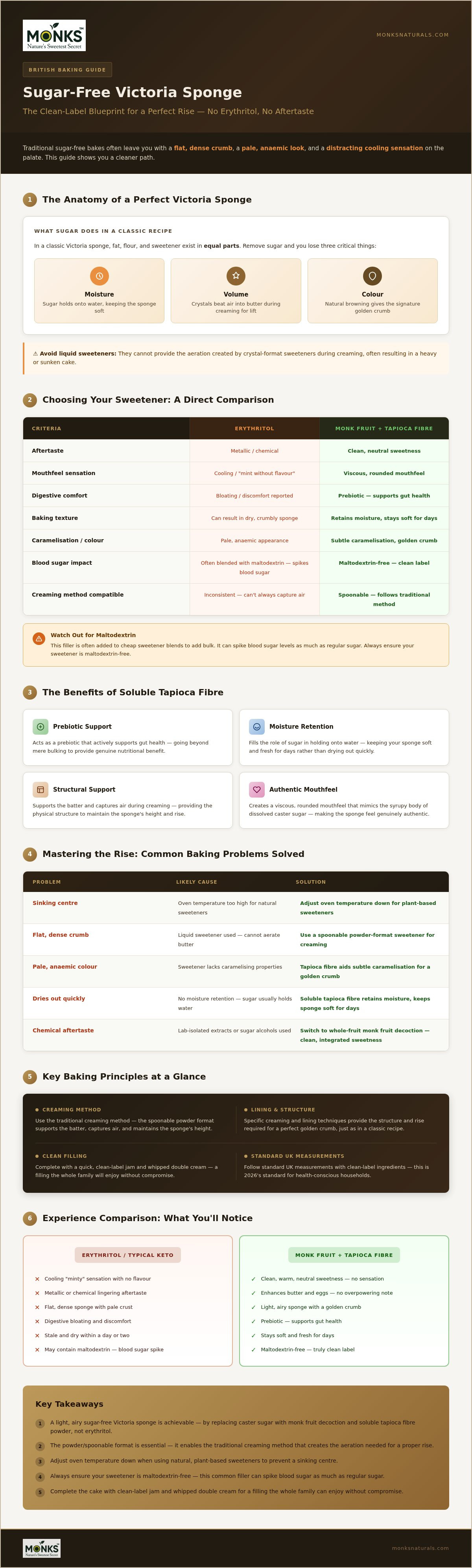
- Bake, share, and enjoy a light, airy sugar free victoria sponge recipe that avoids the artificial cooling aftertaste of traditional keto bakes.
- Discover why monk fruit decoction with soluble tapioca fibre powder is the essential replacement for caster sugar to ensure moisture, volume, and lift.
- Learn specific creaming and lining techniques that provide the structure and rise required for a perfect golden crumb.
- Solve common baking frustrations like sinking centres by adjusting oven temperatures for natural, plant-based sweeteners.
- Complete your cake with a quick, clean-label jam and whipped double cream that the whole family will love.
The Anatomy of a Perfect Sugar-Free Victoria Sponge
A traditional Victoria sponge is a masterpiece of British simplicity. It relies on a specific balance of fat, flour, and sweetness. In a classic recipe, these elements exist in equal parts. This creates the light, springy texture we all recognise. When you remove sugar, you lose more than just taste. You lose moisture. You lose volume. You lose the ability to brown naturally in the oven. For a successful sugar free victoria sponge recipe, you need a solution that replicates these physical properties. Clean-label baking has become the 2026 standard for health-conscious households. We look for ingredients that are natural, functional, and transparent. A monk fruit decoction bridges the gap between modern wellness and culinary tradition.
The Role of Sweetness in Sponge Physics
Sugar crystals play a mechanical role in baking. During the creaming stage, they beat air into the butter. This process creates the tiny bubbles needed for a perfect rise. If you use liquid sweeteners, you often end up with a heavy or sunken cake. They simply cannot provide the necessary aeration. This is why structural integrity depends on a spoonable medium. Using Monkfruit decoction with soluble tapioca fibre Powder allows you to follow the traditional creaming method. The powder supports the batter. It captures the air. It maintains the sponge's height. You get the lift you expect without the sugar you don't.
Flavour Profiles: Avoiding the "Chemical" Trap
Many sugar alternatives rely on lab-isolated extracts. These often carry a metallic or chemical note that lingers. In a delicate bake, these harsh flavours easily overpower vanilla and cream. A whole-fruit decoction offers a refreshing change. It provides a clean sweetness that feels integrated rather than added. This method respects the ingredients. It enhances the butter. It complements the eggs. You also avoid the pale, anaemic look of many keto cakes. The presence of tapioca fibre aids in subtle caramelisation. This helps your sugar free victoria sponge recipe achieve that signature golden crumb. It looks right. It tastes right. It feels wholesome.
Choosing Your Ingredients: Monk Fruit vs Erythritol
Selecting the right sweetener is the most critical step in a sugar free victoria sponge recipe. Whilst many turn to sugar alcohols, the results often lack the refinement of a traditional bake. Understanding the health effects of sugar encourages us to seek alternatives, but not all replacements are equal. Most keto-friendly options rely on erythritol. This ingredient is known for a distinct "cooling effect" that feels like mint without the flavour. It's an endothermic reaction that occurs as the crystals dissolve on your tongue. In a delicate sponge, this sensation is jarring. It distracts from the rich butter and vanilla notes that define the experience.
Why We Avoid Erythritol in British Baking
The British tea time palate values subtlety and warmth. Erythritol is often too aggressive. It creates a chemical-like distraction that lingers long after the first bite. Beyond the taste, sugar alcohols are notorious for causing digestive discomfort for many families. They can lead to bloating or a heavy feeling that ruins the enjoyment of a light, celebratory dessert. We prefer a cleaner path. By choosing a monk fruit with tapioca fiber blend, you avoid these pitfalls. The Monkfruit decoction with soluble tapioca fibre Powder provides a neutral sweetness. It doesn't compete with your ingredients. It simply enhances them. It's also essential to ensure your sweetener is maltodextrin-free. This filler is often added to cheap blends to add bulk, but it can spike blood sugar levels as much as regular sugar.
The Benefits of Soluble Tapioca Fibre
Soluble tapioca fibre is a mindful innovator's best friend. It acts as more than just a bulking agent. It's a prebiotic that supports gut health whilst improving the cake's physical structure. One of the biggest complaints with sugar-free bakes is that they dry out quickly. This happens because sugar usually holds onto water. Tapioca fibre aids in moisture retention, filling that void perfectly. This keeps your sponge soft and fresh for days. Soluble tapioca fibre creates a viscous, rounded mouthfeel that mimics the syrupy body of dissolved caster sugar. This ensures your sugar free victoria sponge recipe feels authentic and satisfying. If you're ready to upgrade your pantry, you might consider starting with the Monks Set for a complete toolkit. It's a refined secret for better baking and daily wellness.
Step-by-Step: How to Bake the Perfect Sugar-Free Victoria Sponge
Preparation determines the success of any sugar free victoria sponge recipe. Start by preheating your oven to 180°C (160°C fan). Grease two 20cm sandwich tins. Use parchment paper to line the bottoms and the sides. Sugar-free batters often lack the structural resilience provided by caramelised sugar; this makes them more prone to sticking. Proper lining ensures a clean release and preserves the delicate golden crust. It’s a simple step that guarantees a professional finish.
The Recipe: Ingredients and Measurements
Precision is the hallmark of a mindful baker. This recipe uses the traditional equal-weight method, adapted for modern wellness. You will need:
- 200g unsalted butter, softened at room temperature
- 200g monk fruit powder for baking (Monkfruit decoction with soluble tapioca fibre)
- 4 large free-range eggs, beaten
- 200g self-raising flour, sifted
- 1 teaspoon vanilla bean paste for a deep, authentic aroma
Using a spoonable powder makes the conversion effortless. It mirrors the volume of caster sugar exactly. This maintains the ratios found in classic Victoria sponge recipes whilst removing the refined carbohydrates. Choose vanilla bean paste over extract for those beautiful, tiny seeds and a more robust flavour profile.
Mixing and Aeration Techniques
Begin by creaming the butter and monk fruit powder. Use a high speed until the mixture is pale, fluffy, and significantly increased in volume. This stage is vital. You are creating the tiny air pockets that will expand in the heat. Add the beaten eggs one tablespoon at a time. This "slow-add" technique ensures a stable emulsion and prevents the mixture from curdling. If the batter looks split, add a spoonful of your measured flour to bring it back together.
Finally, sift the remaining flour into the bowl from a height. This incorporates maximum oxygen. Use a large metal spoon to fold the flour in gently. Use a figure-of-eight motion. Do not stir or beat at this stage. Stop as soon as the flour is incorporated to avoid overworking the gluten. Divide the batter equally between your prepared tins. Smooth the tops gently. Bake for 20 to 25 minutes until the sponges are springy and a skewer comes out clean. Your sugar free victoria sponge recipe is now ready for the cooling rack. It’s light. It’s airy. It’s perfect.
Mastering the Rise: Troubleshooting Common Baking Issues
Precision ensures success. A sugar free victoria sponge recipe relies on chemical leavening rather than just the physical bulk of sugar crystals. If your cake sinks, the structure likely collapsed before it could set. Sugar provides a physical scaffold during the bake. Without it, your eggs and flour must do the heavy lifting. Self-raising flour remains the gold standard for this British classic. It provides a consistent, reliable level of aeration. If you substitute with plain flour and baking powder, ensure the ratio is exact. Too much leavener creates a metallic taste. Too little results in a dense, unappealing slab.
Preventing the Dreaded "Sunk" Centre
Temperature consistency is vital for a mindful baker. Always use room-temperature ingredients. Cold eggs can cause the batter to seize. This results in uneven pockets of air and a patchy rise. Because monk fruit lacks the caramelisation properties of refined sugar, the structural timing of the "set" happens differently. You cannot rely on a deep brown crust to indicate doneness. Test your sponge with a light touch. It should spring back immediately when pressed. Alternatively, use a skewer. It must come out clean but not dry. Never open the oven door before the 20 minute mark. This sudden drop in temperature is the most common cause of a collapsed centre. It is a simple, avoidable mistake.
Crumb Structure and Texture
Aeration happens before the heat of the oven. Your batter should look like a thick, pale mousse. If it looks runny or thin, you haven't creamed the butter and powder sufficiently. Once baked, the cooling process is just as important as the mixing. Leave your sponges in their tins for exactly 5 minutes. This allows the tapioca fibre to settle and the structure to firm up. Moving them too soon can cause the delicate crumb to tear or compress. Monk fruit decoction does not affect the pH of the batter. This ensures your leavening agents work exactly as intended. It is clean. It is reliable. It is satisfying.
Oven temperature also plays a role in moisture retention. A fan oven that is too hot will dry the edges before the centre is cooked. Stick to 160°C fan for a gentle, even bake. This protects the natural flavours. It maintains the soft mouthfeel you expect from a premium dessert. To ensure your next bake has the perfect structural support, you can buy Monkfruit decoction with soluble tapioca fibre Powder directly from our shop. It is the refined secret to a better rise.
Completing the Cake: Clean Fillings and Serving
A sugar free victoria sponge recipe is only as good as its filling. Many store-bought "sugar-free" jams hide artificial sweeteners like sucralose or fillers like maltodextrin. These ingredients can spike blood sugar and ruin the clean-label profile you've worked hard to achieve. We prefer a homemade approach. It is fast. It is pure. It is delicious. Assemble your cake whilst the sponges are completely cold to prevent the cream from melting and the jam from running. This patience ensures a professional, bakery-standard result.
The Sugar-Free Raspberry Jam Hack
Traditional jam relies on massive amounts of sugar for preservation and set. You can bypass this with a fresh, vibrant alternative that takes less than ten minutes. Simmer 200g of fresh raspberries in a small pan over a medium heat for 8 minutes. Add a few monk fruit liquid drops to reach your desired level of sweetness. To achieve the perfect thickness without pectin, stir in a tablespoon of chia seeds. These tiny seeds absorb moisture and create a thick, spreadable texture that mimics traditional preserves. This method highlights the natural tartness of the fruit and avoids the chemical aftertaste found in commercial keto options.
The "Icing Sugar" Dusting Alternative
The visual finish is non-negotiable for a traditional Victoria Sandwich. You need that snowy, delicate top to complete the look. You can easily replicate this by blitzing your Monk Fruit Sweetener Powder in a clean spice grinder or high-speed blender for a few seconds. This creates a fine, silken dust that behaves exactly like icing sugar. Sift it over the top sponge just before serving for a beautiful, refined finish. For the internal layer, use whipped double cream. Beat the cream until soft peaks form. Don't add extra sweetener here; let the richness of the dairy and the sweetness of the raspberry jam provide the perfect balance.
This cake is the centrepiece of a traditional British afternoon tea. Serve it with a pot of Earl Grey or a light Darjeeling to complement the delicate vanilla notes. It feels indulgent but remains entirely mindful. If you have leftovers, store the cake in an airtight container in the fridge. The soluble tapioca fibre in the sponge helps it stay moist and soft for up to 3 days. This is a significant advantage over erythritol-based bakes, which often turn gritty or dry within hours. It is a refined secret that allows you to enjoy a clean-label dessert with the whole family, day after day.
Elevate Your Tea Time with Clean Sweetness
Mastering the iconic Victoria Sandwich without sugar is no longer a compromise. By following this sugar free victoria sponge recipe, you've discovered how to achieve a light, airy crumb whilst avoiding the artificial cooling sensation of erythritol. You now understand the physics of the rise, the importance of room-temperature ingredients, and the simplicity of a ten-minute chia jam. This refined approach respects tradition, purity, and your health.
Choosing the right ingredients is the foundation of every successful bake. As a UK-based clean-label brand, we prioritise quality over hype. Our traditional decoction method maintains natural flavour without the gut irritation or chemical aftertaste of sugar alcohols. It is a mindful innovation for your daily ritual. It is time to transform your pantry and share a dessert that everyone can enjoy without hesitation. Switch to clean-label baking with MONKS Monk Fruit Powder today for a superior, erythritol-free experience. Happy baking.
Frequently Asked Questions
Can I use monk fruit drops instead of powder in this sponge recipe?
No, you cannot use drops alone for the sponge batter. The sugar free victoria sponge recipe relies on the physical bulk of the Monkfruit decoction with soluble tapioca fibre Powder to cream with the butter. This process creates the necessary air pockets for a light rise. Drops are perfect for sweetening the cream or making the jam filling, but the cake itself requires the structural support that only the spoonable powder provides.
Why does my sugar-free Victoria Sponge feel denser than the original?
Density usually occurs if the butter and powder weren't creamed until pale and fluffy. Without sugar crystals, you must be more deliberate with your aeration. Using liquid sweeteners or over-working the flour also leads to a heavy crumb. Ensure your eggs are at room temperature to prevent the batter from seizing. Proper aeration is the secret to a light, airy sponge that rivals the traditional version without using refined sugar or artificial fillers.
Is this recipe suitable for a keto diet?
Yes, this recipe is perfectly suited for a keto lifestyle. Monk fruit decoction and soluble tapioca fibre are both low-carb ingredients that don't spike blood sugar levels. Because our powder is entirely erythritol-free and maltodextrin-free, it provides a clean-label alternative for those following strict nutritional plans. It allows you to enjoy a classic British dessert whilst staying within your daily carbohydrate limits without the digestive upset associated with common sugar alcohols.
How do I convert caster sugar to MONKS monk fruit powder?
Converting caster sugar to MONKS powder is straightforward with a 1:1 ratio. If your traditional recipe calls for 200g of sugar, use exactly 200g of our Monkfruit decoction with soluble tapioca fibre Powder. This 1:1 spoonable use makes it effortless to adapt any sugar free victoria sponge recipe. You don't need complex calculations or weight adjustments. It is designed to mirror the volume and sweetness of standard British caster sugar perfectly.
Can I freeze a sugar-free Victoria Sponge?
You can certainly freeze the sponges. Wrap the cooled, unfilled cakes tightly in greaseproof paper and a layer of foil to prevent freezer burn. They will stay fresh for up to three months. When you're ready to serve, defrost them at room temperature for a few hours before adding the fresh cream and jam. Freezing the sponges separately ensures the texture remains light and avoids any sogginess from the moisture in the fillings.
What is the best sugar-free jam to use for a Victoria Sandwich?
The best option is a homemade raspberry chia jam sweetened with Monkfruit decoction Drops. Many store-bought "sugar-free" jams contain maltitol or sucralose, which can leave a chemical aftertaste. A quick 10-minute simmer of fresh berries with a few drops of monk fruit provides a vibrant, tart filling. Chia seeds help achieve a thick, spreadable consistency without the need for high-sugar pectins. It is a much cleaner choice for your health-conscious family.
Does monk fruit powder brown the same way as regular sugar?
Monk fruit powder does not brown exactly like regular sugar because it doesn't caramelise at the same temperature. However, the soluble tapioca fibre in our blend aids in achieving a beautiful golden colour that many other sweeteners lack. Your sponge will look authentic and inviting. Don't be tempted to leave it in the oven longer to get a darker crust; use a skewer to test for doneness to avoid over-baking and drying out the crumb.
Is tapioca fibre safe for people with sensitive stomachs?
Soluble tapioca fibre is generally very well-tolerated and safe for sensitive stomachs. Unlike sugar alcohols like erythritol or xylitol, which can cause bloating and digestive distress, tapioca fibre acts as a gentle prebiotic. It supports gut health whilst providing the necessary bulk for baking. It is a mindful choice for those who find traditional keto sweeteners difficult to digest. It ensures your dessert remains a wholesome experience for the whole family.


