

What if your "natural" sweetener is actually a lab-made chemical hiding behind a clever label? Many health-conscious Britons have made the switch to monk fruit powder, only to be met with the artificial cooling of erythritol or the metallic bitterness of stevia. It's frustrating to seek wellness and find bloating, confusion, and compromise instead. You want a kitchen staple that's simple, pure, and kind to your digestion. You deserve a solution that fits your life without the unwanted side effects.
We believe that your daily rituals should be nourishing, effortless, and delicious. This guide reveals why traditional monk fruit decoction is the cleanest sugar alternative for your gut health and daily routine. We'll explore the traditional simmering process that preserves flavour, the prebiotic benefits of soluble tapioca fibre, and how to use a 1:1 replacement in your favourite British bakes. Discover a way to enjoy sweetness that's free from fillers, free from aftertaste, and entirely focused on your well-being.
Key Takeaways
- Learn why traditional water decoction creates a cleaner, rounder flavour profile compared to industrial solvent extracts.
- Discover how to use monk fruit powder as a simple 1:1 sugar replacement in your favourite British bakes and daily beverages.
- Understand the gut-health benefits of soluble tapioca fibre and why it's a superior, prebiotic alternative to bloating fillers.
- Identify the differences between monk fruit, stevia, and erythritol to finally eliminate bitter aftertastes and artificial cooling sensations.
- Explore the 800-year history of the "immortal fruit" and how this ancient ritual fits into a modern, health-forward lifestyle.
What is Monk Fruit Powder and Why is it Trending in the UK?
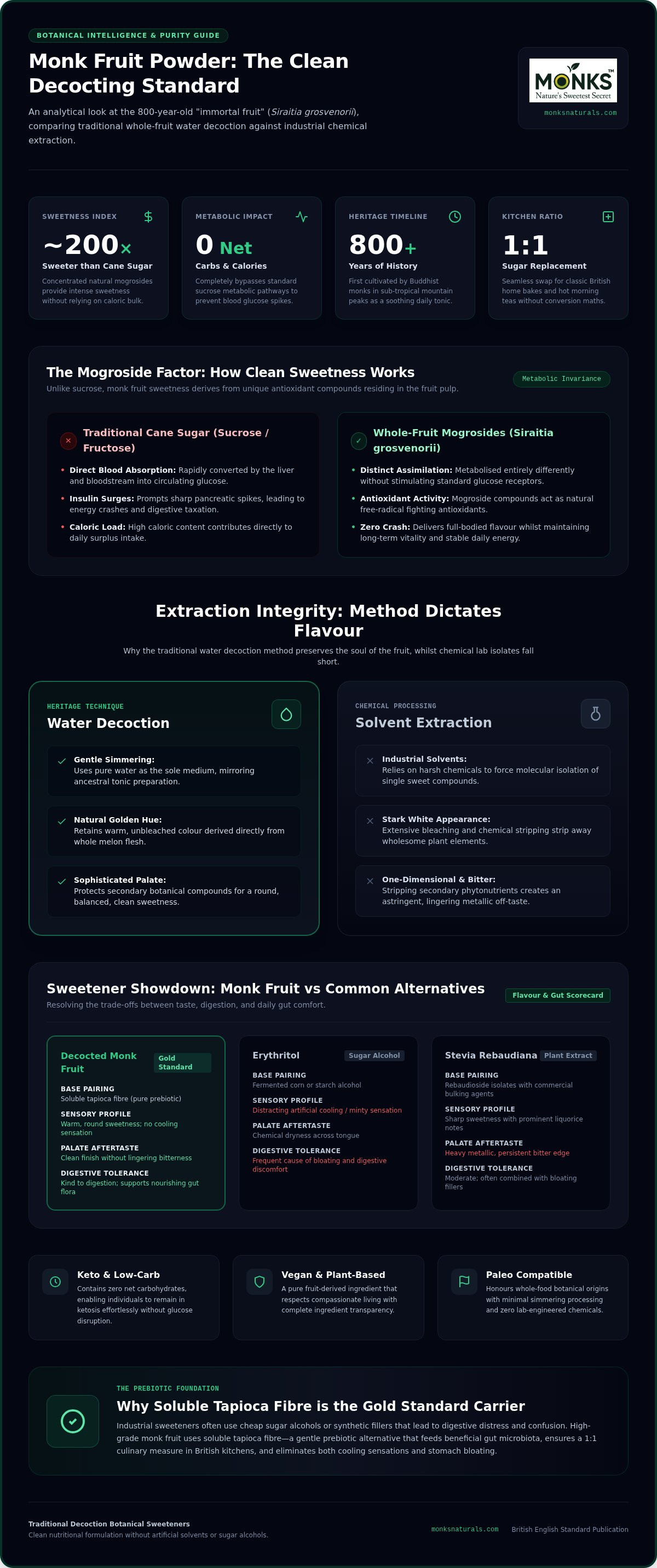
Monk fruit, known botanically as Siraitia grosvenorii or Luo Han Guo, is a small, green gourd native to the sub-tropical mountains of Southeast Asia. For over 800 years, Buddhist monks have harvested this "immortal fruit" amongst the misty peaks, valuing it for its clean sweetness and soothing properties. It's a fruit rooted in tradition, yet it feels perfectly suited for our modern needs. Whilst it looks like a simple melon, its internal profile is quite remarkable. It delivers a sweetness that's roughly 200 times more potent than cane sugar, yet it remains entirely free from calories and carbohydrates.
In the UK, the rise of monk fruit powder reflects a significant shift in how we approach our daily rituals. We're moving away from the heavy, refined sugars that have dominated our cupboards for decades. British households are now seeking ingredients that offer transparency and purity. This isn't just a passing trend; it's a mindful return to plant-based simplicity. By choosing a sweetener that doesn't spike blood glucose levels, you're making a choice that supports long-term vitality without sacrificing the joy of a sweet treat.
The Mogroside Factor: Nature’s Secret Sweetness
The intense sweetness of monk fruit doesn't come from fructose or glucose. Instead, it comes from mogrosides. These are unique compounds found in the fruit's pulp that act as powerful antioxidants. When you consume monk fruit, your body metabolises these mogrosides differently than it does sucrose. They aren't absorbed in the same way as traditional sugars. This means they don't contribute to your daily calorie count or disrupt your insulin levels. It's a fascinating bit of biological engineering. It allows for a rich, sweet flavour without the metabolic crash. This makes it an ideal companion for those who want to maintain steady energy throughout the day whilst still enjoying their favourite recipes.
Why British Households are Swapping Sugar for Monk Fruit
Hidden sugars are everywhere in the modern diet. They're often tucked away in "healthy" snacks and pantry staples. Swapping these out for a Natural Sugar Alternative UK families can rely on is a practical step toward better health. Monk fruit powder is incredibly versatile, making it easy to integrate into a variety of dietary paths:
- Keto and Low-Carb: It provides zero net carbs, helping you stay in ketosis effortlessly.
- Vegan and Plant-Based: It's a pure, fruit-derived ingredient that aligns with compassionate living.
- Paleo: It respects the focus on whole-food origins and minimal processing.
Whether you're stirring it into your morning tea or using it to sweeten a weekend bake, the transition is simple. It offers a clean, honest sweetness that feels like a natural extension of a healthy lifestyle. Choosing monk fruit means choosing a path that prioritises your gut health and your overall well-being, one spoonful at a time.
Decoction vs. Extract: The Secret to a Cleaner Flavour
How a product is made matters as much as what's in it. When you browse for monk fruit powder, you'll likely encounter two very different production methods. Most global brands rely on industrial solvent-based extraction. This process uses chemicals to isolate specific sweet molecules, often resulting in a stark white powder with a sharp, one-dimensional profile. In contrast, the traditional decoction method involves gently simmering the whole fruit in water. This heritage technique mirrors the way herbal tonics have been prepared for centuries. It respects the fruit's integrity. It avoids harsh processing. The result is a warmer, more natural golden hue that reflects its whole-food origins.
This difference in method dictates the final experience in your kitchen. Industrial extracts focus purely on potency, but decoction focuses on the soul of the fruit. By using water as the only medium, the natural complexity of the melon is preserved. This leads to a rounder, more sophisticated sweetness that complements your favourite recipes rather than overpowering them. It's the difference between a lab-made ingredient and a culinary ritual. You can taste the care in every spoonful.
The Problem with Lab-Isolated Extracts
Over-processing often comes at a cost to flavour. Highly refined extracts can leave a lingering metallic or "off" aftertaste on the palate. This happens because heavy filtration strips away the secondary plant compounds that naturally balance the fruit's sweetness. According to FDA guidance on high-intensity sweeteners, these mogrosides are significantly sweeter than sugar, but isolation can make that sweetness feel aggressive. Decoction is the traditional, water-based simmering of fruit to extract sweetness. By keeping the process gentle, we ensure the final product retains a honey-like depth that lab-made alternatives simply can't replicate.
Preserving the Whole Fruit Essence
Modern British kitchens are increasingly moving toward "clean label" ingredients. You want to know exactly what's in your food and how it got there. Choosing a water-based method means avoiding the harsh chemicals often found in the industrial production cycle. It's a transparent approach to wellness. This method preserves the essence of the fruit, ensuring your morning coffee or afternoon tea tastes exactly as it should. If you're curious about the specifics of this heritage process, you can read more in our Monk Fruit Decoction: The Traditional Guide. You might find that switching to a traditional decoction powder completely changes your perspective on sugar-free living.
Comparing Monk Fruit Powder to Erythritol and Stevia
Finding a natural alternative often feels like a series of compromises. You want sweetness without the health costs, yet most options on the high street fall short. Stevia often leaves a lingering, bitter aftertaste that disrupts the flavour of your favourite tea. Erythritol, a sugar alcohol, creates a strange "cooling" sensation in the mouth that feels artificial and distracting. When you choose monk fruit powder, you're opting for a round, honey-like sweetness that integrates seamlessly into your daily life. It provides the mouthfeel of sugar without the metabolic baggage or the chemical finish.
Digestive comfort is a non-negotiable part of modern wellness. Many sugar alcohols are notorious for causing bloating, gas, and general discomfort. Because they aren't fully absorbed by the body, they can ferment in the gut. Monk fruit bypasses these issues entirely. It offers a gentle experience that respects your digestive system whilst delivering the satisfaction you crave. It’s a simple, honest way to sweeten your day.
The Erythritol Issue: Bloating and Aftertaste
For many, the transition to sugar-free living is cut short by the "erythritol effect." This sugar alcohol is often used as a cheap bulking agent in low-quality blends. Beyond the digestive distress, recent clinical research has associated high levels of erythritol with increased cardiovascular risks. Many people find these blends particularly unpalatable in coffee, where the artificial cooling sensation clashes with the warmth of the brew. If you're looking for a cleaner path, our Erythritol-Free Sweetener UK: The 2026 Guide offers a deeper look at why avoiding these fillers is essential for a truly clean routine.
Why Monk Fruit Wins the Taste Test
The difference in flavour is immediate. Stevia's sweetness can feel sharp and metallic because it binds to bitter receptors on the tongue. In contrast, monk fruit provides a deep, floral sweetness that feels authentic. It’s a versatile choice that works across various formats, but a 1:1 spoonable monk fruit powder is particularly helpful for those new to sugar alternatives. It allows you to follow traditional British recipes without complex calculations. Simply swap sugar for monk fruit in your bakes, crumbles, and sponges. This ease of use, combined with clinical perspectives on monk fruit sweetener highlighting its zero-glycemic benefits, makes it the superior choice for a health-forward pantry. It simplifies your journey toward better habits. It removes the guesswork. It restores the pleasure of sweetening.
How to Use Monk Fruit Powder in Your Daily Routine
Integrating monk fruit powder into your kitchen is remarkably simple. It behaves much like the sugar you're used to, offering a 1:1 conversion for most British recipes. This means one teaspoon of sugar equals one teaspoon of monk fruit. It's a straightforward swap that removes the complexity from healthy living. One of its greatest strengths is heat stability. Unlike some artificial alternatives that break down or turn bitter when heated, monk fruit remains stable at high temperatures. You can bake, simmer, and roast with confidence. It keeps its clean sweetness from the oven to the table.
Dissolving the powder is effortless in hot liquids. A quick stir into your morning brew is all it takes. For cold beverages, like iced tea or a summer cordial, try stirring the powder into a splash of warm water first. This creates a simple syrup that blends perfectly. When you remove the bulk of sugar from a recipe, you might notice slight changes in volume. For most cakes and biscuits, the results remain excellent. The natural sweetness carries the dish without the heavy, cloying weight of refined crystals.
Sweetening the British Morning: Tea, Coffee, and Porridge
Start your day with a mindful ritual. A pinch of monk fruit powder enhances a cup of Earl Grey or Matcha without masking the delicate tea notes. It provides a clean finish that won't leave your palate feeling coated. Stir it into your morning oats whilst they're still warm for a low-GI start that keeps you satisfied until lunch. If you're looking for more breakfast inspiration, see our guide on How to Sweeten Yogurt Without Sugar. It’s about making better choices, one bowl at a time.
Baking Without the Sugar Crash
Classic British bakes like Victoria sponges or shortbread biscuits are easily adapted. The soluble tapioca fibre in the powder plays a vital role here. It helps maintain a desirable "crumb" and prevents the bake from becoming too dry. It adds a subtle structural support that mimics the behaviour of sugar. This ensures your treats stay moist, light, and delicious. For a deeper dive into perfecting your oven technique, explore The Best Sugar Alternative for Baking in the UK. Ready to transform your pantry? You can shop our pure monk fruit range today and start sweetening the clean way.
Why MONKS Powder with Tapioca Fibre is the Gold Standard
Choosing a sweetener is about more than just taste. It's about how that ingredient interacts with your body. Many brands on the market rely on cheap fillers like maltodextrin to provide bulk. However, maltodextrin has a high glycaemic index that can cause blood sugar spikes similar to regular sugar. Others use erythritol, which often leads to the digestive distress we've already discussed. MONKS takes a different path. We blend our pure monk fruit decoction with soluble tapioca fibre. This creates a monk fruit powder that's functional, clean, and uncompromising. It’s a premium choice for those who value transparency.
Our approach is rooted in minimalist clarity. We focus on what matters: purity, performance, and well-being. By excluding artificial additives, we offer a product that feels both modern and timeless. It’s a refined secret for your kitchen. It’s a tool for better habits. It’s the gold standard of sweetening.
Prebiotic Benefits of Soluble Tapioca Fibre
Soluble tapioca fibre is a remarkable ingredient. Unlike chicory root inulin, which can cause significant bloating at low doses, tapioca fibre is fermented slowly in the colon. This gentle process supports a healthy, diverse microbiome. It acts as a prebiotic, feeding the beneficial bacteria in your gut. This fibre also provides the perfect "spoonable" texture you need for baking and daily use. MONKS uses tapioca fibre to ensure a 1:1 sugar replacement that supports digestion. It offers a stable, reliable performance in every recipe. You get the sweetness you want. You get the gut support you need. You avoid the metabolic crash.
The MONKS Commitment: Clean, Traditional, Honest
Our brand is built on a foundation of trust and heritage. We honour the traditional Chinese simmering roots of the fruit, ensuring every batch of our monk fruit powder reflects that history. We maintain a strict "No Erythritol, No Maltodextrin" promise. This commitment to purity is what sets us apart in the British wellness market. We believe in quality over quantity. We believe in transparency over hype. We believe in making wellness feel like an effortless part of your daily routine. If you're ready to elevate your pantry, you can Buy Monk Fruit Sweetener UK directly from us. Embrace a refined, sugar-free lifestyle that actually feels good. Start your journey toward cleaner sweetening today.
Embrace a Cleaner Way to Sweeten
Choosing a natural sugar alternative shouldn't feel like a compromise. You've discovered how traditional water-based decoction creates a rounder, cleaner taste than industrial extracts. By moving away from gut-irritating fillers like erythritol and maltodextrin, you're prioritising your digestive health whilst still enjoying the sweetness you love. It's about simplifying your pantry and returning to ingredients that respect your body's natural balance.
Integrating a premium monk fruit powder into your daily routine is an effortless step toward a more mindful lifestyle. Whether you're sweetening a morning Earl Grey or perfecting a classic British sponge, the results are honest, delicious, and free from any artificial cooling aftertaste. As the UK's leading monk fruit specialist, we're here to help you navigate this transition with ease and confidence.
Ready to transform your kitchen rituals? Experience the purity of MONKS Monk Fruit Powder and see how easy it is to live sugar-free without the side effects. It's time to enjoy a refined sweetness that supports your well-being every day.
Frequently Asked Questions
Is monk fruit powder safe for diabetics in the UK?
Yes, monk fruit powder is a safe and effective choice for diabetics. It has a zero-glycaemic index, meaning it doesn't cause the blood sugar or insulin spikes associated with traditional sugar. The sweetness comes from mogrosides, which the body metabolises differently than carbohydrates. This allows you to enjoy your favourite treats whilst maintaining stable glucose levels. It’s a clean, plant-based way to manage your sweetness intake without compromise.
Does monk fruit powder have a bitter aftertaste like stevia?
No, pure monk fruit doesn't share the bitter, metallic aftertaste often found in stevia. This is especially true for products made using the traditional decoction method, which preserves the fruit's natural, honey-like sweetness. Stevia often binds to bitter taste receptors on the tongue, but monk fruit provides a rounder, more floral flavour. It integrates seamlessly into tea and coffee, enhancing the drink without leaving a sharp or chemical finish.
Can I use monk fruit powder 1:1 in my baking recipes?
Yes, you can use our monk fruit powder as a direct 1:1 replacement for sugar in your British baking. We blend our pure decoction with soluble tapioca fibre to ensure it measures spoon-for-spoon just like the sugar you're used to. This makes it simple to adapt classic recipes for sponges, biscuits, and crumbles. You won't need complex conversion charts or difficult adjustments to achieve a delicious, sugar-free result in your kitchen.
What is the difference between monk fruit powder and liquid drops?
The main difference lies in their application and texture. Our powder is blended with soluble tapioca fibre, making it ideal for baking and adding bulk to recipes. Liquid drops are a highly concentrated form of pure decoction, perfect for stir-and-go moments like sweetening a quick coffee or a cold water bottle. Both options are free from erythritol and fillers, ensuring you receive the same clean, premium sweetness in whichever format fits your ritual.
Is monk fruit powder keto-friendly and vegan?
Absolutely. Monk fruit is naturally plant-based, making it entirely vegan-friendly. It is also a staple for keto and low-carb lifestyles because it contains zero net carbohydrates and zero calories. It won't disrupt ketosis, allowing you to maintain your dietary goals whilst still enjoying a sweet taste. Whether you're following a strict nutritional plan or simply seeking a cleaner lifestyle, this fruit-derived sweetener aligns perfectly with your values and daily habits.
Why do some monk fruit powders contain erythritol?
Many commercial brands use erythritol as a cheap bulking agent because pure monk fruit is incredibly potent. These blends often contain 99% erythritol and only a tiny fraction of fruit extract. At MONKS, we strictly avoid these fillers. We use soluble tapioca fibre instead, as it provides a gut-friendly, prebiotic benefit without the artificial cooling sensation or digestive bloating associated with sugar alcohols. Our monk fruit powder prioritises transparency and purity over industrial shortcuts.
How should I store my monk fruit powder to keep it fresh?
Store your powder in a cool, dry place away from direct sunlight to maintain its quality. Keeping the container tightly sealed is essential, as the natural fibres can absorb moisture from the air if left open. A kitchen cupboard or pantry is the perfect spot for your daily supply. By protecting it from humidity, you ensure the powder remains free-flowing and easy to spoon, preserving that clean, delicate sweetness for every use.
Does monk fruit powder cause any digestive side effects?
Pure monk fruit is generally very well-tolerated and doesn't cause the bloating or gas associated with sugar alcohols. We choose soluble tapioca fibre as our carrier because it is a gentle prebiotic that supports gut health without irritation. If you've experienced discomfort with other sweeteners, it was likely due to hidden erythritol or maltodextrin. Our clean-label approach ensures you can enjoy a sweet life whilst keeping your digestive system calm and happy.


