

The most popular sugar alternatives on the high street might be the very reason your home baking fails to satisfy. Most people reach for Stevia or Erythritol expecting a simple swap, yet they often end up with a bitter aftertaste or an unnatural, icy sensation. Finding a natural sweetener that tastes like sugar UK wide has felt like a constant compromise between health and flavour. You deserve a morning coffee that is sweet, clean, and comforting without the hidden fillers or chemical notes.
It's frustrating to choose a wellness-led lifestyle only to suffer from digestive upset, bloating, or metallic lingering. This 2026 guide promises to clear the confusion by introducing you to traditional monk fruit decoctions. These whole-fruit infusions provide a rounded sweetness that mimics sucrose perfectly whilst remaining kind to your gut. We will explore how to identify clean ingredients, master 1:1 baking swaps, and navigate the latest UK food standards for a truly sugar-free kitchen.
Key Takeaways
- Identify why high-street sweeteners like Stevia and Erythritol often result in bitter aftertastes or digestive discomfort.
- Discover why monk fruit decoction is the premier natural sweetener that tastes like sugar UK residents can use for a seamless 1:1 replacement.
- Learn to avoid hidden fillers like maltodextrin and dextrose that compromise purity and spike blood sugar.
- Understand how traditional whole-fruit simmering creates a clean, rounded sweetness without the chemical processing of lab-isolated extracts.
- Master effortless swaps for your morning coffee and home baking using premium, erythritol-free powders and drops.
What Makes a Natural Sweetener Taste Like Sugar?
Sugar is more than just a sweet sensation. It is a complex culinary tool that provides bulk, structure, and a specific sensory experience. For many, the search for a natural sweetener that tastes like sugar UK wide has been a journey of disappointment. Most alternatives focus solely on intensity, ignoring the nuanced way real sugar behaves on the palate. A natural sweetener that tastes like sugar UK consumers actually enjoy must replicate the syrupy body and clean profile of sucrose.
The Sensory Profile of Real Sugar
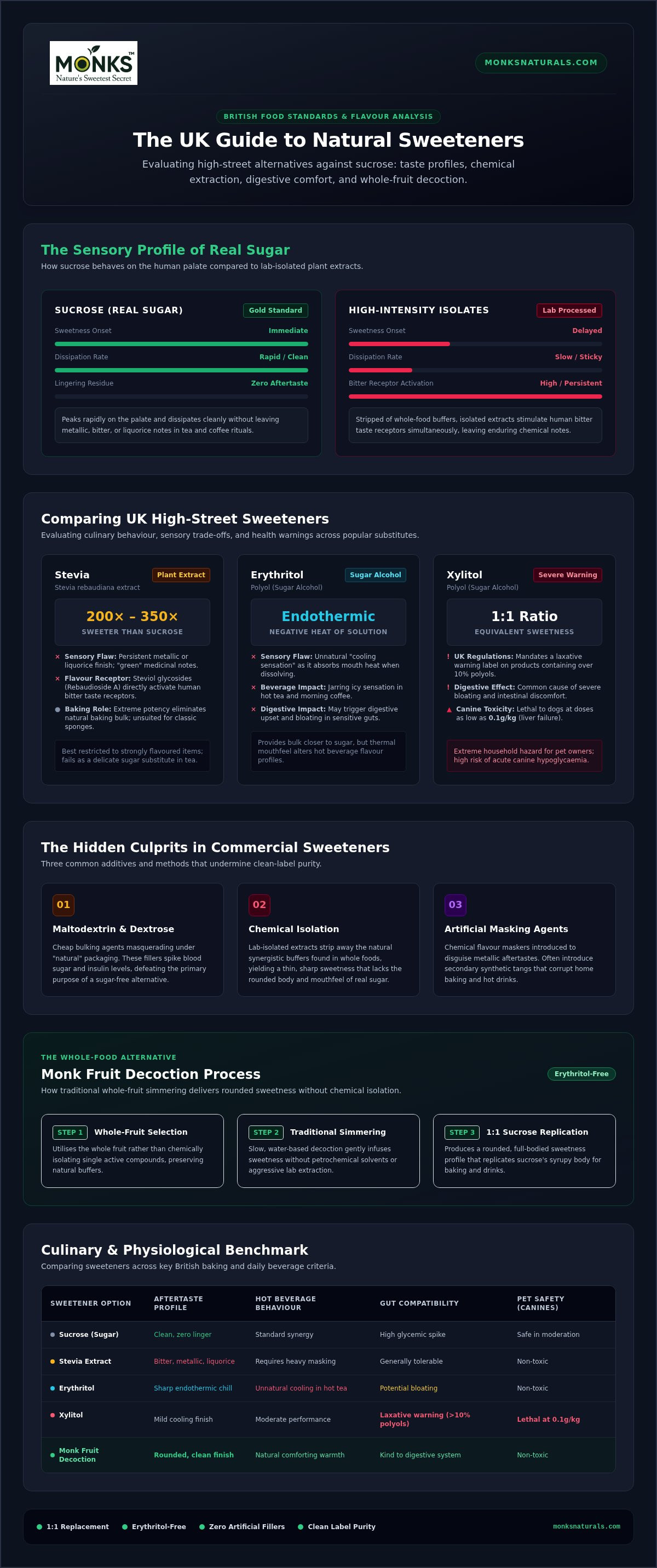
Real sugar has a distinct temporal profile. It offers an immediate onset of sweetness that peaks quickly and then dissipates without leaving a trace. There are no metallic, bitter, or liquorice notes. In the UK, where tea and coffee rituals are central to daily life, this clean finish is essential. Clean sweetness is the absolute absence of chemical aftertastes or lingering medicinal notes. Many sugar substitutes fail because they activate bitter taste receptors alongside sweet ones. This creates the off-notes often associated with high-intensity plant extracts like stevia.
Why Most Natural Alternatives Fall Short
The primary issue lies in how these sweeteners are processed. Lab-isolated extracts often strip away the natural buffers found in whole foods. This results in a thin sweetness that lacks the rounded mouthfeel of sugar. In British baking, texture is as important as taste. A classic sponge or shortbread relies on the bulk of sugar to create the right crumb. Common high-street options often use fillers to compensate for this lack of volume. You might find:
- Maltodextrin or dextrose: These fillers can spike insulin levels and often hide behind a natural label.
- Erythritol: This polyol creates an unnatural cooling sensation in the mouth, which can ruin a warm cup of tea.
- Artificial masking agents: These are used to hide metallic flavours but often add their own chemical tang.
Intensity is another trap. A sweetener that is 200 times sweeter than sugar isn't necessarily better. It's often harder to dose and lacks the balanced profile of a traditional fruit decoction. Modern UK wellness is shifting toward clean label ingredients. We want transparency and ingredients we recognise. By choosing whole-food processing over chemical isolation, it's possible to achieve a sweetness that feels familiar and comforting in every cup.
Comparing Popular UK Natural Sweeteners: Stevia, Xylitol, and Erythritol
Walking down the health aisles of a UK supermarket, you'll likely see three dominant names: Stevia, Xylitol, and Erythritol. These are the current "Big Three" in the world of sugar alternatives. While they offer a lower glycemic index, many users find they fall short of the sensory joy real sugar provides. Finding a natural sweetener that tastes like sugar UK shoppers can rely on for their daily tea involves looking past the marketing and understanding the chemistry behind the taste. According to NHS guidance on sweeteners, these options are authorised for use in Great Britain, but their culinary performance varies wildly.
Stevia: The High-Intensity Pioneer
Stevia is derived from the leaves of the Stevia rebaudiana plant. It is incredibly sweet, often 200 to 350 times sweeter than sucrose. However, this intensity comes with a price. Many people report a persistent metallic or liquorice-like finish. This happens because steviol glycosides directly activate human bitter taste receptors. Whilst whole-leaf extracts are less processed, they often carry a stronger "green" taste. Rebaudioside A is the most common lab-isolated extract, yet even this refined version rarely provides the clean finish required for a delicate Earl Grey. Stevia works best in drinks with strong, bold flavours that can mask its medicinal finish, but it often fails as a standalone sugar replacement.
Erythritol and Xylitol: The Sugar Alcohols
Erythritol and Xylitol are polyols, or sugar alcohols. They offer a texture closer to sugar than Stevia, but they aren't without significant flaws. Erythritol is famous for its "cooling sensation." When it dissolves in your mouth, it absorbs heat, creating an icy feel that is jarring in hot coffee or tea. Xylitol provides a 1:1 sweetness ratio, but it can be harsh on the gut. UK regulations require products with more than 10% polyols to carry a warning about laxative effects. Many people find that even small amounts lead to bloating and digestive discomfort.
For dog owners, Xylitol is a major concern. It is highly toxic to canines, causing life-threatening blood sugar drops and liver failure at doses as low as 0.1g/kg. Keeping Xylitol in a household with pets is a risk many aren't willing to take. If you are tired of the cooling effects or digestive discomfort of polyols, you might prefer the clean, erythritol-free options that focus on whole-fruit decoction instead. Finding a natural sweetener that tastes like sugar UK families can use safely means prioritising ingredients that don't compromise on gut health or pet safety.
The Hidden Culprits: Why Your Sweetener Doesn’t Taste Like Sugar
Many products on UK supermarket shelves carry the "natural" label, yet their ingredient lists tell a different story. If you've been searching for a natural sweetener that tastes like sugar UK brands often provide something that looks right but feels wrong on the tongue. This discrepancy usually comes down to what is added to the bottle or bag to make it spoonable or shelf-stable. Many of these additions are hidden culprits that compromise both health and flavour.
The Problem with Bulking Agents
Because high-intensity extracts are hundreds of times sweeter than sucrose, they require bulking agents to match sugar’s volume. In many cases, up to 90% of your sweetener might be a cheap filler like maltodextrin or dextrose. These are technically plant-derived, but they behave like sugar in the body. Maltodextrin actually has a higher glycemic index than table sugar. This ruins the clean profile many keto and diabetic users require whilst spiking insulin levels. If you want to avoid these hidden spikes, consult our Erythritol-Free Sweetener UK Guide to find truly transparent alternatives.
Extraction Methods and Chemical Aftertastes
The way a plant is turned into a powder also dictates the final flavour. Most industrial manufacturers use solvent-based extraction. This involves chemical solvents to isolate specific sweet compounds, such as Mogroside V or Rebaudioside A. While this achieves high purity in a lab setting, it often leads to a flat or medicinal taste in the kitchen. According to the Harvard T.H. Chan School of Public Health's analysis of low-calorie sweeteners, these hyper-potent extracts interact with taste receptors differently than sucrose, often resulting in lingering aftertastes.
To hide these metallic notes, brands frequently add "natural flavourings." These aren't there for taste; they are masking agents designed to trick your brain into ignoring the bitter finish of the isolate. Choosing a product made through traditional simmering or mechanical pressing preserves the fruit’s natural essence. This ensures your natural sweetener that tastes like sugar UK experience is authentic and free from chemical interference. It's about finding a balance that feels like a discovery rather than a compromise.
Monk Fruit Decoction: The Natural Sweetener That Actually Tastes Like Sugar
The search for a natural sweetener that tastes like sugar UK consumers can actually enjoy often ends at monk fruit. However, not all monk fruit is created equal. Most high-street brands sell highly purified extracts. These Mogroside V isolates are potent but can feel thin on the palate. Monk fruit decoction is the traditional alternative. It is a simple water extraction made by simmering the whole fruit. This process retains the natural complexity of the fruit, delivering a sweetness that feels rounded and authentic. It provides the syrupy mouthfeel that is often missing from lab-created alternatives.
The Traditional Simmering Process
MONKS embraces this ancient simmering method. We choose purity over chemical efficiency. We avoid the solvents used in industrial labs. This results in a clean, gentle sweetness. There is no metallic finish. There is no icy cooling sensation. It is the perfect companion for a traditional British cuppa. The decoction method ensures the sweetness is balanced by the fruit's natural essence. This creates a profile that is indistinguishable from sugar in hot beverages. If you want to understand the history and science of this method, explore The Traditional Guide to Monk Fruit Decoction.
Our process is defined by three simple steps:
- Simmer: Whole fruit is cooked slowly in water.
- Sieve: The liquid is filtered to remove solids.
- Sweeten: The resulting decoction provides a pure, sugar-like taste.
Culinary Performance: Baking and Dissolving
Baking requires more than just sweetness. It requires bulk and structure. Our powder combines monk fruit decoction with soluble tapioca fibre. This creates a "spoonable" texture. It allows for a 1:1 swap in your favourite recipes. It helps your cakes rise. It helps your biscuits crunch. It even mimics the caramelisation of real sugar. Soluble tapioca fibre also acts as a prebiotic, supporting gut health whilst providing the necessary volume for a perfect sponge. It avoids the bloating often caused by the polyol fillers found in cheaper blends.
Dissolving is effortless with the right format. Our liquid drops are a game-changer for cold drinks. They provide instant sweetness without the need for stirring or waiting. No grit. No grains. No residue. Whether you are sweetening an iced coffee or a homemade lemonade, the drops provide a clean, consistent flavour. This versatility makes it the ideal natural sweetener that tastes like sugar UK families can use across every meal. Experience the purity of our monk fruit decoction range today.
Choosing Your Sugar Alternative: The MONKS Solution
Reclaiming your daily rituals shouldn't feel like a chore. For those seeking a natural sweetener that tastes like sugar UK households can trust, the transition is about simplicity and transparency. By moving away from industrial isolates and embracing whole-fruit decoction, you can enjoy the sweetness you love without the digestive baggage. MONKS offers a refined solution that fits effortlessly into a modern, health-forward lifestyle.
The MONKS Difference: No Erythritol, No Fillers
Our approach is rooted in purity. We exclude the common irritants found in high-street blends, such as erythritol and maltodextrin. Instead, we use soluble tapioca fibre to create a functional, gut-friendly base for our powder. This ensures a true 1:1 sugar replacement that behaves exactly as you expect in the oven. MONKS is the UK’s leading monk fruit specialist, dedicated to bringing the purity of traditional decoction to modern homes.
Choosing between our formats is simple:
- Monkfruit Decoction Powder: Best for baking, dusting, and measuring by the spoonful.
- Monkfruit Decoction Drops: Ideal for instant stirring into tea, coffee, or cold water.
- The MONKS Set: A complete kit for those who want versatility across all culinary tasks.
Our ingredients are always vegan, keto-friendly, and free from artificial masking agents. We believe that nature provides everything needed for a clean, rounded sweetness. By choosing a natural sweetener that tastes like sugar UK families can enjoy together, you're prioritising wellness without sacrificing the familiar comfort of home cooking.
How to Get Started Today
Transitioning your kitchen doesn't require a total overhaul. Start with your morning ritual. Replace the sugar in your coffee with a single squeeze of our drops or a level spoonful of our powder. You'll notice the absence of the bitter aftertaste often found in other natural alternatives. Whether it's a delicate matcha or a robust breakfast tea, the flavour of your drink remains the star. It's a gentle way to integrate better habits into your routine.
You can find our premium Monk Fruit Sweetener Powder on Amazon for quick delivery across the UK. For those ready to discover the full breadth of our clean-label offerings, explore the full MONKS range on our website. Reclaiming your health starts with one small, better choice. Enjoy the sweetness of discovery.
Embracing a Sweeter, Cleaner Future
Finding a natural sweetener that tastes like sugar UK residents can enjoy shouldn't be a constant struggle of trial and error. We've explored how traditional monk fruit decoction avoids the bitter aftertastes and unnatural cooling sensations of common high-street alternatives. By choosing whole-fruit simmering over chemical extraction, you preserve the rounded, syrupy mouthfeel that makes your morning tea or coffee so comforting. This mindful choice allows you to maintain your daily rituals without any sensory compromise.
Always remember to check labels for hidden fillers like maltodextrin that can spike blood sugar levels unexpectedly. Choosing erythritol-free and gut-friendly options ensures your digestive system stays happy whilst you enjoy your favourite home-baked treats. As the UK’s leading monk fruit specialist, MONKS is here to help you navigate this transition with ease and confidence. Our traditional decoction method provides a superior taste that fits seamlessly into a modern, health-forward lifestyle.
Switch to a cleaner sweetness with MONKS and experience a sugar-free lifestyle that finally delivers on its promise. It's time to enjoy the sweet moments in life, naturally and effortlessly.
Frequently Asked Questions
Does monk fruit sweetener actually taste like real sugar?
Yes, monk fruit sweetener provides a clean sweetness that closely mimics sucrose. Unlike many alternatives, a high-quality decoction lacks the metallic or bitter aftertaste often found in Stevia. It delivers a rounded mouthfeel and a fast-dissolving profile that is indistinguishable from table sugar in tea and coffee. This makes it the ideal natural sweetener that tastes like sugar UK households can use for daily rituals without sacrificing flavour or comfort.
Is monk fruit sweetener available to buy in the UK?
Yes, monk fruit is widely available in the UK, particularly in the form of traditional water-based decoctions. Following a 2024 Food Standards Agency determination, monk fruit decoctions are not classified as novel foods in Great Britain. This allows UK-based brands like MONKS to offer pure drops and powders legally. You can easily find these premium alternatives online or through specialist retailers, ensuring a steady supply for your sugar-free kitchen.
What is the best natural sweetener for baking in the UK?
A monk fruit decoction powder blended with soluble tapioca fibre is widely considered the best option for British baking. This specific combination allows for a seamless 1:1 replacement in traditional recipes like sponges or shortbread. The tapioca fibre provides the necessary bulk and helps the bake achieve a natural caramelisation. It ensures your treats have the correct crumb and texture without the digestive discomfort often caused by erythritol-based bulking agents.
Why do some natural sweeteners have a bitter aftertaste?
Bitterness often occurs because high-intensity plant extracts, such as Stevia, directly activate human bitter taste receptors. Lab-isolated compounds like Rebaudioside A can leave a lingering medicinal finish that sugar doesn't possess. Additionally, industrial extraction methods using chemical solvents can strip away the fruit's natural essence. Choosing a whole-fruit decoction helps maintain a balanced sweetness profile, as the natural fruit carbohydrates buffer the intensity and prevent these sharp, unpleasant off-notes.
Can I use monk fruit sweetener if I have diabetes?
Yes, monk fruit sweetener is an excellent choice for those managing diabetes because it has a negligible impact on blood glucose levels. Pure decoctions don't cause the insulin spikes associated with table sugar or hidden fillers like maltodextrin. It allows you to enjoy sweet flavours in your diet whilst maintaining stable energy levels. However, you should always check the ingredient list to ensure no high-glycemic bulking agents have been added to the blend.
Is monk fruit sweetener better for you than Stevia?
Many people prefer monk fruit over Stevia because it lacks the persistent liquorice-like aftertaste. While both are plant-derived, monk fruit decoction offers a more rounded sweetness that pairs better with the delicate flavours of tea and matcha. MONKS provides an erythritol-free alternative that is gentler on the gut than many Stevia blends found on the high street. It represents a more sophisticated choice for those prioritising both culinary quality and digestive wellness.
Does monk fruit sweetener cause bloating or digestive issues?
Pure monk fruit decoction does not cause bloating or digestive issues. Most digestive upset attributed to natural sweeteners actually stems from sugar alcohols like erythritol or xylitol, which can have a laxative effect. By choosing an erythritol-free product, you avoid the osmotic diarrhoea and gas often associated with polyols. MONKS uses soluble tapioca fibre as a prebiotic base, which supports gut health whilst ensuring your sweetness remains entirely comfortable and bloat-free.
How do I use monk fruit as a 1:1 sugar replacement?
To achieve a 1:1 sugar replacement, you should use a monk fruit powder specifically formulated with a bulking agent like tapioca fibre. This ensures that one teaspoon of sweetener matches the volume and sweetness of one teaspoon of table sugar. It simplifies your kitchen routine by removing the need for complex conversions or mathematical adjustments. For liquids, pure drops are highly concentrated; usually, just a few drops are enough to sweeten an entire cup of coffee.


