

The "natural" sweetener in your pantry might be closer to a lab experiment than a plant. Most people switch to a plant based sugar alternative to escape the heavy processing of white sugar, yet they often end up with gut-wrenching sugar alcohols or lab-isolated extracts. You’ve likely felt that strange cooling sensation or the bitter aftertaste that ruins a perfectly good cup of coffee. It's frustrating to prioritise your health only to be met with digestive discomfort and hidden fillers like maltodextrin.
You deserve a sweetness that feels as good as it tastes. This guide explains why whole-fruit decoction is the cleanest choice for your daily routine. We'll explore how to find a truly clean label that supports stable blood sugar without the chemical baggage. Discover how to choose a versatile, gut-friendly option for your morning tea, favourite porridge, and afternoon bakes. It's time to embrace a sweetener that is grown, steeped, and simplified. Let's look at what makes a sugar alternative truly healthy in 2026.
Key Takeaways
- Learn how to distinguish between lab-isolated extracts and whole-fruit decoctions for a cleaner sweetening experience.
- Discover why a plant based sugar alternative should be free from gut-disrupting sugar alcohols and hidden fillers like maltodextrin.
- Compare the profiles of Stevia, Xylitol, and Monk Fruit to find the perfect match for your palate and health goals.
- Explore practical ways to use liquid drops and powders in your morning tea, favourite porridge, or weekend baking.
- Identify the key features of a clean-label product that supports stable blood sugar without sacrificing taste or quality.
What defines a plant based sugar alternative in 2026?
A plant based sugar alternative is a sweetening substance derived directly from botanical sources like leaves, fruits, or roots rather than being synthesised in a laboratory. This definition marks a significant shift in how we sweeten our daily rituals. In 2026, the focus has moved from merely "low calorie" to "botanically sourced" purity.
The UK is leading this cultural change. We are leaving behind the era of synthetic "diet" sweeteners like aspartame and saccharin. These chemicals often carry a metallic aftertaste and a list of lab-born side effects. Instead, we are looking to nature. We want ingredients that feel at home in our kitchens, not in a test tube.
There is a vital distinction to make between "natural-origin" and "minimally processed" options. Many mass-market sweeteners are still highly refined isolates. They are stripped of their botanical context in a factory using chemical solvents. Minimally processed alternatives preserve the integrity of the source. This approach keeps the process simple, clean, and transparent.
Why choose plant-based over refined sugar?
Refined sugar is a simple carbohydrate that causes rapid spikes in blood sugar. Choosing a plant based sugar alternative helps maintain a stable glycaemic index. This prevents the energy crashes that follow a sugary snack. It allows for sustained energy throughout the day.
These botanical options provide sweetness without the caloric burden. You can enjoy your morning tea or favourite porridge whilst reducing your overall intake. This transition happens without the need for artificial chemicals. It is a gentle way to manage weight and metabolic health.
Dental health is another key factor amongst British families. Traditional sugar feeds the bacteria that cause tooth decay and cavities. Plant-based sweeteners are not fermented by oral bacteria in the same way. This makes them a safer choice for children and adults alike. They protect your smile whilst satisfying your sweet tooth.
The rise of "clean label" sweetening in Britain
British consumers now demand total transparency. We want to know exactly what is in our food. Ingredient lists are being scrutinised more than ever. People are actively avoiding products that carry the "ultra-processed" label. This is about more than just calories; it is about ingredient integrity.
A clean label prioritises:
- No hidden maltodextrin to bulk out the powder.
- No artificial fillers that disrupt gut health.
- No chemical solvents used during the extraction process.
This movement is about returning to basics. It is about choosing products that are steeped, simmered, and bottled with care. By focusing on botanical origins, we ensure our sweetness is as pure as the plants it comes from. It makes better choices feel effortless and integrated into a modern, health-forward lifestyle.
How monk fruit decoction differs from standard extracts
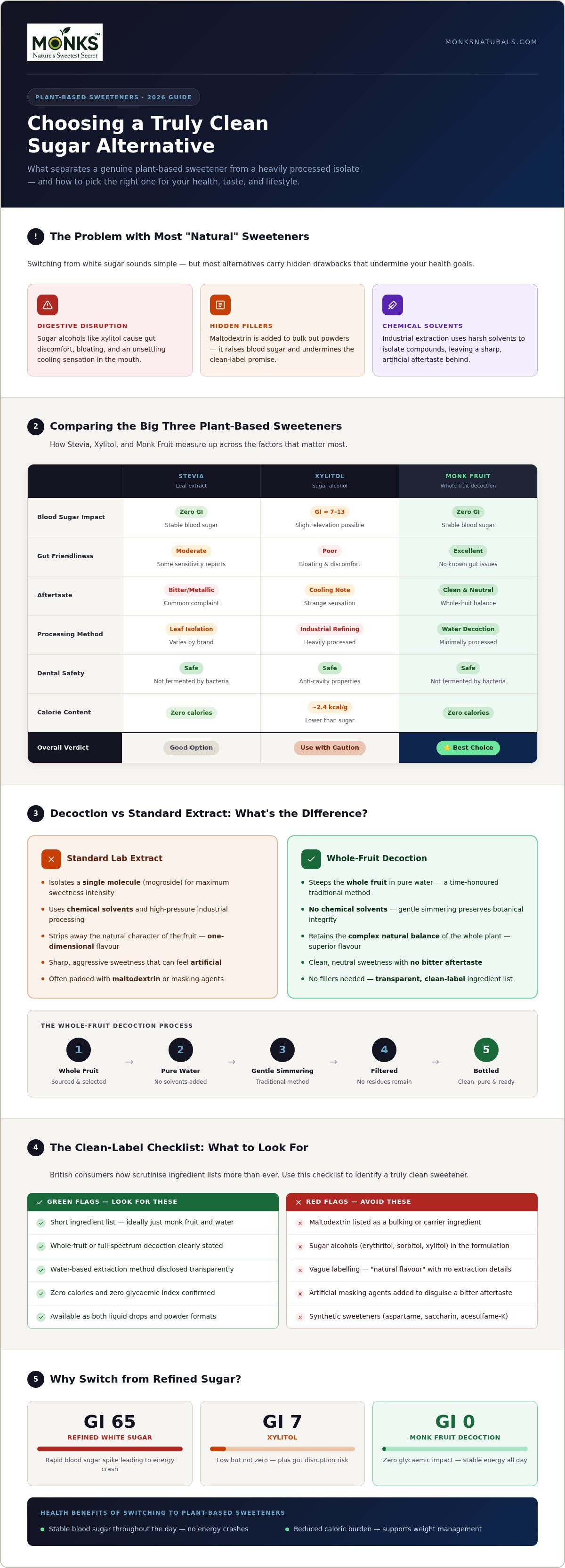
Not all sweetness is created equal. Most shoppers looking for a plant based sugar alternative assume that "monk fruit" on the label means the same thing across every brand. It doesn't. Standard extracts are typically lab-isolated mogrosides. This industrial process focuses on a single molecule to maximise sweetness. In doing so, it strips away the natural character of the fruit and leaves you with a one-dimensional isolate.
A decoction is different. It is a traditional, time-honoured method of simmering. Instead of using harsh chemicals to isolate a compound, we gently steep the whole fruit in pure water. This preserves the plant's integrity. It creates a sweetener that tastes like nature intended. It is clean. It is transparent. It is honest. By choosing a decoction, you are choosing a process that respects the botanical origin of the ingredient.
Traditional simmering vs chemical extraction
Cheaper extracts often rely on chemical solvents to speed up production. These solvents pull sweetness from the fruit through high-pressure industrial processing. It's efficient for the manufacturer but detrimental to the consumer. The result is often a sharp, aggressive sweetness that feels artificial. Water-based decoction is a slower, more mindful process. This traditional method has been used for centuries. It avoids the ultra-processed pitfalls of modern food science. By simmering the fruit, we extract the sweetness gently. This ensures that no chemical residues remain in the final product. It respects the fruit whilst delivering a superior, domestic flavour profile.
Maintaining a clean sweetness
The most common complaint about a plant based sugar alternative is the aftertaste. Many people experience a bitter, "metallic" note or an odd cooling sensation on the tongue. This usually happens because isolates lack the complex balance of the whole plant. Manufacturers then add "masking agents" or fillers to hide these flaws. Whole-fruit decoction eliminates this need. The sweetness is rounded and full-bodied. It blends naturally into your morning brew without changing the character of the beans or leaves. For a deeper look at this process, read our guide on monk fruit decoction.
At MONKS, we've mastered this niche. We provide a sweetness that is grown, steeped, and simplified. We remove the calories but keep the character. You can easily find the right monk fruit set for your kitchen and start enjoying a cleaner, more refined lifestyle today.
Comparing popular plant-based sweeteners: Stevia, Xylitol, and Monk Fruit
Choosing a plant based sugar alternative often feels like a compromise between taste and health. Stevia is a common first choice for many. It is derived from leaves and offers intense sweetness, but it frequently leaves a lingering bitter aftertaste that many find off-putting in tea or coffee. Xylitol is another popular option found in health shops. Whilst it is excellent for dental health, it carries nearly two-thirds the calories of sugar and is famously toxic to household pets, particularly dogs.
Monk fruit stands apart as a 1:1 sugar replacement. It satisfies the palate without the baggage of traditional isolates. It is stable, clean, and reliable. Unlike other botanicals, it doesn't require complex masking agents to make it palatable for your morning routine or weekend baking. It simply works. It feels like a refined secret for those who want sweetness without the chemical complexity.
Why many sweeteners have a cooling aftertaste
Have you ever noticed a strange, cold sensation when eating "sugar-free" treats? This is caused by polyols, or sugar alcohols. When substances like erythritol dissolve in your mouth, they absorb heat from your tongue. This physical reaction creates a temperature drop that feels like a menthol chill. It is a distracting sensation that pulls you away from the actual flavour of your food. It makes a warm cup of coffee feel strangely clinical.
We believe sweetness should feel natural and warm. This is why MONKS is entirely erythritol-free. By avoiding these sugar alcohols, we ensure our products provide a familiar, sugar-like experience that complements the richness of your favourite brew. We prioritise a domestic, culinary feel over lab-born efficiency. For a detailed breakdown of these flavour profiles, see our comparison of monk fruit vs stevia taste.
Gut health and plant-based alternatives
Digestive comfort is often the hidden cost of switching to a plant based sugar alternative. Many sugar alcohols are poorly absorbed in the small intestine. Instead, they travel to the large intestine where they ferment. This process leads to the common complaints of gas, bloating, and urgent discomfort. It turns a healthy choice into a physical chore.
We use soluble tapioca fibre as a superior, gut-friendly bulking agent. It provides the necessary structure for our powder without the digestive drama. It acts as a gentle prebiotic that supports your microbiome rather than disrupting it. Erythritol-free options are better for sensitive stomachs because they avoid the osmotic effect that triggers sudden digestive upset. This ensures your daily habits remain wholesome and comfortable.
Practical ways to use plant-based sweeteners in British life
Integrating a plant based sugar alternative into your daily routine shouldn't feel like a chore. It's about enhancing the rituals you already love. For many in Britain, the day starts with a proper cup of tea or coffee. Monk fruit drops are ideal here. They dissolve instantly and leave no gritty residue at the bottom of the mug. You get a clean, rounded sweetness that lets the flavour of the beans or leaves shine through.
Baking is a science of ratios. Traditional sugar provides bulk and moisture. When you switch, you need an alternative that mimics these properties. Our powder ensures your sponge stays light and your biscuits keep their snap. It behaves beautifully under heat, maintaining its sweetness without breaking down or turning bitter. It's a reliable way to enjoy your favourite treats whilst supporting your wellness goals.
Breakfast is the most important time to avoid a sugar spike. Stirring a plant based sugar alternative into your morning porridge or a bowl of Greek yogurt provides the sweetness you crave without the mid-morning crash. It's a simple swap that keeps your energy levels stable until lunch. You can even use it to macerate fresh berries for a wholesome dessert that feels indulgent but remains entirely clean.
The 1:1 conversion rule for powders
Cooking should be simple. Our monk fruit powder is designed for a direct 1:1 replacement by volume. If a recipe calls for a tablespoon of sugar, use a tablespoon of powder. This eliminates the need for complex maths in the kitchen. Soluble tapioca fibre is the secret to the "mouthfeel". It provides the structure that lab-isolated extracts lack. It helps achieve the right crumb in cakes and the perfect rise in bread. You can find our Monk Fruit Powder on Amazon to start your next baking project.
Sweetening on the go with liquid drops
Life happens outside the kitchen. Whether you're at a café or travelling, liquid drops offer ultimate convenience. They are discreet and highly concentrated. Generally, just two to four drops are enough to equal the sweetness of a level teaspoon of sugar. It's a precise way to control your intake. This makes it easy to stay consistent with your health goals whilst dining out. Read more on how to use monk fruit drops for more inspiration.
Ready to simplify your sweetening? Explore the full MONKS collection and upgrade your pantry today.
Choosing the best plant based sugar alternative in the UK
Selecting a plant based sugar alternative in the UK requires a keen eye for detail. Many products on supermarket shelves use misleading "natural" claims to hide industrial fillers. Maltodextrin and dextrose are the most common culprits. These ingredients are often added to bulk out cheap extracts, but they carry a high glycaemic index. They can spike your blood sugar just as quickly as refined white sugar. This defeats the purpose of making a healthier switch.
A premium experience depends on what is left out. Choosing an erythritol-free option ensures you avoid the artificial cooling sensation and digestive upset discussed earlier. It allows the true flavour of your food and drink to take centre stage. For those following keto, vegan, or diabetic diets in Britain, this level of purity is essential. It provides a reliable way to enjoy sweetness without compromising metabolic health or ethical standards.
What to look for on a clean-label sweetener
A truly clean label is short and transparent. You should look for ingredients you recognise. Avoid complex chemical names or "natural flavours" that aren't clearly defined. Whole-fruit sourcing is the gold standard. It maintains the botanical complexity that lab-isolated extracts lose. By choosing a product that uses traditional methods, you ensure your sweetness remains as close to nature as possible. For a comprehensive look at your options, consult our Natural Sugar Alternative UK guide.
The MONKS difference: Pure, simple, and British
We believe in sweetness without compromise. MONKS is the UK leader in monk fruit decoction because we prioritise integrity over industrial speed. Our commitment is simple: zero calories, zero carbs, and zero artificial fillers. We don't use erythritol, maltodextrin, or hidden sugars. This makes it an ideal choice for those who value quality over quantity.
If you are ready to start your sugar-free journey, The Monks Set is the perfect introduction. It includes both our liquid drops for on-the-go use and our powder for home baking. It is a complete kit designed to fit seamlessly into a modern, health-forward lifestyle. You can trust that every drop and spoonful is steeped in tradition and simplified for your daily routine. Explore the MONKS range today and discover the cleanest way to sweeten your life.
Elevate your daily ritual with cleaner sweetness
Embracing a plant based sugar alternative shouldn't mean compromising on taste or digestive comfort. You now know the difference between lab-isolated extracts and the gentle, traditional method of whole-fruit decoction. By choosing options free from erythritol and hidden fillers like maltodextrin, you protect your gut health whilst enjoying a familiar, sugar-like warmth in your favourite morning brew or weekend bakes.
It's about making better choices feel effortless. As the UK’s leading monk fruit brand, MONKS provides a 100% plant-based and vegan-friendly solution that fits seamlessly into your kitchen. Every drop and spoonful is erythritol-free for zero bloating; this ensures your sweetness remains as pure as its botanical origin. It's time to simplify your pantry and prioritise your long-term wellness without sacrificing the flavours you love.
Switch to a cleaner sweetness with MONKS and discover how refined, simple ingredients can transform your daily habits. Your journey towards a more mindful lifestyle starts with a single, better choice.
Frequently Asked Questions
Is monk fruit a healthier plant-based sugar alternative than stevia?
Monk fruit is often preferred for its cleaner flavour profile. Stevia is famous for a lingering bitter aftertaste that many find unpleasant. Because MONKS uses a traditional decoction method, it provides a well-rounded sweetness that mimics real sugar. It is a versatile plant based sugar alternative that works beautifully in coffee or tea without the need for chemical masking agents or artificial fillers often found in cheaper stevia blends.
Can I use plant-based sweeteners if I have a sensitive stomach?
You can, but you must choose carefully. Many options on the market rely on sugar alcohols like erythritol, which frequently cause bloating and digestive discomfort. Choosing an erythritol-free plant based sugar alternative is the best approach for those with sensitive systems. MONKS uses soluble tapioca fibre as a bulking agent. This is a gut-friendly prebiotic that supports your microbiome rather than causing the fermentation issues associated with fermented polyols.
Does monk fruit sweetener break an intermittent fast?
Pure monk fruit decoction does not break a fast. It has a zero-calorie and zero-carbohydrate profile; this means it won't spike your insulin levels or pull you out of ketosis. It is an excellent way to enjoy a sweetened black tea or coffee whilst adhering to an intermittent fasting schedule. Always ensure your chosen sweetener is free from hidden fillers like maltodextrin, which can interfere with your metabolic state.
Is it safe for diabetics to use plant-based sugar alternatives?
Most botanical sweeteners are safe for diabetics because they have a glycaemic index of zero. They provide sweetness without impacting blood glucose levels. The danger lies in hidden ingredients. Many brands use maltodextrin or dextrose to bulk out their powders; these can cause significant sugar spikes. Always opt for clean-label products that are certified keto-friendly and free from artificial additives to ensure your blood sugar remains stable and manageable.
Why do some natural sweeteners have a bitter aftertaste?
This usually happens when manufacturers use lab-isolation techniques. These processes focus on extracting high-intensity molecules but leave behind the complex, balancing compounds of the whole plant. This results in the sharp, metallic, or liquorice-like notes often associated with stevia. A water-based decoction avoids this issue. By gently simmering the whole fruit, we maintain a domestic, culinary flavour that feels natural on the palate and avoids any unpleasant, lingering bitterness.
How do I convert sugar measurements to monk fruit powder for baking?
Converting measurements is simple with our spoonable powder. We've designed it to be a direct 1:1 replacement for white sugar by volume. If your favourite cake recipe calls for 100g of sugar, simply use 100g of our monk fruit decoction with soluble tapioca fibre powder instead. This ensures you achieve the same rise, crumb, and mouthfeel in your baking without the need for complex mathematical conversions or kitchen guesswork.
Are plant-based sweeteners safe for children and toddlers?
These alternatives are generally safe and can help reduce a child's overall sugar intake. This is beneficial for preventing tooth decay and managing energy levels throughout the day. However, it's vital to avoid sugar alcohols like erythritol or xylitol for younger children. These can cause sudden digestive upset. Choosing a clean, whole-fruit decoction ensures that your toddlers enjoy a natural sweetness that is gentle on their developing digestive systems.
What is the difference between monk fruit extract and monk fruit decoction?
Extracts are typically industrial isolates created using chemical solvents to target specific sweet molecules. This often results in a one-dimensional, artificial taste. A decoction is a traditional method of gently simmering the whole fruit in pure water. This slower process respects the plant's integrity and preserves its natural character. It produces a cleaner, more premium sweetness that feels at home in a kitchen rather than a laboratory environment.


