

That lingering, liquorice-like bitterness in your morning coffee isn't a failure of your brewing technique; it's the hidden cost of choosing the wrong natural sweetener. We understand the frustration of seeking a healthier lifestyle only to be met with artificial chemical flavours or the uncomfortable bloating caused by hidden sugar alcohols. It's a common struggle for those of us trying to reduce sugar without losing the simple, domestic joy of a sweet treat.
When comparing monk fruit vs xylitol, the conversation often centres on dental benefits, but the real daily challenge is finding a taste that feels authentic and clean. You deserve a sweetener that enhances your tea, perfects your baking, and respects your gut health. This guide provides the definitive comparison of taste, aftertaste, and culinary performance for 2026. We will explore how these plant-based options behave in the kitchen, their impact on your digestion, and which one finally eliminates the need for compromise. Discover how to choose a sweetener that is pure, functional, and genuinely delicious.
Key Takeaways
- Understand why monk fruit provides a cleaner sweetness than stevia by comparing their natural origins and unique molecular structures.
- Identify the source of the common "cooling" aftertaste and learn how to achieve a pure flavour without the lingering bitterness of stevia.
- Discover how natural sweeteners perform at high temperatures and the simple adjustments required to master browning in your home baking.
- Evaluate the digestive benefits of monk fruit vs xylitol and stevia to find a gut-friendly choice that avoids the bloating often linked to sugar alcohols.
- Explore why the traditional decoction method produces a filler-free alternative that integrates effortlessly into your daily coffee and tea rituals.
The Sweetness Showdown: Monk Fruit vs Stevia Taste Profiles
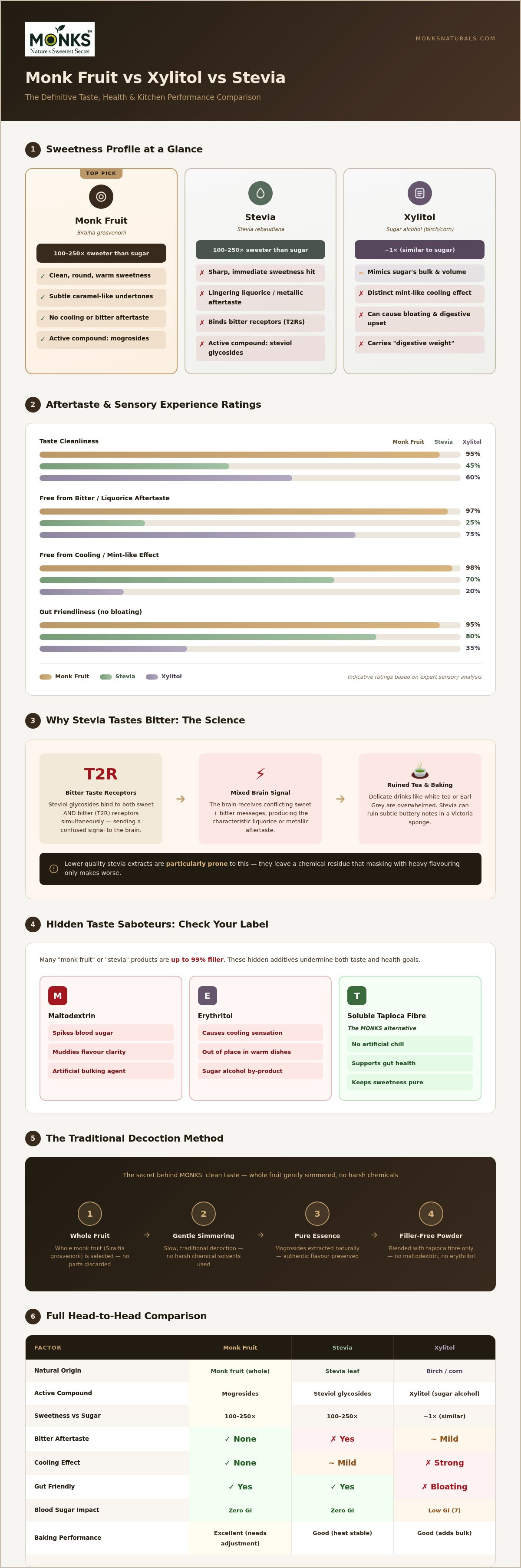
Choosing between natural sweeteners often feels like a trade-off between health and pleasure. Stevia originates from the leaves of the Stevia rebaudiana plant, whilst monk fruit comes from a small, green melon called Siraitia grosvenorii. Both are classified as high-intensity sugar substitutes, delivering a sweetness that is roughly 100 to 250 times more potent than sucrose. This intensity is driven by specific plant compounds: steviol glycosides in the leaves and mogrosides in the fruit.
The core difference lies in the "shape" of the sweetness. Stevia often delivers a sharp, immediate hit. In contrast, monk fruit is frequently described as "rounder" and "cleaner". It blends into recipes with a transparency that stevia lacks. When we look at monk fruit vs xylitol, we see that whilst xylitol mimics sugar's bulk, monk fruit provides a superior, concentrated sweetness without the digestive weight. It's a refined secret. It tastes clean. It works.
The Stevia Bitterness: Why the Liquorice Aftertaste Persists
Stevia’s most famous flaw is its lingering aftertaste. This happens because steviol glycosides don't only interact with your sweet receptors. They also bind to bitter taste receptors on the tongue called T2Rs. This dual interaction sends a mixed message to the brain, resulting in that distinct "liquorice" or metallic finish. Lower-quality extracts are particularly prone to this. They leave a chemical residue that can ruin a delicate cup of white tea or a vibrant bowl of matcha. Masking this bitterness requires heavy flavouring, which often defeats the purpose of using a natural, clean-label ingredient.
The Monk Fruit Profile: Clean Sweetness Through Tradition
Monk fruit offers a fundamentally different sensory experience. It provides a bright, domestic sweetness often accompanied by subtle, caramel-like undertones. This profile is best enjoyed through a traditional Chinese decoction method, where the whole fruit is simmered to create a pure essence. This gentle process avoids the harsh chemical extraction used for stevia, preserving a more authentic flavour. It's the favourite choice for those who are sensitive to bitter notes. You can find this clean profile in our monk fruit powder, which uses this simmering technique to ensure every spoonful is free from fillers. Comparing monk fruit vs xylitol reveals that monk fruit’s lack of cooling effect and its traditional preparation make it a more wholesome addition to your daily wellness routine. It allows you to sweeten, bake, and enjoy without compromise.
Aftertaste and Sensory Experience: Beyond the First Sip
Many consumers believe that natural sweeteners inevitably come with a strange, icy sensation. This is the cooling effect myth. In reality, this chill doesn't come from the fruit itself; it's a byproduct of erythritol, a sugar alcohol frequently used as a bulking agent. When comparing monk fruit vs xylitol, users often notice that xylitol also carries a distinct, mint-like coolness that can feel out of place in a warm pudding. Pure monk fruit is different. It's warm. It's deep. It's authentic.
Stevia often struggles in traditional British baking favourites. Its intense liquorice profile can easily overwhelm the delicate buttery notes of a Victoria sponge or the subtle fragrance of an Earl Grey tea. You want a sweetener that disappears into the background, leaving only the sweetness you crave. The traditional decoction process is the secret to our clean taste, involving the gentle simmering of whole monk fruit to extract its pure, unadulterated essence. This ensures your morning ritual remains untainted by chemical echoes, providing a clean finish that respects the integrity of your favourite brew.
Maltodextrin and Erythritol: The Hidden Taste Saboteurs
Check the label on your favourite sweetener. You might find that your "monk fruit" or "stevia" bag is actually 99% filler. Manufacturers often use maltodextrin to add volume, but this can cause spikes in blood sugar and muddy the flavour clarity. Research from Harvard on artificial sweeteners highlights how these additives can complicate the health profiles of sugar substitutes. At MONKS, we use soluble tapioca fibre. This choice avoids the artificial "chill" of erythritol whilst supporting a gut-friendly experience. It keeps the sweetness pure, transparent, and functional.
- Maltodextrin spikes blood sugar.
- Fillers dilute the natural flavour.
- Erythritol creates an unwanted chill.
Texture and Mouthfeel in Drinks
Solubility defines your drinking experience. Stevia powders can often feel thin or leave a gritty residue at the bottom of your cup. In contrast, a monk fruit decoction provides a rich, syrupy quality that mimics the body of real sugar. This is vital for achieving the perfect mouthfeel in a morning latte or a creamy hot chocolate. Achieving a luxurious texture shouldn't require compromise. If you're ready to upgrade your pantry, explore the range at Monks Naturals to find your perfect match. When weighing up monk fruit vs xylitol for your coffee, the lack of aftertaste and the superior solubility of a pure decoction usually wins the day.
Cooking and Baking Performance: Heat Stability Compared
Baking is a domestic ritual. It requires precision. Both monk fruit and stevia are impressively heat-stable up to 200°C. They don't lose their sweetness in the oven. This reliability is supported by Michigan State University on Stevia & Monk Fruit safety. However, the challenge for the home cook isn't just heat; it's chemistry.
Sugar does more than sweeten. It provides structure, retains moisture, and creates browning. Neither stevia nor monk fruit caramelises exactly like sucrose. Your crumbles might look paler than usual. To fix this, try adding a teaspoon of chicory root or a pinch of cinnamon to deepen the colour. You can find more practical tips in our Monk Fruit vs Sugar: A 1:1 Conversion Guide. It's a refined secret for better results.
Baking with Stevia: The Density Challenge
Stevia is incredibly concentrated. Using it without a bulking agent often results in a flatter, denser bake. Your Victoria sponge might lose its signature lift. There is also the risk of bitter "hot spots". If the extract isn't dispersed perfectly, the flavour becomes uneven. Stevia performs better in moist recipes like carrot cake, but it struggles with the snap required for crisp biscuits. It feels thin. It lacks body.
The Monk Fruit Advantage in the Kitchen
Our Monkfruit decoction with soluble tapioca fibre Powder is designed for the modern kitchen. The tapioca fibre provides the necessary bulk for a "spoonable" experience. It mimics sugar's texture without the baggage. When comparing monk fruit vs xylitol, the difference is clear. Xylitol provides volume but often leads to digestive discomfort. Monk fruit offers a gut-friendly alternative that keeps your sponges light and your puddings rich.
Choose your tools wisely. Use the powder for porridge, crumbles, and classic British puddings. For raw treats and cheesecakes, Monkfruit decoction Drops are the superior choice. They blend instantly. They leave no grit. They ensure a smooth, premium finish every time. Integrating these choices into your routine is effortless. It's a simple path to better health.
Health and Gut Impact: A British Wellness Perspective
True wellness begins in the gut. For those managing blood sugar, both monk fruit and stevia provide a reassuring zero-glycemic index (GI) profile. They offer sweetness without the metabolic spike. This makes them essential tools for anyone following a keto or diabetic lifestyle. However, the impact on your digestive system goes far beyond simple sugar readings.
The common complaint of bloating is rarely caused by the natural extract itself. Instead, it's often the result of hidden sugar alcohols. Erythritol is a frequent addition to mass-market sweeteners, yet it's notorious for causing digestive distress in sensitive individuals. Transitioning to a cleaner alternative is a simple way to protect your comfort. You can learn more in our Erythritol-Free Sweetener UK: The 2026 Guide. When comparing monk fruit vs xylitol, the difference in gut tolerance is stark. Whilst xylitol is effective for dental health, its tendency to cause laxative effects makes it a risky choice for daily use in larger quantities.
Is Stevia Gut-Friendly? What the Science Says
Stevia is often marketed as a gentle herbal option, but the reality is more complex. Recent lab studies, including 2026 research from Cambridge University, have begun to explore how stevia interacts with gut bacteria diversity. There is some evidence that certain compounds might impair specific beneficial bacteria. Commercial stevia brands also frequently rely on fillers like dextrose or maltodextrin. These additives can disrupt the microbiome and muddy the "natural" claim. Choosing a product should be about what is left out as much as what is put in. Natural doesn't always mean gentle. Clarity matters.
Monk Fruit and Soluble Tapioca Fibre
We believe in a minimalist approach to health. Our monk fruit decoction uses a traditional simmering method that keeps the process close to nature. Unlike lab-isolated extracts, this whole-fruit approach preserves the integrity of the mogrosides. To provide structure, we use soluble tapioca fibre. This isn't just a filler; it's a functional ingredient. It acts as a prebiotic. It feeds your microbiome. It supports your digestion. This combination is particularly beneficial for those monitoring their health closely:
- Steady energy: No blood sugar spikes or crashes.
- Digestive ease: Free from the bloating associated with sugar alcohols.
- Microbiome support: Prebiotic fibre encourages beneficial bacteria growth.
This approach is explained in detail in our guide on Monk Fruit Sweetener for Diabetics. It is a refined secret for a healthier routine. Your health deserves a sweetener that works with your body, not against it. Experience the benefits of a prebiotic monk fruit sweetener and feel the difference in your daily ritual.
Making the Switch: Why MONKS Wins the Taste Test
The transition to a sugar-free lifestyle should feel like a discovery, not a sacrifice. We've compared the options. We've analysed the science. The result is clear: monk fruit provides the most authentic, clean-tasting experience for the discerning palate. Whilst stevia persists with its "licorice" bitterness and xylitol brings an unwanted cooling sensation, monk fruit remains transparent. It enhances your coffee. It perfects your baking. It respects your morning ritual.
When you evaluate monk fruit vs xylitol, the choice often centres on how you want to feel after your meal. You deserve a sweetener that is gentle on the stomach and free from the chemical echoes of industrial processing. In the debate of monk fruit vs xylitol, the superior taste and gut-friendly profile of the former make it the clear winner for 2026. By choosing a UK-based, clean-label brand, you support a higher standard of purity. You choose a product that values quality over quantity.
The MONKS Difference: No Fillers, Just Fruit
Our Monkfruit decoction with soluble tapioca fibre Powder stands as the ultimate sugar swap for the modern kitchen. It's a refined secret for those who refuse to settle for maltodextrin or erythritol. If you're new to this journey, The Monks Set provides the perfect entry point. It combines our versatile powder with our convenient drops, allowing you to organise your sugar-free life with ease.
Integrating these choices into your routine is simple. Start by adding a few Monkfruit decoction Drops to your morning tea. Notice the lack of bitterness. Feel the clean finish. For a deeper dive into your options, read our Natural Sugar Alternative UK: The 2026 Guide. It provides the clarity you need to make better choices every day.
Where to Buy Premium Monk Fruit in the UK
Finding a pure, filler-free sweetener shouldn't be a struggle. You can find our full range directly on the MONKS website, where we share our passion for traditional decoction methods. If you prefer the convenience of your regular shop, our products are also available via Amazon UK. Both options ensure you receive the freshest batches of our traditional simmered extracts.
Start your sugar-free journey today. Choose a cleaner, better taste. Embrace a routine that supports your wellness without compromising on the joy of sweetness. It's time to experience the MONKS difference. Your morning coffee will thank you.
Elevate Your Daily Sweetness Ritual
We have explored the nuances of natural sweetness for a modern, health-forward lifestyle. Stevia often leaves a bitter trail that lingers on the palate. Monk fruit remains clean and transparent. It is the refined choice for your morning coffee, afternoon tea, and home baking. When you weigh up monk fruit vs xylitol, the decision rests on purity and digestive comfort. Monk fruit offers the authentic sweetness you crave without the synthetic aftertaste or the unwanted "chill" of sugar alcohols.
Choosing a traditional decoction means choosing a filler-free life. Our products are erythritol-free for zero bloating, ensuring your gut health remains a priority. It is a simple, domestic upgrade that integrates seamlessly into your routine. Switch to the UK’s cleanest monk fruit sweetener today and experience the superior taste of a whole-fruit extract. We also offer free UK delivery on orders over £30 to help you organise your pantry with ease. Your journey to a healthier lifestyle doesn't need to be a chore. It starts with a single, better choice.
Frequently Asked Questions
Does monk fruit taste exactly like white sugar?
Monk fruit provides a clean, natural sweetness that is very close to sugar but not an identical match. It lacks the sharp, chemical edge of artificial alternatives and avoids the bitter aftertaste of stevia. You will notice subtle fruity or caramel undertones that blend beautifully into coffee and tea. It's a refined secret for those seeking a domestic ritual that feels authentic and wholesome. It sweetens. It satisfies. It stays pure.
Why does some stevia taste bitter whilst others do not?
The bitterness in stevia stems from the way steviol glycosides interact with your tongue's bitter taste receptors. Lower-quality extracts often contain higher amounts of specific compounds that leave a lingering metallic or liquorice finish. Premium versions focus on isolating cleaner-tasting molecules, but the risk of a bitter "hot spot" remains. Monk fruit decoction avoids this entirely by using a traditional simmering process that preserves a much rounder and more consistent flavour profile.
Is monk fruit sweetener better for you than stevia?
Both are zero-glycemic options, but monk fruit is often preferred for its cleaner processing and digestive profile. When comparing monk fruit vs xylitol or stevia, the absence of harsh chemical solvents and sugar alcohols is a significant benefit. Our decoction includes soluble tapioca fibre, which acts as a prebiotic to support your gut health. It's a mindful choice that prioritises purity, transparency, and your daily well-being without making health feel like a chore.
Can I use monk fruit and stevia together in baking?
You can blend these sweeteners, but using them together requires careful measurement to avoid an overwhelming sweetness. Many bakers find that monk fruit decoction with soluble tapioca fibre Powder provides a superior texture on its own. It mimics the bulk of sugar more effectively than liquid stevia drops. If you choose to mix them, start with small amounts to ensure the stevia bitterness doesn't mask the delicate, clean notes of the monk fruit.
Does monk fruit have a cooling aftertaste like erythritol?
Pure monk fruit does not have a cooling aftertaste. That distinctive, mint-like chill is actually a characteristic of erythritol, which is a sugar alcohol commonly used as a filler in mass-market products. At MONKS, we consciously exclude erythritol and other sugar alcohols from our range. By using a traditional whole-fruit decoction, we maintain a warm and rounded sweetness that feels domestic and comforting. It's sweetness without the artificial "chill" or the bloating.
Why is monk fruit more expensive than stevia in the UK?
Monk fruit is a boutique crop with a limited harvest period between July and September in specific regions of China. The traditional simmering method used for our decoction is more labour-intensive than the industrial extraction of stevia leaves. This artisanal approach ensures a premium product that values quality over quantity. Whilst it may carry a higher price point, the result is a cleaner taste, a better gut profile, and a more integrated wellness experience.
Is monk fruit extract safe for children and during pregnancy?
Monk fruit is considered safe for children and during pregnancy by major global health authorities. It has been used for centuries in traditional Chinese medicine as a natural remedy and sweetener. Because it is non-glycemic and free from artificial fillers, it's a gentle way to reduce sugar intake for the whole family. However, we always recommend consulting with your GP or midwife before making significant changes to your diet during pregnancy or for young children.
Does stevia or monk fruit break an intermittent fast?
Neither monk fruit nor stevia will break an intermittent fast because they contain zero calories and do not trigger an insulin response. They allow you to enjoy a sweetened beverage whilst maintaining a state of ketosis or autophagy. When weighing up monk fruit vs xylitol for fasting, monk fruit is the superior choice because it avoids the small caloric load and potential digestive disruption often associated with sugar alcohols. It's clean, functional, and fast-friendly.


