

Finding a natural sugar alternative UK residents can trust is harder than it looks. Many "clean" sweeteners are bulked with maltodextrin or sugar alcohols that trigger uncomfortable bloating and a lingering, metallic aftertaste. You want the sweetness of sugar without the crash, the additives, or the digestive distress. It's exhausting to read every label only to find hidden fillers disguised as health foods.
We agree that your favourite morning ritual should be simple, pure, and delicious. You deserve a sweetener that respects your gut and satisfies your palate. This 2026 guide reveals the healthiest plant-based options for a truly clean lifestyle. You'll learn the difference between lab-made extracts and traditional decoctions. Identify genuine labels. Avoid hidden erythritol. Embrace functional ingredients like soluble tapioca fibre. Discover a better way to sweeten. It's light, honest, and entirely wholesome.
Key Takeaways
- Identify hidden fillers. Avoid the bloating, spikes, and synthetic aftertastes often caused by maltodextrin or erythritol blends.
- Discover the ideal natural sugar alternative UK for your daily rituals. Prioritise purity, flavour, and simplicity.
- Navigate plant-based choices. Compare the bitter profile of stevia against the digestive considerations of birch-derived xylitol.
- Support your gut. Choose clean-label products that integrate seamlessly into keto, vegan, and health-conscious lifestyles.
- Embrace the 2026 gold standard. Learn why traditional monk fruit decoction offers the cleanest, most sophisticated sweetening experience.
The Landscape of Natural Sugar Alternatives in the UK
British kitchens are changing. The demand for a natural sugar alternative UK consumers can trust has peaked in 2026. This isn't just a fleeting trend. It's a fundamental shift in how we approach wellness. High sugar consumption is linked to various health concerns, and the UK government's Soft Drinks Industry Levy (SDIL) has accelerated the move away from traditional beet and cane sugars. As of April 2026, the higher rate of this levy stands at £2.78 per 10 litres for drinks with 8g of sugar or more per 100ml. This regulatory pressure has forced innovation in every pantry.
To understand your options, it helps to look at a comprehensive overview of sugar substitutes. Most plant-based choices fall into three categories: high-intensity sweeteners like stevia, sugar alcohols like xylitol and erythritol, and fruit-based decoctions like monk fruit. Each has its own profile. Stevia offers intensity but often carries a bitter note. Xylitol supports dental health but may cause digestive upset. Monk fruit, particularly when prepared as a traditional decoction, provides a clean sweetness without the synthetic baggage. Finding the right natural sugar alternative UK brands offer means looking beyond the front of the packet.
Why "Natural" Does Not Always Mean Clean
Supermarket shelves are often deceptive. You might see "natural" on the front, but the back tells a different story. Many blends use maltodextrin or dextrose as bulking agents. These are cheap fillers. They can spike blood sugar levels just as quickly as table sugar. Processing matters, too. Harsh chemical solvents used in lab extraction can strip away the plant's inherent benefits. In 2026, a clean label sweetener is defined as a product containing only whole-plant ingredients, prepared through traditional methods without synthetic additives or hidden fillers.
The Shift Towards Gut-Friendly Sweetening
Health enthusiasts across the UK are now prioritising the microbiome. There is a growing awareness that what we eat affects our inner ecosystem. Synthetic sweeteners like aspartame or sucralose are increasingly avoided due to their potential impact on gut flora. Even some natural sugar alcohols like erythritol can cause bloating or discomfort for sensitive individuals. This has led to a rise in demand for whole-food alternatives. Monk fruit decoctions, especially those paired with soluble tapioca fibre, offer a functional way to sweeten whilst supporting digestive health. It's about finding balance. It's about choosing ingredients that work with your body, not against it.
Comparing the Most Popular Natural Sweeteners
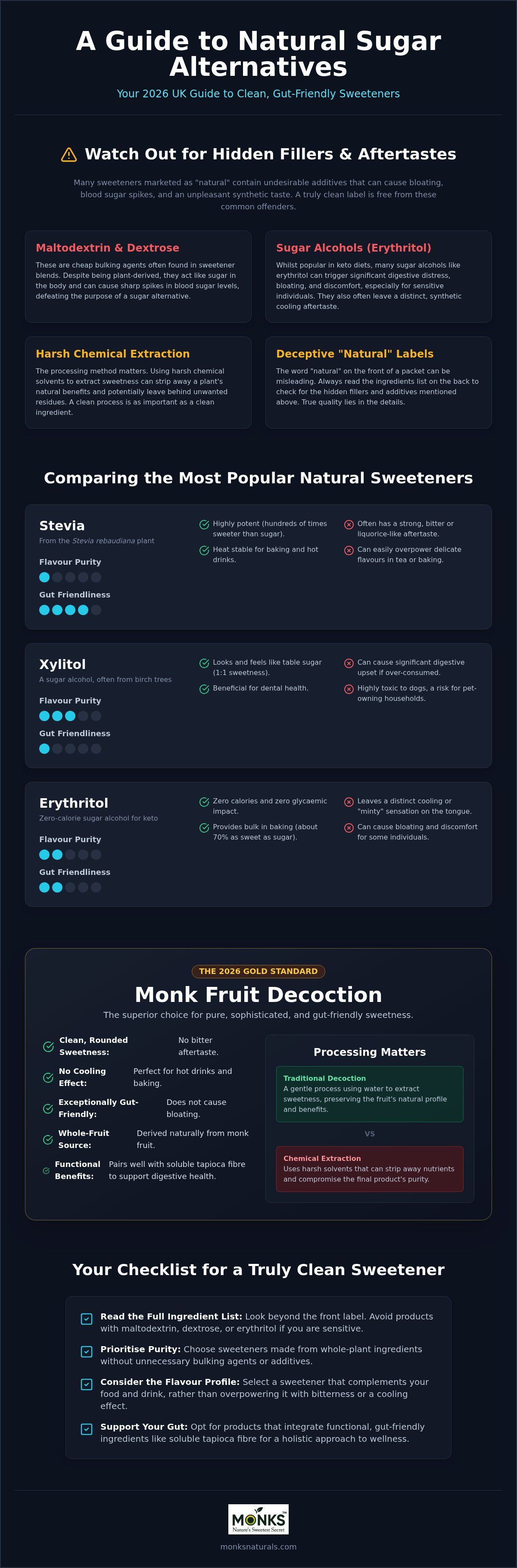
The search for a natural sugar alternative UK kitchens can rely on often starts with four main contenders. Each has a unique personality. Each serves a different purpose. Each carries its own set of compromises. Understanding these differences is the first step toward a cleaner, more mindful pantry.
Stevia remains a popular plant-based choice. It's potent. It's accessible. It's widely available in British supermarkets. Derived from the leaves of the Stevia rebaudiana plant, it's hundreds of times sweeter than sugar. The challenge is the lingering bitterness. This liquorice-like aftertaste can easily overpower a delicate Earl Grey or a subtle lemon drizzle cake. It's a functional choice, but it rarely offers a pure flavour profile.
Xylitol offers a familiar experience. It's crystalline. It's sweet. It looks and feels like table sugar. Often sourced from birch trees, it's a favourite for dental health because it doesn't feed oral bacteria. However, it's a sugar alcohol. This means it can cause significant digestive upset if consumed in large quantities. It's also highly toxic to dogs, which is a vital consideration for pet-owning households across the UK.
Erythritol is the staple for keto baking. It's a sugar alcohol with zero calories and zero glycemic impact. It's easy to use. It provides bulk. The main drawback is the distinct cooling sensation it leaves on the tongue. In a cold dessert, this might pass unnoticed. In a warm sponge or a hot cup of coffee, it can feel synthetic and distracting.
Monk fruit stands apart as the emerging leader for 2026. It's a whole-fruit extract. It's gut-friendly. It provides a clean, rounded sweetness without the cooling effect of sugar alcohols or the bitterness of stevia. For those seeking a truly premium experience, a monk fruit decoction offers the most honest path to a sugar-free lifestyle.
Performance in British Baking and Hot Drinks
Heat stability is essential for any baker. Stevia and monk fruit survive high oven temperatures without losing their sweetness. Xylitol and erythritol are also heat-stable, but they can alter the final texture of your bakes. They may result in a crispier or drier crumb than intended. Most natural alternatives don't swap 1:1 with sugar. Stevia is highly concentrated. Erythritol is about 70% as sweet. Xylitol is a direct match. Always check a conversion guide to ensure your recipes stay balanced and delicious.
Calorie Count and Glycemic Impact
Glycemic impact varies wildly amongst natural choices. Whilst honey and agave are natural, they are not low-impact. They contain high levels of fructose. They spike insulin levels. In contrast, monk fruit and stevia sit at zero on the glycemic index. This makes them the superior natural options for those managing type 2 diabetes or following a strict ketogenic diet. Zero calories should always be paired with zero additives for the best results.
The Problem with Fillers and Aftertastes
The search for a natural sugar alternative UK shoppers can trust often ends in frustration. You find a product labelled "Monk Fruit" or "Stevia," but the taste is wrong. It's too sharp. It's too cold. It leaves a metallic coating in your mouth that lingers for hours. This is rarely the fault of the plant itself. Usually, the culprit is a hidden filler or a harsh extraction process that prioritises cost over quality.
The "Erythritol Gap" is a significant hurdle in the British market. Many popular sweeteners found on platforms like Amazon UK are advertised as monk fruit, yet they consist predominantly of erythritol. This sugar alcohol is used to provide bulk because pure monk fruit extract is intensely sweet. For those with sensitive stomachs, this is a problem. Erythritol can cause bloating, gas, and digestive discomfort. Choosing erythritol-free options is the only way to ensure your morning coffee doesn't lead to an afternoon of gut distress.
Fillers like maltodextrin and dextrose present another risk. These additives are often used to make plant extracts pourable like granulated sugar. Despite their "natural" origin, they have a high glycemic index. They can cause blood sugar spikes that rival refined sugar. This undermines the very reason many people switch to alternatives. A truly clean label should be short, transparent, and free from these tactical inclusions.
Understanding the Cooling Effect
If your tea suddenly feels like you've just chewed a piece of mint, you're experiencing the cooling effect of sugar alcohols. Chemically, substances like erythritol and xylitol create an endothermic reaction when they dissolve. They literally absorb heat from your tongue. This sensation is jarring in a hot British brew. It masks the delicate notes of the tea and creates a synthetic, clinical experience. Traditional decoction avoids the cooling effect entirely by using a water-based simmering process rather than chemical isolation.
Why Soluble Tapioca Fibre is the Superior Bulking Agent
To achieve a sugar-like texture without the downsides of sugar alcohols, we look to nature's functional fibres. Soluble tapioca fibre is a game-changer for 2026. It provides the necessary bulk for baking whilst acting as a prebiotic that supports gut health. It doesn't spike insulin. It doesn't cause the "runny" tummy associated with sugar alcohols. In the kitchen, it helps create a better crumb and a more satisfying mouthfeel. You can find more detail on this in our guide to monk fruit with tapioca fibre. It's the secret to a sweetener that behaves like sugar but treats your body with respect.
Choosing the Right Alternative for Your Lifestyle
Your choice of sweetener should align with your personal wellness goals. No single natural sugar alternative UK consumers find on the shelves is perfect for every situation. It's about finding the right tool for your specific lifestyle. Whether you're tracking macros or simply trying to settle a sensitive stomach, your ingredients matter.
If you're following a ketogenic diet, zero-carb options are essential. You need a sweetener that provides satisfaction without triggering an insulin response or kicking you out of ketosis. For vegans, the focus shifts to ethical purity. Traditional white sugars often use bone-char in the refining process. Choosing a plant-based, decoction-style sweetener ensures your morning routine remains entirely cruelty-free and clean.
Gut health is a primary concern for many in 2026. As discussed, avoiding sugar alcohols like erythritol and xylitol is a wise move for those prone to bloating. Instead, look for alternatives that include prebiotic fibres. These support your microbiome whilst providing a gentle sweetness. For families, stability is key. Natural sweeteners don't cause the energy spikes and subsequent crashes associated with refined sugar, making them a safer choice for children's breakfasts and snacks.
A Checklist for the Savvy UK Shopper
Always turn the packet over. Avoid synthetic names like sucralose or aspartame. Watch out for maltodextrin, which often hides in "natural" blends. In June 2024, the UK Food Standards Agency (FSA) confirmed that aqueous monk fruit decoctions are not considered novel foods. This provides a clear safety assurance for British families. Look for "whole fruit" or "traditional decoction" on the label to ensure you're getting a premium product rather than a lab-isolated extract.
Practical Swaps for Everyday Life
Start small. Replace the sugar in your morning porridge or matcha with a sprinkle of fibre-based powder. For evening rituals, natural sweeteners work beautifully in home-made cordials or cocktails, offering sweetness without the hangover-inducing sugar crash. If you're often out and about, liquid drops provide the ultimate convenience. A quick squeeze into your tea whilst at work keeps your habits consistent and your energy levels stable. To upgrade your daily routine, you can explore our range of monk fruit decoctions today.
Why Monk Fruit Decoction is the Gold Standard for 2026
The gold standard for a natural sugar alternative UK families can rely on has shifted. It's no longer just about the name of the plant. It's about the method of preparation. Most commercial monk fruit products are highly purified extracts. These mogroside isolates are created in labs using harsh chemical solvents. Whilst they are sweet, they often lose the rounded, complex flavour of the original fruit. In contrast, traditional decoction respects the integrity of the ingredient.
Decoction is a gentle simmering method. We use whole fruit and pure water. This process extracts sweetness naturally, maintaining a "clean" profile that avoids clinical, sharp notes. By choosing decoction, you're embracing a product that is fundamentally transparent. No chemicals. No solvents. No hidden processing aids. Supporting independent UK health brands ensures this level of quality remains accessible. MONKS is redefining the sugar-free experience by bringing these ancient, mindful practices to the modern British market.
The MONKS Difference: Purity in Every Spoonful
Our Monkfruit decoction with soluble tapioca fibre Powder is designed for the domestic kitchen. It's spoonable. It's simple. You can use it 1:1 in your favourite recipes without complex calculations or bitter surprises. Unlike supermarket blends, it's strictly erythritol-free and maltodextrin-free. We don't use cheap fillers to cut costs. Instead, we use soluble tapioca fibre to provide a satisfying texture and gut-friendly benefits. This ensures your bakes stay moist and your coffee stays smooth. It's the refined secret to effortless, healthy sweetening.
Start Your Journey to Sugar-Free Living
Transitioning away from refined sugar doesn't have to be a complex lifestyle overhaul. Start by swapping one daily habit. Perhaps it's the sugar in your afternoon tea. Or the syrup on your weekend pancakes. Small changes lead to lasting results. Finding the right set for your kitchen is the first step toward a more balanced routine. Listen to your body. Notice how your energy levels stabilise. Feel the difference in your digestion. You don't need to sacrifice flavour to achieve your wellness goals. Discover the purest natural sugar alternative in the UK at MONKS and redefine your sweetening experience today.
Embrace a Purer Daily Ritual
Finding the ideal natural sugar alternative UK residents can rely on is a journey toward clarity and wellness. You've discovered how to identify hidden fillers, avoid synthetic aftertastes, and prioritise your gut health. Remember to look for clean labels. Seek out traditional methods. Trust in whole-plant ingredients. By moving away from erythritol and maltodextrin, you ensure your morning tea or favourite bake remains a source of honest joy. It's about making better choices effortless and rewarding.
Our traditional decoction offers a clean, natural taste that respects your body. It's erythritol-free for a happy gut. It's simple, sophisticated, and effective. You can find our range on Amazon UK to begin your transition today. Your path to a sugar-free lifestyle is now clear. It's time to enjoy sweetness without compromise. Your daily routine deserves this level of purity and transparency.
Switch to a cleaner sweetness with MONKS. We're here to guide you toward better habits, one spoonful at a time. Your wellness is worth the discovery. Start your journey today.
Frequently Asked Questions
Is monk fruit sweetener legal in the UK?
Yes, monk fruit decoction is legal and available across the UK. In June 2024, the Food Standards Agency (FSA) confirmed that traditional water-based decoctions are not considered novel foods. This allows brands like MONKS to offer these products safely to British consumers. However, highly purified mogroside extracts still require separate authorisation. Choosing a decoction ensures you are using a compliant, safe, and natural sugar alternative UK residents can trust for their daily needs.
Does monk fruit have a bitter aftertaste like stevia?
Monk fruit decoction provides a clean, rounded sweetness without the bitter notes associated with stevia. Stevia often leaves a lingering, liquorice-like aftertaste that can overpower delicate beverages. Because decoction uses a traditional simmering method rather than chemical isolation, it maintains the fruit's natural flavour profile. It integrates seamlessly into tea, coffee, and baking. You get the satisfaction of sugar without the synthetic or sharp metallic finish found in many plant-based extracts.
Can I use monk fruit 1:1 for sugar in British baking?
You can use MONKS monk fruit decoction powder with soluble tapioca fibre as a simple 1:1 replacement for sugar. This makes transitioning your favourite British recipes effortless. Unlike pure extracts, which are hundreds of times sweeter than sugar, our powder is specifically designed to match the volume and sweetness of table sugar. It provides the necessary bulk for cakes, biscuits, and sponges. This ensures your bakes maintain a familiar texture whilst remaining entirely sugar-free.
Is erythritol-free monk fruit better for gut health?
Choosing an erythritol-free natural sugar alternative UK is significantly better for your digestive system. Erythritol is a sugar alcohol that many people find difficult to digest, often leading to bloating, gas, and discomfort. By removing these alcohols and using prebiotic fibres like soluble tapioca fibre instead, you support your microbiome rather than irritating it. This makes it an ideal choice for those with sensitive stomachs or conditions like IBS who still want to enjoy sweetness.
What is the difference between monk fruit decoction and extract?
The difference lies in the processing method and the final purity of the product. Decoction involves gently simmering whole monk fruit in water to extract its natural sweetness. It's a traditional, chemical-free process. Extracts are typically created in labs using harsh solvents to isolate specific sweet compounds called mogrosides. Whilst extracts are potent, they often lack the full-bodied taste of a decoction and may contain residual chemicals from the isolation process. We prioritise the decoction method for its honesty.
Does monk fruit sweetener break an intermittent fast?
Pure monk fruit decoction does not break an intermittent fast because it contains zero calories and does not trigger an insulin response. It allows you to enjoy a sweetened coffee or tea whilst staying in a fasted state. This makes it a popular tool for those following time-restricted eating patterns. Because our products are free from maltodextrin and dextrose, you don't have to worry about hidden sugars causing a blood glucose spike that would interrupt autophagy.
Is tapioca fibre a healthy ingredient in sweeteners?
Soluble tapioca fibre is a highly beneficial, functional ingredient that serves as a superior bulking agent. It's a prebiotic fibre, meaning it feeds the good bacteria in your gut. Unlike maltodextrin, it has a low glycemic impact and won't cause rapid blood sugar spikes. In baking, it helps create a satisfying mouthfeel and crumb structure. It's a mindful choice for those looking to add more fibre to their diet whilst reducing their refined sugar intake safely.
Why is monk fruit more expensive than artificial sweeteners?
Monk fruit is a premium ingredient that requires careful cultivation and traditional processing. Unlike artificial sweeteners like aspartame, which are mass-produced in labs from cheap chemicals, monk fruit must be hand-harvested and gently simmered. The decoction process is more time-consuming and yields a higher-quality, cleaner product. When you choose MONKS, you are investing in purity, gut health, and a traditional craft rather than a low-cost, synthetic alternative filled with industrial additives and hidden fillers.


