

Is your healthy breakfast actually a dessert in disguise? Many "wellness" brands pack their pots with hidden syrups that spike your insulin before your day has even begun. You likely choose plain yoghurt for the gut-friendly probiotics, yet the aggressive, sour tang can be difficult to enjoy on its own. It is a common dilemma. You want the health benefits, but you also want a meal that feels like a treat. Learning how to sweeten yogurt without sugar is the ultimate shift towards a cleaner, more vibrant lifestyle.
We agree that you shouldn't have to choose between a pleasant taste and a calm digestive system. This guide promises to transform your morning bowl using natural, erythritol-free methods that avoid the bitter aftertaste of stevia. We will explore the science of traditional fruit decoctions, the benefits of soluble fibres, and simple kitchen swaps. Prepare to master a daily ritual that is light, nourishing, and perfectly sweet.
Key Takeaways
- Identify the hidden sugars in common supermarket brands and learn why plain yoghurt is the superior choice for your gut health.
- Discover how to sweeten yogurt without sugar by using aromatic spices like cinnamon and cardamom to naturally enhance flavour.
- Learn why traditional monk fruit decoctions are the gold standard for avoiding the bitter aftertaste and bloating associated with stevia and erythritol.
- Master the use of liquid drops and soluble fibre powders to achieve a rich, "spoonable" consistency without any added glucose or syrups.
The Plain Yoghurt Dilemma: Why We Crave Sweetness
Plain yoghurt is a living, functional food. During the fermentation process, live cultures consume lactose and convert it into lactic acid. This biochemical shift gives yoghurt its signature tang and thick texture. Whilst this acidity is a sign of probiotic activity, many British consumers find the sharp profile difficult to enjoy. Our palates are often conditioned from childhood to expect sweetness in the morning. This expectation makes the leap to plain, unsweetened varieties feel like a chore rather than a choice.
The UK yoghurt market is filled with "low-fat" options that appear healthy at first glance. However, removing fat often strips away the natural creaminess and flavour. To make these products palatable, manufacturers frequently rely on the "Sugar Trap." They add fruit syrups, honey, or concentrated juices to mask the bitterness. Learning how to sweeten yogurt without sugar is the first step in breaking this cycle of hidden additives and regaining control over your morning nutrition.
The Hidden Impact of Added Sugars
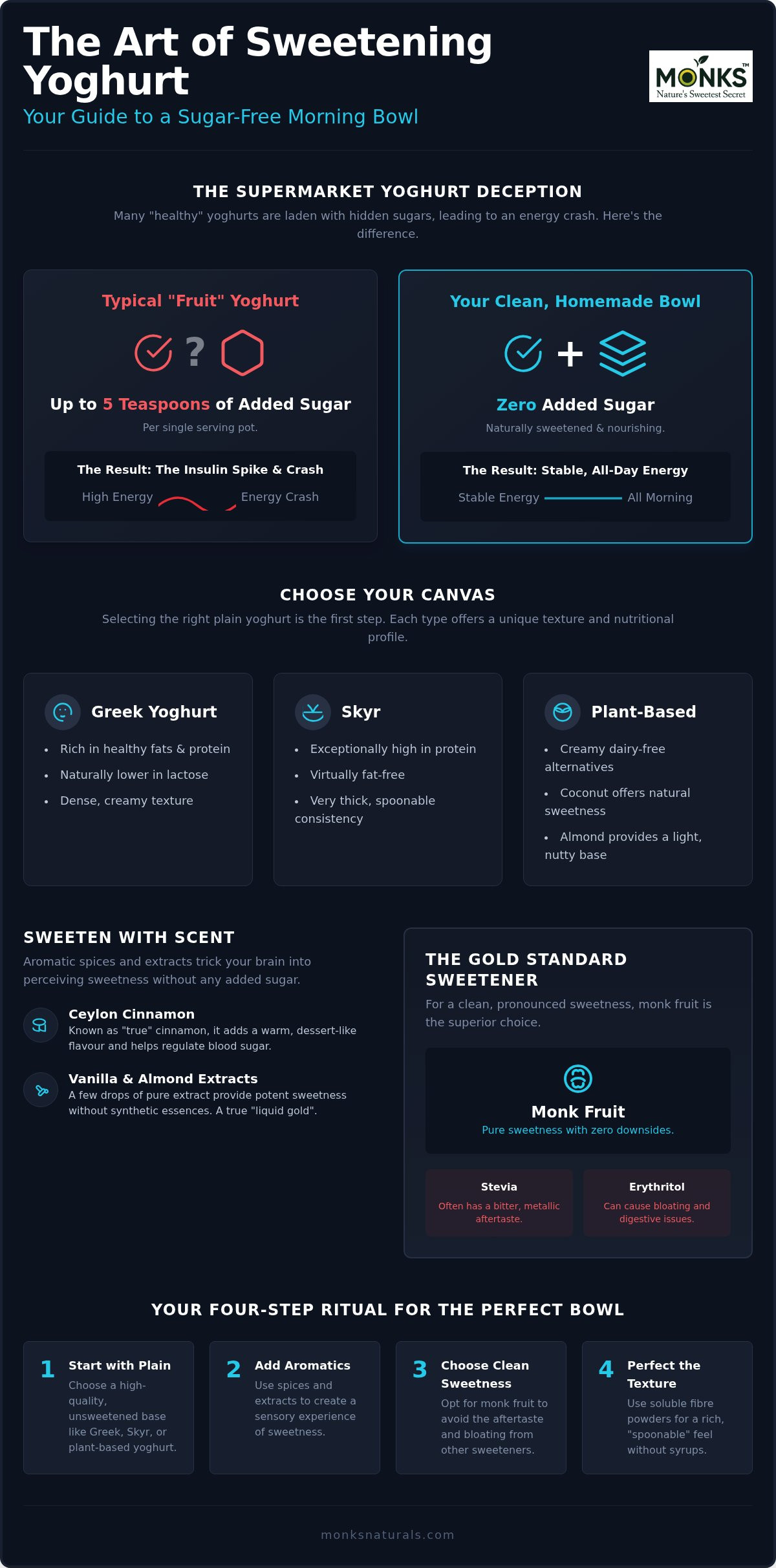
A single pot of "healthy" fruit yoghurt can contain up to five teaspoons of added sugar. This creates a significant insulin spike shortly after consumption. Your body reacts to this glucose flood, leading to the inevitable mid-morning crash that leaves you reaching for more caffeine or snacks. Glycaemic load is a specific ranking system that measures how much a serving of food will raise your blood glucose levels after eating it. When you choose plain bases and add your own clean sweetness, such as monk fruit, you'll maintain a stable energy level throughout the day.
Choosing Your Base: Greek, Skyr, or Plant-Based?
Selecting the right base is essential for a satisfying breakfast. Amongst British shoppers, Greek yoghurt and Skyr are the most popular high-protein choices. Skyr, an Icelandic-style cultured dairy product, is technically a soft cheese but offers a thick, creamy mouthfeel with very low fat. Greek yoghurt is strained to remove liquid whey, resulting in a dense texture and higher protein-to-sugar ratio than standard varieties. Understanding these bases is key to mastering how to sweeten yogurt without sugar effectively.
- Greek Yoghurt: Rich in healthy fats and protein; naturally lower in lactose.
- Skyr: Virtually fat-free but exceptionally high in protein; very thick consistency.
- Plant-Based: Coconut yoghurt provides a natural sweetness from fats, whilst almond varieties offer a lighter, nutty base.
Interestingly, full-fat yoghurt often tastes sweeter than fat-free versions. The natural lipids coat the tongue, which helps to mellow the perception of lactic acid. Plant-based options are also gaining ground in the British health scene, providing creamy alternatives for those avoiding dairy. By starting with a high-quality, plain base, you create a blank canvas for natural flavours without the bloat of artificial syrups.
Sweetening with Aromatic Spices and Extracts
Your brain is easily fooled. Olfactory senses play a massive role in how we perceive flavour, often blurring the line between scent and taste. By using aromatic spices, you can trick your mind into expecting sweetness even when glucose is absent. This is a foundational skill for those mastering how to sweeten yogurt without sugar. Spices such as cardamom and nutmeg carry warm, sweet notes that mimic the profile of traditional desserts. They provide a sensory depth that masks the natural acidity of plain dairy.
Creating a "Sweetness Ritual" with pantry staples is both simple and effective. Instead of reaching for a flavoured syrup, start with a blank canvas of plain Greek yoghurt. Adding aromatics allows you to customise the intensity without the bloat of artificial additives. Whilst spices provide the scent of sweetness, you may find that pairing them with a clean, plant-based sweetener provides the most satisfying results. For those seeking a more pronounced sweetness, monk fruit is an excellent choice, particularly as it is FDA-approved as safe for daily consumption.
The Power of Ceylon Cinnamon
Ceylon cinnamon is often called "true" cinnamon. It is the preferred choice for health-conscious shoppers because it contains lower levels of coumarin than the common Cassia variety. It also assists in blood sugar regulation, making it ideal for a balanced breakfast. Start with a half-teaspoon stirred directly into your bowl. You'll find that it creates a complex, dessert-like profile when combined with a pinch of nutmeg or ginger. This combination provides a rich flavour that satisfies the palate without a single gram of sugar.
Vanilla and Almond Extracts: Liquid Gold
Pure extracts are significantly superior to synthetic essences. A high-quality vanilla extract is made by macerating beans in alcohol, resulting in a resonant, woody sweetness. Almond extract is even more potent. One drop can transform a bitter pot of Skyr into something reminiscent of a cherry bakewell. Alcohol-based extracts evaporate quickly upon contact with the yoghurt's moisture, leaving behind only the pure, concentrated flavour of the bean or nut. Using these liquids ensures your morning meal remains clean and transparent.
If you want to elevate these aromatic profiles further, consider adding a few Monkfruit decoction Drops to your bowl for a seamless, sugar-free finish.
Using Whole Foods to Balance the Tang
Whole foods offer a sophisticated way to soften the sharp profile of lactic acid. The secret lies in the fibre content. Fibre acts as a natural brake, slowing down the absorption of fructose into your bloodstream. This prevents the rapid insulin response often triggered by processed syrups. When considering how to sweeten yogurt without sugar, think about integration rather than just topping. Use the "Mash Method" to release natural juices. By crushing your fruit directly into the bowl, you distribute the flavour molecules evenly through the creamy base. This technique ensures every spoonful carries a hint of sweetness without the need for added glucose.
Texture also plays a vital role in how we perceive flavour. Adding a variety of nuts and seeds introduces healthy fats and a satisfying crunch. Walnuts, chia seeds, and pumpkin seeds are excellent choices for British breakfast bowls. These additions provide satiety and complex earthy notes that complement the fermented dairy. This combination of fibre, fat, and protein creates a balanced meal that supports gut health whilst keeping your palate satisfied.
Low-Sugar Fruits for High-Impact Flavour
Brightness often mimics sweetness. Adding a fine grating of lemon or lime zest can trick your brain into perceiving a more vibrant, sweet profile. This is a calorie-free way to enhance your morning routine. Frozen berries are another brilliant kitchen staple. Stirring frozen raspberries or blackberries into your yoghurt creates a refreshing "frozen yoghurt" texture as they thaw. These specific berries are amongst the most keto-friendly options due to their high fibre-to-sugar ratio. Stick to a portion size of approximately 80g, which is one of your five-a-day, to keep the carbohydrate count low.
The Glycaemic Reality of Dried Fruits
Be cautious with concentrated sugar sources. Whilst some suggest using dates or raisins, these are incredibly dense in fructose. For diabetics or those on a strict keto path, these can cause significant blood sugar spikes. Fresh fruit is always superior to concentrated purees or dried varieties. If you crave a richer consistency, reach for nut butters instead. A teaspoon of almond or cashew butter adds a decadent creaminess. These fats coat the tongue and mellow the yoghurt’s natural acidity, providing a luxurious mouthfeel that feels like a treat. This approach is a cleaner, more stable way to master how to sweeten yogurt without sugar every day.
Clean Sugar Alternatives: Why Monk Fruit is the Gold Standard
While whole foods and spices provide a foundation, you sometimes require a more concentrated sweetness. Many online guides suggest honey, agave, or date syrup as healthy swaps. These are still liquid sugars that trigger a significant insulin response. If you are researching how to sweeten yogurt without sugar, you've likely encountered Stevia and Erythritol. Stevia is notorious for a sharp, bitter aftertaste that lingers. Erythritol often produces a distracting "cooling" sensation on the palate. Monk fruit stands apart. It offers a clean, transparent sweetness that feels balanced and premium.
The problem with most keto-friendly sweeteners is the chemical processing involved. Many brands use harsh solvents to isolate sweetness, leaving behind a metallic finish. A pure alternative should complement your food, not overpower it. By choosing a whole-fruit source, you avoid the artificial notes common in supermarket aisles. It is clean. It is pure. It is effective.
The Digestive Benefit of Erythritol-Free Sweeteners
Sugar alcohols can be difficult for the body to process. They often lead to fermentation in the gut, which causes bloating, gas, and digestive discomfort. Choosing erythritol-free options is a vital step for maintaining a calm, happy microbiome. MONKS avoids the common industry reliance on fillers like maltodextrin or dextrose. These additives are often hidden in "natural" blends to add bulk and can spike blood sugar. Instead, our Monkfruit decoction with soluble tapioca fibre Powder uses functional fibre to support your digestion. It provides a smooth, spoonable texture that integrates perfectly into thick Greek yoghurt or Skyr.
Monk Fruit Decoction vs. Isolated Extracts
A decoction is a traditional method of extraction. It involves a gentle simmering process where the whole fruit is steeped in water to release its essence. Most commercial sweeteners are highly processed white powders created in a laboratory. Our whole-fruit method results in a more rounded, complex flavour profile that mimics the mouthfeel of sugar. Monk fruit has been a staple of traditional Chinese wellness for centuries, prized for its natural sweetness and soothing properties. This heritage ensures a product that is grounded in nature. When you understand how to sweeten yogurt without sugar using a decoction, you elevate your breakfast from a simple meal to a refined wellness ritual.
Experience the difference of a traditional whole-fruit sweetener by choosing The Monks Set for your morning routine.
Creating the Perfect Sugar-Free Bowl with MONKS
Building the ultimate breakfast bowl is an art of balance. You've selected your base, understood the power of aromatics, and prepared your whole-food toppings. Now, it's time to master the final layer of clean sweetness. Mastering how to sweeten yogurt without sugar becomes effortless when you use a traditional decoction. Unlike granules that can feel gritty or syrups that spike your insulin, these methods respect the creamy integrity of your yoghurt. They provide a smooth, premium experience that feels like a morning luxury.
For a standard 200g serving of Greek yoghurt or Skyr, the ratio is simple. Start with 3 to 5 drops of our liquid decoction. Stir thoroughly, taste, and adjust. This methodical approach allows you to find your personal "sweet spot" without overdoing it. Follow this simple assembly guide for the best results:
- Prepare the Base: Place 200g of plain, unsweetened yoghurt into a chilled bowl.
- Infuse the Sweetness: Add your chosen MONKS sweetener and any liquid extracts.
- Layer the Texture: Fold in your "Mash Method" berries and a handful of raw nuts.
The Liquid Drop Method for Instant Mixing
Liquid sweeteners are the superior choice for dairy. Our Monkfruit decoction Drops integrate instantly into the thickest yoghurt bases. You won't find any lumps or undissolved crystals here. Just pure, transparent sweetness. These drops are particularly effective when combined with the vanilla or almond extracts mentioned earlier. They carry the flavour across the palate evenly. The portable dropper bottle is also designed for life on the move. Whether you're at the office or the gym, you can transform a plain supermarket pot into a gourmet treat in seconds.
Adding Texture with the Spoonable Powder
If you prefer a thicker, more substantial mouthfeel, reach for the powder. Our Monkfruit decoction with soluble tapioca fibre Powder does more than just sweeten. The tapioca fibre adds a subtle, pleasant body to the yoghurt. It makes every mouthful feel more "spoonable" and indulgent. This version is also a secret weapon for overnight recipes. When left to sit with oats or chia seeds, the fibre helps the mixture set into a decadent, pudding-like consistency. It's clean. It's functional. It's satisfying. Explore the MONKS collection to find the perfect addition to your next breakfast ritual.
Embrace a Cleaner Morning Ritual
Your breakfast should be a source of sustained energy, not a hidden sugar trap. By starting with a high-protein plain base and layering in aromatic spices or low-glycaemic berries, you reclaim control over your daily health. You've discovered that the secret to a satisfying bowl lies in the quality of your ingredients and the total absence of artificial fillers. Mastering how to sweeten yogurt without sugar is about choosing purity over convenience. It means moving away from synthetic blends that cause bloating and embracing the gentle power of traditional methods.
As the UK’s leading monk fruit brand, MONKS offers a refined solution for those seeking a transparent label. Our decoctions provide a rounded sweetness, no cooling aftertaste, and gut-friendly tapioca fibre. It's time to move past the insulin spikes and enjoy a meal that truly nourishes your body. Upgrade your breakfast with MONKS Erythritol-Free Sweeteners and experience the ease of a balanced, delicious routine. Your morning deserves this level of care and minimalist clarity. Start your journey toward better gut health today.
Frequently Asked Questions
Is honey a healthy way to sweeten yoghurt without sugar?
Honey is technically a form of free sugar and is high in both fructose and glucose. Whilst it contains trace minerals, it still causes significant insulin spikes and can disrupt ketosis. If your goal is a truly sugar-free lifestyle, honey isn't the best choice. Instead, a pure monk fruit decoction provides the sweetness you crave without the caloric load or the glycaemic impact of traditional syrups and nectars.
Does monk fruit sweetener have a bitter aftertaste like stevia?
Pure monk fruit decoctions don't have the metallic or bitter aftertaste often associated with stevia. Stevia's bitterness comes from specific glycosides, whereas monk fruit's sweetness is derived from mogrosides. Our traditional simmering method ensures a clean, rounded flavour profile. This makes it a superior choice for those learning how to sweeten yogurt without sugar whilst maintaining a premium, dessert-like taste that feels natural and light.
Can I use monk fruit drops in plant-based yoghurts?
Monk fruit drops are exceptionally versatile and integrate perfectly into coconut, almond, or soy-based yoghurts. Since plant-based varieties often lack the natural sweetness of dairy lactose, a few drops can enhance the flavour without adding unnecessary carbohydrates. They are entirely vegan-friendly and keto-compatible. The liquid format ensures instant, lump-free mixing in the varied textures often found in dairy alternatives, providing a consistent sweetness throughout your bowl.
Will sweetening my yoghurt with monk fruit break my intermittent fast?
Pure monk fruit decoctions have a negligible effect on blood glucose and insulin levels, meaning the sweetener itself won't break a fast. However, the yoghurt base contains proteins, fats, and natural sugars that will trigger a digestive response. If you are in a strict fasting window, it's best to consume your sweetened yoghurt during your eating phase. Use the drops in black tea or coffee instead to remain fasted.
Is it safe to give monk fruit sweetened yoghurt to children?
Monk fruit is a natural, plant-derived option that is safe for children and helps reduce their daily sugar intake. In June 2026, the Joint FAO/WHO Expert Committee on Food Additives (JECFA) established a temporary acceptable daily intake of 0-10 milligrams per kilogram of body weight. Using it in home-prepared yoghurt is a brilliant way to avoid the high sugar levels found in many commercial children's snacks whilst protecting their dental health.
Why does erythritol make me feel bloated after eating yoghurt?
Erythritol is a sugar alcohol that can be difficult for some digestive systems to process. It can cause fermentation in the gut, which often leads to gas, bloating, and general discomfort. This is why MONKS products are strictly erythritol-free. We utilise soluble tapioca fibre instead, which supports the microbiome and provides a smooth mouthfeel without the digestive distress or the distracting "cooling" sensation often caused by common polyols.
What is the best yoghurt for a keto diet in the UK?
Plain Greek yoghurt or Skyr are the premier choices for a keto diet in the UK due to their high protein and low carbohydrate content. Always choose full-fat versions, as they are more satiating and typically contain fewer hidden thickeners than fat-free alternatives. These thick, creamy bases provide the perfect canvas for those wanting to know how to sweeten yogurt without sugar using clean, plant-based drops or powders.
How much monk fruit powder is equivalent to a teaspoon of sugar?
Our Monkfruit decoction with soluble tapioca fibre Powder is much sweeter than traditional table sugar. Generally, a small pinch or approximately 1/8 of a teaspoon is equivalent to a full teaspoon of sugar. Because it's a concentrated, whole-fruit extract, we recommend starting with a very small amount and tasting as you go. This allows you to achieve a perfectly balanced sweetness that complements rather than overpowers the yoghurt's natural tang.


