

If you’re searching for how to stop sugar cravings UK, it can be tempting to blame yourself or reach for stricter rules. But a craving can be a cue to pause, not a command you have to obey. It may show up when you’re tired, stressed, hungry or following a familiar routine. It doesn’t mean you’ve failed.
A craving can feel hardest to manage when you’re low on energy or looking for comfort. You don’t need to rely on willpower alone or cut out every sweet food. Start by noticing what might be driving the urge, then choose a response that suits the moment.
This guide explores physical, emotional and routine-related triggers, with practical ways to respond when a craving appears. It also looks at gradual habit changes, without turning food into a test of self-control or a moral issue.
Key Takeaways
- Learn how to stop sugar cravings UK by exploring what may be behind the urge, rather than treating it as a test of willpower.
- Notice whether hunger, stress, tiredness or a familiar routine could be playing a part.
- When a craving appears, pause, name it and check what you need. Choosing something sweet can still be a valid response.
- Try small routine changes, such as making meals more satisfying, and notice what works for you.
- If you still want a sweet taste, monk fruit decoction powder and drops can sweeten everyday foods and drinks. They are not a treatment for cravings.
What are sugar cravings, and how are they different from hunger?
A sugar craving is a strong desire for a sweet food or drink, such as chocolate, biscuits or a sweetened coffee. It can feel urgent and focus on one particular taste. Hunger is usually a broader need to eat, although it can make sweet foods especially appealing too. The two can overlap, and neither is automatically a problem.
Cravings are common and may involve physical cues, feelings, memories and your surroundings. For a wider overview of the influences involved, see this guide to understanding food cravings. Having an urge doesn’t show that you lack self-control, and it isn’t, by itself, a diagnosis.
A sugar craving is a strong urge for something sweet, not proof that you’ve done anything wrong.
How can you tell a craving from physical hunger?
Physical hunger tends to point towards eating in general. You might be open to several foods, and the feeling may build over time. A craving can arrive suddenly or centre on a familiar sweet food, such as the chocolate you often have with a cup of tea.
These are clues, not a definitive test. You can feel hungry and crave sweetness at the same time, particularly if you haven’t eaten for a while. Ask yourself: “Would something else to eat appeal, or am I drawn to one particular taste?” The answer can help you notice what you want, without dictating what you should choose.
Does craving sugar mean you have done something wrong?
No. An urge can be connected with a familiar routine, a feeling, the food available nearby or other personal factors. You might want a sweet snack during a work break because it’s part of your day, or reach for one when you’re seeking comfort. That doesn’t make the choice a moral issue.
Instead of criticising yourself, get curious about the pattern. Notice when the urge tends to appear, what’s happening around you and what you might need. There’s no need to record every bite or judge the answer. A simple observation, such as “I often want something sweet when I’m tired after work”, can be a useful starting point.
This distinction matters if you’re looking into how to stop sugar cravings UK. The aim isn’t to label every desire as hunger or prove you can resist. It’s to understand the moment well enough to respond in a way that suits you. Sometimes you may choose the sweet food; at other times, you may realise you need a meal, a break or a different kind of comfort. The following sections look at those possible triggers and practical responses.
Why do sugar cravings happen? Understand the triggers behind the urge
There isn’t always one clear reason for wanting something sweet. A craving may be shaped by what and when you’ve eaten, how you’re feeling, what’s around you and the routines you’ve built. These influences can overlap, and a possible trigger for one person may not explain another person’s experience.
Sugar cravings can have several contributing factors, rather than one simple cause.
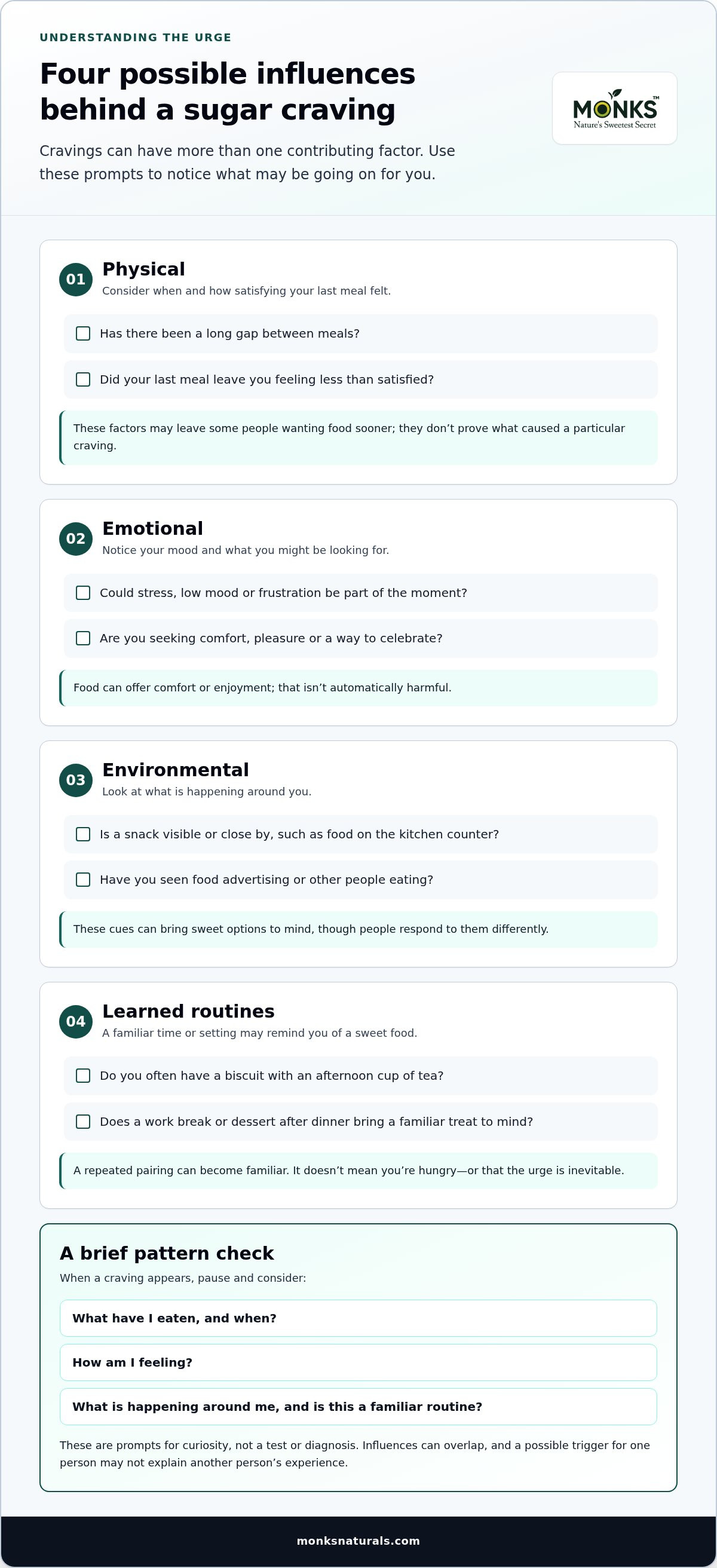
It may help to consider four broad areas, without treating them as a checklist or diagnosis:
- Physical: A long gap between meals, or a meal that didn’t feel satisfying, may leave some people wanting food soon afterwards. This won’t apply to everyone, and it doesn’t prove that a particular craving has a physical cause.
- Emotional: Stress, low mood, frustration or the wish to celebrate can influence what feels appealing. Food may offer comfort or pleasure, which isn’t automatically harmful.
- Environmental: A snack on the kitchen counter, food advertising or seeing others eat can bring sweet options to mind. These cues may influence desire, but not everyone responds to them in the same way.
- Learned routines: If you often have a biscuit with an afternoon cup of tea, that pairing can become familiar. The setting or time may remind you of the snack, even if you’re unsure whether you’re hungry.
Can stress, tiredness or emotions influence cravings?
They may. After a demanding day, you might reach for a familiar sweet snack because it feels comforting, enjoyable or easy. A short night’s sleep or a stressful moment could also shape what you fancy, but neither explains every craving. Diabetes UK discusses how feelings can be connected with eating. Notice your mood and circumstances before deciding what might help, whether that’s food, rest or a little breathing space.
Can habits and food cues make cravings feel stronger?
Possibly. A regular treat after lunch, visible snacks at work or a familiar dessert after dinner can act as reminders. Repeating a routine may link a particular moment with sweetness, so the urge feels familiar when that moment comes around. It isn’t inevitable, and there’s no fixed timetable for cravings to appear or change.
To spot your own pattern, pause briefly when the urge shows up. Consider what you’ve eaten, how you’re feeling and what’s happening nearby. You don’t need to record every detail or set strict rules. A few observations can help you see whether the same situation comes up repeatedly or whether cravings vary from day to day.
This curiosity is a practical starting point for anyone exploring how to stop sugar cravings UK. If you want a sweet taste in a drink or food, MONKS monk fruit decoction powder and drops are an optional way to add it. They won’t address other possible influences, such as hunger, stress or familiar habits.
What should you do when a sugar craving hits?
A craving can feel pressing, but you don’t have to answer it straight away or turn it into a battle. A brief pause gives you time to notice what’s going on and choose a response that fits. The aim isn’t always to make the craving disappear. It’s to respond without judgement.
A simple pause-and-choose method
Try this short sequence and adapt it to suit you. There’s no single response that works for every craving.
- Pause. Take a comfortable breath and give yourself a moment before acting. You’re making space to choose, not setting a rule that you must resist.
- Name the urge. Try a simple description: “I want something sweet” or “I’m thinking about biscuits.” Naming it can help you notice the desire without criticising yourself.
- Check hunger and context. Ask whether you might be hungry, tired or stressed, or whether a familiar time or situation is prompting the thought. You don’t need to find one definitive explanation.
- Choose a response. You could eat the sweet food, have something satisfying if you’re hungry, or take a short break if that suits you better.
For example, if you’ve missed lunch and want a chocolate bar, a more filling snack or meal may suit your needs better. If you’re not hungry but want the taste, eating something sweet is still a valid choice. If you’re tense after a busy meeting, stepping away from your desk, stretching or making a cup of tea might help. You can also decide that none of those alternatives appeals and choose the food. Success isn’t measured by whether you resist.
Changing your surroundings may help when they’re part of the moment. Move away from a visible snack, take a few minutes outside or switch to a different task. These are options, not tricks that guarantee the craving will pass. A sweetener can change the taste of a drink or food, but it isn’t a proven cure for cravings and won’t address possible hunger, stress or other influences.
If you still want sweetness in an everyday food or drink, MONKS offers monk fruit decoction powder with soluble tapioca fibre and pure liquid drops as optional alternatives. They’re not treatments for cravings. Explore MONKS monk fruit sweeteners if that choice suits you.
When is it better to seek support?
Consider speaking with your GP or a suitable health professional if distress around eating feels persistent, affects daily life or is difficult to manage alone. Seek professional advice if you’re concerned about diabetes, a medicine’s effects or a significant change in appetite. Don’t change prescribed medicines or treatment based on cravings alone. A qualified professional can help you explore your concerns and appropriate next steps.
How can you make everyday routines less likely to trigger cravings?
Small routine changes may make cravings easier to understand and respond to, but no meal pattern guarantees they’ll stop. Treat regular, satisfying meals as an experiment. If you often feel very hungry or reach for sweets after a long gap, try making food available earlier and notice whether that suits you.
How can meals and snacks support a steadier routine?
Plan for moments when eating can be difficult, such as a busy morning or a late journey home. An easy option might be porridge, yoghurt with fruit, or toast with an accompaniment that suits your preferences and dietary needs. A snack can be useful if you’re hungry between meals. There’s no need to follow a rigid timetable or ban sweet foods.
Aim for food that feels satisfying to you. Combine familiar foods in a way that works for your appetite, budget and routine, then see how you feel afterwards. If an option doesn’t suit you, try something else. The point is nourishment and practicality, not a perfect plate or a guaranteed way to prevent cravings.
How can you make your environment work for you?
First, notice where and when cravings tend to crop up. If they often appear during an afternoon work break, you might keep a satisfying snack within easy reach or take your break somewhere different. If a particular snack is visible at home, changing where it’s stored may help, if that feels right for you and your household.
Sleep and stress can also be worth noticing as part of your wider routine. Consider whether a calmer wind-down or a short pause during a demanding day feels manageable. These changes may support general wellbeing, but they won’t necessarily remove cravings. Choose one small adjustment and see how it fits, rather than trying to overhaul everything at once.
A brief pattern log can help you make sense of what you notice. Jot down the time, what was happening, whether you’d eaten recently and how you felt. Keep it descriptive, not judgemental. You don’t need to count calories, track every bite or label foods as good or bad. After a while, look for useful patterns, such as cravings often arriving when lunch is delayed. If logging makes you anxious, stop and use a simpler check-in instead.
UK front-of-pack colour-coded labels can offer a quick comparison of sugar in packaged foods. As a guide, traffic-light labelling marks sugar as low at 5g or less per 100g and high above 22.5g per 100g. Check the label’s basis and serving information too, as the amount you eat matters. Use these figures as information, not rules about what you’re allowed to enjoy.
If you’re exploring how to stop sugar cravings UK, try one routine adjustment at a time and keep what feels helpful. If you’d also like an alternative way to sweeten everyday food or drink, explore MONKS monk fruit options. A different sweetener changes taste; it doesn’t treat cravings or address every possible cause.
Can a different sweetener help when you still want a sweet taste?
Sometimes you want the taste of sweetness, rather than a response to hunger, stress or another need. A different sweetener can be one way to make a drink or food taste sweet. It doesn’t necessarily change the urge itself, explain why it appeared or treat a health condition. Think of it as an optional ingredient choice, not a solution to every craving.
Where might monk fruit sweetener fit into a daily routine?
MONKS makes monk fruit decoction products by gently simmering whole fruit using a traditional method. The range includes a spoonable powder made with soluble tapioca fibre and pure liquid drops. These are different formats for sweetening everyday foods and drinks, not interchangeable measures, so don’t assume the same amount of each will give the same result.
You might choose the powder for porridge or the drops for tea or coffee if you’d like a sweet taste. Use them as you would any ingredient that suits your preferences, and follow the product’s directions. Both formats are free from erythritol, maltodextrin and fillers. That ingredient information can help you understand what you’re choosing, but neither format treats cravings.
To see the available formats, explore the monk fruit sweetener range.
What should a sweetener change, and what should it not promise?
A sweetener changes how you add sweetness to food or drink. It can’t tell you whether you’re hungry, ease a stressful situation or guarantee that a desire for sweet food will go away. If a craving is connected with a long gap between meals, a familiar routine or how you’re feeling, changing what you put in your tea won’t necessarily address that influence. The other practical steps in this guide still matter.
Don’t assume that a sweetener will lead to weight loss, affect blood glucose in a particular way or manage a health condition. Individual needs can differ, especially if you have diabetes or take medication. For personal questions about food choices and your health, speak with your GP or another suitable health professional. Don’t alter prescribed treatment based on a sweetener or a craving.
That distinction can make how to stop sugar cravings UK feel less like finding one perfect replacement and more like choosing a response that fits the moment. You can enjoy sweetness if you want it, while also noticing whether hunger, feelings or routine might need attention. Monk fruit powder and drops are simply optional ways to sweeten food and drink. If that sounds useful for your kitchen, browse MONKS monk fruit options.
Take one gentle step towards a routine that suits you
There’s no need to solve every craving at once. Choose one small thing to observe or adjust this week, then notice how it feels. You might make a satisfying snack easier to reach or pause to check what you need when an urge appears. Learning how to stop sugar cravings UK isn’t about following perfect rules. It’s about finding responses that feel realistic in daily life, without judging yourself for wanting something sweet.
If you enjoy sweetness in tea, coffee or food, MONKS offers monk fruit decoction powder with soluble tapioca fibre and pure liquid drops. Both are free from erythritol, maltodextrin and fillers. They’re optional ways to sweeten food and drink, not treatments for cravings or their possible causes.
Explore MONKS monk fruit sweetening options and find a format that fits your kitchen routine. Keep it simple, stay curious and give yourself room to find what works for you.
Frequently Asked Questions
Is craving sugar a sign of diabetes?
No. A sugar craving on its own can’t diagnose diabetes or tell you what your blood glucose is. Appetite and food preferences can vary for many everyday reasons. If you’re worried about diabetes, have noticed other changes in your health or have symptoms that concern you, speak with your GP or another qualified health professional. Don’t use cravings alone to assess your blood glucose or make changes to existing treatment.
Can stress cause sugar cravings?
Stress may influence eating habits, and a familiar comfort food can feel appealing during a demanding period. It isn’t the only possible explanation. You could briefly note what was happening, how you felt and whether the urge appears in similar situations. This may help you decide what could support you in that moment. If stress or eating feels difficult to manage, consider seeking guidance from a suitable health professional.
How long does it take to stop sugar cravings?
There’s no reliable timeline that applies to everyone, so a set deadline can create unnecessary pressure. If you’re looking into how to stop sugar cravings UK, focus on whether a small change makes your daily routine feel more manageable, rather than expecting every urge to disappear. Your experience may vary with personal circumstances and habits. If cravings persist, cause distress or affect your wellbeing, seek personalised advice from a qualified professional.
Can skipping meals make you crave sugar?
It may leave some people hungry and more drawn to quick, familiar foods, but responses differ. Notice whether the urge tends to follow a long gap without eating, and whether you feel hungry for other foods too. If it suits your circumstances, try planning a meal or snack for that part of the day and see how it feels. For medical conditions or specific dietary needs, ask a qualified professional for tailored advice.
Should I completely cut out sugar to stop cravings?
No, complete avoidance isn’t necessary for everyone, and strict rules may be hard to sustain. The NHS recommends limiting free sugars as part of a balanced diet, but changes can be gradual. You might start by noticing one regular source, such as a sweetened drink, and decide whether you want to adjust it. If you have a health condition or specific dietary concerns, seek individual advice from a qualified professional.
Can monk fruit sweetener stop sugar cravings?
Monk fruit sweetener isn’t a proven way to stop cravings. It offers a sweet taste in food or drink, but doesn’t address every possible influence, such as hunger, emotions or routine. MONKS offers monk fruit decoction powder with soluble tapioca fibre and pure liquid drops. Choose these as sweetening options if they suit your preferences, not as treatment for cravings or a health condition.


