

What if the erythritol headlines are raising a question the evidence can’t yet answer? If you’re wondering, “is erythritol bad for you?”, it helps to separate known effects from concerns still being studied. Digestive discomfort, such as bloating or diarrhoea, is a recognised possibility, particularly with higher intakes. Research linking blood erythritol levels with cardiovascular events has attracted attention, but an association doesn’t prove that erythritol causes harm.
It’s understandable to feel unsure when a sweetener is authorised for use in the UK yet appears in worrying headlines. This guide explains what UK approval means alongside EFSA’s acceptable daily intake, how to spot erythritol on ingredient labels and why an acceptable daily intake is a safety benchmark, not a target to reach.
We’ll look at established digestive effects, what cardiovascular studies do and don’t show, and practical ways to choose a sweetener that suits you. If you’d rather avoid erythritol, ingredient-transparent options include monk fruit sweeteners made without it, such as MONKS powder and drops.
Key Takeaways
- Wondering “is erythritol bad for you”? The evidence distinguishes established digestive effects from cardiovascular questions that research has not settled.
- UK authorisation and an acceptable daily intake provide context, but neither is a reason to aim for a specific intake.
- Check ingredient labels for erythritol and E968, then consider your own response and sweetener habits.
- Erythritol is a polyol, or sugar alcohol, not an alcoholic drink.
- If you prefer an erythritol-free option, compare ingredients, intended use and taste. MONKS powder and drops are made without erythritol.
Is erythritol bad for you? Why the answer needs context
Alarming headlines can make a familiar ingredient feel unsettling. So, is erythritol bad for you? There isn’t one answer that applies to every person or every amount. UK authorisation means the sweetener has been assessed for permitted food uses. It doesn’t mean everyone responds in the same way, or that every research question has been resolved.
Erythritol is a polyol, also called a sugar alcohol: a type of sweetener distinct from table sugar and from the alcohol in beer or wine. The name can be confusing, but erythritol isn’t an alcoholic drink. It occurs naturally in small amounts in some foods and in the body, while food manufacturers use it as an ingredient in selected products.
Erythritol adds sweetness and bulk, which can help give some sugar-free or reduced-sugar foods a familiar texture. It may also appear in products labelled keto or in blends with high-intensity sweeteners such as monk fruit or stevia. These labels don’t guarantee a product contains erythritol, so check the ingredient list.
What is erythritol, and where might you find it?
Look for “erythritol” or “E968” in the ingredients. You might find it in sugar-free confectionery, tabletop sweeteners or a sweetener blend, but recipes vary between brands and products. For a concise overview of its properties and uses, see the Erythritol Wikipedia article. Reading the full list shows whether it’s present alongside other sweeteners.
Why has erythritol become a health concern?
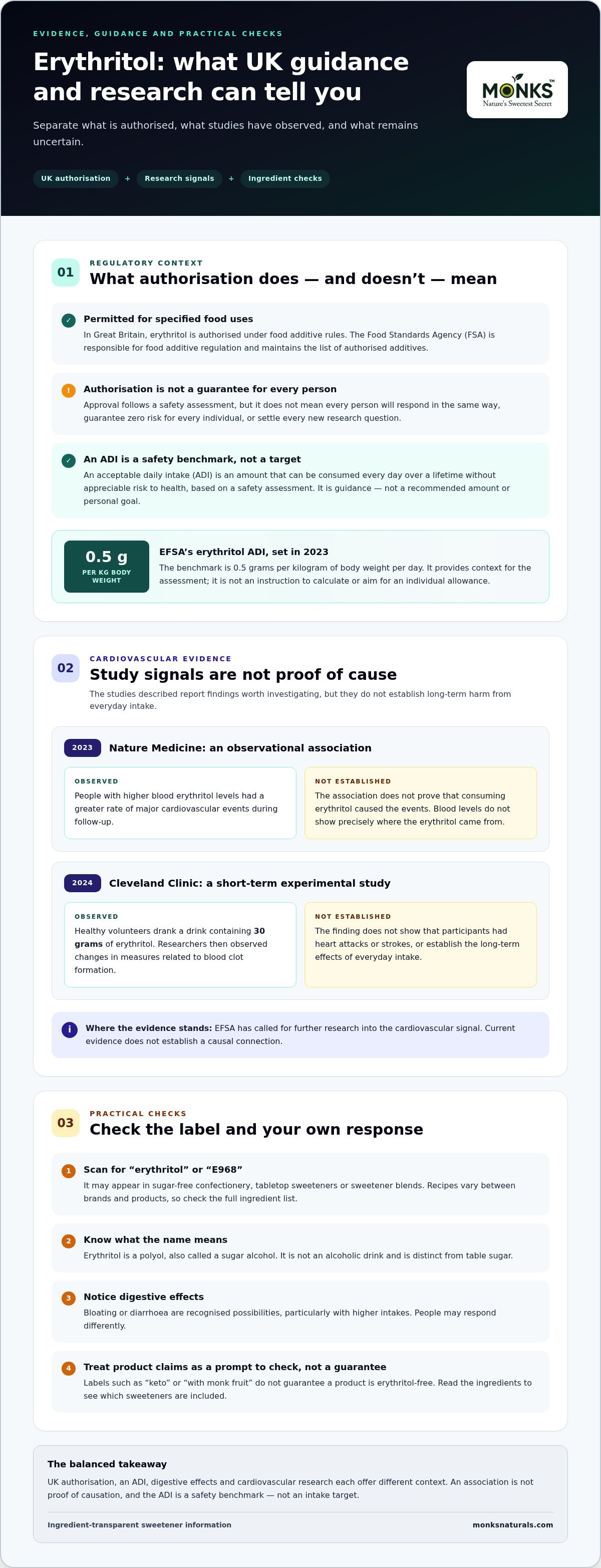
Cardiovascular headlines grew after a 2023 study in Nature Medicine reported an association between higher blood erythritol levels and cardiovascular events. An association is a signal for further study, not proof that eating erythritol causes those events. Blood levels may not show exactly how much erythritol came from food, and the finding doesn’t establish the risk for every consumer.
The balanced view is that erythritol is authorised for use in the UK, while some research questions remain unresolved. Approval and ongoing investigation address different things. The sections ahead explain UK guidance, possible side effects and practical label checks, so you can make a choice based on evidence and your preferences rather than a headline alone.
What UK safety guidance and research say about erythritol
UK authorisation and emerging research answer different questions. Authorisation concerns whether an additive is permitted for specified food uses following a safety assessment. Research examines signals that may need further investigation. Neither should be mistaken for the other.
Regulatory approval means erythritol is authorised for permitted food uses; it isn’t proof that every use is risk-free for every person. In Great Britain, the Food Standards Agency (FSA) is responsible for food additive regulation and maintains the list of authorised additives. NHS guidance explains that permitted sweeteners have undergone safety assessment. This framework provides oversight, but it can’t guarantee that an ingredient suits everyone or resolve every new research question.
What does UK sweetener approval tell consumers?
An acceptable daily intake (ADI) is the amount that can be consumed every day over a lifetime without appreciable risk to health, based on a safety assessment. It’s a guidance benchmark, not a recommended amount or personal target. In 2023, the European Food Safety Authority (EFSA) set an ADI for erythritol of 0.5 grams per kilogram of body weight per day. This figure provides context for the assessment; it isn’t an instruction to calculate or aim for an individual allowance.
What can the cardiovascular research establish?
In 2023, a study published in Nature Medicine found that people with higher blood erythritol levels had a greater rate of major cardiovascular events during follow-up. This was an observational association. It cannot establish that consuming erythritol caused the events, and blood levels don’t by themselves show precisely where the erythritol came from.
A 2024 Cleveland Clinic study took a different approach: healthy volunteers consumed a drink containing 30 grams of erythritol, after which researchers observed changes in measures related to blood clot formation. This short-term experimental finding raises a question about possible biological effects. It doesn’t show that participants experienced heart attacks or strokes, or establish the long-term effects of everyday intake. EFSA has called for further research into the cardiovascular signal, while stating that current evidence does not establish a causal connection.
| Question | What the evidence can show | What remains uncertain |
|---|---|---|
| Is it authorised in Great Britain? | It’s permitted for specified food uses under UK additive rules. | Authorisation doesn’t guarantee zero risk for every individual. |
| Does research link it with cardiovascular outcomes? | Observational and short-term experimental studies report signals worth investigating. | Whether erythritol causes long-term cardiovascular harm is unresolved. |
The US has a separate regulatory system: the FDA has treated erythritol as generally recognised as safe (GRAS). Its FDA guidance on erythritol offers a point of comparison, not UK guidance. If ingredient transparency matters to your choice, you can also explore erythritol-free monk fruit sweeteners as an optional alternative.
Erythritol side effects: separating digestive effects from heart-risk headlines
Digestive discomfort and cardiovascular headlines are separate concerns, supported by different kinds of evidence. Some people notice symptoms after consuming polyols such as erythritol, while cardiovascular research raises questions that have not been settled. Neither means everyone will have the same response. If you’re asking, “is erythritol bad for you?”, start by distinguishing what’s known from what’s still under study.
Can erythritol cause digestive discomfort?
Polyols can have a laxative effect, and some people report bloating, gas or diarrhoea after consuming them. Responses vary, so one person’s symptoms don’t predict what someone else will experience. The amount consumed and other ingredients in a food may also make it harder to identify what’s behind a reaction.
If you’re trying to spot a pattern, note which product you ate, how much you had and how you felt afterwards. Don’t assume erythritol is the cause based on one episode. If symptoms persist, feel concerning or affect your daily life, seek advice from a GP or another qualified healthcare professional. If digestive tolerance is your main concern, a guide to gut-friendly sweeteners can help you compare options without treating any sweetener as a guaranteed solution.
How should readers interpret heart-risk headlines?
Headlines can turn “associated with a higher rate of cardiovascular events” into “causes heart attacks”. Those statements aren’t equivalent. The observational research discussed earlier found a relationship between blood erythritol levels and cardiovascular outcomes, but it can’t establish cause and effect. Blood levels may not reflect food intake alone, and other factors could influence both levels and health outcomes.
Experimental research has also reported short-term changes in measures related to blood clotting after erythritol consumption. That finding helps researchers investigate possible mechanisms, but it isn’t evidence that participants had cardiovascular events or that typical long-term intake causes them. As the NIH research on erythritol and cardiovascular events explains, further research is needed to understand the signal.
A headline can prompt a sensible question, but it can’t tell you your personal risk. Consider the evidence in proportion, and speak with a healthcare professional about concerns linked to your own health rather than making a decision from a news report alone.
- Practical benefit: Erythritol can provide sweetness in some reduced-sugar products. This describes its food use, not a health benefit.
- Better-established concern: Polyols may cause digestive discomfort for some people; individual responses differ.
- Unresolved question: Cardiovascular studies report signals for further investigation, but they don’t establish that erythritol causes heart disease.
Deciding on erythritol: labels, habits and response
A measured choice starts with the product, not a frightening headline. If you’re asking “is erythritol bad for you?”, check the label, consider how the food fits into your usual diet, then reflect on how you personally respond. There’s no need to assume everyone must avoid it or to treat an acceptable daily intake as a goal.
How can you spot erythritol on a food label?
Scan the full ingredients list for “erythritol” or “E968”. Sweetener blends can contain more than one ingredient, so don’t stop at the product name or front-of-pack claims. For example, a fictional label might list “sweeteners: erythritol, steviol glycosides”. That example is illustrative only; ingredients vary between products.
Use this simple sequence when comparing options:
- Read the ingredients. Look for erythritol or E968, and note any other sweeteners in the blend.
- Compare similar products. Check the ingredient panels of foods you’d realistically choose, rather than judging by “sugar-free” or “keto” wording alone.
- Consider your own response. If you notice a pattern after eating a product, record what you ate and how you felt. A note can help you discuss it, but it can’t diagnose the cause.
What practical steps can help you make a measured choice?
Look at your overall eating pattern, too. One ingredient doesn’t tell you whether your diet is balanced, and a sweetener doesn’t automatically make a food a better fit. Consider how often you choose the product, what it replaces and whether you enjoy its taste and texture.
Individual tolerance can differ. If you suspect a connection between a product and discomfort, a brief food-and-symptom note may help you see whether the same pattern repeats. Avoid drawing firm conclusions from a single occasion, especially if a food contains several sweeteners or other ingredients. For persistent symptoms or concerns related to a medical condition, speak with a qualified healthcare professional.
If you’d rather choose an option without erythritol, compare ingredient lists and formats. MONKS monk fruit decoction powder, made with soluble tapioca fibre, and pure liquid drops are erythritol-free options. That’s an ingredient preference, not a claim that one sweetener is medically safer. Explore erythritol-free monk fruit sweeteners if you’d like to see an alternative. For more ideas focused on ingredient choices, the erythritol-free sweetener guide can help you compare options.
Erythritol-free sweeteners: a gentle alternative if you prefer another option
Choosing an erythritol-free sweetener is a matter of preference, not proof that erythritol is dangerous or that you need to avoid it. If you’re still weighing “is erythritol bad for you?”, focus on what the evidence can tell you, then choose by ingredients, intended use and taste. A different sweetener isn’t automatically healthier, and no option suits every recipe or palate.
What should you compare when choosing an erythritol-free sweetener?
Start with the full ingredients list. Check which sweetener is named and whether the product includes other ingredients, rather than relying on front-of-pack wording alone. Then think about how you plan to use it. A format that suits your morning drink may not be the one you prefer for another part of your routine.
- Ingredients: Look for the named sweetener and any additional ingredients.
- Intended use: Consider whether you want to sweeten a drink or use a sweetener in everyday cooking.
- Taste and texture: Choose what you enjoy. These are practical preferences, not evidence that one sweetener offers a health advantage.
If you’re comparing several products, read each label in full. Two options described in similar terms can have different ingredient lists and formats. An erythritol-free sweetener guide can also help you organise the choices around what matters to you, without turning the decision into a strict rule.
How does monk fruit decoction fit as an optional choice?
MONKS offers monk fruit decoction sweeteners in two formats: powder made with soluble tapioca fibre, and pure liquid drops. Both are free from erythritol, maltodextrin and fillers. The powder and drops differ in format, so consider which is more practical for your routine and how you prefer a sweetener to taste. MONKS sweeteners are designed for use in coffee, tea, matcha, baking and everyday food.
The soluble tapioca fibre is an ingredient in the powder. It shouldn’t be taken as a promise about digestion or a medical benefit. Likewise, choosing a product without erythritol doesn’t establish that it’s medically safer. It simply gives you a clear ingredient-based alternative if you’d rather leave erythritol out of your cupboard.
Keep it simple: check the label, match the format to your intended use and let taste guide your preference. If monk fruit suits what you’re looking for, explore MONKS monk fruit decoction sweeteners as an erythritol-free option.
Make your next choice feel simple
“Is erythritol bad for you?” doesn’t need to become a rule that dictates every shop or meal. Make your next choice a small, informed one: decide what matters most, whether that’s a clear ingredient list, a particular taste or a sweetener that suits your usual recipes. You can change your mind as your preferences or the research evolve.
If you’d like to explore an erythritol-free option, MONKS monk fruit decoction sweeteners include powder made with soluble tapioca fibre and pure liquid drops. These offer another ingredient choice, not a promise of a health outcome. Compare the formats and ingredients with what you already use.
Explore MONKS erythritol-free monk fruit sweeteners and choose a format for your everyday routine. Thoughtful choices can be simple, personal and free from the pressure to find one perfect answer.
Frequently Asked Questions
Is erythritol approved for use in food in the UK?
Yes. Erythritol is authorised for specified food uses in Great Britain. NHS guidance lists it among sweeteners that have undergone safety assessment, while the Food Standards Agency oversees food additive authorisation. Approval applies to permitted uses and conditions; it isn’t a personal medical recommendation or a promise that everyone will respond alike. For the latest status, check current FSA information, particularly if you’re making a decision for a specific health concern.
Can erythritol raise blood sugar?
Erythritol is generally used as a low-calorie sweetener and is not expected to affect blood glucose in the same way as sugar. Still, a food containing it may include other ingredients that matter, such as carbohydrate from flour or starch. For example, a sweetened biscuit can affect glucose differently from a sweetener used in a drink. Check the full nutrition panel and follow your diabetes care team’s personalised advice.
How much erythritol is safe to consume each day?
There isn’t a recommended daily amount you need to reach. EFSA set an acceptable daily intake of 0.5 grams per kilogram of body weight per day in its 2023 assessment. This is a long-term safety benchmark, not a personal allowance or an instruction to consume that amount. It also shouldn’t replace current UK guidance or tailored advice from a healthcare professional if you have a relevant condition.
What happens if you eat too much erythritol?
Some people may experience digestive discomfort after consuming polyols, but there’s no single outcome or threshold that applies to everyone. If you feel unwell after a sweetened snack, check whether it contains erythritol and note other ingredients and what else you ate. One episode can’t identify the cause. Seek clinical advice if symptoms are persistent, severe or worrying, rather than relying on a food diary to diagnose them.
Is erythritol worse for you than sugar?
Not as a simple rule. Sugar and erythritol differ, and the better fit depends on the food, your dietary needs and what the sweetener replaces. Replacing added sugar may help reduce sugar intake, but a sweetened product isn’t automatically nutritious. Compare the whole ingredient list and nutrition information. For instance, consider the product’s overall sugar and energy content as well as whether it suits your usual eating pattern.
Can erythritol cause a heart attack?
Current research doesn’t establish that eating erythritol causes heart attacks. Some studies report an association between blood erythritol levels and cardiovascular events, while experimental work has examined short-term changes in clotting-related measures. These findings raise questions for further research, but they can’t predict an individual’s personal risk or prove cause and effect. If you’re concerned about your own cardiovascular health, discuss it with a qualified healthcare professional.
Is monk fruit sweetener free from erythritol?
Some monk fruit sweeteners contain other sweeteners, so check the full ingredient list rather than relying on the name alone. MONKS monk fruit decoction powder, made with soluble tapioca fibre, and pure liquid drops are free from erythritol, maltodextrin and fillers. That’s useful if you’re comparing ingredients, but an erythritol-free label is an ingredient choice, not evidence of a medical benefit.


