

This sugar free icing recipe for cakes starts with a practical choice: pick an icing style to suit the finish you want, then use a sweetener in the format the recipe is designed for. Sugar-free icing can turn grainy, runny or too soft to spread when a sweetener behaves differently from sugar.
Monk fruit powder is spoonable, but it should not automatically replace sugar in equal amounts. MONKS powder contains soluble tapioca fibre, so its quantity needs to suit the recipe rather than a guessed sugar equivalent. Add it gradually and check both flavour and texture as you mix.
Below, you’ll find a workable method for buttercream, ways to adjust its consistency and guidance on choosing a sweetener format. The same checks can help whether you’re icing a simple sponge, cupcakes or a cake for a special occasion.
Key Takeaways
- Use a recipe designed for your icing style and sweetener, then make small adjustments to reach the finish you want.
- Choose a softer spreadable icing for a traybake and a firmer buttercream if you want to pipe decorations.
- Powder and liquid sweeteners mix differently, so don’t swap them by equal spoonfuls.
- If icing is too soft, stiff or grainy, change one thing at a time and check the texture before adding more.
- MONKS monk fruit decoction powder contains soluble tapioca fibre and is free from erythritol, maltodextrin and artificial fillers.
What makes sugar-free icing work on a cake?
A good cake icing should taste right with the cake, spread without tearing the sponge and hold its shape if you’re piping. Replacing icing sugar with another sweetener does not guarantee the same result. Different sugar substitutes vary in sweetness, flavour and format, which can affect the taste and texture of the finished icing.
For home baking, “sugar-free icing” describes an icing made with a sweetener other than table sugar. The phrase alone does not confirm that the finished icing meets a formal nutrition claim. Other ingredients, including dairy, can contribute sugars, so the whole recipe matters. If you are making a nutrition claim on a product or its packaging, check current UK requirements and assess the finished icing’s ingredients and nutritional profile.
Choose an icing style for the cake you are making
Start with the finish. Buttercream works well for filling and coating a layer cake, as well as piping onto cupcakes. Cream-cheese icing has a tangier flavour that suits warmly spiced cakes, but its softer texture can make detailed piping harder. For a traybake, a simple spreadable topping is usually enough.
- Layer cakes: Choose buttercream for filling and coating, especially if you want a defined finish.
- Cupcakes: Buttercream can be spread or piped. Cream-cheese icing gives a softer, tangier topping.
- Traybakes: A spreadable icing creates an even finish without elaborate decoration.
A piped swirl needs firmer icing than a thin layer spread across a traybake. Choose the recipe and sweetener with that difference in mind. If you are unsure about the texture, test a small amount on a plate before icing the cake.
What “sugar-free” means in a home-baking recipe
In a home recipe, the phrase can describe replacing table sugar. It does not automatically verify a regulated “sugar-free” nutrition claim. The finished icing may contain sugars from other ingredients, so consider the complete recipe rather than the sweetener alone.
For your cake, focus on flavour and function. A spoonable sweetener may mix differently from a liquid one, and neither is automatically interchangeable with icing sugar by volume. Follow quantities intended for your chosen icing and sweetener instead of guessing at a direct swap. That gives your sugar free icing recipe for cakes a more reliable starting point.
How to make a smooth sugar-free icing for cakes
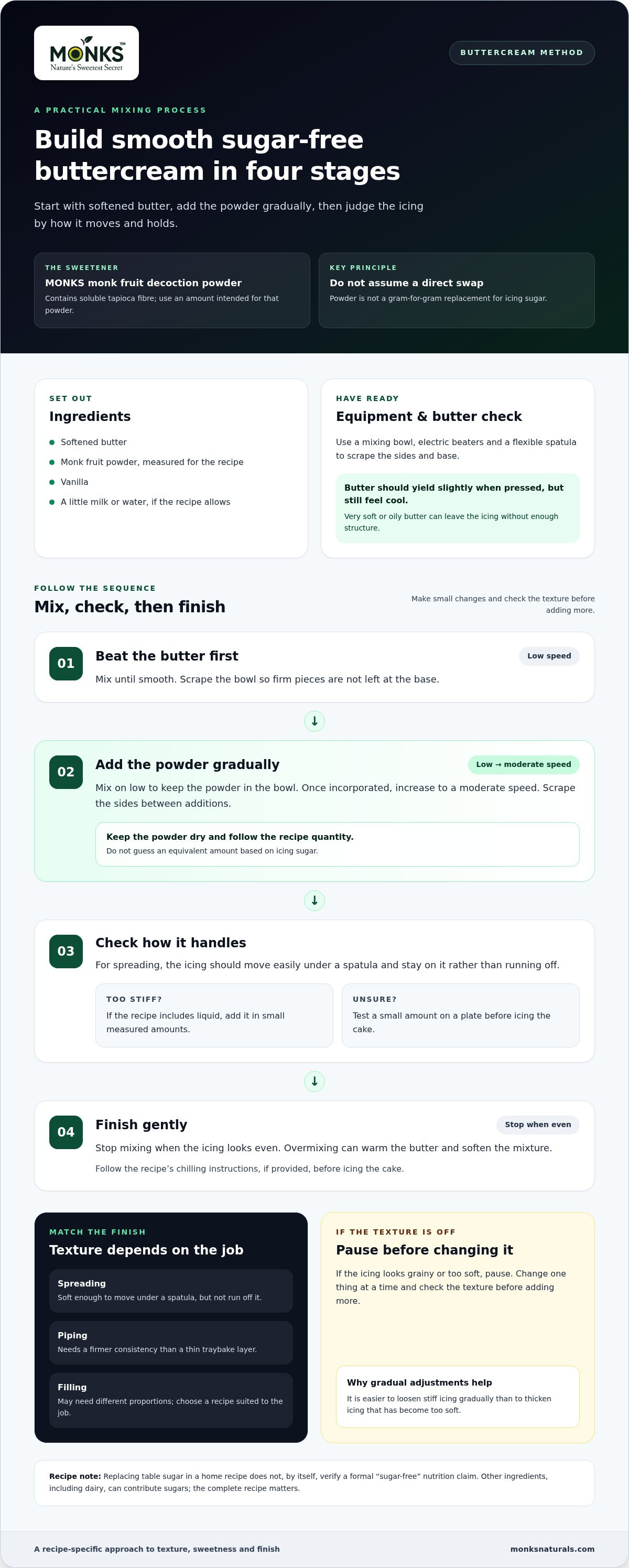
For smooth buttercream, start with softened butter and add the sweetener gradually. MONKS monk fruit decoction powder with soluble tapioca fibre is spoonable, but it is not a direct, gram-for-gram replacement for icing sugar. Use a quantity intended for that powder, then adjust the flavour and consistency in small steps. The same method will not necessarily suit liquid drops or a different icing base.
Ingredients and equipment for the tested recipe
For a spreadable buttercream, set out softened butter, monk fruit powder, vanilla and a small amount of milk or water for adjusting the consistency. Use the amount of powder specified for the recipe you are following, rather than assuming it will replace icing sugar measure for measure. You’ll also need a mixing bowl, electric beaters and a flexible spatula to scrape the sides and base of the bowl.
Butter provides the body, while the sweetener brings sweetness. Vanilla adds flavour, and a little liquid can loosen the mixture if the recipe allows it. Keep any liquid to a minimum at first: it is easier to loosen stiff icing gradually than to thicken icing that has become too soft.
Mixing steps for an even, workable finish
Use butter that yields slightly when pressed but still feels cool. Very soft or oily butter can leave the icing without enough structure. Keep the powder dry and measure it according to the recipe you are using.
- Beat the butter first. Mix at a low speed until smooth. Scrape the bowl so firm pieces are not left at the base.
- Add the powder gradually. Mix on low to keep the powder in the bowl, then increase to a moderate speed once it is incorporated. Scrape the sides between additions.
- Check the texture. For spreading, the icing should move easily under a spatula and stay on it rather than running off. If the recipe includes liquid, add it in small measured amounts.
- Finish gently. Stop when the icing looks even. Overmixing can warm the butter and soften the mixture. Follow the recipe’s chilling instructions, if provided, before icing the cake.
This method is for spreadable buttercream. Piping needs a firmer consistency, and a filling may need different proportions, so use a recipe suited to the job. If the mixture looks grainy or too soft, pause before adding ingredients. The next section explains how to troubleshoot it without making several changes at once.
MONKS powder is made with monk fruit decoction and soluble tapioca fibre. When using this monk fruit powder for baking, keep its format in mind and follow quantities intended for the powder. Judge the icing by its appearance and handling rather than assuming it will behave like icing sugar.
Which sweetener works best for sugar-free cake icing?
There is no single best format for every cake. Powder is spoonable and can be mixed into icing ingredients; drops add sweetness as a liquid. Choose the format that suits your recipe and the finish you want. In a sugar free icing recipe for cakes, avoid swapping products by equal spoonfuls. Their ingredients and concentration can differ, so the same volume may not give the same sweetness or texture.
| Format | Practical strength | Likely limitation | Best recipe role |
|---|---|---|---|
| Powder | Easy to measure and incorporate with dry or soft ingredients | May not behave like icing sugar or provide its bulk | A spoonable sweetener in a recipe designed for that powder |
| Liquid drops | Add sweetness without adding a powder | Can change the balance of moisture in the icing | A liquid sweetener in a separately designed formulation |
Powdered sweetener: when a spoonable format helps
Powder is easy to portion into a mixing bowl and blend gradually with butter or another icing base. That convenience does not mean every powder dissolves or tastes alike, or that each one creates the same thickness. MONKS monk fruit decoction powder includes soluble tapioca fibre. Use a quantity intended for that product, not a direct replacement for icing sugar. For more ingredient background, read the guide to monk fruit with tapioca fibre.
Liquid drops: sweetness without adding a powder
Drops suit recipes designed for a liquid sweetener. They add sweetness without adding powder, but do not provide the same physical ingredient as powder. A recipe may need another ingredient to build body and help the icing hold its shape. Follow a formulation designed for drops rather than adding butter, cream cheese or dry ingredients by guesswork. MONKS monk fruit decoction drops are a different format from the powder, not an automatic substitute within the same recipe.
Use the table as a starting point, then follow the method and quantity intended for your chosen product. For a spreadable topping, look for a smooth consistency. For piping, the icing needs enough structure to hold the shape. Taste and texture can both change with a different product, even if the sweetener comes from the same source. A small trial batch lets you assess the result before icing a whole cake.
How to fix and store sugar-free cake icing
Work from what you can see and change one thing at a time. The sweetener, icing base and room temperature can all affect the result. If the icing is too soft, pause and cool it briefly if the recipe allows, then reassess before changing the mixture.
Troubleshoot texture without spoiling the batch
Use the recipe’s method as your guide. A fix that suits buttercream may not suit cream-cheese icing, and a sweetener’s format can affect how it blends. Make a small adjustment, mix gently and check the texture again before adding anything else.
- Too soft: If the recipe supports chilling, cool the icing briefly and check whether it has firmed. Avoid adding more sweetener or other ingredients by guesswork.
- Too stiff: If the recipe allows, add its specified liquid in a small measured amount. Mix it in and reassess before adding more. A little extra liquid can change the consistency quickly.
- Grainy: Check that the sweetener was added gradually and mixed evenly. Scrape the bowl and mix again according to the recipe. Some powders may not produce the same texture as icing sugar, so extra mixing is not a guaranteed fix.
- Uneven: Check the sides and base of the bowl for unmixed icing. Scrape it back into the mixture and blend gently until the colour and consistency look uniform.
Keep changes modest. If the icing still does not look right, compare it with the recipe’s visual cues instead of adding several ingredients. This helps preserve the batch and makes it easier to work out what to adjust next time.
Make-ahead, refrigeration and serving
Storage depends on the icing base and the complete recipe. Buttercream and cream-cheese icing do not necessarily have the same make-ahead, refrigeration or freezing instructions. Follow the storage guidance for the specific recipe and keep the finished icing covered as directed. Do not assume timings for a different icing or sweetener apply to yours.
Bring chilled icing back to a usable texture only as the method instructs. If it is too firm straight from the fridge, let it soften as directed and reassess before mixing. Repeated warming and chilling may change the texture, so prepare only what you need where practical and make a note of how the recipe behaves.
For a more dependable sugar free icing recipe for cakes, record the sweetener format, icing base and storage method alongside the result. MONKS monk fruit decoction powder contains soluble tapioca fibre, so keep the method you use with your notes. You can explore MONKS monk fruit sweeteners as you plan your next bake.
Make the recipe your own with MONKS monk fruit powder
The sweetener you choose affects more than flavour. Its format and other ingredients can influence how it works in a recipe, so treat MONKS monk fruit decoction powder as its own ingredient rather than a one-to-one replacement for icing sugar. Use a quantity intended for the powder, then assess the finished icing for taste and consistency.
What MONKS powder brings to this recipe
MONKS powder is a spoonable monk fruit sweetener made with soluble tapioca fibre. MONKS gently simmers whole monk fruit using a traditional decoction method. The product is free from erythritol, maltodextrin and artificial fillers. These details describe its formulation and process, not a guaranteed result in a particular cake icing. Find the ingredient used in this recipe in the monk fruit sweetener powder.
Keep the distinction clear as you bake. Powder and liquid drops have different formats, and a recipe made for one should not automatically be made with the other. Another monk fruit product may also have a different formulation. Follow quantities developed for the powder you are using, rather than assuming a spoonful will replace the same amount of sugar or another sweetener.
If ingredient preferences inform your choice, read the erythritol-free sweetener guide for more context. MONKS powder is free from erythritol, but that alone does not determine the nutritional profile of the finished icing. The full recipe and its ingredients matter, particularly if you plan to make a formal nutrition claim.
Choose a simple next step for your next cake
Follow the recipe’s method and product-specific amount, then note the result. Was the icing easy to spread? Did it taste balanced with the cake? Did it hold the finish you wanted? These observations help you refine the next batch without changing several things at once.
For a useful comparison, keep the icing style and base consistent when trying another sweetener format. Change one ingredient at a time and record any shift in texture or sweetness. Drops will not necessarily create the same structure as powder, and a different powder may behave differently too. A small trial is a sensible way to see what suits your favourite cake before making a larger batch.
A sugar free icing recipe for cakes works best when the sweetener and method are matched. If monk fruit powder suits your ingredient preferences, explore MONKS sweeteners and choose a format for your next bake.
Bring your next cake idea to life
Let the cake guide the finish. A delicate sponge may suit a light layer of icing, while a celebration cake can take a bolder flavour or more polished decoration. Try one variation, such as a hint of citrus or a different extract, and let the icing complement the cake rather than compete with it.
Keep your notes close as you experiment. Record the flavour pairing and finish you liked, so the next sugar free icing recipe for cakes can build on what worked. Small, thoughtful adjustments make home baking more personal without turning it into a complicated project.
Ready to choose a monk fruit option for your baking cupboard? Explore MONKS monk fruit sweeteners and choose the format that suits your next recipe.
Frequently Asked Questions
Can I make sugar-free icing without butter?
Yes. Use a recipe created for cream cheese or another suitable base instead of replacing butter in a buttercream recipe. Cream-cheese icing, for example, can suit a spiced cake, but its flavour and handling differ from buttercream. For a dairy-free option, check every ingredient and test a small batch first. The icing should be thick enough to stay on the cake you plan to decorate.
Can I colour sugar-free icing?
Usually, yes. Add food colouring a little at a time, mix well and check the shade before adding more. Gel colouring is often easier to control than a larger amount of liquid, which may loosen some icings. If you need an even colour across several batches, test a small portion first and use the same colouring and mixing method for each batch.
Will sugar-free icing set hard on a cake?
Not necessarily. Soft buttercream may stay spreadable, while a glaze or another icing style may finish differently. For a firm shell, choose a recipe designed for that result rather than expecting every sugar-free topping to harden. A chilled cake may also feel firmer temporarily, so judge the finish after following the recipe’s serving instructions. Try the icing on a small area before decorating the whole cake.
Can I make sugar-free cake icing in advance?
Often, yes, but suitable make-ahead timing depends on the icing base and recipe. Follow the recipe’s storage instructions, then allow time for any recommended softening or re-mixing before decorating. Icing prepared the day before may need a gentle mix to restore an even consistency. Do not apply one recipe’s timing to another icing, especially if the base or sweetener differs.
Can I freeze sugar-free icing?
Some buttercreams may freeze successfully, but that is not true of every icing. Cream-cheese bases and different sweetener formulations may change texture after thawing. If you are planning ahead, follow instructions for your exact recipe and test a small amount before freezing a full batch. If the recipe does not include freezing guidance, make it fresh or store it as directed instead.
Can monk fruit drops replace powdered sweetener in cake icing?
Not automatically. Drops add sweetness as a liquid, while powder contributes a dry ingredient to the mixture, so a direct swap can affect both sweetness and consistency. A sugar free icing recipe for cakes should use quantities intended for its specific sweetener. To use drops, choose a recipe developed for liquid sweetener or test a small batch first. Do not substitute equal spoonfuls unless that amount has been tested.


