

Can a keto friendly simple syrup be smooth and easy to use without relying on sugar? Traditional syrup gets its sweetness and body from sugar, so changing the sweetener can affect more than flavour. A syrup may taste sweet but feel thinner, and “sugar-free” alone doesn’t show how a serving fits your carbohydrate goals.
You don’t have to guess your way through the ingredients or expect every sweetener to behave like sugar. This guide explains how to make a practical syrup for drinks and recipes, and how different formats affect texture. MONKS monk fruit drops add sweetness without the bulk of traditional sugar syrup, while the powder combines monk fruit decoction with soluble tapioca fibre. Compare ingredients, nutrition information and serving sizes to find an option that suits your routine and your approach to keto.
Key Takeaways
- A keto friendly simple syrup can sweeten drinks and recipes, but the right option depends on more than sweetness alone.
- Compare sweeteners by how they affect bulk, thickness and mouthfeel, as well as flavour.
- Check ingredient lists, nutrition information and serving sizes against your own carbohydrate goals.
- Combine water with a suitable sweetener, adding concentrated options gradually and tasting as you go.
- MONKS monk fruit drops and powder with soluble tapioca fibre have different roles, so choose the format that suits your intended use.
What Is Keto-Friendly Sugar Syrup, and What Is It Used For?
Simple syrup is a pourable sweetener used in drinks and recipes. Traditional versions are made by dissolving sugar in water, which creates a liquid that stirs easily into hot or cold ingredients. A keto friendly simple syrup is a liquid sweetener whose ingredients and serving fit an individual’s carbohydrate goals. There’s no single standard recipe, and a label alone can’t guarantee that every serving suits every keto plan.
It helps to separate two questions: how sweet a syrup tastes, and how its carbohydrates fit your chosen way of eating. Sugar provides sweetness and contributes body to traditional syrup. A sugar-free alternative may taste sweet without matching its thickness or mouthfeel. For a helpful overview of the classic ingredient and its uses, see What is simple syrup?
How Is Sugar-Free Simple Syrup Different from Traditional Syrup?
Traditional simple syrup is sugar dissolved in water. Sugar-free versions use other sweetening ingredients, and recipes vary. Some are thin and easy to pour; others include ingredients intended to add body. A concentrated liquid sweetener can provide sweetness without the bulk of sugar, so it may not have the thickness of a spoonable syrup. Read the ingredient list and nutrition information, then consider the amount you’ll actually use.
“Sugar-free” describes the absence of sugar, not necessarily the full carbohydrate profile or suitability for a particular eating plan. Ingredients, serving sizes and nutrition values differ, so check the product label rather than relying on a front-of-pack description alone.
Where Can You Use Keto-Friendly Simple Syrup?
Use a pourable sweetener in coffee, iced drinks and cocktails, or in desserts where a liquid sweetener suits the recipe. In cold drinks, a liquid can be convenient because it blends without waiting for granules to dissolve. Stir it into iced coffee or another chilled drink, then taste and adjust. For baking or sauces, consider whether the recipe relies on sugar for bulk or texture, rather than sweetness alone.
- Coffee: Add a little, stir and taste before adding more.
- Iced drinks: Mix the sweetener in before adding ice, then check the balance.
- Cocktails: Adjust the sweetness to complement the other flavours.
- Desserts: Use it where sweetness is the main role, and expect a different result if sugar also provides structure.
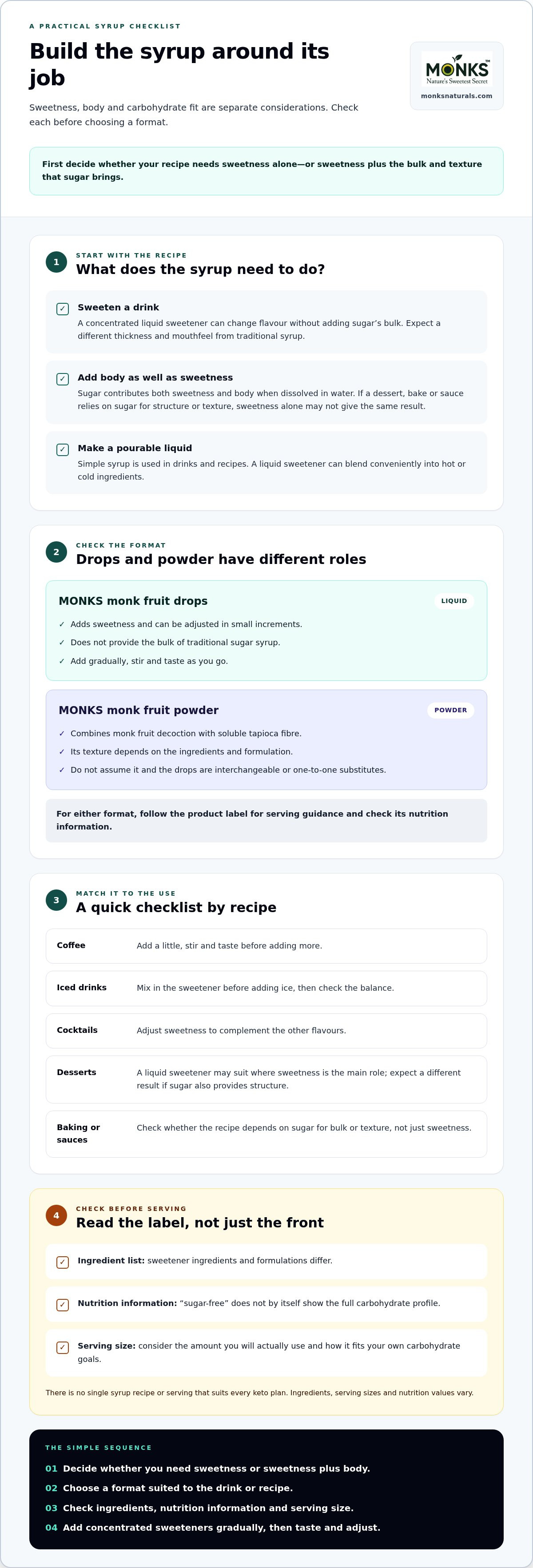
MONKS monk fruit drops offer a liquid way to add sweetness to everyday drinks, but they don’t provide the bulk of traditional syrup. When adapting a recipe, decide first whether you need sweetness alone or sweetness and syrup-like body. That distinction makes it easier to choose a format and assess its nutrition information against your own carbohydrate goals.
How Sweeteners Affect Syrup Sweetness, Texture, and Taste
A syrup has more than one job. It needs to taste sweet, but its thickness and mouthfeel also affect how it pours and blends into a drink or recipe. Those qualities don’t always come from the same ingredient. Sweetness alone doesn’t create syrup body: a concentrated sweetener can change flavour without adding the bulk or viscosity that sugar brings.
That’s why choosing a sweetener for keto friendly simple syrup means considering both its flavour and its role in the mixture. Powdered sweeteners aren’t all made from the same ingredients, and their behaviour depends on the rest of the formulation. For background on different options, see Mayo Clinic’s Understanding sugar substitutes.
Why Sweetness and Syrup Texture Are Not the Same Thing
In traditional syrup, dissolved sugar contributes sweetness and body. Replace it with a concentrated sweetener and you may get the sweet taste without the same thickness. Drops can help you adjust flavour, but they don’t automatically replace sugar’s bulk. Expect a different texture and judge the result by how it works in the drink or recipe, rather than expecting an identical sugar-like finish.
| Sweetener format | Sweetness and texture | Useful consideration |
|---|---|---|
| Sugar | Sweetens and contributes body when dissolved in water. | Contains sugar; consider how it fits your dietary goals. |
| Monk fruit drops | A liquid format for adding sweetness; doesn’t provide traditional sugar’s bulk. | Add gradually and taste as you go. |
| Powdered sweeteners | Texture depends on the powder’s ingredients and formulation. | Check the ingredient list and nutrition information. |
How Monk Fruit Drops and Powder Differ in a Syrup
Liquid drops make it easy to adjust sweetness in small increments. MONKS powder is a different format, combining monk fruit decoction with soluble tapioca fibre. Don’t assume the powder and drops are interchangeable or use them as one-to-one substitutes. Their ingredients and physical forms differ, so follow the label for serving guidance and assess the nutrition information against your own carbohydrate goals.
If you’re comparing formats, consider how MONKS monk fruit sweeteners might suit the way you plan to use them. Test a small amount before adapting a larger recipe. A drink may need sweetness alone; a dessert may rely on its sweetener for more than flavour.
Which Sweetener Should You Choose for Keto-Friendly Simple Syrup?
The right sweetener depends on the job you need it to do. For a drink, adjustable sweetness may matter most. For a dessert, you may also want an ingredient that contributes bulk or affects the finished texture. Taste matters too: sweetness intensity and any lingering flavour can vary between products and formulations.
Keto carbohydrate limits aren’t identical for everyone. They depend on an individual’s approach and eating plan, so a broad “keto-friendly” label can’t determine whether a serving suits you. Harvard T.H. Chan School of Public Health outlines the Principles of the ketogenic diet, including its focus on carbohydrate restriction. Use that context alongside your own targets, and check the product label.
What Should You Check on a Sweetener Label?
Start with the ingredient list. Identify the sweetening ingredient, any bulking agents and other additions, then check the nutrition panel and stated serving size. The amount you use in a drink or recipe may differ from the listed serving, so consider the nutrition information in relation to your actual portion. Interpret the figures according to your own dietary approach instead of assuming a front-label claim answers every question.
Then consider the flavour. If you’re sensitive to lingering sweetness or a particular aftertaste, try a small amount in a familiar drink before using it in a larger recipe. Taste is personal, and a sweetener that works well in coffee may not be your preferred choice for dessert.
How to Match a Sweetener to Your Drink or Recipe
Choose liquid drops when you want to adjust sweetness gradually without adding the bulk of a powdered ingredient. This can suit drinks where sweetness is the main aim. A powder may be more convenient when a spoonable ingredient fits the method, though its effect on texture depends on its formulation. Neither format is automatically a one-to-one substitute for sugar in recipes that rely on sugar for structure.
Before choosing, ask yourself:
- What’s the intended use? A cold drink, coffee or dessert may call for different textures.
- How sweet should it taste? Add concentrated sweeteners cautiously and taste as you go.
- Does the serving fit your plan? Review the product’s ingredients, nutrition information and serving size.
If avoiding erythritol is part of your ingredient preference, compare labels and look for erythritol-free monk fruit sweeteners. MONKS offers liquid drops and powder with soluble tapioca fibre, both free from erythritol, maltodextrin and artificial fillers. Consider the format as well as the ingredients, and choose based on the recipe’s needs, the flavour you enjoy and the nutrition information for your intended serving.
How to Make and Adjust a Simple Keto-Friendly Syrup
A homemade syrup can be as simple as water combined with a sweetener suited to your recipe. There isn’t one universal ratio: liquid drops and powders behave differently, and concentrated sweeteners vary. Follow the product’s label guidance, then adjust by taste. Making a small batch lets you test the result without assuming a particular product-for-sugar conversion.
A Flexible Method for Making Sugar-Free Simple Syrup
Keep the heat gentle. Warm the water to help the chosen sweetener mix in, rather than boiling it down into a thick syrup. Add sweetener gradually, especially if it’s concentrated, and taste once the mixture has cooled. A keto friendly simple syrup made with drops may be thinner than traditional syrup because drops add sweetness but not sugar’s bulk.
- Warm the water gently. Pour water into a clean pan and heat until warm, without bringing it to a vigorous boil.
- Add your chosen sweetener. Follow its label directions. Stir in powder as directed, or add liquid drops a little at a time.
- Mix until combined. Stir well so the sweetener disperses through the water.
- Cool and taste. Once cool, try a little in the drink or recipe you’re making. Add more sweetener gradually if needed.
- Adjust for the intended use. If it tastes right but seems too thin, adding more drops will increase sweetness, not necessarily body. For another batch, consider using less water or a sweetener format suited to the texture you want.
Make small adjustments and note what you change. That makes it easier to repeat a version you enjoy. Test it in the finished drink too: sweetness can seem different once the syrup is diluted with ice or other ingredients.
How to Add Flavour and Store Homemade Syrup
For a fresh variation, steep citrus peel or mint in the warm water, then remove it before mixing in the sweetener. A little vanilla can add a softer flavour. Start with simple additions so they complement rather than overwhelm coffee, iced drinks or cocktails.
Use clean utensils and a clean, sealable container. Let the syrup cool before closing and storing it, and follow sensible food-handling practices. Because homemade mixtures vary in ingredients and preparation, don’t assume they will keep for a set period. Make a manageable amount, store it appropriately and discard it if its appearance, smell or texture changes.
Explore MONKS monk fruit sweeteners and use the product label to guide how you add them to your recipe.
How MONKS Monk Fruit Sweeteners Fit into Keto-Friendly Syrup
MONKS sweeteners are made from whole-fruit monk fruit decoction, prepared by gently simmering the fruit. The two formats have different roles when making homemade keto friendly simple syrup. Pure liquid drops provide a way to add sweetness to water, while the powder combines monk fruit decoction with soluble tapioca fibre. Neither is a ready-made syrup or a direct substitute for sugar.
Consider what your recipe needs. A drink may need sweetness alone; another recipe may suit a powdered ingredient. In either case, keto suitability depends on the product’s nutrition information, the portion you use and your own carbohydrate goals. Check the label and serving guidance rather than assuming one format suits every plan.
Using Pure Monk Fruit Drops to Sweeten a Syrup
To make a lightly sweetened liquid, add MONKS drops gradually to warm water, stirring and tasting between additions. Follow the product label for serving guidance, and don’t assume a particular number of drops matches a measure of sugar. This gradual approach lets you control the flavour, especially when the liquid will be mixed into coffee, iced drinks or a recipe with its own distinct flavours.
Drops provide sweetness, not the bulk or thickness of traditional sugar syrup. The result may be thinner, so consider whether your drink needs a sweetener or a thicker texture. If you’re using a drops-based method from another recipe, make sure its instructions suit the ingredients and format you have before following its quantities.
When Monk Fruit Powder May Suit Your Recipe
MONKS powder includes soluble tapioca fibre, so it has a different composition and physical form from the liquid drops. It may suit a method that calls for a spoonable ingredient, but it won’t necessarily behave like sugar or create the same syrup consistency. Read the product label for its ingredients and serving guidance, then consider how the powder may affect the texture of your drink or dessert.
Review the monk fruit sweetener powder details when comparing this format with drops. Check the nutrition information and serving size against your personal carbohydrate goals, and test a small amount in the recipe before adjusting a larger batch.
Choose the format by function: drops for adjustable liquid sweetness, powder where a powdered ingredient suits the method. To compare the options, browse the MONKS sweetener range and use the product information to guide your choice.
Make Your Next Drink a Simple Starting Point
Your first keto friendly simple syrup doesn’t need to transform every recipe in your kitchen. Start with one familiar drink and choose the level of sweetness and texture you enjoy. A small everyday test helps you find what works for your taste and routine without making the process complicated.
As you experiment, keep your approach personal. A syrup that suits one drink may not be the right match for dessert, and your preferences matter as much as the ingredient format. Use each small test to decide whether you need sweetness alone or a thicker texture.
Explore MONKS monk fruit sweeteners to compare the liquid drops and powder for everyday use.
Frequently Asked Questions
Is monk fruit simple syrup keto-friendly?
It can suit a keto approach, but check the specific ingredients, nutrition panel and serving size rather than relying on the name alone. A homemade syrup made with monk fruit drops can add sweetness without sugar, but the amount you use still matters to your carbohydrate goals. MONKS monk fruit sweeteners are designed for keto diets, though individual plans and serving choices differ.
Can you make keto-friendly simple syrup without erythritol?
Yes. Make a keto friendly simple syrup with water and a sweetener that doesn’t contain erythritol, such as pure monk fruit drops. Check the ingredient list, follow the product’s serving guidance and add it gradually. MONKS sweeteners are free from erythritol, maltodextrin and artificial fillers; check the product label for ingredients and nutrition information.
Does monk fruit syrup taste like sugar?
Not exactly. Monk fruit can provide sweetness, but the overall taste depends on the product’s formulation and the other ingredients in the recipe. MONKS uses whole-fruit decoction and describes its sweetness as clean, without a cooling aftertaste. Try a small amount in a familiar drink, such as plain tea, before pairing it with coffee, citrus or other strong flavours.
How do I make sugar-free syrup thicker?
Thickening depends on the ingredients, so avoid adding more concentrated drops as a fix: that increases sweetness, not necessarily viscosity. If a recipe needs more body, test a suitable thickening ingredient in a small amount first and check its nutrition information before adding it to the full batch. Stir thoroughly and assess the cooled texture, since warmth can make a mixture seem thinner than it will be when chilled.
Can I use keto-friendly simple syrup in coffee and cocktails?
Yes. Start with a small amount, then adjust to suit the drink. In coffee, taste before adding milk or cream, as these change the overall balance. For cocktails, account for the acidity of citrus and the bitterness of ingredients such as tonic or coffee liqueur. Stir or shake well, then taste again; the finished drink may seem less sweet than the syrup on its own.
Does homemade sugar-free syrup need to be refrigerated?
Refrigeration is a sensible choice for homemade syrup. Transfer it to a clean, sealed container once cool and keep it chilled between uses. Make a modest amount so you can use it while it’s fresh, and avoid dipping used spoons into the container. As ingredients and preparation vary, don’t assume a fixed storage life; discard the syrup if its smell, appearance or texture changes.


