

Could a sweetener have little effect on blood glucose and still prompt an insulin response? That distinction is easy to miss when online claims promise a “spike-free” option. If you’re comparing sweeteners that don't spike insulin, start by separating what’s known about blood-glucose changes from what research says about insulin response. They’re related, but they aren’t the same measure.
Look beyond the name on the front of the pack, too. Some sweeteners are blended with bulking agents or other ingredients, so the full ingredient list matters. And no option should be treated as guaranteed to leave insulin unchanged.
This guide compares common sweetener types, explains why their effects may differ and shows you what to look for on labels. It also covers monk fruit decoction in different formats, including liquid drops and powder with soluble tapioca fibre. Consider the evidence, ingredients and intended use together rather than relying on exaggerated health promises.
Key Takeaways
- Learn why a small change in blood glucose doesn’t automatically mean there’s no insulin response.
- Compare non-nutritive sweeteners, polyols and caloric sugars without treating limited evidence as a guarantee.
- Use ingredient lists to spot blends, then consider taste and how you plan to use each sweetener.
- When trying an option, keep the serving size and accompanying food consistent to make personal patterns easier to interpret.
- Explore MONKS monk fruit decoction in drops or powder with soluble tapioca fibre as formats to compare, not as a promise of zero insulin response.
What Does “Sweeteners That Don’t Spike Insulin” Actually Mean?
If you’re choosing a sweetener for coffee, yoghurt or a home-baked recipe, you may want to know whether it will affect your blood glucose or insulin. These questions are connected, but they aren’t interchangeable. This guide to sweeteners that don't spike insulin starts by separating the two, then looks at why a simple “yes” or “no” answer can be misleading.
An insulin response is the body’s release of insulin after a stimulus, measured over time; it isn’t the same thing as a rise in blood glucose. Insulin is a hormone that helps regulate glucose in the blood. Its response can be considered alongside a glucose reading, but one doesn’t automatically reveal the other.
That distinction matters when you see claims that a sweetener has “no effect”. A stable glucose reading after consuming something doesn’t prove that insulin didn’t change. Equally, a sweet taste alone doesn’t mean a clinically meaningful insulin response has occurred. Any response depends on the person and the conditions being measured.
Insulin response and blood glucose are related, but not identical
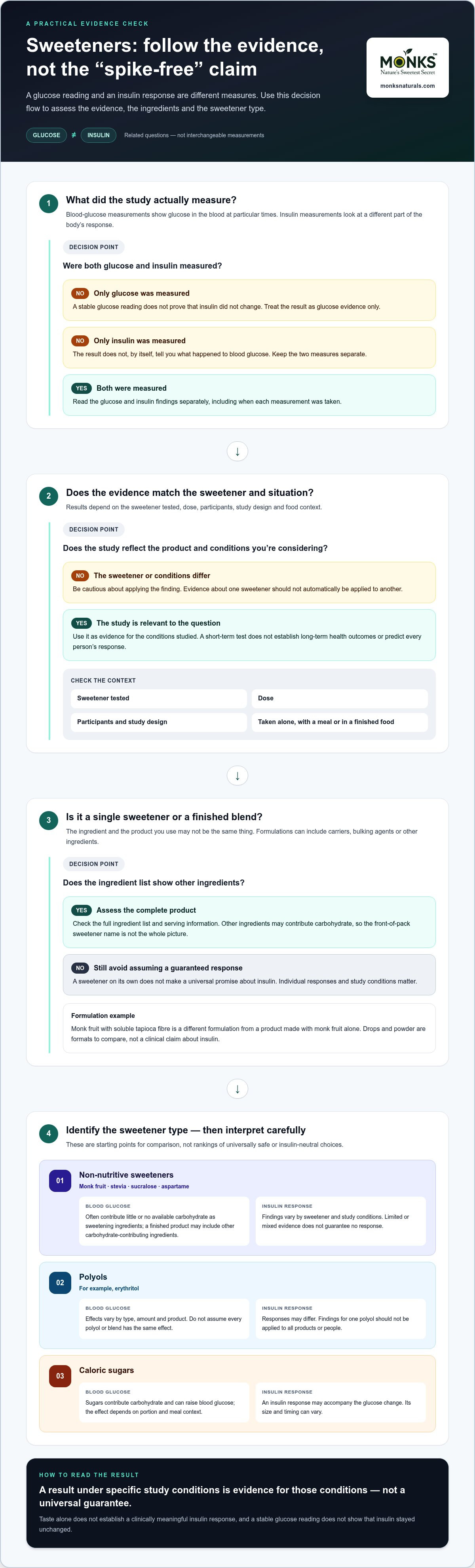
Blood-glucose measurements show the amount of glucose in the blood at particular times. Insulin measurements look at a different part of the body’s response. When reading a study, check whether researchers measured glucose, insulin or both, and when they took the measurements. For a broad overview of sweetener types and uses, see Understanding Sugar Substitutes.
Why individual responses and study conditions matter
Research results depend on the sweetener tested, the dose, the participants and the study design. Food context matters too: a sweetener taken alone may not produce the same measurements as one consumed with a meal or in a finished food. A short-term test describes responses under its study conditions. On its own, it doesn’t establish long-term health outcomes or predict what will happen for every person.
Products also vary. A sweetener ingredient and a finished blend aren’t necessarily the same thing: a product may include other ingredients that affect its overall composition. Check the full ingredient list and serving information rather than relying on the front-of-pack description. The comparisons below distinguish evidence about glucose from evidence about insulin, and ingredient properties from those of the product you actually use.
There’s no universal guarantee behind the phrase “does not spike insulin”. If you have diabetes, take medication that affects blood glucose, or have another medical concern, discuss sweetener choices with your healthcare professional. They can advise you in light of your health needs and treatment, rather than relying on a general claim or a single reading.
How Common Sweetener Types May Affect Insulin and Blood Glucose
There isn’t one response shared by every sweetener or every person. Some options contribute little carbohydrate and may have little direct effect on blood glucose, but that alone doesn’t establish what happens to insulin. The table separates the two questions and offers a starting point, not a ranking of universally safe or insulin-neutral choices.
| Sweetener type | Blood-glucose evidence | Insulin-response evidence |
|---|---|---|
| Non-nutritive sweeteners, including monk fruit, stevia, sucralose and aspartame | Often contribute little or no available carbohydrate as sweetening ingredients, but a finished product may contain other ingredients that contribute carbohydrate. | Findings vary by sweetener and study conditions. Limited or mixed evidence doesn’t support a guarantee of no response. |
| Polyols, such as erythritol | Effects vary by type, amount and product. Don’t assume every polyol or blend has the same glucose effect. | Responses may differ, and findings for one polyol shouldn’t be applied to all products or people. |
| Caloric sugars | Sugars contribute carbohydrate and can raise blood glucose, with the effect depending on portion and meal context. | The body’s insulin response may accompany the change in glucose; the size and timing can vary. |
Plant-derived options: monk fruit and stevia
Monk fruit and steviol glycosides are distinct sweetener types, not interchangeable ingredients. Both have plant origins, but that doesn’t predict an individual’s insulin response. Formulations differ as well: a product may pair a high-intensity sweetener with a carrier or another ingredient, so read the full label. A monk fruit product containing soluble tapioca fibre, for example, isn’t the same formulation as one made with monk fruit alone.
Polyols, artificial sweeteners, and sugar
Erythritol is one polyol used in some sweetener products. Findings about it shouldn’t be generalised to other polyols. Sucralose and aspartame are separate non-nutritive sweeteners, and evidence about one shouldn’t be treated as evidence about the other. For a clinical overview of artificial sweeteners and blood glucose, see Mayo Clinic on Sweeteners and Diabetes.
For everyday use, compare both the sweetener and the complete ingredient list. A powder may behave differently in a recipe from drops stirred into tea, and the amount used matters. If you’re exploring monk fruit, MONKS monk fruit decoction options include drops and powder with soluble tapioca fibre. These formats describe the products, not a clinical claim about insulin. Next, consider how to weigh evidence, ingredients, taste and intended use together.
Which Sweetener Is the Best Fit? Compare Evidence, Ingredients, and Use
There’s no single best choice for everyone. Compare four things: the quality of evidence about glucose and insulin, the product’s ingredients, its taste and how you plan to use it. A sweetener that works well in tea may not suit baking, and a finding about one ingredient may not apply to a finished blend.
Be cautious with front-of-pack terms. “Natural” describes an origin or positioning, not a proven insulin response. “Zero calorie” and “sugar-free” also don’t establish that insulin will remain unchanged. Treat these claims as prompts to read further, not as clinical conclusions.
Formulation matters because a product’s full ingredient list, not just its headline sweetener, determines what you’re actually adding to a drink or recipe. A sweetener ingredient and a product containing that ingredient aren’t automatically equivalent. This matters when a high-intensity sweetener is combined with a carrier or bulking ingredient to make it easier to measure or use.
How to read a sweetener ingredient list
Start with the complete ingredient list and serving information. Look for blends, carriers and bulking ingredients, and note what the product contains besides the named sweetener. Use the current product label for exact composition rather than making assumptions based on the product name or a general description. To compare products carefully, record the serving you use as well as the ingredients.
Then assess the evidence separately from the label. Research may examine a particular sweetener ingredient at a specific dose, while the product on your shelf may combine it with other ingredients. Evidence about the ingredient doesn’t automatically settle questions about the finished product. Look for studies that measured the outcome you care about, whether blood glucose, insulin or both, and be wary of claims that treat those measures as interchangeable.
Match the format to the way you sweeten food
Think about where you’ll use it. Liquid drops can be convenient for adjusting sweetness in tea or coffee. A powder may be easier to measure into certain foods, but its other ingredients can affect texture and how it behaves in a recipe. Neither format guarantees the same sweetness or baking performance as another product. Follow the product’s serving guidance and adapt recipes gradually.
Monk fruit decoction drops and monk fruit decoction powder with soluble tapioca fibre are different formulations. The powder isn’t pure monk fruit alone: the fibre is part of its composition. Taking that blend into account helps you compare ingredients and intended use without mistaking it for a single-ingredient sweetener. Choose based on the label, taste and task, then assess insulin-related claims as carefully as you would for any other product.
How to Choose and Try a Sweetener Without Overreading the Result
A simple routine can make comparisons more useful, whether you’re sweetening tea, stirring something into porridge or adapting a recipe. The aim isn’t to diagnose your body from a home reading. It’s to make a deliberate choice, keep the comparison fair and recognise when you need personalised advice. This can help you assess claims about sweeteners that don't spike insulin without assuming one serving proves how a product affects you.
A simple process for comparing options
- Define the need. Decide what you want to sweeten and what matters most: a short ingredient list, a liquid format for drinks, or a powder that fits your usual cooking. Consider taste and texture alongside the claims on the pack.
- Check the ingredients. Read the full label, including serving guidance. Note the named sweetener and any other ingredients, such as carriers or fibre. Compare the product as sold rather than assuming evidence about one ingredient describes the whole formulation.
- Choose one format and product. Follow the label’s serving guidance and avoid changing several things at once. For example, keep your usual breakfast and drink the same while trying the sweetener in your tea. That makes the comparison easier to interpret.
- Observe the context. If you already monitor glucose as part of your care, note the food, serving size, timing and any relevant changes to your routine. Look for patterns across repeated, comparable occasions, not a conclusion from a single reading.
Keep the serving and accompanying food consistent when noticing personal patterns. A different meal, a larger portion or a change in activity can affect a reading, making it difficult to attribute a change to the sweetener alone. Home observations can help you describe what you notice, but they aren’t clinical testing and can’t establish cause and effect.
For related context on monk fruit and blood glucose, see this monk fruit blood glucose guide. Use it as general reading, not as a substitute for individual diabetes care or a promise about how any product will affect you.
When to seek individual health guidance
If you use insulin or glucose-lowering medicines, ask your healthcare professional for advice tailored to your treatment before changing your routine. Don’t alter medication or treat a sweetener as a diabetes therapy based on a product claim or home experiment. Speak with a clinician if symptoms persist or glucose readings are confusing, unexpected or difficult to manage.
For a practical next step, explore monk fruit decoction formats and compare the ingredient information with the way you plan to use them.
MONKS Monk Fruit Decoction: A Thoughtful Option to Consider
Having compared evidence, ingredients and everyday use, you can consider MONKS monk fruit decoction as one option. Its appeal is the choice of formats and their distinct ingredients, not a promise about how your body will respond. No sweetener can be described as guaranteed to leave insulin unchanged for every person.
What distinguishes the MONKS formats
The powder combines monk fruit decoction with soluble tapioca fibre. It isn’t pure monk fruit powder, so consider both components when reading the label or deciding how you’ll use it. The liquid drops are a separate option: pure liquid drops rather than the powder formulation. Don’t assume the ingredients of one format apply to the other.
MONKS products are free from erythritol, maltodextrin and artificial fillers. If you prefer to avoid those ingredients, this gives you a clear point of comparison. Read the label for ingredient information and serving guidance, and consider the product as it is made rather than relying on a general claim about monk fruit.
The distinction matters when considering evidence, too. A study of a particular sweetener ingredient doesn’t automatically establish the insulin response to every product containing it. Likewise, an ingredient’s plant origin or calorie content can’t by itself tell you how you personally will respond. Soluble tapioca fibre is part of the powder’s formulation, while the drops have a different format and composition.
Bring a clean-label sweetener into daily routines
Start with a familiar ritual. Drops can be stirred into tea or coffee, while powder may suit other everyday foods where its texture works for you. Follow the product’s serving guidance and adjust to taste. In cooking or baking, a sweetener’s sweetness and texture can affect the finished recipe, so you may need to experiment to find the right fit.
If ingredient preferences guide your choice, the erythritol-free sweetener guide offers related context for comparing products. Use it alongside current labels, especially if you’re checking for particular ingredients. Product details show what’s in the pack; they don’t replace clinical evidence or personal medical advice.
MONKS monk fruit decoction may suit someone looking for a plant-derived sweetening option in liquid or powder form, with soluble tapioca fibre as part of the powder blend. Weigh it against your taste, routine and ingredient priorities, not as a clinical solution or a guarantee of zero insulin response. Explore monk fruit sweetening options and compare the formats for everyday use.
Make Your Next Choice a Simple One
You don’t need to find a perfect sweetener or settle every question about insulin before choosing what to use. Start with one everyday moment, such as your morning drink, and decide what matters most: taste, format or ingredients. Then make a considered choice and notice how it fits your routine. That’s more useful than relying on a sweeping promise about sweeteners that don't spike insulin.
Let your priorities guide you, not pressure to make a flawless choice. If you’re managing diabetes or have concerns about how a sweetener may affect you, use this information as a starting point for a conversation with your healthcare professional. Personal advice can put general claims into the context of your health and care.
For a closer look at monk fruit options, explore monk fruit sweetening options and compare the formats for your daily routine. Choose the one that best fits how you like to sweeten your food and drinks.
Frequently Asked Questions
Can a sweetener affect insulin without raising blood glucose?
Yes, insulin and blood-glucose measurements may not move in step. A glucose meter reading cannot show whether insulin changed, so studies need to measure insulin directly to investigate that question. If you’re comparing sweeteners that don't spike insulin, look for evidence reporting both outcomes, not just a claim about blood glucose. Check what product and serving the research tested, too.
Does a sweet taste alone cause an insulin spike?
A sweet taste alone doesn’t prove that a clinically meaningful insulin spike has occurred. Taste isn’t a reliable way to judge what’s happening inside the body. If you notice a sensation or feel different after a sweet drink, that experience may be worth recording, but it can’t identify an insulin change. Measuring an insulin response requires an appropriate test, not taste alone.
Can individual insulin responses to the same sweetener differ?
They may differ, so one person’s experience can’t predict another’s. Health status, the amount consumed and the surrounding meal are among the factors that make individual experiences difficult to compare. Even repeated home observations are useful only in the context in which they were taken. If you’re tracking readings, note the product, portion and meal, and discuss any concerning patterns with a clinician.
Do sweeteners affect insulin differently when eaten with other foods?
They may, because a sweetener in a mixed meal is consumed alongside other ingredients that can influence the body’s response. A spoonful added to plain tea isn’t directly comparable with the same sweetener used in a pudding or eaten after lunch. For a clearer personal comparison, keep the meal and portion similar on different occasions. That still won’t prove the sweetener caused a particular change.
Can home glucose readings show whether a sweetener affects insulin?
No, a home glucose meter measures glucose, not insulin. A reading may help you monitor glucose if that’s part of your care plan, but it can’t confirm whether insulin has changed. Continuous glucose monitors also track glucose rather than insulin. Don’t treat a normal-looking glucose result as proof that a sweetener had no effect on insulin, or as a reason to change your care routine.
Should people taking insulin use non-sugar sweeteners without medical advice?
If you take insulin, ask your diabetes care team or another healthcare professional for advice that fits your treatment plan. Changing sweeteners doesn’t automatically mean your medication should change, and you shouldn’t adjust insulin doses based on a product claim or a single reading. Share the product label and how you plan to use it with your clinician, especially if you’re unsure how it fits your usual routine.
Does “zero calorie” mean a sweetener cannot affect insulin?
No. “Zero calorie” describes energy content under the relevant labelling rules; it doesn’t establish an insulin response. The finished product may also contain other ingredients, and a label can’t predict every person’s response. Check the full ingredient list and serving guidance, then treat “zero calorie” as a nutrition claim, not a guarantee about hormones or blood glucose.


