

A lighter hot chocolate can still taste deep, smooth and properly cosy. The key isn’t simply cutting back: a satisfying cup balances cocoa, milk and just enough sweetness, so it feels comforting rather than thin or bitter. This low calorie hot chocolate recipe keeps the choices simple and adjustable.
You’ll find a straightforward method using familiar ingredients, plus practical swaps to suit your taste. Choose milk for the texture you enjoy, then add sweetness gradually with monk fruit powder or drops. The powder is spoonable; liquid drops let you adjust sweetness with less impact on the drink’s texture. To estimate calories for your serving, use the quantities you actually add and the nutrition labels on your ingredients. That way, you can make a rich-tasting cup and see what contributes to its total.
Key Takeaways
- Calories depend on serving size and ingredients, especially the milk, cocoa, sweetener and toppings.
- Compare ingredient labels to see how unsweetened cocoa and different milks affect the drink’s nutrition and flavour.
- This low calorie hot chocolate recipe uses a measured serving, with simple ways to adjust sweetness and texture.
- Warm gently and whisk as you go, whether you use the hob or microwave.
- Estimate calories from your ingredient quantities and their nutrition labels. Cinnamon or vanilla can add flavour.
What makes a hot chocolate recipe low calorie?
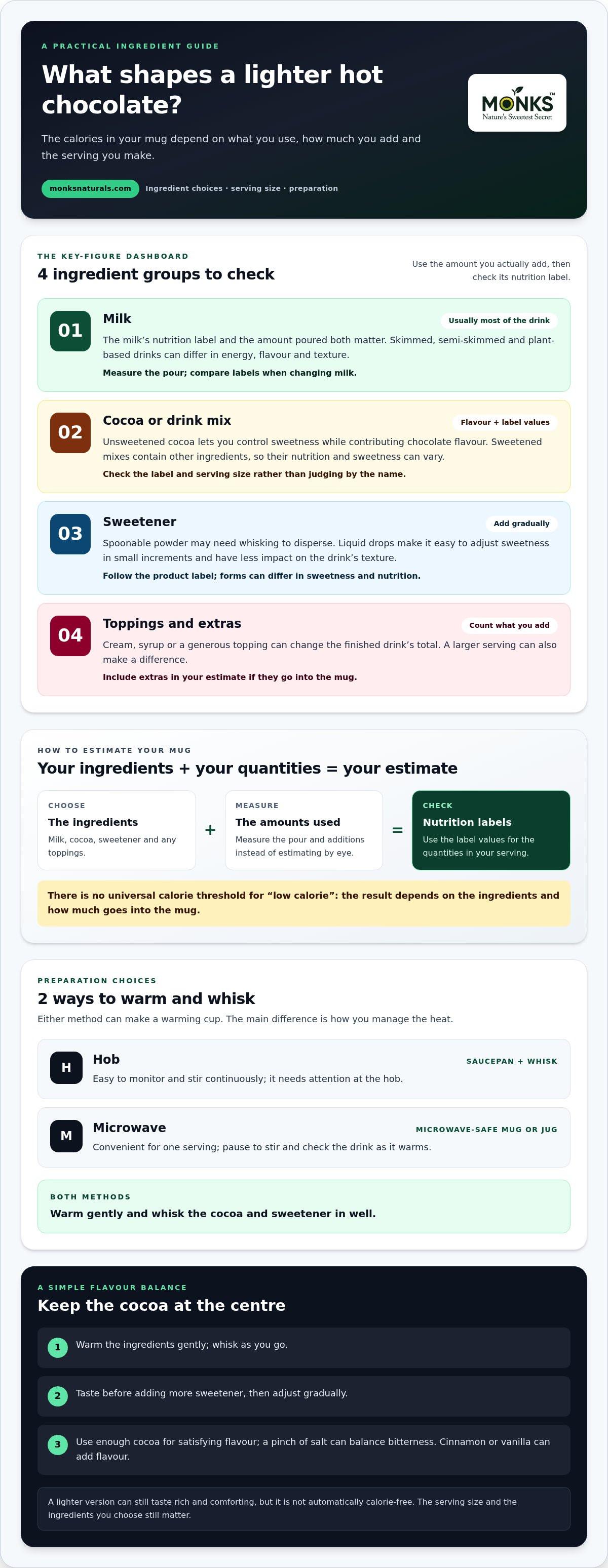
A low calorie hot chocolate is made with ingredient choices that keep the energy in your serving lower. There’s no universal calorie threshold for the name: the result depends on what you add and how much goes into the mug. A lighter version can still be warming and cocoa-forward, but it isn’t automatically calorie-free.
The calorie estimate comes from the amounts of each ingredient in your finished serving, not from the recipe name. Use that principle when comparing drinks. A small mug made with one type of milk may differ from a larger one made with another, even if both use the same cocoa.
The terms hot chocolate and hot cocoa can describe different styles and preparations. For background on their distinctions, see this overview of the history and types of hot chocolate. For a calorie estimate, the ingredients and quantities in your own cup matter most.
Which ingredients contribute most to the calories?
Milk usually makes up most of the drink, so both its nutrition label and the amount poured matter. Skimmed, semi-skimmed and plant-based drinks can differ in energy and composition. Unsweetened cocoa adds chocolate flavour and contributes to the total. Sweeteners vary too, so check the label rather than assuming a particular type contributes no calories. MONKS monk fruit decoction powder is spoonable, while liquid drops let you adjust sweetness without adding a powder. Check the product label and use the amount you actually add.
Consider your toppings as well. Cream, syrup or a generous topping can change the finished drink’s calorie total, as can using a larger serving. Measure the milk and other additions, note their label values, and calculate using the amounts you used. This gives you an estimate for your mug, rather than a figure taken from a different serving.
Can a lighter hot chocolate still taste rich?
Yes. Richness is a flavour and texture goal, not a guarantee about nutrition. Start with cocoa that has a rounded chocolate taste. A pinch of salt can balance bitterness, while your choice of milk affects the drink’s body and flavour. Warm the ingredients gently and taste before adding more sweetener.
You don’t need to remove the cocoa to make a lighter cup. Instead, balance the ingredients: choose a portion that suits you, use enough cocoa for satisfying flavour, and adjust sweetness gradually. The recipe below follows that approach, with room to tailor the milk and sweetener to your preference.
Build a balanced low calorie hot chocolate with the right ingredients
Your ingredients set the character of the cup. Start with unsweetened cocoa if you want to control the sweetness yourself. Sweetened chocolate drink mixes contain other ingredients, so their nutrition and sweetness can vary. Read the label and check the serving size rather than assuming a mix is lighter or richer from its name.
Next, choose milk and sweetener to suit your taste. Skimmed milk, semi-skimmed milk and unsweetened plant drinks each bring a different flavour and texture. Their nutrition can vary between brands and formulations, so compare labels. Your choice of milk and the serving size you measure are key factors in the calorie total.
Choosing milk for flavour, texture and calories
Dairy milk gives cocoa a familiar creamy flavour, while unsweetened plant drinks may have a lighter body or their own subtle taste. Skimmed and semi-skimmed milk differ in richness, but neither is automatically the best choice for every cup. Plant drinks vary too. Use one clearly specified milk in the base recipe, then treat alternatives as swaps and recalculate using each carton’s label.
For a more consistent estimate, measure the amount you pour instead of filling the mug by eye. If you change the milk, keep the cocoa and sweetener portions steady at first. That makes it easier to compare the flavour and work out how the swap affects the nutrition. There isn’t one universally lowest-calorie option: the label and serving amount matter.
Sweetening without obscuring the cocoa
Granulated sweeteners are spoonable and may need whisking to disperse through a warm drink. Liquid sweeteners are added in drops, making it easy to adjust sweetness gradually. Follow the product label for serving guidance; don’t assume that a spoonful of one sweetener matches another in sweetness or nutrition. The American Heart Association offers background on low-calorie sweeteners and their benefits, including their role in reducing added sugar.
MONKS monk fruit decoction powder, made with soluble tapioca fibre, is a spoonable option. Pure liquid drops offer a liquid alternative. Add a little, stir, taste, then adjust according to the product label and your preference. The powder and drops have different forms, so choose the one that best suits the texture you want. You can also explore monk fruit with tapioca fibre when comparing sweetener formats.
Keep the cocoa at the centre of the drink. A measured portion of sweetener can soften bitterness without masking the chocolate flavour. Treat cream and syrup as optional extras and include them in your estimate if you add them. To compare monk fruit sweetener options, explore MONKS powder and drops and choose the format that fits your cup.
Low calorie hot chocolate recipe: compare preparation choices
You can make a warming cup on the hob or in the microwave. The main difference is how you manage the heat. A saucepan is easy to monitor and stir continuously; a microwave is convenient for one serving but needs pauses for stirring and checking. Either way, warm the milk gently and whisk the cocoa and sweetener in well. The finished drink still depends on the ingredients and amounts you choose.
| Method | Useful equipment | Practical trade-offs |
|---|---|---|
| Hob | Small saucepan and whisk | Easy to monitor and stir continuously, but needs attention at the hob. |
| Microwave | Microwave-safe mug or jug and spoon or small whisk | Convenient for one serving, but heat builds unevenly and needs staged warming. |
Hob method: more control over gradual heating
Pour your chosen milk into a small saucepan and warm it over a low to medium heat. To avoid dry cocoa pockets, first whisk the cocoa and sweetener with a small splash of milk to make a smooth paste. Gradually whisk in the rest, then keep stirring as the pan warms. When you see gentle steam and small bubbles around the edge, take the pan off the heat. Don’t let it boil.
Microwave method: a convenient single serving
Use a microwave-safe mug or jug with enough room for stirring, and never use metal. Mix the cocoa and sweetener with a little milk first, then add the rest. Heat in short bursts, pausing to stir between them, until the drink is warm to your liking. Stirring helps distribute the warmth. Timings vary with microwave power and the serving vessel.
With either method, avoid heating a full mug for one long stretch. Milk can become too hot, and cocoa can settle if left unstirred. Check the temperature before sipping, especially after microwaving, as the vessel and drink may not warm evenly. A small whisk is useful on the hob; a spoon works well for stirring between microwave intervals.
Choose the method that suits your kitchen and the attention you can give the drink. Use the hob if you want to monitor the temperature and whisk continuously. For a quick single cup, use the microwave in stages. The next section sets out the method for this low calorie hot chocolate recipe and explains how to estimate its calories from the ingredients you use.
How to make the low calorie hot chocolate recipe step by step
A repeatable recipe needs measured quantities, and a useful calorie estimate needs the nutrition labels for the ingredients you use. Milk and cocoa labels vary, and sweeteners have their own serving guidance. Measure the ingredients for your mug and calculate from those amounts rather than relying on a calorie figure that may not match your ingredients.
Ingredients and measured quantities for one mug
Measure each ingredient in grams or millilitres and record the amounts. Make one mug, and leave toppings out of the base calculation unless you add them.
- Unsweetened cocoa powder, weighed in grams.
- Your chosen milk, measured in millilitres. Use the same type and brand for the calculation as for the drink.
- Optional monk fruit decoction powder or drops, added in line with the current product label and adjusted to taste.
- Optional cinnamon or vanilla, if using. Record the amount if you want to include it in your estimate.
For a spoonable option, MONKS monk fruit decoction powder is made with soluble tapioca fibre. Liquid drops are another option. Follow their product labels rather than assuming a conversion between the two. Keep cream, marshmallows and other toppings separate so it’s clear whether your estimate covers the drink alone or the finished mug.
Method, serving and nutrition estimate
- In a small saucepan, mix the weighed cocoa with a small splash of the measured milk. Whisk to form a smooth paste and reduce dry pockets.
- Gradually whisk in the remaining milk and your chosen measured sweetener.
- Warm gently over low to medium heat, stirring often. Take the pan off the heat once the drink is steaming and small bubbles appear at the edge. Don’t let it boil.
- Taste carefully. If you want more sweetness, add a little more sweetener according to its label, stir, and taste again.
- Pour into one mug. Add any optional topping only after recording it separately for your calorie calculation.
To estimate calories, use the nutrition information on the exact cocoa, milk and sweetener packs. If a label gives calories per 100g or 100ml, multiply that figure by the amount used and divide by 100. Add the ingredient totals, then include any topping you serve. If the label gives values per portion, adjust them to match your measured amount. This gives you an estimate for the whole mug; changing the serving changes the amount consumed.
For one serving, add the calories from the measured ingredients using their labels, and include toppings only if they’re in the mug. A single calorie figure wouldn’t be accurate without the specific measurements and label values. For a sweetener to add to your cup, explore monk fruit sweetener options.
Make the recipe your own with simple sweetener and flavour adjustments
A good mug is easy to tailor. Start with the base recipe, then change one thing at a time. That way, you can tell whether you prefer more cocoa, extra sweetness or a different finish. Begin with a small adjustment: it’s easier to add flavour than to correct a drink that’s become too sweet or intense.
Adjust sweetness, cocoa intensity and texture
If you’d like a sweeter mug, stir in a little sweetener, taste, then repeat if needed. Follow the product label for serving guidance rather than assuming one sweetener measures like another or converts directly to sugar. For a deeper cocoa note, add cocoa gradually and whisk it in well. Changing the amount changes the drink’s nutrition, so update your calorie estimate using the label and quantity used.
Small flavour additions can change the cup without taking over:
- Cinnamon: Add a light dusting for gentle warmth.
- Vanilla: Stir in a little extract for a softer, rounded aroma.
- Extra cocoa: Add a little for a more pronounced chocolate flavour, then reassess the sweetness.
For a smoother, milder cup, keep the cocoa amount steady and choose a milk whose flavour and body you enjoy. Changing the milk can alter both texture and nutrition. Cream and marshmallows are optional extras, not part of the base drink; include them in your calorie estimate if you add them. Make one adjustment, stir thoroughly and taste before deciding what the mug needs next.
A simple MONKS sweetener option for your mug
MONKS monk fruit decoction is made by gently simmering whole fruit using a traditional method. The spoonable powder combines monk fruit decoction with soluble tapioca fibre, while pure liquid drops offer another format. Choose according to how you like to sweeten and the texture you want, then adjust gradually. Use the current product label for serving guidance and nutrition information when estimating your finished drink. The powder and drops are different formats, so don’t assume a direct conversion between them.
Once you’ve found a balance you enjoy, note the milk, cocoa and sweetener amounts so you can make the same cup again. If you change an ingredient or add a topping, recalculate using the amounts you use and their labels. That keeps your estimate specific to your mug, rather than based on a different recipe or serving size.
To explore MONKS monk fruit sweetener options, compare the powder and drops and choose the format that suits your recipe.
Make your next mug your own
Treat your first cup as a starting point, not a fixed formula. Note the milk and sweetener you use, then adjust one element next time. Tasting as you go helps you find a balance that suits your palate and your usual mug. Keep track of changes if you want to compare calorie estimates between versions.
A low calorie hot chocolate recipe can become a simple cold-weather ritual when it suits your taste. Try a gentle hint of spice one day, or keep the cocoa centre stage the next. Small, considered changes let you explore without losing the comfort of a warm cup.
MONKS offers monk fruit decoction powder with soluble tapioca fibre and pure liquid monk fruit drops to sweeten your drink. Explore MONKS monk fruit sweeteners and choose a format that fits the way you like to prepare your mug. Then settle in, take a sip and enjoy making the recipe your own.
Frequently Asked Questions
How many calories are in a cup of low calorie hot chocolate?
There isn’t one fixed calorie count because cup size and ingredients vary. For your low calorie hot chocolate recipe, add the calories from the amounts of cocoa, milk and sweetener you use, using those products’ nutrition labels. If you make a larger mug or add a topping, include it in the calculation. Treat the result as an estimate, since labels may use rounded values.
Can I make low calorie hot chocolate without sugar?
Yes. Use unsweetened cocoa and a milk or plant drink without added sugar, checking the ingredient list and nutrition label rather than relying on front-of-pack wording. You can leave the drink unsweetened, though the cocoa may taste more bitter, or add a suitable sweetener to taste. MONKS offers monk fruit decoction powder and liquid drops; follow the current product label for serving guidance.
Is cocoa powder naturally low in calories?
Unsweetened cocoa powder still contributes calories, so it isn’t calorie-free. The amount in your mug matters: a lightly flavoured drink and one with extra cocoa won’t have the same total. Check the pack’s nutrition information and weigh the amount you use for a more consistent estimate. Sweetened drinking chocolate is a different product, so check its label separately rather than applying cocoa powder values.
Can I make this hot chocolate vegan?
Yes. Choose a plant-based drink, such as an unsweetened oat, soya or almond drink, and check the labels on your cocoa and any additions. Some plant drinks have a more noticeable flavour or a thinner body, so choose one you enjoy. Leave out dairy toppings or select a clearly labelled vegan alternative, and include any additions in your nutrition estimate.
Does hot chocolate contain caffeine?
Hot chocolate made with cocoa can contain caffeine, although the amount depends on the cocoa product and how much you use. Cocoa also contains theobromine, another naturally occurring stimulant. If you’re sensitive to caffeine, check the product information where available and consider having a smaller serving or enjoying it earlier in the day. A cocoa-based drink isn’t automatically caffeine-free just because it isn’t coffee.
Can I prepare hot chocolate in advance and reheat it?
Yes, though it’s usually simplest to make only what you plan to drink. If saving a portion, transfer it to a covered container, refrigerate it promptly and use it soon. Reheat gently in a saucepan or microwave-safe mug, stirring well so the warmth is distributed. Avoid boiling, check the temperature before drinking and don’t repeatedly cool and reheat the same portion.


