

The easiest-looking sweetener swap can be the reason keto scones turn dry or fall apart. If you’ve tried almond-flour baking, you’ll know how quickly a tender crumb can become crumbly, and monk fruit products aren’t all measured or formulated alike. This keto scones recipe with monk fruit makes the sweetener choice part of the method, not an afterthought.
You’ll find practical guidance on measuring, mixing and shaping scones that hold together, plus what to check on a monk fruit sweetener label before baking. The exact quantities, oven settings and timings need to come from a tested recipe card, so this guide focuses on the checks that help you follow and assess that recipe reliably.
You’ll also learn what to look for as the scones bake, how to check whether they’re cooked through and how to work out carbohydrate figures by serving. That makes it easier to calculate the recipe using your own ingredients and portions, rather than relying on a broad “keto” label or an assumed sweetener ratio.
Key Takeaways
- See how measured ingredients and gentle handling can help a keto scones recipe with monk fruit produce a tender crumb.
- Compare monk fruit powder and drops by checking each product’s ingredients, serving guidance and carbohydrate information.
- Find practical checks for dry dough and crumbly scones, and see how mixing and cooling can affect their shape.
- Get serving ideas and a straightforward way to assess carbohydrate figures per portion.
Keto Scones Recipe with Monk Fruit: What Makes This Recipe Work?
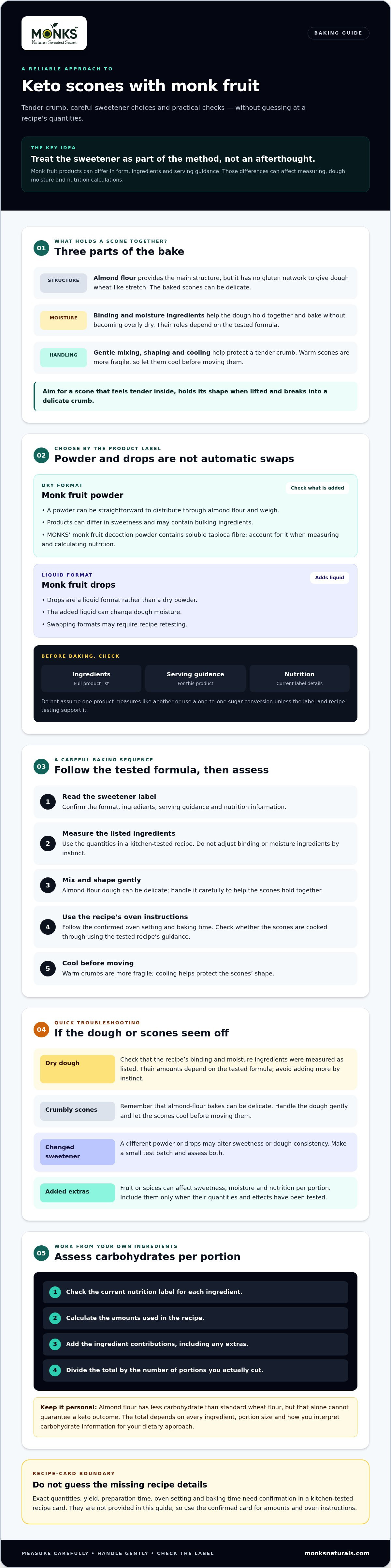
A good scone should feel tender inside, hold its shape when lifted and break into a delicate crumb rather than scatter across the plate. This keto scones recipe with monk fruit guide focuses on almond flour and choosing a suitable sweetener. The important point is to treat both as ingredients with their own properties, not as simple one-for-one swaps for wheat flour and sugar.
Recipe-card note: Exact quantities, yield, preparation time, oven setting and baking time need to be confirmed in a kitchen-tested recipe. They aren’t available here, so guessing could lead to unreliable timings, portions or nutrition figures. Use the confirmed recipe card for the amounts and oven instructions.
What makes a scone recipe keto-style?
Almond flour replaces conventional wheat flour in this style of bake. It contains less carbohydrate than standard wheat flour, but that fact alone can’t guarantee a keto outcome. The total depends on every ingredient, the size of each portion and how you interpret carbohydrate information in your own dietary approach.
Monk fruit products also vary. Some are concentrated drops; others include ingredients that add bulk. MONKS’ powder combines monk fruit decoction with soluble tapioca fibre, so don’t assume it measures or contributes the same as pure drops or another powder. The monk fruit plant is the source of monk fruit sweetener, but the product label is what matters for your recipe calculation.
To estimate the recipe, check the current label for each ingredient, calculate the amounts used, then divide the total by the number of portions you actually cut. Treat “keto-style” as a description of the recipe approach, not a promise that it suits every person’s carbohydrate target.
The ingredients and their role in the bake
Almond flour provides the scones’ main structure, but it has no gluten network to give dough the stretch of a wheat-based bake. Almond-flour scones can therefore be delicate. Handle the dough gently and let the baked scones cool before moving them, as warm crumbs are more fragile.
Binding and moisture ingredients help the dough hold together and bake without becoming overly dry. Their exact roles depend on the tested formula, so follow the listed amounts rather than adding more by instinct. Optional extras such as fruit or spices can affect sweetness, moisture and nutrition per portion. Include them only when their quantities and effect have been tested, then include them in your nutrition calculation.
Choosing Monk Fruit Sweetener for Keto Scones
The sweetener affects more than flavour. In a keto scones recipe with monk fruit, its form and other ingredients can affect measuring and dough moisture. Check the product itself, not just the words “monk fruit” on the front of the pack.
Monk fruit powder versus liquid drops in baking
A dry powder is often straightforward to distribute through almond flour and weigh, which can help keep the balance of dry and wet ingredients consistent. However, powders aren’t all alike. Their sweetness can vary, and some include bulking ingredients, so don’t assume a spoonful of one product matches a spoonful of another.
MONKS’ monk fruit decoction powder contains soluble tapioca fibre, while its monk fruit decoction drops are a liquid format. The fibre is part of the powder’s formulation, so account for it when measuring and calculating nutrition. Drops add liquid rather than dry bulk, which can change dough moisture. Substituting one format for the other may require recipe retesting.
Monk fruit sweeteners can be made and formulated in different ways. The IFIC overview of monk fruit sweeteners provides further background. For this bake, follow the specific pack’s serving guidance and the recipe’s tested amount. Don’t use a one-to-one sugar conversion unless the product label and recipe testing support it.
For more on the powder’s fibre component, look for The Ultimate Guide to Monk Fruit with Tapioca Fibre. Treat it as extra context, then use the current product label for your measurements.
How to check the sweetener label before baking
Before mixing, read the full ingredients list, serving guidance and nutrition information. Confirm whether you’re using powder or drops, and note any added ingredients. In particular, account for soluble tapioca fibre in the powder when calculating the recipe’s nutrition. Don’t assume its carbohydrate contribution or serving size from another product.
Work from the amounts you actually use and the number of scones you cut. If you change sweetener, make a small test batch and check both sweetness and dough consistency. For more background on ingredient choices, Erythritol-Free Sweetener UK: The 2026 Guide to Clean Sugar Alternatives may be useful, but it doesn’t replace checking the label of the product in your kitchen.
To compare formats, review MONKS monk fruit sweetener options, then check the current product information before choosing one for your recipe.
How to Make Keto Scones with Monk Fruit Step by Step
Good scones start with measured ingredients and gentle handling. The full ingredient list, quantities, yield, oven setting and baking time haven’t been provided here, so this isn’t a complete tested method. Use a verified recipe card for those details. Guessing could leave you with dry dough, fragile scones or inaccurate nutrition information.
The steps below show what to check when following or testing a recipe. Use the confirmed recipe card for exact gram measurements, Celsius temperature and whether the oven should be fan-assisted. Almond flour and a particular monk fruit sweetener aren’t automatically interchangeable with other products, so record the brands and formulations used during testing.
Prepare and shape the scone dough
- Weigh the ingredients. Measure each ingredient in grams and check the sweetener’s current pack guidance. Record the full ingredient list, including any binding or moisture ingredients, rather than relying on unmeasured substitutions.
- Combine the dry ingredients. Mix them evenly before adding the wet ingredients. Once the dough comes together, handle it gently. Extended mixing won’t improve the structure of almond-flour dough.
- Check the consistency. Notice whether the dough holds together when pressed and whether it feels excessively dry or sticky. If an adjustment is needed during testing, change one ingredient by a small, recorded amount and retest. Don’t add liquid or flour by guesswork to a final recipe.
- Shape and portion. Pat the dough to an even thickness and cut equal portions using the tested method. Record the number of scones and their approximate size so the yield and nutrition per portion can be calculated accurately.
Bake, cool and check for doneness
- Use the verified setting. Follow the temperature, fan setting and time range confirmed by a test bake. These details aren’t available here, so they shouldn’t be presented as tested figures.
- Look for visual cues. During testing, note when the scones are set and lightly coloured at the edges, then check the centre before deciding they’re done. Colour alone may not confirm that the middle has baked through.
- Cool before moving. Let the scones rest on the tray, then transfer them carefully once they’ve firmed. Almond-flour bakes can be delicate while warm.
If you change the flour, monk fruit product or add fruit, retest the dough and bake. For general background on monk fruit sweeteners, IFIC offers further reading. The finished recipe still needs to be tested with the specific product and quantities used.
Troubleshooting Keto Scones: Crumbling, Dryness and Sweetness
Almond-flour scones can be delicate, but a few checks can help identify what’s affecting the crumb. Change one thing at a time, note the result and retest the full bake before treating an adjustment as part of the recipe.
Why are my almond-flour scones crumbly or dry?
Start with the scales. Check that you weighed the flour rather than measuring it by volume, and confirm that the other ingredients match the recipe. Too much almond flour or too little moisture can leave dough dry and difficult to bring together. If it seems unusually dry, check your measurements first. Only trial a small change to a moisture ingredient if the dough still won’t hold together, then bake again to assess the texture.
Handle the mixture gently once the wet ingredients are added. Stop mixing as soon as the dough comes together, as excessive mixing and shaping can compact delicate dough. If the scones crumble when you move them, let them cool completely before transferring or serving. Warm almond-flour bakes are fragile and can firm as they cool.
If you change an ingredient amount, flour, sweetener or method, make a fresh test bake. Even a small alteration can affect moisture, shape and baking time, so don’t assume the original results still apply.
How to adjust sweetness and add flavour
Monk fruit products differ in ingredients and sweetness. Check the specific pack’s serving guidance, then adjust gradually in a test batch rather than assuming a direct sugar swap. If the flavour is too mild or too sweet, change only the sweetener amount on the next trial. Note the product and quantity so you can repeat the result.
Berries, citrus zest and spices may suit scones, but there are no tested quantities for these variations here. Treat them as ideas to test rather than confirmed recipe options. Add one at a time, record the amount and check the dough before baking. Recalculate nutrition using the ingredient labels and the number of portions you cut.
This recipe is a baking guide, not a medical or weight-loss promise. Whether it fits your approach depends on the ingredients, portion and your own dietary needs. To compare monk fruit formats and labels, explore MONKS monk fruit options and check the current product information before baking.
Serve, Store and Adapt Your Monk Fruit Keto Scones
Taste a scone plain once it has cooled. That gives you a clear sense of its sweetness and crumb before you add anything. An accompaniment can make it feel more like a leisurely breakfast or afternoon treat, but it’s optional, not a requirement of a keto-style recipe.
Serving ideas and simple variations
Serve the scones plain, or add a separately measured accompaniment you enjoy. Count any topping as an additional ingredient: its carbohydrates and portion size change the nutrition calculation for what you eat. If you’re tracking, check its label and include the amount served rather than relying on the scone’s figures alone.
Berries, citrus zest and spices can change a scone’s flavour, but no variations or quantities have been confirmed in a test of this recipe. Treat them as ideas for a future trial, not tested options. Add one at a time, note the amount, then check how it affects dough consistency, baking and sweetness. Recalculate nutrition using the labels for the exact ingredients and the number of portions made.
For more context on monk fruit decoction, see Monk Fruit Decoction: The Traditional Guide to Clean Sweetening in 2026. Use the label of your chosen sweetener to guide recipe measurements, as products can differ in ingredients and serving guidance.
Storage, freezing and recipe nutrition
Storage time, conditions and freezing instructions should come from a test of these scones, not from another almond-flour recipe. Until those checks are complete, no specific shelf life or thawing method can be confirmed. To establish reliable guidance, test how the baked scones hold their texture under the proposed storage conditions, then record the results before publishing instructions.
Nutrition estimates depend on the exact ingredients and quantities, including the monk fruit product used, any toppings and the portion size. Check current pack information, calculate the full batch from the amounts used, then divide by the actual number of portions. A change in sweetener or an added ingredient calls for a fresh calculation.
Ready to compare options for your next bake? Explore MONKS monk fruit sweeteners, then check the current product label before measuring or calculating recipe nutrition.
Make Your Next Scone Bake a Little Simpler
A reliable keto scones recipe with monk fruit starts with careful measuring, gentle handling and patience while the scones cool. Choose a sweetener by its ingredients and serving guidance, not its name alone. Then calculate nutrition using the exact products, quantities and portion size you use.
MONKS offers monk fruit decoction powder with soluble tapioca fibre, as well as pure monk fruit drops. The products are free from erythritol, maltodextrin and artificial fillers. Their formulations differ, so check the current label before deciding how to measure them or include them in your nutrition calculation.
For a closer look at the available options, explore MONKS monk fruit sweeteners. Compare the product formats, check the label and choose the one that suits your baking method.
Frequently Asked Questions
Can I use monk fruit sweetener instead of sugar in keto scones?
Yes, but don’t assume it swaps in at the same weight or volume. Monk fruit products vary in sweetness and ingredients, and some contain bulking ingredients that affect the dough. Check the product’s serving guidance, then use a tested recipe amount or trial a small batch. Powder and liquid drops may behave differently in almond-flour dough, so adjust only after testing the texture and sweetness.
Are scones made with monk fruit automatically keto?
No. Monk fruit alone doesn’t make a scone keto. The full ingredient list, quantities, product labels and portion size all affect the carbohydrate calculation, as can toppings or additions. Calculate from the current nutrition information for the ingredients you use, then divide by the number of portions you actually make. Whether the result fits a keto approach depends on your own dietary targets; a recipe label isn’t a guarantee.
Can I use monk fruit drops instead of powder for scones?
Possibly, but the two forms aren’t automatically interchangeable. Drops add liquid, while a powder contributes dry ingredients and may include a bulking component such as soluble tapioca fibre. That difference can change dough consistency as well as sweetness. Check the drops’ label and serving guidance, then test a small batch. Add liquid gradually only if the recipe has been retested to account for the change.
Why do almond-flour keto scones crumble?
Almond-flour scones can crumble if the flour is over-measured, the dough is too dry or the portions are handled before they’ve cooled. Weigh ingredients rather than relying on volume, and mix gently once the wet ingredients are added. Let the baked scones cool fully before transferring or slicing. If the dough still won’t hold together, trial a small adjustment to a moisture ingredient and retest the bake.
How do I make monk fruit scones less sweet?
Reduce the sweetener gradually in a test batch, guided by the specific product’s serving information. Monk fruit products differ in sweetness, so don’t make a large reduction based on another brand’s measurements. Keep the other ingredients unchanged for the trial, then taste once the scones have cooled. Record the product and amount used so you can repeat the result or adjust slightly next time.
Can I add blueberries to keto scones with monk fruit?
Yes, but blueberries change the flavour, moisture and nutrition of the batch. No tested blueberry quantity is specified for this recipe, so begin with a small, weighed amount and bake a trial batch. Fold the berries in gently to avoid crushing them through the dough. Check the berries’ nutrition information and include the amount used when calculating the figures per portion.
How should I store or freeze keto scones?
Use storage and freezing instructions confirmed by a test of this particular recipe. No tested storage duration, conditions or thawing method are available here, so it wouldn’t be reliable to give a specific shelf life. To establish suitable guidance, test how the scones hold their texture under the intended conditions, then record the results. Don’t transfer storage timings from a different almond-flour scone recipe.


