

Most clean baking recipes simply swap refined sugar for concentrated syrups that spike your blood glucose just as quickly. When searching for authentic clean eating dessert recipes UK home cooks often hit a frustrating wall. You either end up with treats sweetened with erythritol, which leaves an artificial cooling aftertaste and triggers digestive distress, or whole-food experiments that turn out dense, dry, and distinctly uninviting.
You shouldn't have to compromise between metabolic wellness and the simple pleasure of an evening sweet course. A proper pudding ought to feel comforting, rich, and deeply restorative. It should celebrate natural ingredients without demanding a steep energy crash an hour later.
You can create beloved British classics using pure, unrefined ingredients that protect your digestion whilst keeping your energy beautifully stable. Ahead, discover practical pantry swaps, essential culinary techniques, and wholesome recipes that deliver tender crumbs, velvety creams, and genuine comfort.
Key Takeaways
- Learn how authentic clean eating dessert recipes UK bakers love replace refined caster sugar and processed fats with nourishing whole foods.
- Understand why common sugar substitutes upset gut health, and discover how to sweeten dishes without cooling sensations or digestive distress.
- Master the simple moisture, fat, and binder adjustments needed to give alternative flours a tender crumb and perfect rise.
- Explore five comforting British pudding recipes designed to satisfy evening cravings whilst maintaining steady metabolic balance.
- Stock a mindful, versatile larder with clean staples that move effortlessly from everyday breakfasts to celebratory bakes.
What Defines Clean Eating Desserts in British Kitchens?
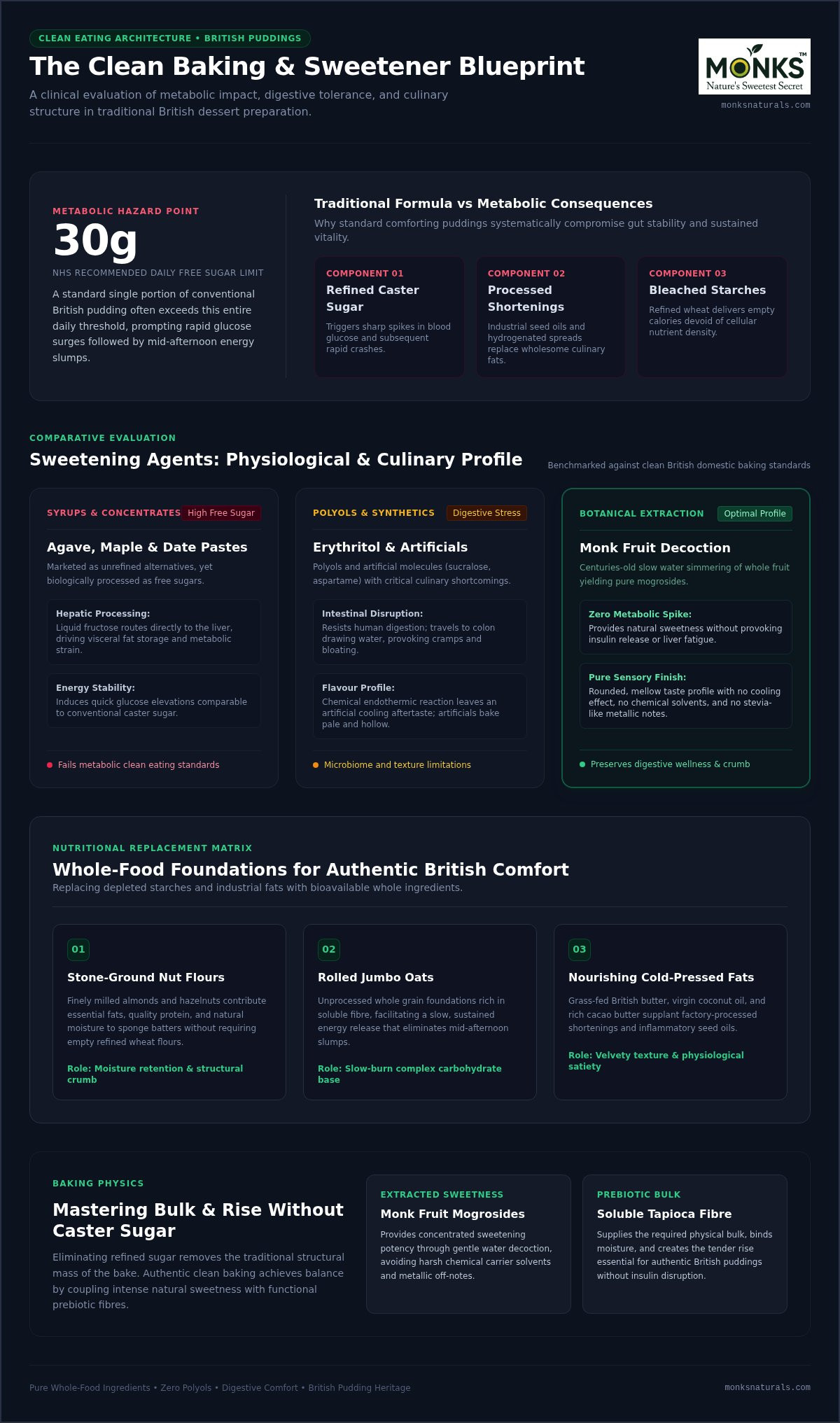
Traditional British puddings carry an undeniable heritage of comfort. From warm fruit crumbles to steamed sponges, these recipes sit at the heart of domestic cooking. Yet standard recipes rely heavily on ultra-processed vegetable shortenings, refined wheat, and heaps of caster sugar. A single portion often exceeds the NHS recommended daily limit of 30g of free sugars, leading directly to the mid-afternoon energy slumps and digestive sluggishness familiar to so many.
True clean baking changes the paradigm. The ethos of clean eating prioritises whole, minimally processed ingredients while stripping away artificial additives, synthetic flavourings, and bleached starches. Clean baking does not mean culinary deprivation; it focuses on nutritional density. Thoughtfully created clean eating dessert recipes UK bakers turn to use nourishing ingredients, delivering authentic comfort without the accompanying metabolic crash.
The Whole-Food Philosophy: Beyond Refined White Sugar
Eliminating refined caster sugar removes pure, empty glucose spikes from your evening routine. Instead, intentional home preparation builds structure and flavour from nutrient-dense foundations:
- Stone-ground nut flours: Finely milled almonds and hazelnuts contribute essential fats, protein, and natural moisture to sponge batters.
- Whole grains: Rolled jumbo oats provide soluble fibre, ensuring a slow, sustained energy release.
- Cold-pressed fats: Virgin coconut oil, grass-fed British butter, and rich cacao butter replace industrial seed oils and hydrogenated spreads.
These whole foods satisfy genuine physiological hunger rather than triggering chemical cravings. You enjoy real nourishment.
The Hidden Sugar Trap: Honey, Agave, and Date Pastes
Many conventional wellness recipes claim to be unrefined by substituting sugar with agave nectar, maple syrup, or concentrated date pastes. While these syrups feel natural, your body processes them as free sugars. Liquid fructose heads straight to your liver, driving visceral fat storage and metabolic strain just like white sugar.
To master dependable clean eating dessert recipes UK kitchens require sweetening agents that respect human digestion. Rather than relying on heavy syrups, modern clean baking pairs mineral-rich botanical extractions with fibre-dense binders. The pure sweet profile of monk fruit decoction, for instance, adds clean sweetness without triggering insulin spikes or digestive unrest. You achieve the exact indulgence of a classic sweet course, with your metabolic balance fully intact.
Comparing Sweetener Options for Clean Baking and Gut Health
Every home baker knows that sweetness is only half the battle. Sugar also provides essential bulk, retains delicate moisture, and creates a tender crumb. Artificial sweeteners like sucralose and aspartame offer intense sweetness, but they completely disrupt healthy intestinal microbiomes while leaving baked goods pale and hollow. Aligning your kitchen with the UK's official Eatwell Guide means reducing processed sugars, but replacing them with industrial chemicals only swaps one dietary issue for another.
The Problem with Polyols: Why Erythritol Fails Clean Standards
Many low-sugar recipes rely heavily on sugar alcohols like erythritol. While marketed as harmless, polyols frequently resist human digestion. They pass directly to the colon, drawing excess water and causing painful bloating, cramping, and sudden laxative effects. Erythritol also produces a distinct chemical endothermic reaction in your mouth. This unnatural cooling sensation clashes jarringly with warm crumbles and comforting sponges, as detailed in our guide to erythritol-free sweeteners.
Whole Monk Fruit Decoction: Purity Without Chemical Solvents
Pure fruit extraction offers a gentler, unadulterated path. Practised for centuries, traditional water simmering gently extracts naturally sweet mogrosides from the whole fruit. Unlike stevia, which often leaves an unpleasant, metallic aftertaste, slow-simmered monk fruit delivers a rounded, mellow profile. It requires no harsh chemical solvents or artificial carrier agents. You can explore how this gentle water process preserves plant integrity in this look at traditional monk fruit decoction.
Soluble Tapioca Fibre: Functional Structure for Home Baking
Baking cakes without caster sugar requires physical substance. Soluble tapioca fibre fills this structural gap naturally. Derived from non-GMO cassava root, this prebiotic starch provides the exact volume, moisture retention, and gentle browning that traditional bakes demand. It feeds beneficial gut bacteria rather than triggering digestive distress.
When creating dependable clean eating dessert recipes UK kitchens benefit enormously from pairing these two plant elements. Blending clean mogrosides with resistant plant starch creates an effortless 1:1 cup-for-cup sugar replacement. If you want to elevate your home bakes without digestive upset, consider switching your larder to monk fruit with tapioca fibre for flawless everyday texture.
5 Nourishing Clean Eating Dessert Recipes for British Puddings
Recreating comforting British puddings requires thoughtful balance. Rather than turning to syrupy date pastes or synthetic sugar alcohols, these recipes rely on whole ingredients paired with gentle, unrefined sweetness. Each bake honours classic textures while keeping your digestion settled and blood sugar steady. These five clean eating dessert recipes UK kitchens can prepare with ease deliver authentic indulgence without compromise.
Wholesome Orchard Apple and Blackberry Oat Crumble
Tart seasonal fruit meets a rustic, golden crust in this Sunday staple. Preheat your oven to 180°C (160°C fan). Toss 500g of sliced Bramley apples and 150g of fresh wild blackberries with 1 teaspoon of ground cinnamon, a pinch of sea salt, and 3 tablespoons of Monkfruit decoction with soluble tapioca fibre Powder. For the crumble topping, rub together:
- 120g rolled jumbo oats
- 60g finely ground almond flour
- 40g crushed walnuts
- 3 tablespoons melted virgin coconut oil
- 2 tablespoons Monkfruit decoction with soluble tapioca fibre Powder
Scatter the oat mixture evenly over the fruit base. Bake for 32 to 35 minutes until the fruit bubbles vigorously and the crumble crust turns amber.
Rich Cacao and Avocado Silk Pots with Fresh Berries
For an effortless, no-bake evening treat, blend two ripe Hass avocados with 45g of raw Peruvian cacao powder, 120ml of full-fat coconut cream, and 1 teaspoon of pure vanilla bean paste. Add 6 to 8 drops of Monkfruit decoction Drops to build a silky, glossy ganache without any granular grit. Divide between four glass ramekins and chill for two hours. Garnish with plump raspberries, toasted pumpkin seeds, and bruised mint leaves just before serving.
Steamed Lemon and Poppy Seed Almond Mini Sponges
These delicate puddings offer a bright citrus lift and a remarkably tender crumb. Beat 3 large free-range eggs with 60g of melted grass-fed butter and 50g of Monkfruit decoction with soluble tapioca fibre Powder until pale. Gently fold in 140g of fine almond flour, the zest and juice of 1 unwaxed lemon, 1 tablespoon of blue poppy seeds, and half a teaspoon of bicarbonate of soda.
Divide the batter into four greased mini pudding basins. Steam gently over simmering water in a covered pan for 22 minutes. Invert onto warm plates and serve alongside a spoonful of chilled cashew cream or rich British clotted cream.
Warm Spiced Ginger and Pear Traybake
Whisk together 180g of fine oat flour, 2 teaspoons of ground ginger, and 1 teaspoon of ground cinnamon. In a separate bowl, blend 2 eggs, 60ml of melted coconut oil, and 65g of Monkfruit decoction with soluble tapioca fibre Powder. Fold the wet ingredients into the dry base, then stir through 2 peeled, finely diced Conference pears. Pour into an 8-inch square tin and bake at 175°C for 26 minutes for a fragrant, moist afternoon slice.
Cardamom Roasted Rhubarb with Whipped Coconut Custard
Trim 400g of vivid pink forced rhubarb into bite-sized batons. Arrange in a single layer in a shallow baking dish, splash with 1 tablespoon of water, and scatter with 4 crushed cardamom pods and 2 tablespoons of Monkfruit decoction with soluble tapioca fibre Powder. Roast at 190°C for 18 minutes until tender yet holding shape. Spoon over chilled, whipped coconut cream sweetened with 3 drops of Monkfruit decoction Drops for a vibrant seasonal finish.
Clean Baking Techniques: Mastering Moisture, Rise, and Texture
Clean baking requires a shift in kitchen physics. When you remove refined caster sugar, you lose its hygroscopic qualities, meaning its innate ability to lock in water and create tender crumb structures. Unrefined whole-food ingredients behave differently under oven heat. Mastering a few practical adjustments guarantees that your clean eating dessert recipes UK bakes yield light, moist results rather than dense, heavy bricks.
Working with Grain-Free Flours: Almond, Coconut, and Oat
Every non-wheat flour interacts with liquid in a unique way:
- Almond flour: Rich in beneficial fats, ground almonds produce a tender crumb. However, they lack structural gluten and absorb very little water. Use them as a base for moist, dense sponges.
- Coconut flour: Exceptionally absorbent. Coconut flour acts like a sponge, requiring three to four times the liquid volume of nut flours. Never substitute it 1:1 for wheat. Limit it to 15-20% of your total flour blend.
- Fine oat flour: Provides natural starch and gentle elasticity. It replicates the softness of traditional plain flour while contributing prebiotic beta-glucans.
When swapping standard plain flour, use a balanced blend: two parts almond flour to one part fine oat flour yields the most familiar crumb texture.
Achieving Natural Structure and Rise Without Gluten
Without wheat gluten, trap air bubbles using whole-food binders. Combine two tablespoons of ground golden flaxseed with five tablespoons of warm water; let it sit for ten minutes until a viscous gel forms. This mimics gluten's binding capacity.
For chemical lift, pair bicarbonate of soda with an unpasteurised acid like raw apple cider vinegar or fresh lemon juice. The immediate carbon dioxide reaction produces a light rise. Fold in whipped egg whites gently right before your batter enters the oven to protect that delicate air structure.
Preventing Dryness: Retaining Moisture with Functional Fibre
Baking with dry alternative flours often risks a crumbly texture. Adding pureed unsweetened Bramley apples or finely grated, squeezed courgette introduces invisible moisture without changing the overall flavour profile.
Equally vital is your choice of sweetening bulking agent. Soluble tapioca fibre acts as a natural humectant, drawing in ambient water molecules and keeping baked goods moist for three to four days on the kitchen counter. To refine your kitchen techniques and explore whole-food chemistry, read our comprehensive natural sugar alternative guide. When you're ready to master light sponges and tender crumbles at home, visit MONKS Naturals to stock your pantry with clean, whole-food sweeteners.
Stocking the Mindful British Pantry for Effortless Healthy Puddings
A well-curated larder removes daily decision fatigue from healthy living. When your shelves contain honest, unrefined staples, putting together an evening sweet course becomes second nature rather than an exhausting chore. Preparing clean eating dessert recipes UK kitchens can be proud of starts with stripping away ultra-processed fondants, refined sugars, and artificial syrups. Replace them with versatile, whole-food ingredients that transition effortlessly between your morning bowl of porridge and an after-dinner crumble.
The Essential Clean Sweetening Arsenal
Reliable sweetening requires two dedicated pantry formats to cover hot bakes and chilled dishes with equal ease:
- Spoonable monk fruit powder: Keep Monkfruit decoction with soluble tapioca fibre Powder in an airtight jar. Measuring 1:1 like standard caster sugar, it provides necessary dry-weight bulk for traybakes, pastry crusts, and crisp crumble toppings.
- Monk fruit liquid drops: Liquid Monkfruit decoction Drops disperse instantly without heat or agitation. Use them to sweeten delicate chilled custard, whip into coconut cream, or balance a fresh berry coulis.
- Aromatic whole spices: Store whole nutmeg pods, ground mixed spice, and sweet Ceylon cinnamon. High-grade spices add deep, warming complexity, naturally reducing the total sweetness required in any dish.
Nutrient-Dense Wet and Dry Staples
Build your base with ingredients that offer lasting satiety and real nourishment. Raw Peruvian cacao powder delivers intense chocolate depth without added dairy or lecithin fillers. Keep flaked unsweetened coconut, stone-ground almond flour, and jumbo oats sealed in glass jars away from direct sunlight.
For fats, select cold-pressed extra virgin coconut oil and British grass-fed butter to give shortbreads and crumble toppings a rich, flaky texture. Finally, check your extracts carefully. Many commercial flavourings rely on propylene glycol or synthetic carrier alcohols. Choose pure Nielsen-Massey vanilla bean paste or organic almond extract extracted purely with water and organic alcohol. To simplify your cupboard overhaul, experience effortless whole-food baking using MONKS natural sweeteners today.
Reclaim Comfort Puddings with Mindful Sweetness
Honouring traditional British puddings doesn't require settling for post-dessert fatigue or digestive discomfort. Real clean baking isn't about restriction; it's about making thoughtful, nourishing swaps. By replacing refined caster sugar and high-fructose syrups with stone-ground flours and botanical extractions, you can enjoy comforting puddings that nourish your body and maintain stable metabolic health.
Mastering delicious clean eating dessert recipes UK bakers can trust comes down to pure, functional ingredients. Traditional whole fruit decoctions extract honest sweetness without chemical solvents, whilst non-GMO tapioca fibre provides the moisture and structure classic sponges need. You completely sidestep the artificial cooling effects of erythritol and the harsh insulin spikes of unrefined liquid sugars.
Discover pure sweetness for your baking with MONKS natural sweeteners. Step into your kitchen with confidence, gather your favourite whole foods, and savour the comforting sweet course you deserve.
Frequently Asked Questions
What is the best natural sugar substitute for clean baking in the UK?
A whole monk fruit decoction paired with soluble tapioca fibre provides the cleanest profile. It delivers an authentic 1:1 cup-for-cup sugar replacement without synthetic fillers, maltodextrin, or chemical solvents. Unlike stevia or artificial alternatives, it lacks bitterness and protects gut comfort. It gives home cooks a reliable, blood-sugar-friendly staple that browns and holds moisture just like caster sugar.
Can I bake traditional British crumbles without caster sugar or honey?
Yes, you can easily bake authentic crumbles without any free sugars. Toss sliced Bramley apples and seasonal berries with spoonable monk fruit powder and warm spices like cinnamon. For the topping, rub rolled oats, ground almonds, and melted coconut oil with the same sweetener. It yields a crisp, golden crust that balances the tart fruit filling without creating an afternoon glucose spike.
Why does erythritol leave a cooling sensation in homemade puddings?
Erythritol creates an endothermic chemical reaction when it dissolves in saliva, drawing thermal energy directly from your tongue. This produces an artificial, minty chill that overpowers warm puddings like crumbles and sponges. Additionally, this fermented sugar alcohol passes undigested to the lower gut, frequently triggering uncomfortable bloating and gas. Pure monk fruit decoction avoids polyols entirely, leaving zero chemical aftertaste or chill.
How do I substitute monk fruit powder for sugar in standard UK recipes?
When using Monkfruit decoction with soluble tapioca fibre Powder, substitute it at an exact 1:1 ratio by volume for caster or granulated sugar. For example, swap 100g of sugar for 100g of monk fruit powder. The soluble plant fibre replicates the structural bulk and moisture retention of standard sugar. It lets you adapt classic clean eating dessert recipes UK families love without altering liquid levels.
Are clean eating desserts suitable for individuals managing blood sugar levels?
Yes, provided they avoid hidden free sugars such as honey, date paste, and maple syrup. Using a zero-glycemic sweetener like monk fruit decoction alongside nutrient-dense nut flours keeps postprandial glucose levels remarkably flat. The healthy fats and prebiotic soluble fibres slow carbohydrate digestion. This makes thoughtfully prepared clean eating dessert recipes UK households bake suitable for low-carb lifestyles and sustained metabolic balance.
How long do grain-free, clean eating desserts stay fresh at room temperature?
Most grain-free clean bakes stay fresh in an airtight tin at room temperature for up to three days. Because whole-food recipes exclude synthetic preservatives and refined sugar humectants, moisture levels require mindful management. Baked goods made with soluble tapioca fibre retain their tender crumb significantly longer than plain nut-flour cakes. For treats containing fresh dairy, coconut cream, or avocado, always refrigerate and consume within two days.
Can I freeze home-baked clean desserts made with monk fruit sweetener?
Absolutely. Sponges, oat crumble toppings, and traybakes sweetened with monk fruit freeze exceptionally well for up to three months. Wrap individual portions tightly in parchment paper before placing them in an airtight container to prevent freezer burn. Defrost thoroughly at room temperature or warm gently in an oven at 150°C. Monk fruit decoctions remain stable during freezing and thawing without separating or weeping.


