

Why does your "natural" sweetener still leave a strange, icy chill in your mouth? Understanding the nuances of monk fruit decoction vs extract is the first step to a better brew. You want sweetness. You want health. You want flavour. Yet, many shop-bought blends rely on erythritol or hidden fillers that cause digestive upset and ruin your morning tea.
Whilst industrial extracts often require chemical solvents, a decoction is simply steeped, simmered, and pure. It's the difference between a processed isolate and a whole-food preparation. This distinction is vital for your health, your gut, and your kitchen. It is about choosing a sweetener that feels as good as it tastes.
In this guide, you'll discover why the UK Food Standards Agency now classifies decoctions as a traditional food. We will explore the science of mogrosides, the absence of the unpleasant cooling effect, and how to choose the cleanest sweetener in 2026. Your journey to a better-tasting, sugar-free coffee starts here.
Key Takeaways
- Understand why whole-fruit decoction is steeped like a tea whilst industrial extracts require complex chemical isolation.
- Identify how to eliminate the unpleasant "cooling effect" and digestive upset caused by common erythritol blends.
- Discover why the UK's Food Standards Agency classifies decoction as a traditional food rather than a novel isolate.
- Compare monk fruit decoction vs extract to find the purest, most natural sweetening solution for your daily ritual.
- Learn how clean-label ingredients like soluble tapioca fibre support your gut health without compromising on flavour.
Defining the Difference: Monk Fruit Decoction vs Extract
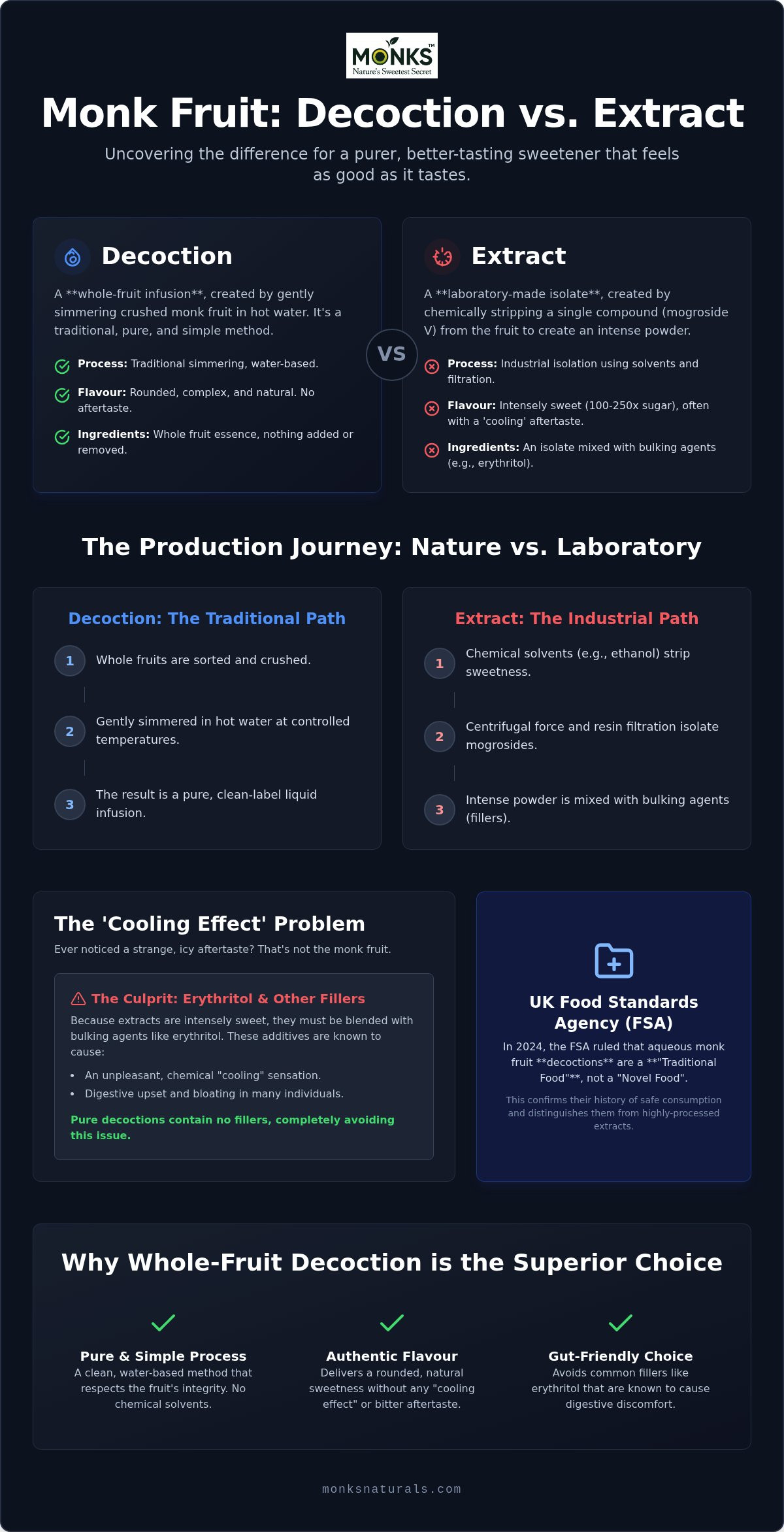
Not all monk fruit is created equal. In the UK, a major regulatory shift occurred in 2024. The Food Standards Agency (FSA) ruled that aqueous decoctions are "not novel." This decision fundamentally changed the conversation around monk fruit decoction vs extract. One is a traditional food ingredient. The other is a highly processed additive. This distinction dictates how your body processes the sweetness and how it tastes in your morning coffee.
The 2024 ruling confirmed that decoctions have a history of safe consumption. This means they are regulated like any other fruit-based ingredient. Extracts, however, remain under stricter "Novel Food" scrutiny. Choosing a decoction isn't just about taste. It's about choosing a product that aligns with modern UK food standards and your own wellness goals.
What Exactly is a Decoction?
Think of a decoction as a deeply steeped tea. It's a method rooted in traditional wellness. Whole fruits are sorted, crushed, and gently simmered in hot water. This process extracts sweetness without stripping away the fruit's character. A decoction is a water-based simmer that preserves the fruit's natural essence.
By using the whole fruit of the Siraitia grosvenorii plant, the final product retains a rounded flavour. You aren't just getting a sharp sweet hit. You're getting a complex, culinary experience. No chemical solvents are used. No artificial filters are required. It's clean, simple, and transparent.
The Industrial Reality of Monk Fruit Extracts
Extracts tell a different story. They're born in laboratories through centrifugal force and resin filtration. The goal is to isolate a specific compound called mogroside V. This creates a powder that's 100 to 250 times sweeter than table sugar. It's an industrial isolate, not a whole food preparation. It lacks the natural balance of the original fruit.
Because extracts are so intensely sweet, they can't be used alone in your kitchen. Manufacturers must add bulking agents to make them usable. You'll often find them blended with erythritol or maltodextrin. These fillers are responsible for the unpleasant cooling aftertaste and potential digestive issues many people face. By choosing a decoction, you avoid these additives. You get purity. You get flavour. You get comfort.
The Production Process: Traditional Simmering vs Lab Isolation
Every drop of sweetener begins with the same small, green fruit harvested in the misty mountains. The journey it takes from the orchard to your pantry changes everything. When comparing monk fruit decoction vs extract, the production method is the most defining factor. One path respects the fruit's integrity. The other breaks it down into a molecular isolate. This choice impacts the flavour, the environmental footprint, and the purity of what you put into your body.
Traditional methods rely on the simplicity of water. Industrial methods rely on the complexity of chemistry. By choosing a decoction, you're opting for a process that mirrors a kitchen ritual rather than a laboratory experiment. It's a transparent approach that leaves no room for hidden solvents or artificial aftertastes.
Gently Simmered: The Whole-Fruit Advantage
The MONKS decoction process is methodical. We start by sorting the fruit to ensure only the ripest specimens are used. Next, the fruit is crushed to release its natural juices. Finally, it's gently simmered in hot water. This isn't a rapid boil. Temperature control is vital. Precise, lower temperatures preserve the natural sweetness whilst preventing the development of bitter, burnt notes.
This water-based method is the ultimate "clean label" solution. It avoids the metallic "twang" often found in processed alternatives. Because we use the whole fruit, the final product maintains its culinary soul. It's a sustainable choice, too. Traditional simmering uses fewer resources and avoids the chemical waste associated with modern industrial filtration. You can experience this purity first-hand with our monk fruit decoction drops.
The Chemical Footprint of High-Intensity Extracts
Extracts follow a much more aggressive path. To isolate the sweet mogroside V compounds, manufacturers use multi-stage centrifugal force and chemical resins. Solvents like ethanol are frequently used to strip the sweetness from the fruit pulp. Whilst these extracts are FDA-approved as food additives, the process removes almost everything that makes the fruit a whole food.
The result is a powder so intensely sweet that it's impossible to use in a domestic kitchen. This extreme potency creates a problem for manufacturers. They must add bulking agents like erythritol or maltodextrin to make the product measurable for your coffee or baking. This isolation process is why extracts often taste "flat" or artificial. They've lost their fruit identity. They've become a chemical isolate rather than a natural companion to your daily tea.
Taste Profiles and the 'Cooling Effect' Problem
Have you ever taken a sip of coffee only to be met by a strange, icy sensation? This "cooling effect" is the single biggest complaint amongst those switching to sugar alternatives. It feels artificial. It lingers. It distracts from the rich notes of your favourite tea or dark roast. When comparing monk fruit decoction vs extract, this sensory experience is where the two products diverge most sharply.
The truth is that monk fruit itself doesn't cause this chill. The problem lies with the "baggage" that industrial extracts carry. Extracts are intensely sharp and narrow in their sweetness. Decoctions, by contrast, offer a warm, rounded profile that integrates seamlessly with complex flavours like matcha or cocoa. It's the difference between a clinical isolate and a culinary ingredient.
Why Most Extracts Require Erythritol
Manufacturers face an "intensity gap" with extracts. Because these powders are roughly 200 times sweeter than sugar, you can't easily measure them at home. A single teaspoon would be ruinous. To make the product "spoonable," they add bulking agents. Erythritol is the most common filler, but it comes with a cost. This polyol (sugar alcohol) absorbs heat from your mouth as it dissolves, creating that distracting icy aftertaste.
Beyond the flavour, these fillers often lead to digestive consequences. Many people experience bloating, gas, or "rumbly" stomachs after consuming erythritol blends. Extracts lose the fruit's identity during isolation, leaving you with a chemical sweetness that requires masking agents just to be palatable. It's a compromise that many health-conscious drinkers in the UK are no longer willing to make.
The Clean Taste of Pure Decoction
Decoction is a traditional preparation that has been used for centuries in Eastern medicine and culinary rituals. It doesn't need to be "fixed" with artificial fillers. Because the whole fruit is simmered, the sweetness is balanced by the fruit's natural essence. There is no sharp "spike" of sweetness; instead, you get a smooth, consistent flavour that feels familiar and comforting.
We use soluble tapioca fibre in our powder to provide the texture you expect without the digestive upset. This plant-based fibre acts as a prebiotic, supporting your gut whilst allowing the monk fruit to shine. Pure monk fruit decoction offers a velvety mouthfeel that mirrors the comforting weight of traditional cane sugar without the metabolic crash. It's sweetness as nature intended: clean, gentle, and entirely free from the icy sting of industrial isolates.
Navigating the UK Regulatory Landscape in 2026
The UK has become a global leader in clean-label sweetener innovation. This shift stems from a pivotal regulatory decision that clarified the market. When evaluating monk fruit decoction vs extract, the legal status is your best guide to purity. In 2024, the Food Standards Agency (FSA) ruled that aqueous decoctions are not "novel foods." This means they're treated as standard food ingredients. They're safe, traditional, and transparent. It's a fundamental change for health-conscious shoppers across the country.
Extracts follow a different set of rules. Because they're highly processed isolates, they often remain under "Novel Food" scrutiny. This requires specific, lengthy authorizations that many products haven't yet secured. By choosing a decoction, you're opting for a product that meets the highest UK standards for traditional consumption. It's about clarity, safety, and trust in your daily ritual.
The FSA Ruling Explained for Consumers
In June 2024, the FSA acknowledged evidence of significant monk fruit consumption before 15 May 1997. This historical data was crucial. It proved that water-based monk fruit preparations have been part of the human diet for decades. This ruling changed the UK sweetener market overnight. It moved decoctions from the "novel" category into the "traditional" category. They're now a safer, more transparent choice for your pantry. You aren't buying a lab-created isolate. You're buying a time-tested fruit preparation that respects nature's design.
Extracts vs Decoctions: The Compliance Gap
Many products on UK shelves claim to be "monk fruit" but are actually 99% erythritol. This is often a way to bypass the regulatory hurdles facing high-intensity extracts. In both the EU and the UK, these extracts face stricter limits on where and how they can be used. Decoctions bypass this complexity entirely. They're a whole-food solution that fits perfectly into a modern, health-forward lifestyle.
At MONKS, we lead the market by adhering strictly to the "not novel" whole-fruit standard. We exclude the fillers. We exclude the chemicals. We exclude the confusion. Reading labels is now essential for every UK consumer. Look for the word "decoction" to ensure you're getting a genuine, whole-food product. You can shop our FSA-compliant range to bring this purity into your home today.
Choosing Your Sweetener: Why Whole Fruit Decoction Wins
Choosing the right sweetener shouldn't feel like a compromise. As we have explored the nuances of monk fruit decoction vs extract, the evidence points to a single conclusion: purity wins. Decoction bridges the gap between traditional wisdom and modern health needs. It offers the rounded sweetness of a whole food without the chemical baggage or industrial isolation of extracts. For a truly clean kitchen in 2026, decoction is the only choice that aligns with a mindful, wellness-forward lifestyle.
The benefits are clear. You get a better taste profile that mirrors sugar. You experience better digestion thanks to the absence of sugar alcohols. You benefit from better regulation under UK food standards. This isn't just about replacing sugar; it's about upgrading your daily rituals with an ingredient that respects your body and your palate. Whether you are sweetening a morning brew or a weekend bake, the quality of your sweetener defines the quality of your health.
The Monks Method: Premium Quality Without Compromise
We believe in transparency. Our range is built on a strict erythritol-free and maltodextrin-free guarantee. You will never find hidden fillers or artificial cooling effects in our products. Our Monkfruit decoction Drops are the perfect companion for coffee lovers. They provide instant, portable sweetness that cuts through the bitterness of a dark roast without altering its character. They are simple, effective, and pure.
For those starting their journey, "The Monks Set" provides the ultimate introduction to sugar-free living. It combines our versatile powder with our convenient liquid drops. This set allows you to experiment across different culinary applications whilst ensuring you always have a clean alternative on hand. It is a curated approach to better habits, designed to make the transition feel effortless and rewarding. We focus on quality so you can focus on enjoying your favourite flavours.
Making the Switch: Your Next Steps
Integrating decoction into your life is remarkably simple. Our Monkfruit decoction with soluble tapioca fibre Powder is designed to replace sugar in a 1:1 ratio for most recipes. Stir it into your morning porridge, whisk it into a light sponge, or use it to balance the acidity of a sharp evening cocktail. It dissolves cleanly and maintains its sweetness even under heat. It is a versatile tool for any modern cook.
To ensure maximum freshness, store your decoction products in a cool, dry place away from direct sunlight. This preserves the delicate mogrosides and keeps the texture consistent. Making the switch is a small change that yields significant results for your energy levels and gut health. Discover the clean, natural sweetness of MONKS decoction today and experience the difference that whole-fruit preparation makes to your daily routine.
Elevate Your Daily Ritual
Choosing a sweetener is about more than just calories. It's about respecting your body's natural balance. We've explored the critical differences between monk fruit decoction vs extract. You now know that traditional simmering preserves the fruit's integrity whilst industrial isolation strips it away. By choosing a decoction, you eliminate the icy cooling effect, avoid digestive upset, and embrace a cleaner label.
As the UK's leading monk fruit brand, MONKS provides an FSA 'not novel' compliant solution for your pantry. Our range is entirely free from erythritol, maltodextrin, and artificial fillers. It's sweetness without the compromise. Whether you're sweetening a morning coffee or a weekend bake, you can trust in our commitment to transparency and purity.
Switch to the UK's cleanest sweetener with MONKS and rediscover the simple joy of natural flavour. Integrating better choices into your daily routine has never been easier or more delicious.
Frequently Asked Questions
Is monk fruit decoction the same as monk fruit extract?
No, they are fundamentally different preparations. A decoction is a whole-fruit preparation made by gently simmering monk fruit in hot water, much like steeping a tea. In contrast, an extract is a highly processed isolate that uses chemical solvents to strip away everything except the sweet mogroside compounds. When comparing monk fruit decoction vs extract, the decoction remains a traditional food ingredient whilst the extract is regulated as a food additive.
Why does some monk fruit have a cooling aftertaste?
That icy sensation isn't actually from the monk fruit itself. It is caused by erythritol, a sugar alcohol frequently blended with monk fruit extracts to add bulk. Because extracts are hundreds of times sweeter than sugar, manufacturers use these fillers to make them "spoonable." These polyols absorb heat from your tongue as they dissolve, creating a distracting chill. Our decoction avoids these additives to provide a warm, rounded sweetness.
Is monk fruit decoction safe for diabetics and keto diets?
Yes, it is an ideal choice for both diabetic and ketogenic lifestyles. Monk fruit decoction has a glycemic index of zero, meaning it won't cause the sharp blood sugar spikes associated with traditional cane sugar. It contains no net carbohydrates or calories, making it a staple for those following keto or paleo regimes. It allows you to enjoy sweet flavours in your daily coffee or tea without compromising your metabolic health or ketosis.
What does the 'not novel' ruling mean for UK consumers?
This ruling by the Food Standards Agency (FSA) is a win for transparency. It confirms that monk fruit decoctions have a documented history of safe consumption in the UK and Europe before May 1997. For you, this means decoction is classified as a traditional food ingredient rather than a "novel" lab-created isolate. It ensures you are buying a product that meets rigorous safety standards whilst remaining close to its natural, whole-fruit origins.
Does monk fruit decoction cause bloating like other sweeteners?
No, it is designed to be gentle on your digestive system. Many common sweeteners rely on sugar alcohols like erythritol or xylitol, which can ferment in the gut and cause bloating, gas, or discomfort. We exclude these entirely. Instead, our powder uses soluble tapioca fibre, a prebiotic that supports gut health without the rumbly side effects. It provides a clean sweetness that feels as good as it tastes in your favourite recipes.
Can I use monk fruit decoction powder for baking?
Absolutely. Our monk fruit decoction with soluble tapioca fibre Powder is specifically formulated to be heat-stable and versatile. You can use it as a 1:1 replacement for sugar in most baking recipes, from sponges to biscuits. It maintains its sweetness under high temperatures and provides a velvety mouthfeel similar to traditional sugar. It is an effortless way to create sugar-free treats that the whole family can enjoy without the metabolic crash.
Why is MONKS sweetener erythritol-free?
We prioritise purity and digestive comfort above all else. Erythritol is an industrial filler that often causes a metallic aftertaste and an artificial cooling sensation. By remaining erythritol-free, we ensure our monk fruit decoction vs extract comparison always favours the cleaner, more natural option. Our goal is to provide a sweetener that integrates seamlessly into your life without the need for chemical masking agents or the risk of digestive upset.
How many drops of monk fruit liquid equal a teaspoon of sugar?
Our Monkfruit decoction Drops are highly concentrated for ease of use. Generally, just two to four drops are enough to match the sweetness of one standard teaspoon of white sugar. This makes them an incredibly efficient companion for your morning tea or coffee. Because they are liquid, they dissolve instantly in both hot and cold drinks, allowing you to customise your sweetness level with precision and zero waste.


