

The monk fruit sugar replacement that looks most like sugar may not be the simplest choice for your kitchen. The name can describe different products: a concentrated monk fruit sweetener, a blend with a bulking ingredient or a liquid. The formulation affects how you measure it and where it may work best.
If product labels seem confusing, start by comparing the ingredients and serving instructions. A spoonable powder and liquid drops suit different routines, and neither should be assumed to replace sugar in the same way. Check the pack directions before adding a new sweetener to drinks or recipes.
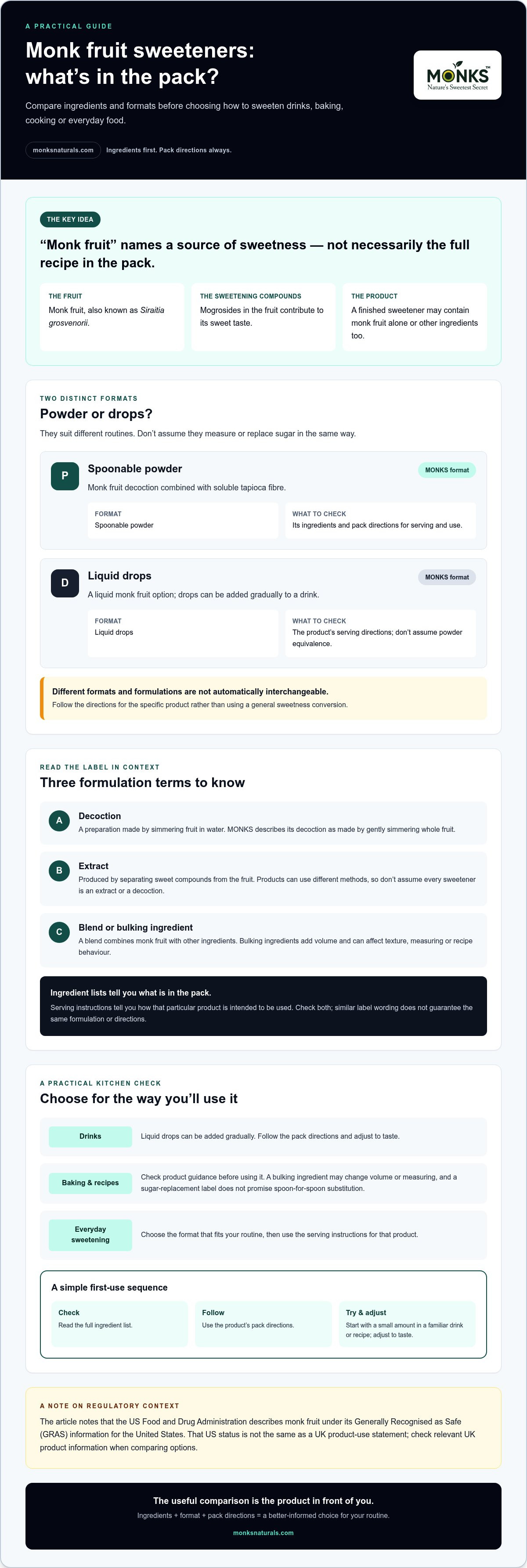
This guide explains how to compare ingredients, formats and everyday uses. You’ll learn what to check before using a product in baking or other recipes, and how monk fruit decoction powder with soluble tapioca fibre differs from pure monk fruit drops. Use those differences to choose an option that suits your taste and routine.
Key Takeaways
- Check the full ingredient list. “Monk fruit” can describe products with different formulations and measuring behaviour.
- Choose a monkfruit sugar replacement based on how you’ll use it, whether for drinks, baking, cooking or everyday sweetening.
- Powder and liquid drops suit different routines. Follow the pack directions rather than assuming they measure or substitute for sugar in the same way.
- Try a small amount in a familiar drink or recipe first, then adjust to taste and follow the product guidance.
- MONKS offers spoonable monk fruit decoction powder with soluble tapioca fibre and pure liquid drops, two distinct formats for different preferences.
What Does Monkfruit Sugar Replacement Mean on a Product Label?
A monk fruit replacement is a sweetener product used instead of some or all of the sugar in food or drinks. The label describes its intended use, not necessarily a single ingredient. One product may contain monk fruit alone; another may combine a monk fruit ingredient with a bulking ingredient to add volume.
Keep three things distinct: the fruit, the sweetening ingredient made from it, and the finished product in the pack. Monk fruit, also known botanically as Siraitia grosvenorii, contains compounds called mogrosides, which contribute to its sweetness. A decoction or extract is made from the fruit, while a retail sweetener may contain that ingredient alone or include other ingredients too.
What is monk fruit, and what makes it sweet?
Mogrosides are naturally occurring compounds in monk fruit that contribute to its sweet taste. They are not the same as the complete ingredient list of a packaged sweetener. Processing and formulation determine what goes into the product you buy, so the fruit’s natural compounds alone do not tell you how a particular product will taste or measure.
Why do monk fruit replacement ingredients vary?
Different formats and formulations suit different kitchen tasks. Liquid drops can be added gradually to a drink, while powder is spoonable. A blended product may include a bulking ingredient, which affects volume and can change how it measures or behaves in a recipe. Don’t assume that a product marketed as a sugar replacement is a spoon-for-spoon substitute.
For example, MONKS’ powder combines monk fruit decoction with soluble tapioca fibre, while its drops are a liquid monk fruit option. These are distinct formulations, not interchangeable versions of one ingredient. Check the ingredient list to see what the product contains, then follow its pack directions for serving size and use. Avoid relying on a general sweetness conversion: guidance can differ between products, even when their labels use similar wording.
In short, read beyond the category name. The ingredients tell you what’s in the pack; the directions explain how to use it. Both are more useful than assuming every monk fruit product tastes, measures or performs the same way.
How Do Monk Fruit Sweeteners Differ by Formulation?
The words “monk fruit” tell you about the source of sweetness, but not the full recipe in the pack. A decoction is prepared by simmering fruit in water; an extract is produced by separating sweet compounds from the fruit. Products can use different methods, so don’t assume every monk fruit sweetener is a decoction or an extract.
Monk fruit describes the source of sweetness; the ingredient list describes the complete product formulation. That distinction matters in the kitchen. A product made with monk fruit alone may be intensely sweet and used in small amounts, while a blended sweetener can include ingredients that add volume and change how it measures. Follow the specific pack’s serving directions rather than applying a conversion from another product.
Monk fruit decoction, extracts and blended sweeteners
Decoction describes a preparation approach, not a guaranteed sweetness level or performance. MONKS describes its decoction as made by gently simmering whole fruit. Extracts and blends are different formulation categories: a blend combines monk fruit with other ingredients, and the label should show what those ingredients are. For product-specific detail, explore this guide to monk fruit decoction.
Regulatory references also need context. The US Food and Drug Administration describes monk fruit under its Generally Recognised as Safe (GRAS) information for the United States. That US status is not the same as a UK product-use statement; check relevant UK product information when comparing options.
What do erythritol and tapioca fibre contribute?
Bulking ingredients give a sweetener more volume than a highly concentrated sweetening ingredient alone. Erythritol, for example, can contribute a granulated texture and affect spoon-for-spoon measuring. Other ingredients can change texture and handling too. Their presence doesn’t automatically tell you how a product will behave in every recipe, so check the ingredient list and usage guidance.
MONKS’ spoonable powder combines monk fruit decoction with soluble tapioca fibre, while its drops come in a liquid format. The fibre is part of the powder’s formulation, and the drops offer a different way to add sweetness. They aren’t interchangeable by format or assumed serving size. Read the monk fruit with tapioca fibre guide for more on that ingredient.
To compare the options for your routine, you can view MONKS monk fruit formats. Start with the ingredients, then use the pack directions to guide your first taste and recipe trial.
Which Monk Fruit Sugar Replacement Format Suits Your Kitchen?
The right format depends on what you’re sweetening and how you prefer to measure. Powder is easy to spoon into a dry mixture, drops let you add sweetness gradually to a drink, and granulated blends may offer more bulk. Compare the ingredients and directions, not just the words “monk fruit” on the front of the pack.
| Format | Measuring and ingredients | May suit |
|---|---|---|
| Powder | Spoonable; check whether it contains only monk fruit ingredients or includes a bulking ingredient, which can affect volume and texture. | Stirring into drinks or adding to recipes where a dry ingredient is convenient. Follow the pack’s serving guidance. |
| Liquid drops | Added in drops rather than spoonfuls. Check the recommended serving and how to adjust it to taste. | Adding sweetness gradually to tea, coffee or other drinks. Consider the liquid format when choosing recipes. |
| Granulated blend | Often designed to provide more volume than concentrated sweeteners. Check which ingredients create that bulk and how the maker advises measuring it. | Recipes where a granulated texture or greater volume is useful, provided the product guidance suits the dish. |
Powder, granules or liquid drops: what changes?
Start with the task. A spoonable powder may feel familiar in a mug or mixing bowl, while drops make it easy to adjust a drink a little at a time. Granules can look and measure more like a dry kitchen ingredient, but their composition varies. MONKS’ powder contains monk fruit decoction with soluble tapioca fibre; its drops are a liquid format. They’re different formulations, so don’t assume the same serving works for both.
For any monkfruit sugar replacement, check the full ingredient list and the instructions on the pack. Product labels and directions can help you decide whether the sweetener is intended for drinks, recipes or particular uses. Texture, bulk and results depend on the complete formulation.
Can monk fruit replacement taste and bake like sugar?
A monk fruit sweetener may sweeten a recipe, but that doesn’t mean it will behave exactly like sugar. Sweetness and aftertaste are subjective and can vary with the formulation and the food or drink. In baking, texture and browning can also depend on sugar’s role beyond sweetness, as well as the other ingredients and method.
Start with a familiar drink or a small recipe test. Follow the product’s serving guidance, taste as you go, and don’t assume there is a universal sugar-to-sweetener ratio. A small trial helps you judge the flavour and texture before using it in a larger batch.
How to Choose a Monk Fruit Replacement: A Practical Buying Checklist
A clear label makes choosing a monkfruit sugar replacement simpler. Use this checklist to match a product to your kitchen, then check its current pack directions before trying it.
- Start with the job. Is it for tea or coffee, baking, cooking or several everyday tasks? A product that suits a drink may not provide the texture or volume you want in a recipe.
- Choose a practical format. Decide whether you’d rather measure spoonable powder, add liquid drops gradually or use granules. Think about how you normally sweeten food and drinks.
- Read the full ingredient list. Identify the monk fruit ingredient and any bulking agents or other sweeteners. If you’re avoiding erythritol or maltodextrin, check the current pack label rather than relying on a product title or front-of-pack claim.
- Check serving and use directions. Look for guidance on how much to use and whether the product is intended for drinks, cooking or baking. Don’t assume another brand’s measurements or sugar-substitution ratio will apply.
- Plan a small taste trial. Try it in a familiar drink or simple recipe first. Adjust gradually in line with the product guidance and your preference before using it in a special bake.
Which ingredients and claims should you check?
The ingredient list shows what’s actually in the product, including ingredients that add volume or affect texture. If a particular ingredient doesn’t suit your preferences or dietary needs, confirm its presence or absence on the current label. Formulations can vary, so don’t rely on assumptions based on the category name.
Take care with calorie, glycaemic and health-related claims. Check the wording for the specific product and look for reliable evidence relevant to that claim. A general statement about monk fruit doesn’t establish the same result for every finished sweetener or every person.
Dietary suitability is personal. Review the complete label, including relevant allergen or dietary information, and consider your own needs. If you have a question about whether an ingredient is suitable for you, seek advice from an appropriate health professional.
How can you test a product before changing your routine?
Start with the manufacturer’s serving guidance, then adjust gradually to taste. A cup of tea or a simple everyday recipe makes an easy first test. Notice the sweetness and any aftertaste, and consider whether the format is convenient to measure. Save a special bake for later, once you understand how the product works in your kitchen.
If you’re comparing ingredient preferences, read more about erythritol-free sweeteners before deciding what to look for on the label. To compare MONKS’ monk fruit formats, explore the MONKS product range.
Is a MONKS Monk Fruit Sugar Replacement Right for Your Routine?
The right format is the one that fits how you sweeten food and drinks. MONKS offers monk fruit decoction powder with soluble tapioca fibre and liquid monk fruit drops. These are different formulations, not interchangeable versions of the same product. Consider whether you want something spoonable for your kitchen cupboard or a liquid option you can add gradually to a drink.
When might MONKS powder or drops fit?
The powder may suit you if you prefer a spoonable format and want soluble tapioca fibre included in the formulation. It can be convenient when a dry ingredient fits your routine, but check the pack directions before using it in a particular recipe. You can view the monk fruit sweetener powder as one product example and review its ingredient and use information.
The drops may appeal if you prefer a liquid format, particularly for adding sweetness a little at a time to drinks. Their serving guidance may differ from the powder’s, so follow the directions for the format you choose rather than transferring measurements between them. If you’re deciding between the two, think about where you’ll use a sweetener most often: beside the kettle or with your baking and cooking ingredients.
Check the ingredients for yourself
MONKS describes its products as free from erythritol, maltodextrin and artificial fillers. If avoiding any of these matters to you, confirm the complete ingredient list on the current packaging before buying. The ingredient list is the clearest way to check what’s in the product you’re considering.
As with any monkfruit sugar replacement, use the product’s own serving directions and consider your personal preferences. A format that suits your drinks may not be the one you reach for when preparing a recipe. If you’re unsure, start with a familiar use and a small taste trial rather than assuming it will measure or taste like another sweetener.
What is the simplest next step?
Match your preferred format to your ingredient checklist, then read the product details and directions before making your choice. Checking the label can help you find an option that fits your daily routine.
Explore MONKS monk fruit sweeteners and compare the powder and drops with the way you like to sweeten.
Choose a Sweetener That Fits Your Everyday Kitchen
A confident choice starts with the ingredient list, not just the words on the front of the pack. Check what the product contains, how it’s meant to be measured and whether its directions suit your drinks, baking or everyday cooking. Powder, liquid drops and granulated blends can behave differently, so don’t assume one format or serving guidance will suit every task.
MONKS offers monk fruit decoction powder with soluble tapioca fibre and pure liquid drops. The range is described as free from erythritol, maltodextrin and artificial fillers. Check the packaging for the full ingredient list and use directions, then try your chosen monkfruit sugar replacement in a familiar drink or recipe to see how it suits your taste.
Ready to compare the formats and product details? Explore MONKS monk fruit sweeteners. Start with a familiar kitchen routine and choose the option that suits your preferences.
Frequently Asked Questions
Is monk fruit a good replacement for sugar?
It can be a useful option if you want a sweetener for drinks or everyday food, but the right choice depends on your taste and how you plan to use it. Products differ in format and ingredients, so check whether it’s a powder, liquid or blend, and read the serving directions. If you’re considering a monkfruit sugar replacement for a recipe, test it in a small amount first rather than assuming it behaves like sugar.
Can monk fruit sweetener be used in baking?
Some monk fruit sweeteners can be used in baking, but results depend on the product and recipe. Liquid drops won’t add the same dry bulk as a spoonable powder or granulated blend, and changing the sweetener may affect texture and browning. Check the maker’s recipe guidance and serving directions. For a first try, use a familiar, simple bake and a small batch rather than expecting results identical to sugar.
What is the difference between monk fruit extract and monk fruit decoction?
A decoction is made by simmering fruit in water; an extract is produced by separating desired compounds from the fruit. These terms describe different preparation approaches, and neither tells you the complete formulation of a finished sweetener. Check the product’s ingredient list to see what else is included. MONKS describes its monk fruit decoction as made by gently simmering whole fruit, and offers it as powder and liquid drops.
Does monk fruit sweetener contain erythritol?
Some monk fruit sweeteners include erythritol, while others don’t. A product name or front-of-pack claim may not show the whole formulation, so check the current ingredient list if you want to avoid it. MONKS describes its monk fruit decoction powder and drops as free from erythritol, maltodextrin and artificial fillers. Check the packaging for the specific product you’re considering, as the ingredient list provides the clearest product-specific information.
How much monk fruit sweetener should I use instead of sugar?
There isn’t one reliable conversion for every product. Sweetness and serving size vary with the formulation, so follow the directions on your chosen pack instead of applying a general sugar-to-sweetener ratio. Start with the recommended amount, then adjust gradually to taste in a drink or simple recipe. Powder and drops may have different serving guidance, so don’t transfer measurements from one format to another without checking the label.
Does monk fruit sweetener have an aftertaste?
It can, but taste is personal and the experience may vary by formulation and by what you add it to. Try a small amount in a familiar drink, such as tea or coffee, and notice the sweetness and finish before using it in a larger recipe. MONKS describes its decoction products as having a clean sweetness without a cooling aftertaste, but a taste trial is the best way to assess a product for yourself.
Is monk fruit sweetener suitable for a vegan diet?
Monk fruit itself is a fruit, but a finished sweetener may contain other ingredients, so check the full label rather than relying on the category name. MONKS describes its monk fruit decoction powder and drops as vegan. If you follow a vegan diet, review the current packaging for the product you plan to buy and consider any other dietary requirements you have. Formulations and labels can differ between products.


