

A chewy flapjack depends on more than sweetness. Remove golden syrup without replacing its binding role, and you can end up with a dry, crumbly tray bake. This sugar free flapjack recipe UK guide separates the jobs of sweetness, binding and chew, so you can make a more satisfying oat bar without added sugar.
If you’ve found recipes called “sugar-free” that rely on dates, bananas or honey, the label can feel confusing. These ingredients contain sugars, even when no ordinary sugar is added. In the UK, “sugar-free” is a regulated claim for foods containing no more than 0.5g of total sugars per 100g; “no added sugar” is different and doesn’t mean a food contains no sugars.
Here, you’ll find practical ingredient swaps, clear baking steps and texture cues to help your flapjacks hold together and stay pleasantly chewy. You’ll also learn how to adjust sweetness carefully, and where monk fruit powder with soluble tapioca fibre may fit as one option. The key is to consider the ingredients and baking method together.
Key Takeaways
- Learn why a chewy flapjack needs more than a sweetener: oats, fat and a binder each play a different part.
- Understand the difference between “sugar-free” and “no added sugar” claims under current UK requirements.
- Use this sugar free flapjack recipe UK guide to follow practical steps for mixing, pressing, baking and cooling.
- Identify common causes of crumbly, dry or overly soft flapjacks, then adjust one ingredient or baking step at a time.
- Explore monk fruit powder with soluble tapioca fibre as an optional sweetener, without assuming it replaces sugar one-for-one.
What does sugar-free mean in a UK flapjack recipe?
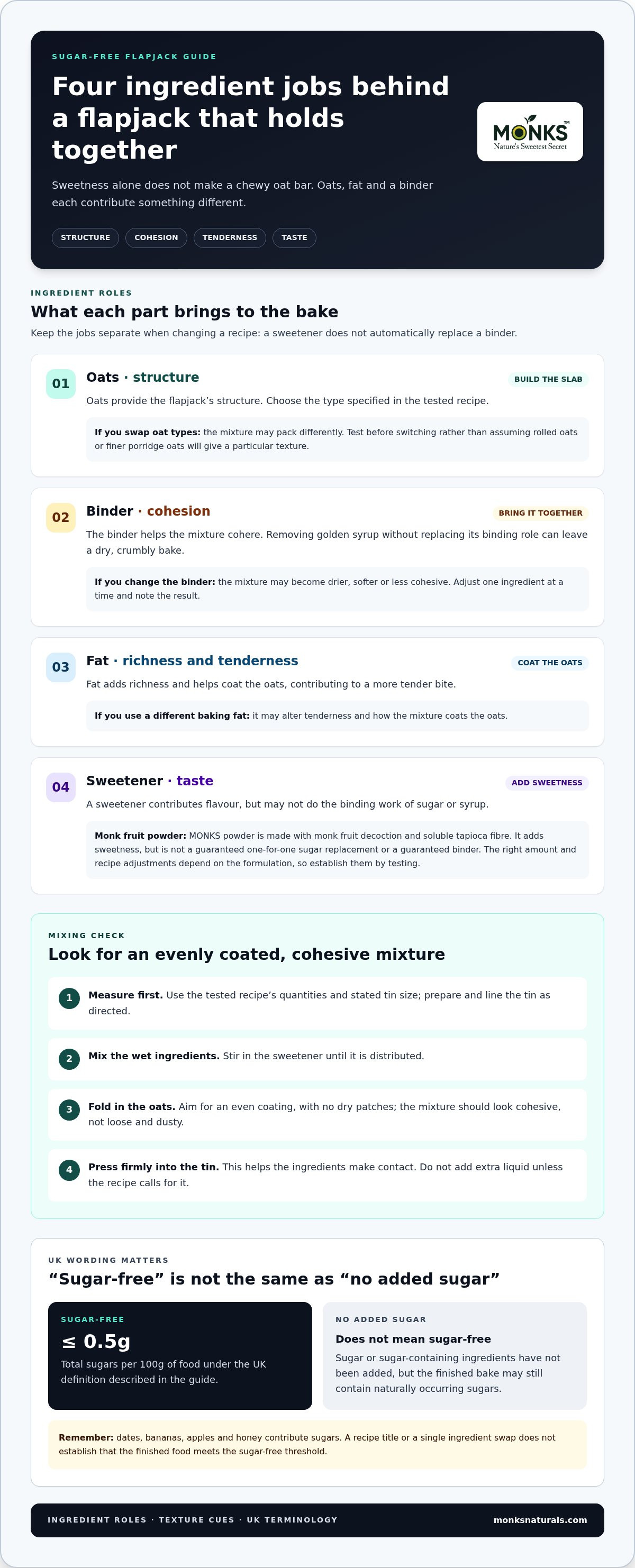
The aim is a familiar, chewy flapjack without added sugar. The wording matters, though. In the UK, “sugar-free” means no more than 0.5g of total sugars per 100g of food. “No added sugar” means sugar or sugar-containing ingredients haven’t been added, but the finished bake can still contain naturally occurring sugars. The two claims aren’t interchangeable.
That distinction affects both ingredient choices and expectations. Dates, bananas, apples and honey all contribute sugars, even when a recipe contains no refined sugar. Replacing golden syrup can also change how the mixture binds, browns and chews. A sweetener adds taste, but doesn’t necessarily do the same job as syrup in a bake.
Is a flapjack with dates or banana really sugar-free?
Some recipes use dates or ripe bananas to sweeten flapjacks without refined sugar. Those fruits still contain sugars. Honey does too, as do apples, whether they’re used fresh or as purée. These ingredients may suit a recipe described as having no added sugar, depending on its full ingredients and preparation, but that alone doesn’t make it sugar-free.
For a regulated “sugar-free” claim, the finished food must meet the total-sugars threshold, including sugars naturally present in its ingredients. Don’t assume a recipe qualifies from its title or from one ingredient swap. Assess the finished recipe against the applicable UK requirements before using that claim.
What makes a flapjack different from an oat bar?
A familiar British flapjack is a compact, baked oat bar, rather than the pancake meant by “flapjack” in some other countries. For background on traditional British flapjacks, see the history and description of the oat-based bake.
Its texture comes from a balance: oats give structure, fat adds richness, and a sweet or binding ingredient helps the mixture hold together. Change one part and the result may be more crumbly, softer or less chewy. This sugar free flapjack recipe UK guide focuses on practical baking choices and texture, not medical or weight-loss advice.
Which ingredients make a sugar-free flapjack hold together?
A dependable flapjack needs each ingredient to do its own job. Oats provide structure, fat brings richness and tenderness, a binder helps the mixture cohere, and a sweetener contributes taste. Traditional sugar or syrup often plays more than one role, so removing it can affect how the bake holds together as well as how sweet it tastes.
That’s why a sugar free flapjack recipe UK needs a considered balance, not simply a sweetener swap. Fruit purée can add moisture and help bind, but dates, bananas and apples also contribute sugars. Monk fruit powder adds sweetness, but shouldn’t be assumed to bind or behave like fruit, sugar or syrup.
How do oats, fat and binder affect flapjack texture?
Choose the oats specified in a tested recipe. Rolled oats and finer porridge oats differ in size, but don’t assume one will produce a chewier or softer result without testing them in the same formulation. Fat helps coat the oats and gives the baked bar a more tender bite. The binder brings the mixture together.
Before baking, check that the oats are evenly coated and there are no dry pockets. Press the mixture firmly into the tin so the ingredients make contact. If you change the binder or oats, make one adjustment at a time and note the result.
| Ingredient role | Possible swap | Likely texture change |
|---|---|---|
| Oats for structure | Another oat type | May change how closely the mixture packs; test before switching. |
| Fat for richness | A different baking fat | May alter tenderness and the way the mixture coats the oats. |
| Binder for cohesion | A suitable alternative binder | May make the mixture drier, softer or less cohesive. |
| Sweetener for taste | Monk fruit powder | Adds sweetness, but isn’t a guaranteed replacement for a binder. |
Can monk fruit powder replace sugar in flapjacks?
MONKS powder is made with monk fruit decoction and soluble tapioca fibre. It’s one option for adding sweetness, but don’t assume it replaces sugar one-for-one or supplies the same binding and browning effects. The right amount and any recipe adjustment depend on the specific formulation, so establish them by testing.
For context on the wider effort to reformulate foods, see the UK's sugar reduction programme. To explore the powder’s ingredients, visit the monk fruit powder product page. Keep the recipe’s binder and sweetener as separate considerations, and use tested quantities for a more reliable bake. You can also explore MONKS monk fruit sweeteners.
How to make a sugar-free flapjack: the recipe method
A reliable bake depends on the balance in the specific recipe. Use its measured ingredient quantities and stated tin size rather than guessing or swapping ingredients mid-method. Oats give the slab structure; the fat and binder help it hold together. A sweetener contributes flavour, but may not replace the binding work of sugar or syrup.
How should you prepare and mix the flapjack ingredients?
Prepare the tin as directed in the recipe, lining it so the slab can be lifted out cleanly. Measure the ingredients before you begin. Mix the wet ingredients together first, then stir in the sweetener until it’s distributed. Add the oats and fold until they’re coated evenly. The mixture should look cohesive, with no dry patches, rather than loose and dusty. Don’t add extra liquid unless the recipe calls for it.
- Prepare: Heat the oven to the temperature specified for the tested recipe. Line the stated tin, leaving enough paper to lift out the bake later.
- Combine: Mix the wet ingredients and sweetener as directed. Fold in the oats until the mixture is evenly coated.
- Fill: Transfer the mixture to the tin and spread it into the corners. Press it down firmly and evenly, paying attention to the edges. A compact layer is less likely to break apart after baking.
- Bake: Follow the tested time and temperature for this formulation. Look for the recipe’s colour and doneness cues. Don’t rely on another flapjack recipe’s timing, as ingredient swaps can affect the bake.
- Cool and cut: Leave the slab in the tin until it has cooled and feels set. Lift it out using the paper, then cut with a sharp knife. Cutting while it’s still warm can make the bars more prone to crumbling.
How do you bake and cut the bars without crumbling?
Pressing matters, but don’t crush the oats into a paste. Compact the mixture enough to make an even slab. Use the recipe’s visual cues as well as its timing. The edges may colour before the centre, so check the whole surface rather than judging by one corner alone.
For a sugar free flapjack recipe UK, take the exact quantities, tin size, oven setting and bake time from a batch tested with the chosen ingredients. Note how the surface looks when baked and how long the slab takes to cool until firm. Those details make the method repeatable and give you a useful guide for the next tray.
Why do sugar-free flapjacks crumble, and how can you fix them?
Changing the sweetener can affect more than flavour. If a batch doesn’t hold together, check coating, binding, pressing and baking before adding extra sweetener. Sweetness alone won’t necessarily make a loose mixture cohesive. Identify the symptom, then change one variable in the next batch so you can see what helped.
Why are my flapjacks dry or falling apart?
Start with the mixture. Before baking, the oats should be evenly coated, with no dry patches, and pressed into a compact, level layer. If the bars crumble after baking, check whether they cooled and set fully before you cut them. If they still fall apart, review the binder and measured quantities rather than adding an unmeasured splash of liquid.
- Crumbly: The oats may not have been evenly coated, or the slab may not have been pressed firmly enough. Correct the mixing or pressing first.
- Dry: The bake may have gone beyond the recipe’s tested colour and doneness cues. Check the oven temperature and timing before changing an ingredient.
- Too soft: Let the slab cool completely before judging its texture. If it remains soft, retest the bake or binder, changing one at a time.
- Unevenly baked: Spread the mixture level and check that the tin sits flat in the oven. If one area colours faster, note its position and adjust the tin placement on the next bake.
For a sugar free flapjack recipe UK, keep notes on the quantities, bake cues and cooling result. Small, measured adjustments are more useful than changing the binder, fat and sweetener together.
Can I add fruit, seeds or chocolate?
Try additions only after you’ve established a dependable base. Dried fruit, seeds or chocolate can add flavour and contrast, but extra ingredients may affect how the mixture coats and binds. Dried fruit also contributes sugars, so adding it can affect whether a “sugar-free” claim is appropriate. Assess the finished recipe rather than relying on its original description.
Add a modest amount of one variation at a time, then check whether the oats remain evenly coated and the cooled slab holds its shape. Larger changes to the mix need a fresh test. Once completely cool, keep flapjacks in an airtight container. Use a storage period only if it has been tested for this recipe; don’t assume a different formulation keeps for the same length of time.
If you’re exploring a monk fruit option for future bakes, browse MONKS monk fruit sweeteners and keep sweetness separate from the binder’s job.
Make your next batch with monk fruit: a simple sugar-free flapjack plan
The most useful principle for your next bake is simple: sweetness, binding and chew are separate needs. A sweetener can change the flavour without replacing the binder or the role that sugar or syrup may have played in the original mixture. Keep the base recipe’s structure steady, then test any sweetener change on its own.
Monk fruit powder is one optional way to add sweetness. MONKS powder combines monk fruit decoction with soluble tapioca fibre, but that description alone doesn’t tell you how it will perform in every flapjack recipe. It isn’t a medical or guaranteed nutritional solution, and shouldn’t be treated as a one-for-one replacement without testing the exact formulation.
How can you adapt the recipe to your preferred sweetness?
Start with the recipe’s measured amount. If you want to adjust it, make a small, measured change and bake another batch before deciding whether the sweetness or texture is right. Taste the mixture before baking only if every ingredient is safe to eat uncooked; otherwise, judge the flavour from the finished, cooled flapjack.
Fruit can be a separate variation, not a sugar-free shortcut. Dates, banana and apple contain naturally occurring sugars. If you add them, describe the change clearly and reassess any claim about the finished bake rather than carrying over the base recipe’s description.
What should you remember before baking another batch?
Measure accurately. Coat the oats evenly, press the mixture firmly into the tin, and let the slab cool fully before cutting. These steps help make the result more consistent and give the bake time to set before you assess its texture.
Keep a brief note of each batch: the ingredients and quantities, any single adjustment, and how the cooled bars turned out. That makes it easier to repeat a result you like or identify what to change next. For this sugar free flapjack recipe UK, test monk fruit powder as a sweetener within the recipe, not as a substitute for every ingredient that helps the bars hold together.
For more ingredient background, explore MONKS monk fruit sweeteners, including spoonable powder made with soluble tapioca fibre. Then return to the kitchen with one small adjustment in mind, and let the next cooled batch guide you.
Bake a chewier flapjack, one thoughtful swap at a time
A satisfying flapjack depends on more than sweetness. Oats bring structure, while fat and a suitable binder help the bars hold together. Make changes gradually, press the mixture firmly and let it cool fully before cutting. These habits make the next batch easier to assess and repeat.
Keep “sugar-free” and “no added sugar” distinct, too. Ingredients such as fruit can contribute naturally occurring sugars, so a recipe’s name alone doesn’t establish which claim applies. This sugar free flapjack recipe UK guide is about practical baking choices, not a medical or nutritional promise.
If you’d like to explore monk fruit as an optional sweetener, MONKS decoction is made by gently simmering whole fruit using a traditional Chinese method. The spoonable powder combines monk fruit decoction with soluble tapioca fibre, and MONKS sweeteners are free from erythritol, maltodextrin and fillers. These details describe the ingredients, not a guaranteed one-to-one sugar swap or a particular flapjack result.
Explore MONKS monk fruit sweeteners and try the powder as a sweetener in your next bake, keeping the binder’s role in mind.
Frequently Asked Questions
Can you make flapjacks without sugar or golden syrup?
Yes, you can make flapjacks without sugar or golden syrup by choosing a sweetener and a separate binder. The finished texture may differ from a traditional version, so test the ingredients together rather than swapping by weight and expecting the same result. Check the completed recipe before calling it sugar-free: in the UK, that claim requires no more than 0.5g of total sugars per 100g. “No added sugar” means something different.
Are date flapjacks sugar-free?
Date flapjacks can be made without refined sugar, but dates contain naturally occurring sugars, so that alone doesn’t make the bake sugar-free. The same applies to bananas, apples, dried fruit and honey. Describe the ingredients accurately, and don’t rely on a recipe title to establish a regulated nutrition claim. If you want to use “sugar-free” for the finished bake, check that the complete recipe meets current UK requirements.
Can monk fruit sweetener be used in flapjacks?
Yes, monk fruit sweetener can be used in baking, but the result depends on its formulation and the rest of the recipe. MONKS spoonable powder combines monk fruit decoction with soluble tapioca fibre. It isn’t automatically a direct, weight-for-weight replacement for sugar, nor should you assume it provides the same binding or browning. Start with tested measurements, then assess sweetness, cohesion and chew once the flapjacks have cooled.
Why do my sugar-free flapjacks fall apart?
Flapjacks may crumble if the mixture wasn’t evenly coated, wasn’t pressed firmly into the tin, or was cut before cooling fully. The recipe’s balance of oats, fat and binder can also need adjustment. Check the mixing and pressing first, then let the slab cool completely before cutting. If it still breaks apart, change one measured ingredient or method at a time and retest rather than simply adding more sweetener.
How do you store homemade flapjacks?
Cool flapjacks completely before cutting and storing them in an airtight container in a cool, dry place. Follow a storage period established by testing the specific recipe, as ingredients and preparation can affect how long the bars keep. If you add fresh fruit or change the binder, don’t assume the original storage guidance still applies. Discard any flapjacks that show signs of spoilage.
Can I make vegan sugar-free flapjacks?
Yes, you can make a vegan version if every ingredient is suitable for a vegan diet. Check labels for the fat, binder, sweetener and any additions, rather than relying on a recipe title. Use a tested plant-based fat and binder, then check that the mixture is evenly coated before baking. Let the flapjacks cool fully before judging whether the bars hold together.
What is the difference between sugar-free and no added sugar?
“Sugar-free” and “no added sugar” are different claims. In the UK, a food labelled sugar-free must contain no more than 0.5g of total sugars per 100g, including sugars naturally present in ingredients. “No added sugar” means sugars haven’t been added as ingredients, but the food may still contain naturally occurring sugars from fruit, for example. Check current UK requirements before using either claim for a finished recipe.


