

The word “natural” may be the least useful clue when you’re choosing an aspartame alternative. A natural aspartame substitute UK shoppers can use every day should suit the drink or recipe, taste right to them and have an ingredient list they understand. It’s reasonable to want a plant-derived option, but sweeteners differ in source, sweetness and flavour. In the UK, “natural” doesn’t have a strict legal definition for sweeteners, so it helps to look beyond the front of the pack.
This guide compares options such as stevia and monk fruit by taste, ingredients and everyday use, without relying on vague health claims. You’ll see why some sweeteners may suit a cup of tea better than baking, what to check on a label and how to choose between powder and liquid formats. Monk fruit is one option to consider. Its flavour is often described as softer and rounder, and products can vary in what else they contain. Compare the details with your own preferences, then try an alternative in a familiar drink or recipe before making it part of your routine.
Key Takeaways
- Look beyond the word “natural”: compare the sweetener’s source with the full ingredient list, including any blends.
- Compare monk fruit, stevia and sugar-based options to narrow down a natural aspartame substitute UK shoppers might prefer.
- Match the format to the task. A sweetener that suits a drink may behave differently in cold foods or baking.
- Test a small amount in a familiar recipe or drink first, then adjust to suit the flavour and sweetness you want.
- When considering monk fruit, compare the ingredient details and format, including powder with soluble tapioca fibre or liquid drops.
What does natural aspartame substitute mean for UK shoppers?
You might be looking for a different ingredient, a flavour you prefer or a format that works better in tea, a cold drink or cooking. But “natural” on a packet doesn’t tell you the whole story. In the UK, the term isn’t strictly defined for sweeteners, so check what the sweetener comes from and what else is in the product.
A high-intensity sweetener adds sweetness in small amounts; a sugar-based alternative adds sweetness through ingredients such as sugar or honey, which also contribute energy and bulk. Plant-derived sweeteners, such as stevia or monk fruit, are another category. For a broader overview of these groups, see Sugar substitutes.
What is aspartame, and what does natural substitute mean?
Aspartame is a high-intensity sweetener: a small amount can provide a sweet taste. A plant-derived alternative describes the source, not necessarily the finished product. Some products combine a plant-derived sweetener with other ingredients, so read the full ingredient list rather than relying on front-of-pack wording.
Natural origin alone doesn’t show that a sweetener is healthier, calorie-free or right for everyone. Sugar and honey are familiar alternatives, but they aren’t high-intensity sweeteners and have different nutritional and cooking properties. The best fit depends on what you want to sweeten and how you plan to use it.
UK rules also distinguish between types of monk fruit ingredient. The Food Standards Agency determined in June 2024 that non-selective aqueous monk fruit decoctions are not novel foods in Great Britain. Highly concentrated mogroside extracts remain subject to novel food approval. Ingredient form matters, not just the fruit named on the label.
Why are UK shoppers looking for an alternative?
Reasons vary. You may prefer a different flavour, want to understand the ingredient list more clearly or be choosing according to personal dietary preferences. These are preference-led decisions, not proof that one sweetener is safer or better for everyone. The FSA and World Health Organization consider aspartame safe within the acceptable daily intake of 40 mg per kilogram of body weight per day.
If you have a health condition, a suspected intolerance or questions about what’s suitable for you, ask a qualified health professional and consult current UK guidance. For a practical comparison, consider five things: source, full ingredients, taste, intended use and authoritative guidance. That’s a clearer way to assess a natural aspartame substitute UK shoppers may come across than trusting a broad “natural” claim alone.
Which natural sweeteners can replace aspartame in everyday use?
There isn’t one direct swap for every drink or recipe. Monk fruit and stevia are plant-derived options used for sweetness in small amounts, whilst sugar-based choices such as honey and maple syrup add sweetness differently. Products can also combine sweeteners with other ingredients. Compare like with like: check the full ingredient list, intended use and directions before choosing a natural aspartame substitute UK shoppers can use in their routine.
- Monk fruit: A plant-derived option available in different product formats. MONKS describes its decoction as whole monk fruit gently simmered using a traditional method.
- Stevia: Another plant-derived sweetener. Some people notice a bitter or liquorice-like aftertaste, though flavour can vary by product and personal preference.
- Honey, maple syrup and other sugar-based choices: These sweeten through sugars and may bring their own flavour, liquid and bulk to a recipe. They don’t behave like high-intensity sweeteners.
These are different categories, not interchangeable ingredients. For an overview of approved sweeteners and related advice, consult the NHS UK guidance on sweeteners.
Monk fruit and stevia: plant-derived options
The plant source doesn’t tell you everything about a finished product. Processing and added ingredients differ, so check whether the label lists a single sweetener or a blend. Monk fruit is often described as having a softer, rounder sweetness than stevia, but taste is subjective. MONKS offers monk fruit decoction powder with soluble tapioca fibre and monk fruit decoction drops. To learn about its approach, you can read about MONKS monk fruit sweeteners.
Don’t assume every product will suit every use. Check the pack for directions and cooking guidance, then try a small amount first. Taste and sweetness can vary between tea, yoghurt and a baked recipe, so assess the product in the food or drink you actually plan to use it in.
Honey, maple syrup and other sugar-based alternatives
Choose these if you want a familiar sweetener with its own flavour, rather than concentrated sweetness from a small amount. Honey and syrups add volume and moisture, so replacing sugar in a recipe can affect texture and balance. Follow a recipe designed for that ingredient, or test a small batch before changing a favourite.
Start with your priority: sweetness, ingredient source or recipe behaviour. Then compare labels and taste the sweetener in the food or drink you want to use it in. For health or dietary questions, check current NHS guidance or speak with a qualified professional.
Natural aspartame substitutes compared: ingredients, taste and use
A useful comparison looks beyond the sweetener’s name. Check its source, the full ingredient list, the flavour it may add and whether the format suits the food or drink you have in mind. These are general category notes, not guarantees: recipes and individual taste preferences vary.
| Option | Source and ingredient checks | Taste considerations | Common uses |
|---|---|---|---|
| Monk fruit | Derived from monk fruit. Check whether the product is a decoction or extract and whether it includes other ingredients. MONKS powder combines monk fruit decoction with soluble tapioca fibre. | Often described as soft or rounded, though taste varies by product and person. | Drinks and other foods, depending on product directions and format. |
| Stevia | Plant-derived. Check whether the product contains steviol glycosides alone or is blended with other ingredients. | Some people notice bitter or liquorice-like notes; others may not. | Often used to sweeten drinks or foods. Check the label for use guidance. |
| Sugar-based choices, such as honey or maple syrup | Check the ingredient and whether the product is pure or blended. These are not the same category as high-intensity sweeteners. | They can bring their own familiar flavour to a drink or recipe. | Drinks and recipes that use sugar or syrup, with adjustments sometimes needed for texture and moisture. |
The best fit depends on the intended use: choose for the drink or recipe first, then compare ingredients, flavour and format. For UK information about permitted sweeteners and safety, refer to NHS advice on sweeteners.
How do taste and format affect the choice?
Powder is measured as a dry ingredient; liquid drops are dispensed into food or drink. Follow the product directions rather than assuming equal amounts are interchangeable. Try a small amount in a familiar drink, such as tea, and notice both the sweetness and any flavour that remains. Your preference may differ from someone else’s.
A product’s sweetness is distinct from the flavour of its other ingredients. Fibre or a syrup base, for example, may affect the overall taste or recipe balance. In baking, a substitute can change more than sweetness, so start with a recipe suited to that ingredient instead of replacing it measure for measure.
What should the ingredient list tell you?
Check whether the product contains one sweetener or a blend, and identify any added fibres or bulking ingredients. MONKS monk fruit decoction drops are a separate liquid format from its powder; the powder includes soluble tapioca fibre. Check the current product label for exact ingredient wording before buying. This makes it easier to compare any natural aspartame substitute UK shoppers are considering without relying on front-of-pack claims alone.
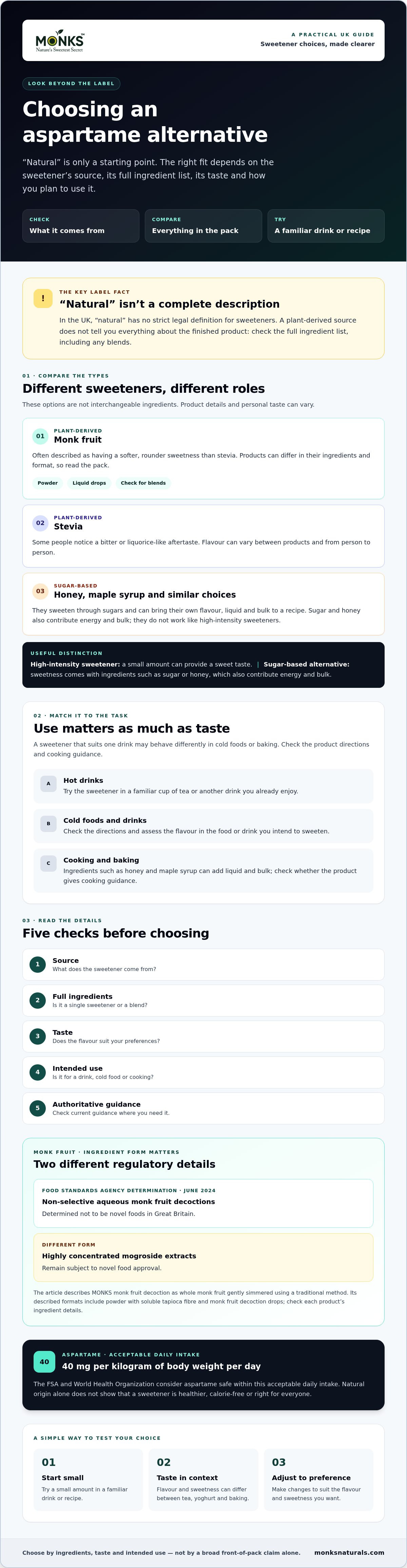
How to choose a natural aspartame substitute for drinks or cooking
Choose by use, not by label claim alone. A sweetener that works in your morning tea may not suit a chilled drink or a cake recipe. Take it one step at a time: identify what you’re sweetening, review the full ingredient list, test the flavour, then assess how it behaves in the recipe.
- Identify the use: Is it for a hot drink, a cold food or baking?
- Review ingredients: Check whether the product is a single ingredient or a blend, and look for directions on the label.
- Test the flavour: Start with a small amount in a familiar drink or food, then adjust gradually to your taste.
- Assess recipe fit: For cooking, consider whether the substitute provides the bulk and moisture your recipe needs.
Choosing an alternative for tea, coffee or cold drinks
For hot drinks, check the product directions and see whether the sweetener mixes as you prefer at the temperature you normally serve it. For a cold drink, check whether it disperses easily without heating. Liquid drops are one format to consider for drinks, but they aren’t automatically a better fit for every person or beverage. Add a little, taste, then adjust. Don’t assume the same amount will replace aspartame in every drink.
Try your usual tea, coffee or glass of water first. Starting with a familiar drink makes it easier to notice the sweetener’s own flavour, including any lingering notes. If a product contains other ingredients, those may also affect the overall taste.
Choosing an alternative for baking and everyday recipes
Baking needs a little more care. Sweeteners differ in bulk and moisture, and may affect browning or texture. A concentrated sweetener won’t necessarily replace the volume of sugar in a recipe. Follow product-specific guidance where available, and test a small batch before changing a favourite cake or biscuit recipe. There’s no universal conversion that works for every product and recipe.
For cold foods such as yoghurt or porridge, consider how the sweetener mixes and whether its flavour suits the other ingredients. Keep notes on what you add and how the finished food tastes. That makes small adjustments easier next time.
If monk fruit is on your shortlist, compare the product format and ingredient details with the way you plan to use it. Explore MONKS monk fruit options and check the current label and directions before deciding whether a product suits your routine.
A monk fruit option without erythritol: what to check before buying
Once you’ve compared sweetener types and considered how you’ll use them, monk fruit decoction is one option to assess. MONKS offers monk fruit decoction powder with soluble tapioca fibre, as well as pure liquid drops. The brand states that its products are free from erythritol, maltodextrin and artificial fillers. These are ingredient details, not evidence of a particular health or digestive outcome.
For any natural aspartame substitute UK shoppers are considering, check the full, current ingredient list and the product directions. Look at the sweetener source, any additional ingredients and whether the format suits your intended use. “Without erythritol” tells you about one ingredient; it doesn’t tell you whether a product is right for your preferences or dietary needs.
When might monk fruit decoction suit your preferences?
MONKS describes its decoction as whole monk fruit gently simmered using a traditional Chinese method. That preparation is a product detail you can compare with the ingredients and processing information for other sweeteners. It may appeal if you’re looking for a monk fruit product and want to understand how it is made. Taste and recipe fit are still personal, so consider the label alongside your intended use rather than treating the source alone as the deciding factor.
To explore the powder in a buying context, review the monk fruit decoction powder listing and check its current ingredient wording before purchasing.
Powder or drops: which MONKS format should you explore?
The powder combines monk fruit decoction with soluble tapioca fibre. It’s a dry format to measure, so check the directions and consider whether it fits the food or drink you plan to sweeten. The drops are a separate liquid format, which you may wish to consider for drinks or other uses where dispensing a liquid feels convenient. Follow the product instructions, and confirm the exact ingredient wording on the live label.
Try a small amount in a familiar drink or food before making it part of a recipe. Adjust gradually to your taste, and don’t assume the powder and drops behave identically. If you’d like to compare the formats and their ingredient details, take a look at MONKS monk fruit options.
Choose the sweetener that fits your everyday routine
The right alternative depends on what you’re sweetening, the flavour you enjoy and the ingredients you’re comfortable choosing. Compare the full label, then test a small amount in a familiar drink or recipe. A natural aspartame substitute UK shoppers prefer for tea may not be the best fit for baking.
Monk fruit is one option to explore in different formats. MONKS offers monk fruit decoction powder with soluble tapioca fibre and pure liquid drops. The brand states that its products contain no erythritol, maltodextrin or artificial fillers. Check the current product label to confirm ingredient details, and treat these as label facts rather than evidence of health outcomes.
If monk fruit sounds suited to your preferences, explore monk fruit sweetener options and compare the powder and drops with how you plan to use them. There’s no need to change everything at once. Start with one everyday drink or recipe, see how it tastes, and choose what feels right for you.
Frequently Asked Questions
What is the best natural substitute for aspartame?
There isn’t one best option for everyone. Monk fruit and stevia are plant-derived sweeteners, whilst honey and maple syrup are sugar-based alternatives with different effects on taste and recipes. Compare the ingredient list, flavour and format, then consider what you want to sweeten. A natural aspartame substitute UK shoppers choose for tea may not suit baking, so try a small amount in your intended use before settling on it.
Is monk fruit a natural alternative to aspartame?
Monk fruit can be a plant-derived alternative to aspartame, but products vary in processing and ingredients. For example, MONKS describes its decoction as whole fruit gently simmered using a traditional method. Its range includes powder made with soluble tapioca fibre and liquid drops. Check the current label to see exactly what a product contains, and follow its directions. “Natural” describes a source or marketing claim, not a guaranteed health benefit.
Can stevia replace aspartame in tea and coffee?
Stevia can sweeten tea or coffee, but the taste may differ from aspartame and from one stevia product to another. Some people notice bitter or liquorice-like notes. Products may also contain other ingredients, so check the full label and serving directions. Try a small amount in your usual drink and adjust gradually to your preference. Don’t assume an equal spoonful or drop count will give the same sweetness.
Does a natural aspartame substitute work in baking?
Some alternatives may suit particular baked recipes, but there’s no universal swap. Sweeteners can differ in bulk, moisture and their effect on browning or texture. A concentrated sweetener, for instance, may not replace the volume of sugar in a cake. Check product-specific cooking guidance and use a recipe designed for that ingredient where possible. Test a small batch before adapting a favourite recipe, rather than relying on an unverified conversion ratio.
Are natural sweeteners healthier than aspartame?
Not simply because they’re described as natural. Source alone doesn’t establish that a sweetener is healthier, calorie-free or suitable for everyone. The UK Food Standards Agency and World Health Organization consider aspartame safe within the acceptable daily intake of 40 mg per kilogram of body weight per day. For individual health concerns, dietary needs or suspected intolerance, speak with a qualified health professional and consult current UK guidance.
How can I check whether a sweetener contains erythritol?
Read the complete ingredients list, not just the product name or front-of-pack claims, and look for “erythritol”. Sweeteners can be sold as blends, so check every listed ingredient. If the wording is unclear, ask the manufacturer to confirm. MONKS states that its products contain no erythritol, maltodextrin or artificial fillers, but check the current product label to confirm the ingredient details before buying.
Where can I buy a natural aspartame substitute in the UK?
You can compare products through UK retailers and brand websites, checking the ingredient list, format and directions before purchase. MONKS sells monk fruit decoction products in the UK, including powder with soluble tapioca fibre and liquid drops. Review the current label to confirm ingredients and see whether the product suits your intended use. Availability can vary by retailer, so check directly with the seller before placing an order.


