

What if switching from stevia to monk fruit is less about finding a one-for-one replacement and more about finding a sweetness that suits your taste? If stevia leaves a lingering, liquorice-like note, you may be curious whether monk fruit tastes cleaner. Taste is personal, and products vary in sweetness and ingredients, so swapping the same amount isn’t always the best first step.
You don’t need to change your whole routine to compare them. Start with the drink or food you sweeten most, whether that’s morning coffee, yoghurt or a favourite recipe. Check the ingredient list and serving guidance, too. Monk fruit products come in different formats, including drops and powder made with soluble tapioca fibre, each suited to different ways of sweetening.
This guide compares stevia and monk fruit for taste, ingredients and everyday use, then explains how to make a measured switch. You’ll learn how to choose a format for drinks or food, test a small amount and adjust to your preference, without assuming every product works the same way.
Key Takeaways
- Stevia and monk fruit come from different plants, but the finished product’s ingredients and format shape how each fits into your routine.
- Compare labels rather than assuming all monk fruit or stevia products taste, measure or behave alike.
- Powder and drops suit different uses. Consider how each mixes into drinks and food before choosing a format.
- Make switching from stevia to monk fruit a taste-led trial: start with one familiar drink, follow the label guidance and adjust gradually.
- Use your taste, ingredient preferences and intended use to guide your choice. MONKS powder and drops are two options to consider.
Switching from stevia to monk fruit: what changes and what stays familiar?
A lingering aftertaste can be reason enough to reconsider the sweetener in your tea or morning coffee. You might also want a format that’s easier to measure into a drink or recipe. Switching from stevia to monk fruit may change the flavour and how you use your sweetener, but it won’t necessarily be a better fit for everyone.
The key distinction is between the plant a sweetener comes from and the finished product in the packet or bottle. Taste, sweetness and ingredients can vary between products, even when they share the same headline ingredient. Treat the switch as a comparison, not an automatic one-for-one replacement.
What are stevia and monk fruit sweeteners?
Stevia is derived from Stevia rebaudiana, a plant whose sweet-tasting compounds are known as steviol glycosides. For neutral background on the plant and its history, see Stevia. Monk fruit, or Siraitia grosvenorii, is a different plant. Its fruit contains sweet-tasting compounds called mogrosides. Both names describe a plant source, not necessarily a product made from that plant alone.
Retail formulations vary. A stevia product may combine its sweetener with other ingredients, and monk fruit products can also differ in formulation and format. Read the full ingredient list rather than relying on the front label to tell you exactly what’s inside.
Why do people consider switching?
Taste is one possible reason. Some people notice a bitter or lingering note from a stevia product, whilst others don’t find it bothersome. Monk fruit may taste different, but personal preference and the product’s formulation matter. Ingredient preferences can also prompt a closer look at labels, while intended use may lead you to consider whether drops or powder suit your usual drinks and food.
Neither sweetener is automatically the right choice for every cup or recipe. Compare products by their ingredients, serving guidance and intended uses. A product that works well in tea may not behave the same way in baking, where texture and bulk matter too.
A small taste test tells you more than a guessed conversion. Choose a familiar drink, check the new product’s label and start with its serving guidance. Taste, then adjust gradually. This gives you a useful comparison without assuming the same measure will deliver the same sweetness or flavour.
Stevia vs monk fruit: compare taste, ingredients and sweetener format
A useful comparison looks beyond the sweetener’s name. The plant source matters, but so do the other ingredients, the product format and how you plan to use it. This is especially relevant when switching from stevia to monk fruit: products with different formulations may not taste or measure alike.
| What to compare | Stevia | Monk fruit |
|---|---|---|
| Plant source | Stevia rebaudiana | Siraitia grosvenorii, whose fruit contains sweet-tasting mogrosides |
| Typical retail formulation | May be sold as drops or powder, sometimes with other ingredients | May be sold as an extract, blend or decoction product; ingredients differ |
| Taste considerations | Some people notice a bitter or lingering note; others don’t | Often described as fruity or clean, though taste varies by person and product |
| Possible uses | Check the label for serving guidance and intended use in drinks or food | Choose a format suited to your routine, then check its label for use guidance |
How might the taste differ?
Perceived sweetness and aftertaste depend on the product and your palate. Neither sweetener is universally better tasting, and changing the plant source doesn’t guarantee that every lingering note will disappear. Try a small amount in a familiar drink first. That gives you a clearer sense of its flavour before you alter a whole recipe.
Why do ingredients and formats matter?
The ingredient list, not the front-of-pack name alone, identifies a product’s formulation. Some powders include bulking ingredients, which can affect how they measure or work in food. Liquid drops have a different texture and may be convenient for adding sweetness to a drink, but follow the product’s own serving guidance. For background on how monk fruit sweeteners are produced and used, see the International Food Information Council’s Everything You Need To Know About Monk Fruit.
Monk fruit decoction products shouldn’t be treated as interchangeable with extracts or blends. MONKS offers a decoction powder made with soluble tapioca fibre and pure monk fruit drops. The powder includes fibre, while the drops offer a liquid format. MONKS describes its decoction as gently simmered whole fruit. Check the ingredients and intended use of any product you’re considering, then explore the MONKS monk fruit formats as one option for comparing powder and drops.
Where does monk fruit work better than stevia in everyday use?
There isn’t one format that suits every kitchen task. In a drink, you may want sweetness without changing the texture. In baking, the sweetener’s bulk and effect on moisture can matter as much as its taste. When switching from stevia to monk fruit, match the format to the use and test it in a small amount before changing a whole recipe.
Monk fruit products can differ in how they’re made and used. For a general overview of what monk fruit sweeteners are, see the International Food Information Council’s guide. Always check the specific product label for its ingredients and serving guidance.
Which format suits drinks?
Drops are easy to add in small increments to coffee, tea or matcha. Stir, taste, then add more only if you want to. This gradual approach helps you judge sweetness in your usual drink without relying on a conversion from stevia. Powder is spoonable, but its ingredients and texture may affect how it mixes. Check that the product is intended for the drink you’re preparing.
For a first comparison, keep the drink and everything else the same. Try a small amount of the new format, then note the flavour and how easily it dissolves.
Can monk fruit replace stevia in cooking and baking?
Not automatically. A sweetener may add sweetness without replacing the bulk, structure or moisture that sugar provides in a recipe. Powder formulations also differ, so the result can depend on the product as well as the other ingredients. Start with a small portion of a familiar recipe, follow the label’s guidance and assess the finished texture and taste before making a larger batch.
MONKS offers monk fruit decoction drops and a powder made with soluble tapioca fibre. They’re distinct formats, so consider their ingredients and intended use rather than treating them as interchangeable. Compare the MONKS monk fruit options to explore which format may fit your routine.
| Use | Format to consider | First test |
|---|---|---|
| Coffee, tea or matcha | Drops for incremental addition; powder if its texture suits the drink | Add a small amount, stir and taste before adjusting |
| Yoghurt or another everyday food | Powder or drops, depending on how you prefer to mix it | Try a small serving and check the flavour and texture |
| Baking | A powder whose ingredients and guidance suit the recipe | Test a small portion; don’t assume it replaces stevia or sugar measure for measure |
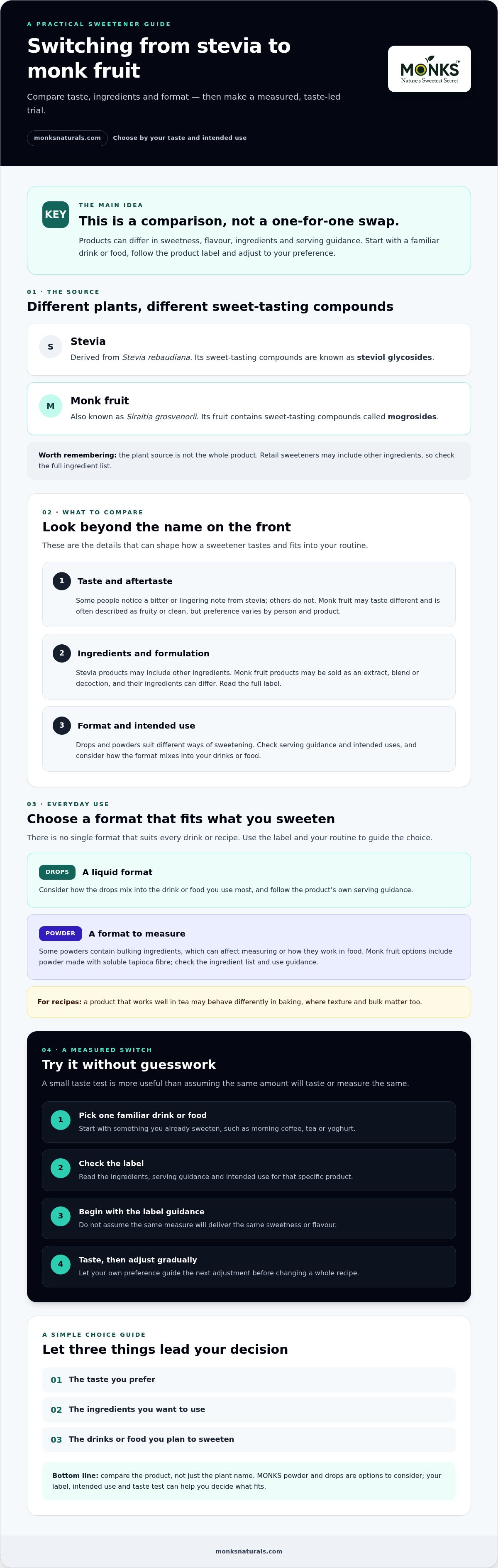
How to switch from stevia to monk fruit without guesswork
A measured trial makes switching from stevia to monk fruit easier to assess. Keep your usual drink and routine, change only the sweetener, and compare the result. There’s no universal conversion ratio: products can differ in sweetness, ingredients and serving size, so use the guidance on the exact product you choose.
How should you test monk fruit in a drink?
Choose a familiar drink, such as your usual tea or coffee. Start with less than you expect to need for your preferred sweetness. Stir thoroughly, taste, then add a little more if you want to. Repeat the trial on another occasion before deciding whether the flavour suits you. One cup may not be enough to judge a new taste in your normal routine.
- Pick one familiar drink. Keep the drink and other ingredients consistent, so you’re comparing the sweetener rather than several changes at once.
- Check the label. Read the serving directions and full ingredients list. Note whether the product is powder or drops, and look for bulking ingredients or additional sweeteners.
- Begin with a small amount. Follow the product’s serving guidance, starting below your desired final sweetness where appropriate. Don’t use your stevia measure as a direct substitute.
- Stir, taste and adjust. Add more gradually only if needed. For drops, add them in small increments; for powder, consider how its texture and ingredients mix into the drink.
- Keep a simple note. Record the product, amount and taste result. This makes it easier to repeat a level you enjoy or adjust deliberately next time.
What should you check before buying?
Look beyond the product name. Check the full ingredients list to understand what else is included, then read the serving directions and nutrition information for that specific product. These details help you compare products fairly and avoid assuming that different monk fruit sweeteners have the same formulation or sweetness.
Choose a format that fits its intended use and the texture you want. Drops may suit adding sweetness gradually to a drink, while a powder may be more practical for spooning into food. For baking, check the product guidance and test a small portion first, since changing sweeteners can affect more than flavour.
For a wider look at monk fruit options, explore MONKS monk fruit products and compare the powder and drops with your preferred ingredients and everyday uses.
Choosing a monk fruit option after stevia: a simple next step
After comparing taste and ingredients, narrow your choice by asking four practical questions: Do you enjoy the flavour? Does the ingredient list suit your preferences? Which format fits your routine? What will you use it for? These checks make switching from stevia to monk fruit a considered choice rather than a blind swap.
Monk fruit products aren’t all made the same way. Some are extracts or blends; others are decoction products. Read the full label and serving guidance before choosing, and don’t assume different products will have identical sweetness, ingredients or uses.
When might monk fruit powder suit your routine?
A spoonable powder may suit you if you prefer a dry format for food or drinks and the product’s texture works for that use. MONKS’ monk fruit decoction powder contains soluble tapioca fibre. That ingredient is part of the formulation, so check the label and serving guidance to understand the product you’re using. To review the listed powder, see the monk fruit decoction powder details.
Try it first in a familiar, small serving. Notice how it tastes and mixes, then decide whether it suits the foods or drinks you usually sweeten. For baking, check the product guidance and assess a small test before using it in a full recipe.
When might pure monk fruit drops suit your routine?
Drops offer a liquid format for drinks and other measured additions. MONKS describes its drops as pure monk fruit, without erythritol, maltodextrin or artificial fillers. Follow the directions on the product itself; don’t transfer a serving amount from another sweetener or format. A liquid may suit a different routine from a spoonable powder, so let your intended use guide the choice.
Neither option needs to be the right fit for everyone. Compare the taste, label, format and intended use, then try the one that best matches your preferences. Explore monk fruit options when you’re ready to review the available product information.
Make your next sweetener choice one small step at a time
Switching from stevia to monk fruit works best as a taste-led trial, not a guessed one-for-one swap. Compare the ingredients and serving guidance on each product, then test a small amount in a familiar drink before deciding whether the flavour suits you. For cooking and baking, consider how the format may affect texture as well as sweetness.
If you’re exploring options, MONKS offers spoonable monk fruit decoction powder with soluble tapioca fibre and pure liquid drops. The brand describes its products as free from erythritol, maltodextrin and artificial fillers, and its decoction as made by gently simmering whole monk fruit. Check the specific product details to see which format fits your routine.
Explore monk fruit sweeteners and review the ingredient and use information before choosing. Start with one small change, taste as you go, and let your own preferences guide the next step.
Frequently Asked Questions
Can I switch directly from stevia to monk fruit?
You can try monk fruit in place of stevia, but don’t assume the same amount will taste equally sweet. Products differ in formulation, concentration and serving guidance. To switch from stevia to monk fruit, start with one familiar drink, check the new product’s label and add a small amount. Taste before adjusting, then repeat the trial another time to see whether it suits your routine.
Does monk fruit taste different from stevia?
It can, though taste is personal and depends on the particular product. Some people notice a bitter or lingering note with stevia, while monk fruit is often described as cleaner or fruitier. Neither description applies to every palate or formulation. Try a small amount of the monk fruit product in a familiar drink, such as tea, and judge its flavour for yourself before using it elsewhere.
How much monk fruit should I use instead of stevia?
There isn’t one reliable amount to use across all products. Sweetness and serving sizes vary, so follow the directions on the monk fruit product you’ve chosen rather than applying a universal conversion ratio. Begin with less than your desired final sweetness, stir well and taste before adding more. Note the product and amount that worked, so you can repeat the result consistently.
Can I use monk fruit instead of stevia in baking?
You can test it in a recipe, but the result may not be identical. Sweeteners differ in formulation, and a product that adds sweetness may not replace the bulk or structure that sugar provides. Check the label for intended use and serving guidance. Try a small portion of a familiar recipe first, then assess its sweetness, texture and moisture before adapting a larger batch.
Is monk fruit sweetener always free from erythritol?
No. Monk fruit products vary, and some combine monk fruit with other sweeteners or bulking ingredients. Read the full ingredients list rather than relying on the front-of-pack name. MONKS describes its monk fruit products as free from erythritol, maltodextrin and artificial fillers, but this shouldn’t be assumed of every brand. Check the specific product label whenever you’re comparing options or avoiding a particular ingredient.
Are monk fruit drops or powder better for switching from stevia?
Neither format is automatically better; choose according to what you want to sweeten. Drops offer a liquid format for measured additions to drinks, while powder is spoonable and may suit food or drinks where its texture works. Their ingredients and serving guidance can differ. Check the label, then try your chosen format in a small amount of a familiar drink or food.
Is monk fruit suitable for people with diabetes?
Suitability depends on the individual and the specific product, so don’t rely on the name “monk fruit” alone. Check the ingredients and nutrition information, including any added ingredients that may affect how the product fits your usual eating plan. If you have diabetes or follow personalised dietary advice, ask your GP or diabetes care team whether a particular product is appropriate for you.


