

The best natural sweetener for protein shakes isn’t always the one that sounds most familiar. A sweetener can bring its own flavour, aftertaste or texture, and your protein powder may already contain one. Before adding anything, check the ingredients and consider what you want your shake to taste and feel like.
If you’re comparing powders, drops and whole-food options, the format matters. Some are easy to stir in, whilst others may change the shake’s flavour or texture. And “natural” alone doesn’t tell you whether a sweetener will suit your preferences.
This guide compares popular choices by taste, format and ingredients. You’ll see how options such as stevia, dates and monk fruit differ, what to look for on the label, and how to choose between powder and liquid drops.
MONKS offers monk fruit decoction in a spoonable powder with soluble tapioca fibre, as well as pure monk fruit drops. Start by checking your protein powder’s ingredient list, then choose the sweetness and format that feel right for your routine.
Key Takeaways
- Check whether your protein powder is already sweetened before adding anything else.
- Choose a natural sweetener for protein shakes by considering its ingredients, flavour and format, rather than the word “natural” alone.
- Match your choice to the protein base and texture you prefer, then adjust gradually according to the product guidance.
- Compare the full ingredient list and nutrition information to find an option that suits your preferences.
- MONKS offers monk fruit decoction in powder with soluble tapioca fibre, or as pure drops, for two distinct ways to sweeten a shake.
Natural sweetener for protein shakes: what are you choosing?
First, decide whether you want sweetness built into your protein powder or added separately. A pre-sweetened powder combines protein, flavourings and sweetener in one product. With a plain protein powder, you choose what to add, how much to use and whether to sweeten it at all. That distinction matters if you want to avoid a particular ingredient or have more control over the finished shake.
There isn’t one universally best natural sweetener for protein shakes. The right fit depends on your protein base, preferred flavour and ingredient priorities. A neutral powder gives you more room to shape the taste; a flavoured one may already be sweet enough, or have a distinct flavour that an add-in could change. Texture matters too. How smoothly an ingredient blends can vary with the product, recipe and amount used, so treat your first mix as a starting point.
Pre-sweetened protein powder or separate sweetener?
Pre-sweetened protein powders can be convenient, but their ingredients and flavour come as a package. Bulk and Vilgain, for example, offer protein powders sweetened with stevia or steviol glycosides. If you choose a pre-sweetened option, check the ingredient list and taste description before adding more sweetness.
A plain powder gives you more flexibility. You can keep the shake unsweetened or add a separate sweetener to suit your palate. This makes it easier to compare formats and adjust your recipe, though the extra ingredient will affect the overall taste and texture.
What does ‘natural’ mean on a sweetener label?
“Natural” is a broad description, not a promise of a particular ingredient, flavour or format. Plant-derived sweeteners such as stevia and monk fruit differ from whole-food additions such as banana or dates. For an overview of the range, explore these types of sweeteners, then look closely at what a specific product contains.
Read the full ingredient list rather than relying on front-of-pack wording. Some products combine a sweetener with other ingredients, which can affect the flavour and texture of your shake. Whole fruit brings its own character and consistency, whilst concentrated sweeteners are used differently. Natural origin alone won’t tell you how sweet a product tastes, how it mixes or whether its ingredients suit your preferences.
Check your protein powder’s label and taste it as prepared. Then decide what you’d like to change: a sweeter finish, a fruitier note or more control over the ingredients. Choose a format that feels easy to use and follow its product guidance. Adjust gradually so you can judge the sweetener alongside the protein base, rather than masking its flavour.
Compare natural sweeteners for protein shakes by type and format
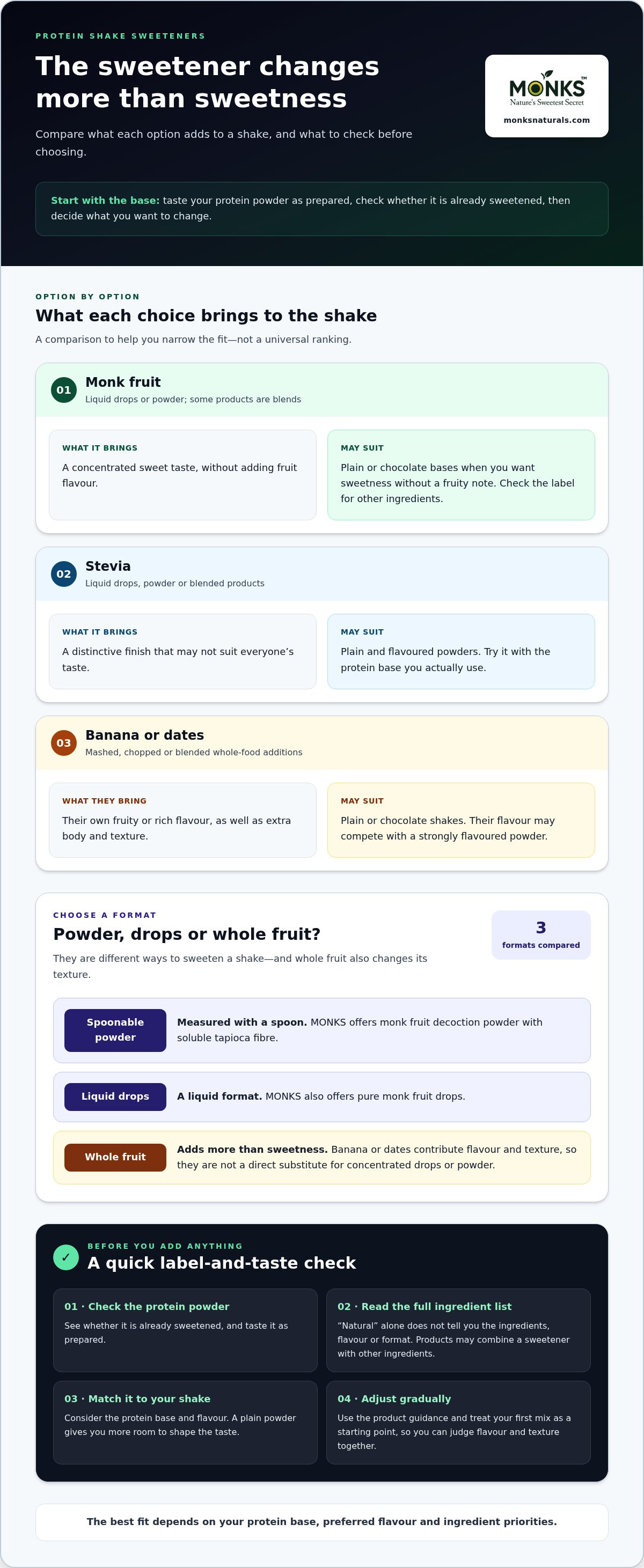
Sweeteners can change more than the level of sweetness. Their flavour, format and accompanying ingredients all affect how they work in a shake. Use this comparison as a starting point, not a universal ranking: your protein base and palate make a difference.
| Option | Common format | Flavour and shake fit |
|---|---|---|
| Monk fruit | Liquid drops or powder; some products are blends | A concentrated sweet taste, often suited to plain or chocolate bases when you want sweetness without adding fruit flavour. Check the label for other ingredients. |
| Stevia | Liquid drops, powder or blended products | Can suit plain and flavoured powders, though its distinctive finish is not to everyone’s taste. Try it with the protein base you actually use. |
| Banana or dates | Mashed, chopped or blended whole-food additions | Add their own fruity or rich flavour, as well as body. They can complement plain or chocolate shakes, but may compete with a strongly flavoured powder. |
Monk fruit, stevia and whole-food additions
Monk fruit and stevia are plant-derived sweetener options, but products made with them can differ in taste and ingredients. Banana and dates are food ingredients, not concentrated sweeteners; they bring flavour and can make a shake thicker. Industry discussion of sweetener trends in high-protein products also highlights why flavour and ingredient choice matter in this category.
Consider the flavour already in your protein powder. A plain base gives you room to explore; chocolate may pair well with fruit or a more neutral sweetener, whilst a flavoured powder can become crowded if you add another strong taste. Preferences vary, so test a small amount in your usual recipe before settling on a favourite.
Powder, drops or ingredients from the fruit bowl?
Spoonable powders and liquid drops offer distinct ways to add a separate sweetener. Powder is measured with a spoon, whilst drops give you a liquid format. MONKS offers monk fruit decoction powder with soluble tapioca fibre, alongside pure monk fruit drops. Whole fruit is different: banana or dates contribute texture as well as sweetness, so they aren’t a direct substitute for concentrated drops or powder.
Recipes vary. A product labelled “monk fruit” or “stevia” may include other ingredients, so read the full label rather than assuming every format has the same composition. For another ingredient-list perspective, see this erythritol-free sweetener guide. To compare monk fruit formats, explore MONKS monk fruit sweeteners and see which style fits your shake routine.
How taste, texture and mixing affect a protein shake
A sweetener doesn’t meet a blank canvas. The protein base, flavourings and liquid all shape the finished shake, so the same addition can taste different from one recipe to another. A plain protein powder gives you more room to notice a sweetener’s flavour. A flavoured powder already has its own profile and may need only a small adjustment.
Sweetener choice affects flavour balance, not protein content. Think of it as one part of the recipe. The aim is to complement the shake, rather than cover up the taste of its other ingredients.
Match sweetness to the protein base
Start with the shake as you usually make it, then taste before adding anything. Neutral-tasting protein can take a more noticeable sweet flavour, whilst chocolate or fruit-based varieties may work better with a milder touch. Product formulations and personal tastes vary, so use your own palate as a guide rather than assuming one sweetener always suits one flavour.
If you’re trying a new natural sweetener for protein shakes, keep the rest of the recipe familiar. That makes it easier to tell whether the change came from the sweetener or another ingredient. A strongly flavoured base can also make a sweetener’s own notes less obvious, so test it in the shake you plan to drink regularly.
Mixing powder, drops and whole-food additions
Formats behave differently. A powder is spoonable, liquid drops are added to the drink, and fruit is blended in as part of the recipe. Banana or dates can add body as well as sweetness, making the shake thicker than one made with a concentrated sweetener. These ingredients aren’t interchangeable if you’re aiming for a particular texture.
Follow the protein product’s preparation directions first, whether they call for stirring or blending. Then use the sweetener’s label guidance. With drops, add gradually and taste between additions. Mix powder thoroughly using your usual method; if you’re adding fruit, blending may help incorporate it into the recipe.
Keep the first trial simple. Use the same protein base and liquid, change only the sweetener, and note the flavour and texture you prefer. If the result tastes too sweet or feels too thick, adjust the next shake rather than trying to correct several ingredients at once. Small, deliberate changes make it easier to find a balance that suits your routine.
Choose a natural protein-shake sweetener with this simple checklist
A good choice is one that fits your shake, your taste and the ingredients you want in your routine. Use this short sequence to compare options without relying on broad claims or assuming that a natural label guarantees a particular result.
- Identify your protein base. Check whether it’s plain or flavoured, then read the ingredient list for sweeteners and bulking ingredients already included. This helps you avoid doubling up on sweetness or adding something you’d rather leave out.
- Set a taste goal. Decide whether you want a gently sweet finish, more noticeable sweetness or a fruitier shake. Keep your usual protein and liquid the same while testing, so you can judge the change clearly.
- Choose a format. Consider whether a spoonable powder, liquid drops or a whole-food addition suits the way you prepare your shake. Each brings a different texture and routine.
- Compare ingredients and information. Read the full ingredient list and nutrition information for both your protein powder and the sweetener. Use the product label, rather than a general description, to understand what’s in the specific product you’re considering.
Start with your ingredients and dietary preferences
Make a short list of ingredients you want to include or avoid, then compare it with each product’s label. A sweetener may be sold in a blend, so the name on the front won’t always tell you everything about its composition. MONKS monk fruit options include a powder made with monk fruit decoction and soluble tapioca fibre, as well as pure drops. Read the ingredients to compare what each format contains.
Don’t treat words such as “natural”, “vegan” or “keto-friendly” as a substitute for checking the full ingredients. These terms don’t tell you whether a product matches your personal preferences or establish its nutrition profile. If a particular dietary consideration matters to you, use the details on the product you plan to add, alongside the information for your protein powder.
Choose a format that suits your routine
A spoonable powder may suit you if you prefer a dry format alongside your usual shake ingredients. Liquid drops may be more convenient if you’d rather add a liquid sweetener. Whole-food additions, such as fruit, are recipe ingredients and can change the shake’s texture as well as its flavour. Pick the format you’re most likely to use consistently.
Follow the manufacturer’s serving directions for the specific sweetener and protein product. There’s no single amount that applies to every product or recipe. Taste and adjust gradually; even after comparing labels, you may need to try an option in your usual shake to see how its sweetness and texture suit you.
To compare monk fruit powder and drops, explore MONKS sweetener formats.
MONKS monk fruit sweetener for protein shakes: a clean-label option
MONKS makes standalone monk fruit sweeteners, not protein powder or a complete shake. They’re designed as a separate option to use with the protein base you already choose. MONKS products are free from erythritol, maltodextrin and fillers. Check the product details and follow its label guidance when adding one to a shake.
The range includes two formats: a spoonable powder made with monk fruit decoction and soluble tapioca fibre, and pure monk fruit drops. Each offers a different way to sweeten a shake, so consider which format fits your recipe and routine. For more detail on how the powder combines monk fruit and fibre, read the monk fruit and tapioca fibre guide.
MONKS powder and drops: two ways to sweeten
The powder is a dry, spoonable format with soluble tapioca fibre alongside monk fruit decoction. The drops are a liquid option made with monk fruit decoction. Neither is a protein powder, so pair your chosen format with your usual shake ingredients and follow its label directions. Don’t assume the two formats are interchangeable.
If you’re comparing the powder format, you can view the monk fruit sweetener powder. Compare its ingredient information with your protein powder, particularly if you’re avoiding specific ingredients or want to know what’s already contributing sweetness to your shake.
Try a considered swap in your usual shake
Keep the first comparison simple. Prepare your usual protein shake and check its ingredient list, then try one MONKS format according to its label. Taste the result before making further changes. This helps you judge how the separate sweetener works with your chosen protein base without also changing the flavourings or other ingredients.
Powder and drops suit different preferences, but your taste is the deciding factor. Look at the full ingredient list, consider which format will be easiest to use, and adjust your shake gradually in line with the product directions. A natural sweetener for protein shakes is a personal choice, not a one-size-fits-all answer.
To compare monk fruit with your usual shake ingredients, discover MONKS sweeteners and choose the format that best fits your routine.
Make your next shake a simple taste test
Try your chosen natural sweetener for protein shakes in your usual routine. Keep the rest of the recipe familiar, follow the product label and notice the sweetness, flavour and texture. One shake is a starting point, not a verdict. Your preference may become clearer as you try it with the protein base you enjoy most.
MONKS monk fruit sweetener is made by gently simmering whole fruit. Ingredient choices matter, but so does finding an option you enjoy using day to day. Compare the product details with your priorities, then choose a format that feels easy to make part of your routine.
Discover MONKS sweeteners and choose a monk fruit format for your next shake.
Frequently Asked Questions
Can I add monk fruit sweetener to a protein shake?
Yes, you can add a separate monk fruit sweetener to a shake made with protein powder. Follow the sweetener’s label directions, then taste before adding more. Don’t assume drops and powders have the same sweetness or serving guidance. If you’re making shakes for more than one person, prepare the protein base first and sweeten each glass separately so everyone can adjust theirs to taste.
Is stevia or monk fruit better for protein shakes?
Neither is best for everyone. Both are plant-derived sweetener options, but their flavour and formulations can vary between products. Consider the taste you enjoy and how it works with your protein powder. For a fair comparison, try each option in the same base and flavour, following the label directions. That helps you judge the sweetener itself rather than differences between recipes.
How much natural sweetener should I put in a protein shake?
There’s no single amount that suits every product and shake. Begin with the sweetener’s stated serving guidance, then taste the prepared drink. If you want it sweeter, add a little at a time and mix again before deciding. This is especially useful with strongly flavoured powders, where extra sweetness can make other flavours less distinct. Adjust a natural sweetener for protein shakes to your own taste.
Can I use liquid sweetener in a protein shake?
Yes, if the liquid sweetener’s directions are suitable for use in a shake. Add it in stages, mix thoroughly and taste before adding more. Don’t transfer serving amounts from a spoonable powder to liquid drops: they’re different formats, and their product guidance may differ. If you’re preparing a shake in advance, stir or shake it again before tasting so the ingredients are evenly combined.
Will natural sweetener change the texture of my protein shake?
It can. The result depends on the sweetener’s format and the rest of your recipe. Drops add a liquid ingredient, whilst a powder brings its own formulation; whole foods such as banana can add thickness and body. Protein type and preparation also affect the feel of the drink. To identify the source of a texture change, keep your usual recipe and alter just one ingredient at a time.
Can I sweeten an unflavoured protein shake without adding sugar?
Yes, you can add a separate sweetener to an unflavoured protein shake, but check both labels to understand the ingredients and nutrition information. Monk fruit and stevia are options some people consider, though products can differ. Don’t assume that “natural” means sugar-free or that every blend has the same composition. Follow the chosen product’s directions, taste the shake, then adjust to suit your preference.


