

What if “natural” tells you less about a sweetener than its ingredients and how it fits your care plan? If you’re looking for safe sweeteners for gestational diabetes UK guidance can feel hard to pin down, especially when online advice conflicts and labels use unfamiliar names. Wanting a satisfying cup of tea or a sweet treat is understandable, too.
Sweeteners used in food undergo UK safety assessments, but that doesn’t automatically make every product right for your pregnancy or glucose targets. The full ingredient list, serving size and your individual care plan all matter.
This guide explains how to compare products, read labels and build choices around the advice from your maternity diabetes team. It also suggests what information to note so you can ask clear questions about ingredients and glucose readings. The aim isn’t to make food feel complicated, but to help you make informed choices one everyday meal at a time.
Key Takeaways
- Assess “safe” in context: consider your maternity team’s advice, the full ingredient list and your individual glucose plan.
- Read carbohydrate information alongside the serving size. A sweetener claim doesn’t tell you the whole carbohydrate picture.
- Compare products by their ingredients and form. “Natural” describes origin or marketing, not automatic suitability in pregnancy.
- Use the intended portion and follow your prescribed monitoring routine. Note any questions about your readings.
- Use this guide to understand safe sweeteners for gestational diabetes UK, and take a product label to your maternity appointment to discuss your options.
Safe sweeteners for gestational diabetes in the UK: what “safe” should mean
Conflicting advice can make a simple choice feel uncertain. If you have gestational diabetes, your maternity diabetes team is best placed to advise on your individual care. Pregnancy, health history and glucose readings can all shape the guidance that suits you. A general article can help you prepare questions, but it can’t replace personalised advice.
A sweetener choice is an ingredient decision, not a gestational-diabetes treatment plan. It should fit current clinical advice, the product’s full ingredients and your individual glucose plan.
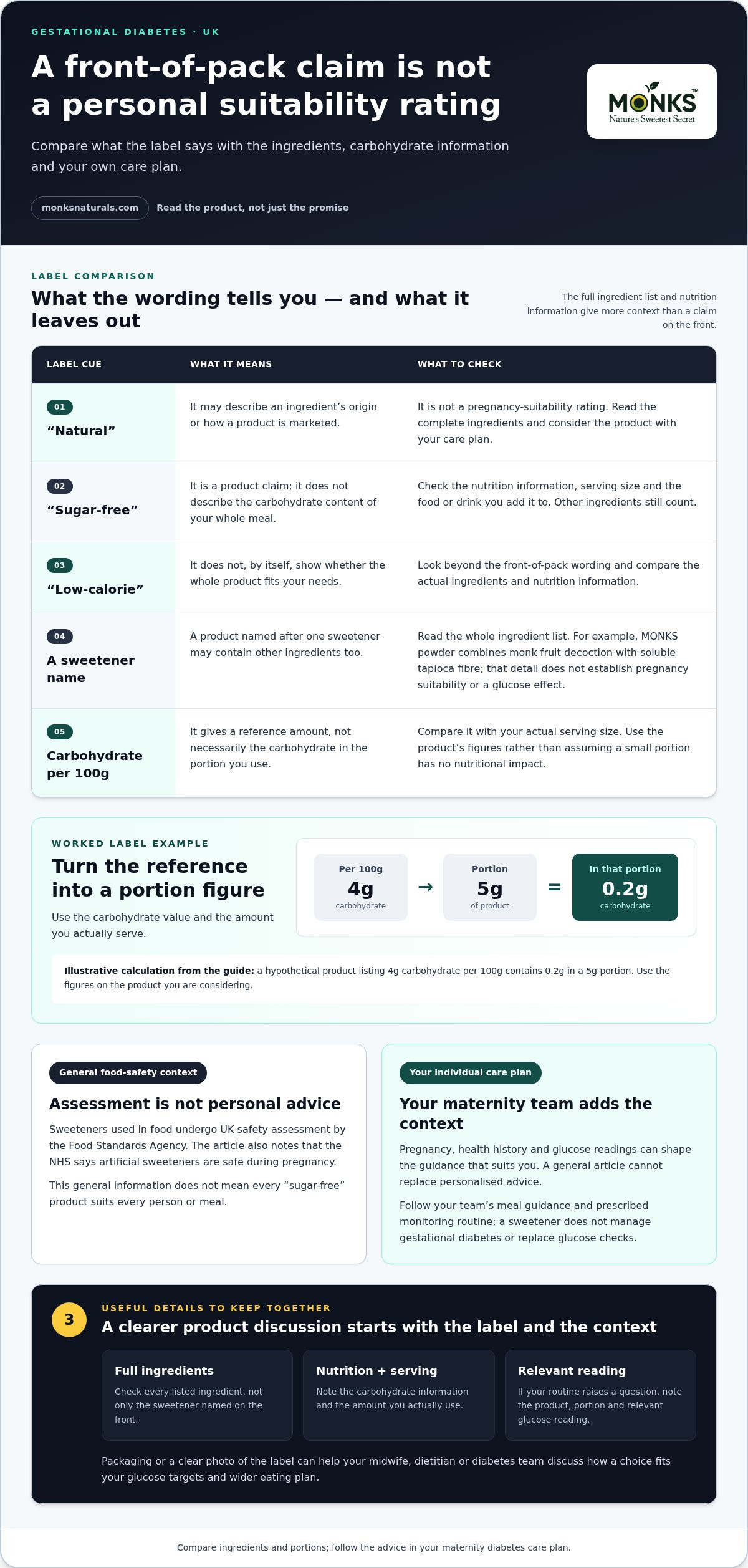
A sweetener can change the taste of a drink or food, but it doesn’t manage gestational diabetes or take the place of your care. Nor does a “sugar-free”, “low-calorie” or “natural” claim tell you whether the whole product fits your needs. Look beyond the front of the pack: the ingredients and nutrition information provide useful context, while your care team can help interpret them alongside your plan.
What does “safe” mean when you have gestational diabetes?
In the UK, sweeteners used in food undergo safety assessment by the Food Standards Agency. That general assessment is not the same as personalised pregnancy advice. “Natural” describes origin or marketing, not automatic suitability; likewise, “sugar-free” doesn’t necessarily mean a product is right for you. For background on different categories, see this comprehensive overview of sugar substitutes, then consider the specific product and your own circumstances.
General food information can help you understand ingredients. Your midwife, dietitian or diabetes team can advise how a particular choice fits your pregnancy, health history and glucose plan. Take the packaging or a clear photo of the label to an appointment if you have questions about a product.
Why UK guidance and your care plan matter
Use current NHS and NICE guidance as a foundation for understanding gestational-diabetes care, then follow the advice from your maternity team. Recommendations may be tailored to your needs and glucose readings, so a broad online claim can’t answer every personal question.
This guide helps you read labels and prepare for a clearer conversation; it doesn’t diagnose or recommend individual treatment. If you’re considering a monk fruit product, check the complete ingredient and nutrition information rather than relying on the sweetener name alone. MONKS products include monk fruit decoction drops and a powder made with soluble tapioca fibre. These product details don’t establish suitability for your pregnancy, so discuss the label with your care team.
How sweeteners, carbohydrates and glucose targets fit together
A sweet taste doesn’t tell you how much carbohydrate is in a food. A sweetener may add little or no carbohydrate, but other ingredients in the product, and the food or drink you add it to, still count. A “sugar-free” label describes a product claim, not the carbohydrate content of your whole meal.
Check the nutrition information and compare “carbohydrate” per 100g with the amount you’ll actually use. For example, if a hypothetical product lists 4g of carbohydrate per 100g and your portion is 5g, that portion contains 0.2g of carbohydrate. Use the product’s own figures and the amount you serve, rather than assuming a small-looking spoonful has no nutritional impact.
How to read a sweetener product label
Read the ingredient list, nutrition information and serving size together. A product named after one sweetener may also contain other ingredients. For instance, MONKS powder combines monk fruit decoction with soluble tapioca fibre. That ingredient detail is useful when reading a label, but it isn’t evidence of a pregnancy benefit or a particular effect on glucose.
For a broader example of the ingredient information to review, you can look at monk fruit product details. Use the current label for the product you’re considering.
How sweeteners fit into meals and glucose monitoring
Follow the meal guidance and monitoring instructions from your maternity diabetes team. A sweetener doesn’t replace a balanced meal or prescribed glucose checks, and a product’s label can’t predict exactly how your glucose will respond. Responses and targets vary, so don’t assume a particular sweetener will affect everyone in the same way.
The NHS says artificial sweeteners are safe during pregnancy. Its NHS advice on sweeteners during pregnancy offers useful general context. This doesn’t make every food labelled “sugar-free” suitable for every person or meal. Follow your own care plan.
If a label or your monitoring routine raises a question, note the product, serving size and relevant reading. Bring those details to your next appointment. They can help your team discuss how the choice fits your glucose targets and wider eating plan, without relying on broad claims about what sweeteners should do.
Comparing sweetener choices: address the “natural means safer” misconception
“Natural” can sound reassuring, but it isn’t a pregnancy-suitability rating. It may describe where an ingredient comes from or how a product is marketed. Similarly, “artificial”, “sugar-free” and “low-calorie” don’t tell you whether a particular product fits your care plan. Compare what’s actually in the pack, not just the broad claim on the front.
In the UK, approved sweeteners undergo food-safety assessment. That general assessment isn’t a personal recommendation for your pregnancy or a ranking of choices for gestational diabetes. For condition-specific context, read Gestational Diabetes UK guidance on sweeteners and discuss individual questions with your maternity diabetes team.
How to compare sweetener types without overclaiming
Use the product form and label to make a practical comparison. Categories are a starting point, not a prediction of how a product will affect you.
| Product type | What to check |
|---|---|
| Table-top blends | Read every ingredient, including any bulking ingredients, and check the nutrition panel and serving size. |
| Liquid drops | Check the listed ingredients and recommended portion. A liquid format doesn’t, on its own, establish suitability. |
| Other sweetener products | Look for the named sweetener, additional ingredients and carbohydrate information. Formulations can vary within a category. |
So, which are the safe sweeteners for gestational diabetes UK? There isn’t a single “best” option that can be selected from a marketing term alone. Check current guidance, inspect the full label and apply the advice for your own glucose plan.
What to know about monk fruit products
MONKS sells monk fruit decoction drops and a powder made with monk fruit decoction and soluble tapioca fibre. The ingredient list matters: products with the same headline ingredient can have different formulations. Check the full label, including nutrition information and serving size, then raise pregnancy-specific questions with your care team.
The monk fruit and tapioca fibre guide explains more about that product combination. It describes ingredients, not clinical approval or suitability for gestational diabetes. Keep that distinction clear and make choices in line with your maternity team’s advice.
How to use sweeteners thoughtfully in a gestational-diabetes meal routine
A simple routine can make sweetener choices easier to understand without turning every meal into a calculation. Start with the meal pattern and portion guidance from your maternity diabetes team. Then check the product label, use its stated serving and follow your prescribed glucose-monitoring instructions. Keep the steps steady, not restrictive.
A simple label-to-meal routine
- Follow your care advice. Begin with the meal plan and portion guidance you’ve received, rather than changing a meal to accommodate a sweetener.
- Check the whole label. Before adding a sweetener to tea, coffee or yoghurt, read the ingredients, carbohydrate information and serving size. A blend may include ingredients beyond the named sweetener.
- Use the intended portion. Follow the product’s serving directions and note how much you’ve used, especially if you’re comparing labels or discussing a product with your team.
- Monitor as prescribed. Keep to the glucose-check schedule provided by your maternity team. Don’t add extra checks or change your routine solely because you’ve used a sweetener.
This isn’t a meal prescription. It’s a practical way to use product information alongside the plan tailored to you. Your overall meal, portion and individual glucose response matter more than a sweetener’s front-of-pack description.
When to ask your maternity diabetes team
Bring a product label or photo to your next appointment if the ingredients, serving size or carbohydrate information aren’t clear. Ask how the product fits your meal guidance. If you notice repeated unexpected readings or have concerns about a food in your routine, share the details with your team. Don’t adjust medication, meals or monitoring instructions based on sweetener use without their advice.
MONKS offers a monk fruit sweetener guide for diabetes with general ingredient information. Gestational diabetes occurs during pregnancy, so general diabetes content isn’t a substitute for pregnancy-specific advice from your maternity team.
To review the ingredient details of MONKS monk fruit products, explore the MONKS product range and compare the current label with your care team’s guidance. This gives you specific information to discuss, without treating a sweetener as a way to manage gestational diabetes.
Choosing a sweetener with confidence: practical next steps
You don’t need to settle every question by reading more marketing claims. Check the product, then discuss any uncertainties with your maternity diabetes team. Use this checklist to turn the question of safe sweeteners for gestational diabetes UK into clear points for your conversation.
A quick checklist before choosing a product
- Follow personalised advice. Start with your maternity team’s recommendations and the meal routine they’ve discussed with you.
- Read the whole label. Check the full ingredients, nutrition information, serving size and intended use. Make a note of anything that’s unclear.
- Look past broad claims. “Natural”, “keto” and “sugar-free” describe an ingredient’s origin, a product’s positioning or a particular claim. None, on its own, confirms that a product suits your pregnancy or glucose plan.
- Take questions to your appointment. Bring the packaging or a clear photo, and explain how you plan to use the product in your usual meals or drinks.
This gives your team something concrete to discuss. For example, ask whether a product’s ingredients and serving information fit your meal guidance, rather than whether a broad category is “safe” for everyone.
Explore monk fruit products with clear expectations
MONKS offers monk fruit decoction in two formats: powder made with soluble tapioca fibre and liquid drops. These are product details, not a recommendation for pregnancy or gestational-diabetes care. Check the current label for the full ingredient list, nutrition information and serving directions. Don’t assume the powder and drops have identical formulations simply because both contain monk fruit decoction.
Explore the MONKS monk fruit range to read the product information. A product page isn’t personalised medical advice. If you have questions about whether an option fits your circumstances, take the label to your maternity diabetes team to discuss alongside your individual needs and care plan.
Make your next sweetener choice with confidence
Choosing safe sweeteners for gestational diabetes UK starts with three practical checks: follow your maternity diabetes team’s advice, read the full ingredient and nutrition label, and don’t treat “natural” or “sugar-free” as a guarantee of personal suitability. A sweetener is one ingredient choice, not a replacement for balanced meals, glucose monitoring or individual care.
If you’re considering monk fruit, MONKS offers decoction powder made with soluble tapioca fibre and pure liquid drops. MONKS products are free from erythritol, maltodextrin and artificial fillers. These are product details, not a claim of pregnancy-specific approval or suitability. Check the current label and discuss any questions with your team.
Explore MONKS monk fruit products to review the product information. Take any label that leaves you uncertain to your next maternity appointment. With clear information and personalised guidance, you can make thoughtful choices without taking the enjoyment out of everyday food.
Frequently Asked Questions
Are artificial sweeteners safe during pregnancy with gestational diabetes?
UK pregnancy guidance says artificial sweeteners are safe during pregnancy, and approved sweeteners undergo food-safety assessment. This general guidance doesn’t confirm that every sweetened product suits your gestational-diabetes plan. Check the full ingredient list and carbohydrate information, and follow advice from your maternity diabetes team, particularly if you have specific dietary instructions or other health considerations.
Can I use monk fruit sweetener if I have gestational diabetes?
Monk fruit may be an option to discuss with your maternity diabetes team, but don’t assume every monk fruit product is suitable for your pregnancy. Products can have different ingredients and serving information. MONKS offers monk fruit decoction drops and a powder made with soluble tapioca fibre. These product details aren’t evidence of pregnancy-specific approval or a personalised recommendation. Review the current label with your team if you’re unsure.
Do sugar-free sweeteners affect blood glucose?
It depends on the product and what you eat with it. A sweetener may contribute little carbohydrate, but a blend can include other ingredients, and the rest of a food or drink still counts. “Sugar-free” doesn’t mean carbohydrate-free or predict your personal glucose response. Check the nutrition panel and serving size, follow your prescribed monitoring routine and discuss repeated unexpected readings with your care team.
How do I check whether a sweetener is suitable with gestational diabetes?
If you’re searching for “safe sweeteners for gestational diabetes UK”, start with your maternity team’s advice rather than a marketing claim. Read the full ingredient list, carbohydrate information and serving size. Check for ingredients beyond the named sweetener, especially in blends. If the label is unclear, take the packaging or a clear photo to your next appointment and ask how it fits your individual meal and glucose plan.
What should I eat with gestational diabetes if I want something sweet?
Choose a sweet option that fits the meal guidance your care team has given you. For example, ask whether fruit with plain yoghurt works within your plan and what portion suits your needs. Fruit contains carbohydrate, so consider the amount and your team’s advice rather than assuming it doesn’t count. A dietitian or maternity diabetes team can help you find satisfying choices that fit your routine.
Should I stop using sweeteners after a gestational-diabetes diagnosis?
Not necessarily. A diagnosis doesn’t automatically mean you must stop using every sweetener, but your individual advice matters. Check what’s in the product, how much you use and whether it fits your usual meals and care plan. If you’ve been given specific instructions or notice a pattern in your readings, discuss it with your maternity diabetes team before making a significant change to your eating routine.
Can a sweetener replace the gestational-diabetes diet plan?
No. A sweetener can change the taste of food or drink, but it can’t replace balanced meals, prescribed glucose monitoring or care from your maternity team. Keep following the meal advice you’ve received, and use sweeteners only as an ingredient choice that fits that guidance. Don’t change medication, meal planning or monitoring because you’ve added a sweetener; raise questions about your plan with your care team.


