

What if the best natural sugar substitute for baking isn’t the one that tastes most like sugar? In a cake, sugar does more than sweeten: it affects moisture, browning and crumb. Swap it without considering those roles, and the result may be drier, paler or less tender than you hoped.
Ingredient labels can add to the confusion. Sweeteners vary in sweetness, bulk and texture, so a simple one-for-one swap won’t suit every recipe. The right choice depends on what you’re baking and which changes you’re prepared to make.
This guide explains how natural sweeteners can affect cakes, biscuits and other bakes, and what to consider before choosing a substitute. You’ll learn why a spoonable powder may suit recipes that need more than liquid sweetness, and how monk fruit decoction powder with soluble tapioca fibre fits into the options. Start with a small test batch, compare the texture and colour, then adjust before changing a favourite recipe.
Key Takeaways
- Choose a natural sugar substitute for baking by considering the whole recipe, not sweetness alone.
- Compare sweeteners by format and likely role. Monk fruit, stevia, xylitol and date-based options can affect bakes differently.
- Match your choice to the result you want, such as a soft crumb, crisp edges or a distinct flavour.
- Test a small batch first. Change one variable at a time and note the texture, colour and taste.
- MONKS monk fruit decoction powder combines whole-fruit decoction with soluble tapioca fibre, without erythritol or maltodextrin.
What does sugar do in baking besides make food sweet?
Baking substitutes can replace sweetness without replacing sugar’s other functions. Depending on the recipe, sugar adds bulk, helps retain moisture, influences texture and supports browning. That’s why sweetness alone can’t predict how a bake will turn out.
Sugar is a functional baking ingredient because it helps shape a bake’s volume, moisture, texture and colour as well as its flavour. Its role varies by recipe. In a meringue, sugar helps create a stable, glossy mixture. In a sponge cake, it contributes to the batter’s volume and a tender crumb. In a biscuit, it can affect spread, crispness and colour. A substitute that works in one may not produce the same result in another.
Why sugar affects texture, moisture and browning
Sugar can help baked goods hold moisture, influencing whether a crumb feels tender or dry. It also affects texture, though the result depends on the other ingredients and how they interact. Removing it may change a bake’s volume or structure, not just its sweetness.
Browning and flavour development depend on the recipe and oven conditions. A sweetener that doesn’t brown in the same way may leave a cake or biscuit paler, even if it tastes sweet enough. For a clearer overview of the different types of sugar substitutes, consider both their sweetness and their form before choosing one for a recipe.
Why a sweetener swap can change a familiar recipe
High-intensity sweeteners provide sweetness in small amounts, but don’t necessarily replace the volume sugar brings to a mixture. Other options add bulk as well as sweetness, yet can still differ in moisture, texture and browning. Format matters too: a liquid adds moisture, while a spoonable powder can contribute more substance to the mixture.
So a spoon-for-spoon swap isn’t automatically equivalent. Even if the sweetness seems right, the balance of ingredients may shift, changing how the bake mixes, spreads or sets. If you’re considering a spoonable powder, explore this guide to monk fruit with tapioca fibre. It explains the format and what to consider when comparing options. Next, let’s look at how different natural sweeteners may behave in cakes, biscuits and other bakes.
How natural sugar substitutes behave in cakes, biscuits and other bakes
Sweetness is only one part of the comparison. A concentrated sweetener can add flavour without much volume, while a granulated or spoonable option may contribute more substance. The ingredient list and format offer useful clues, but neither guarantees a particular result.
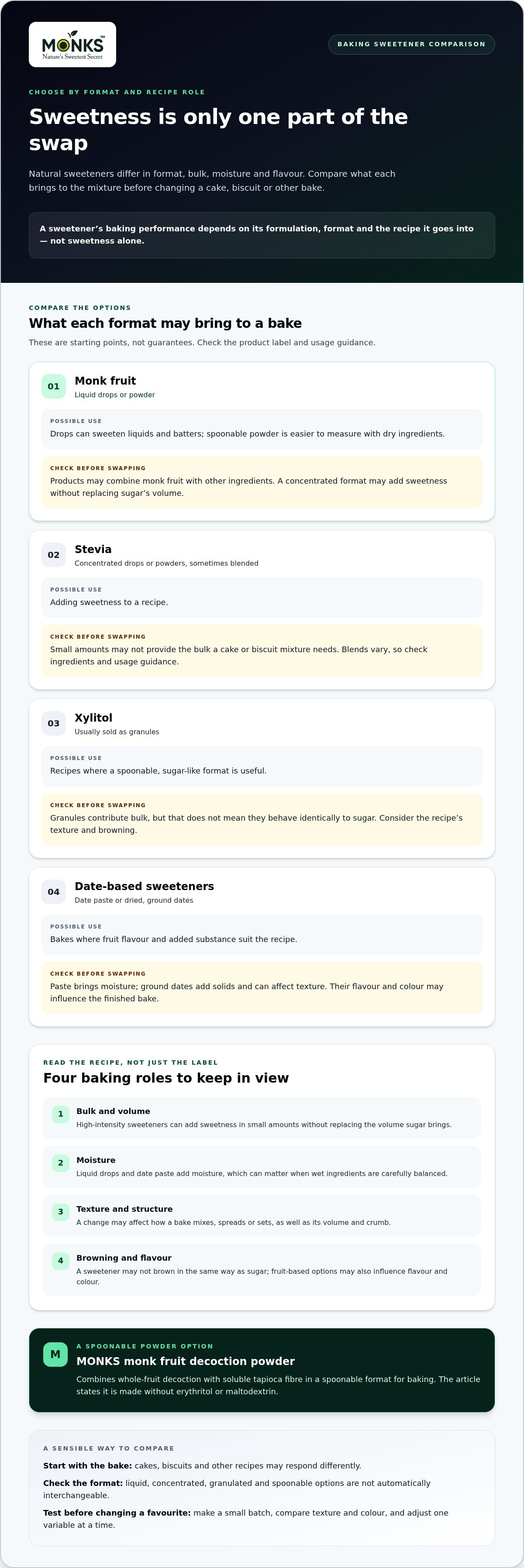
A sweetener’s baking performance depends on its formulation, format and the recipe it goes into, not sweetness alone.
| Sweetener | Format | Possible use | Recipe considerations |
|---|---|---|---|
| Monk fruit | Liquid drops or powder; some products combine it with other ingredients | Drops can sweeten liquids and batters; a spoonable powder is easier to measure with dry ingredients | Check the label for bulking ingredients. A concentrated format may provide sweetness without replacing the volume of sugar. |
| Stevia | Concentrated drops or powders, sometimes blended | Adding sweetness to a recipe | Small amounts may not provide the bulk a cake or biscuit mixture needs. Blends vary, so check their ingredients and usage guidance. |
| Xylitol | Usually sold as granules | Recipes where a spoonable, sugar-like format is useful | Its granulated form contributes bulk, but that alone doesn’t mean it will behave identically to sugar. Consider the recipe’s texture and browning. |
| Date-based sweeteners | Date paste or dried, ground dates | Bakes where a fruit flavour and added substance suit the recipe | Paste brings moisture; ground dates add solids and can affect texture. Their flavour and colour may also influence the finished bake. |
Powders, granules and liquid drops are not interchangeable
Liquid drops can add moisture, which matters in a dry mixture or one with carefully balanced wet ingredients. Spoonable powders are straightforward to measure into dry ingredients, but blends differ: one may include a bulking ingredient, while another may be highly concentrated. Read the ingredient list to see what else is in the product, then follow its usage guidance rather than assuming a direct swap.
What to consider with monk fruit and other plant-derived sweeteners
Monk fruit sweeteners come in different formats and may contain different accompanying ingredients. MONKS monk fruit decoction powder combines whole-fruit decoction with soluble tapioca fibre in a spoonable format for baking. Explore MONKS monk fruit powder as one option. Stevia is available in drops and powders, while xylitol is commonly granulated. Each may sweeten a recipe differently, and none should be assumed to reproduce sugar’s full baking function in every bake.
Which natural sugar substitute suits your bake best?
Start with the result you want, then consider how the sweetener fits the whole recipe. A natural sugar substitute for baking should suit the bake’s texture, flavour and ingredient balance, not just taste sweet. A soft cake, crisp biscuit and fruit-filled muffin each place different demands on a swap.
Use this as a starting point, not a guarantee. Ingredients and methods vary, so a small test batch is the best way to see how a particular option behaves in your recipe.
Choosing a sweetener for cakes, biscuits and muffins
- Cakes: Consider moisture, rise and crumb alongside sweetness. A concentrated sweetener may add little bulk, while a powder containing a bulking ingredient brings more substance. Neither guarantees the same volume or texture as the original recipe.
- Biscuits: Think about spread, crispness and browning. A sweetener’s format and the rest of the dough can influence how biscuits bake, so check the finished colour and texture rather than relying on sweetness as your guide.
- Muffins: Account for moisture already coming from ingredients such as fruit, yoghurt or dairy alternatives. A liquid sweetener may shift that balance, while fruit-based options can add their own flavour and texture.
If you’re looking beyond baking, the natural sugar alternatives guide offers a broader overview of sweetener choices.
How ingredients and preferences shape the choice
Read the full ingredient list, especially if a product is a blend. It can show whether the sweetener includes a bulking ingredient, helping you understand what else it may contribute to a bake. Compare labels carefully rather than assuming two products with the same headline ingredient will behave alike.
Dietary preferences can also narrow your options. If you eat vegan or follow a keto approach, check that the product and the rest of your recipe fit your preferences. These are ingredient choices, not a promise of a particular health outcome.
Finally, trust your own palate. You may prefer a clean, subtle sweetness or enjoy the deeper flavour of a date-based option. Test the taste and texture in a small batch before using a new sweetener in a favourite recipe. Compare its effect on the finished bake, not just how naturally its ingredients sound.
How to test a natural sugar substitute without wasting a whole bake
A small test batch lets you see how a sweetener behaves before it goes into a celebration bake or a favourite family recipe. Keep the trial simple. If you change several ingredients at once, it’s harder to tell what affected the result.
Test one substitution at a time, then use the result to guide your next adjustment.
A simple test-batch method
- Choose a familiar recipe. Pick one with clear measurements and note the original quantity of sugar. A straightforward cake or biscuit recipe makes changes easier to track.
- Check the sweetener’s label. Follow its usage guidance. Products can differ in sweetness, format and bulking ingredients, so don’t assume there’s one conversion ratio that works for every natural sugar substitute for baking.
- Change only the sweetener. Keep the other ingredients and method consistent. If making a smaller batch, measure carefully and use portions of the same size so you can compare the outcome more fairly.
- Record what happens. Once the bake has cooled, assess sweetness, crumb, moisture, spread and colour. Note the result while it’s fresh in your mind.
Cooling matters. A warm bake can feel softer or more moist than it does once it has settled, so wait before judging its final texture. Keep the first trial for an ordinary teatime, not the day you’re counting on a showpiece bake.
How to adjust after the first attempt
Write down specific observations: too sweet, dry, dense, pale or crumbly. Then choose one adjustment for the next test. If the bake seems dry, consider the recipe’s moisture balance. If it’s pale, note the colour without changing several ingredients or the oven method at the same time. Make each trial easy to compare.
Keep the recipe, sweetener label guidance and results together. A few clear notes can help you refine the balance without guessing or risking a full batch each time. For background on what goes into a spoonable monk fruit powder, read this monk fruit and tapioca fibre overview.
For a spoonable option to try in a test bake, discover MONKS monk fruit sweeteners.
MONKS monk fruit powder: a considered option for natural baking
For bakers considering a natural sugar substitute for baking, a spoonable powder is one format worth exploring. MONKS monk fruit decoction powder combines whole-fruit decoction with soluble tapioca fibre. It contains no erythritol or maltodextrin.
The powder is practical to measure alongside dry ingredients. Soluble tapioca fibre also means it brings more than liquid sweetness to a recipe. That doesn’t make it a like-for-like replacement for sugar, though. The balance of ingredients and the type of bake still shape the result.
What to look for in a monk fruit baking sweetener
Start with the format. Drops and powders are used differently in a mixture, and a liquid can affect its moisture balance. Then read the product’s ingredient declaration. Monk fruit products can vary in their accompanying ingredients, including whether they contain a bulking ingredient.
Consider how those ingredients fit with the recipe’s dry and wet components. In a cake batter, for example, adding a powder with fibre may affect the mixture differently from adding drops. Follow the product’s usage guidance, and don’t assume one conversion will suit every cake, biscuit or muffin. A label helps you understand what’s in the sweetener, but a test bake shows how it works in your recipe.
Explore MONKS monk fruit sweetener powder as a spoonable option. Treat it as a possibility to try, not a universal replacement that promises identical results across all bakes.
A gentle next step for your next bake
Begin with a familiar, small recipe rather than a celebration bake. Follow the product’s usage guidance, change one variable at a time and note the taste, texture and colour once the bake has cooled. That gives you a clearer sense of whether the powder suits that particular recipe.
Curious to explore a different approach to sweetening? Explore natural sweetening with MONKS and take your next bake one careful test at a time.
Make your next bake a thoughtful test
The best natural sugar substitute for baking depends on the recipe and the result you want. Sugar contributes more than sweetness, so consider how a swap may affect moisture, texture, volume and colour. Choose a format that fits the mixture, follow its usage guidance and test it in a small batch before changing a favourite bake.
MONKS monk fruit decoction is made by gently simmering whole fruit. Its spoonable powder combines the decoction with soluble tapioca fibre, and MONKS products are free from erythritol, maltodextrin and artificial fillers. It’s one option to explore, with results that can vary from recipe to recipe.
Take a measured, curious approach: bake, taste and note what you’d adjust next time. Explore MONKS monk fruit sweeteners for a considered starting point for your next kitchen experiment.
Frequently Asked Questions
Can I replace sugar with monk fruit in baking?
Yes, but the result depends on the monk fruit product and the recipe. Some products are highly concentrated, while others include ingredients that add bulk. Check the label and follow its usage guidance rather than assuming a direct swap. Try a small batch first. Once it has cooled, assess the sweetness, moisture, texture and colour before deciding whether to use the sweetener in a larger bake.
Does monk fruit sweetener brown like sugar?
Don’t assume monk fruit sweetener will brown in the same way as sugar. Sugar contributes to browning and flavour development, while a substitute may behave differently depending on its ingredients and the recipe. Treat your first bake as a test: check its colour and texture after cooling, and note what you’d change. Keep other ingredients and oven settings consistent so you can better understand the result.
What is the best natural sugar substitute for baking?
There’s no single best natural sugar substitute for baking across every recipe. Cakes, biscuits and muffins can depend on different balances of sweetness, bulk, moisture and structure. Compare the product format and ingredient list, then choose according to the result you want, such as a tender crumb or a distinct flavour. A small test batch will help you judge whether the sweetener suits your recipe and taste.
Can I use stevia instead of sugar in a cake?
Yes, but check the stevia product’s format, sweetness and instructions before using it in a cake. A concentrated option can sweeten without replacing the bulk that sugar would have contributed, which may affect the crumb and texture. Choose a product with guidance relevant to baking, and test a small batch before serving it to guests. Assess the cake after it has cooled, not just while it’s warm.
Is monk fruit sweetener suitable for vegan baking?
MONKS monk fruit alternatives are vegan-friendly. Check the product label and the rest of your ingredients, as a vegan sweetener doesn’t automatically make the whole bake vegan. For example, eggs, butter and milk may need separate alternatives. Change one part of the recipe at a time where possible, then test the result so you can see how each adjustment affects the flavour and texture.
How do I adjust a recipe when replacing sugar?
Start with a familiar recipe and follow the sweetener’s instructions. Don’t assume every product converts spoon for spoon. Make a small test batch, changing only the sweetener first. Once the bake has cooled, record its sweetness, moisture, texture and browning. Use those notes to guide a second test, adjusting one factor at a time rather than changing several ingredients together.
Can liquid sweetener be used in baking?
Liquid sweetener may work in some bakes, but it can add moisture without providing the bulk a recipe expects from sugar. The effect depends on the product and the balance of wet and dry ingredients. Check the label’s baking guidance before using it, especially in a dry mixture. Start with a small batch, then assess the cooled bake for changes in texture and moisture.


