

The best sugar substitute for type 2 diabetes in the UK isn’t automatically the one labelled “natural” or “sugar-free”. Non-nutritive sweeteners can reduce carbohydrate and calorie intake when used instead of sugar, but the right choice also depends on the ingredients, how you use it and how your body responds.
It makes sense to look for a simple swap that still works in your tea, baking or everyday meals. This guide explains what sweeteners are and how they’re assessed for safety, then compares natural options and other sweeteners. You’ll also learn how to read labels, what digestive effects sugar alcohols may have, and why changes to your diet or diabetes medication need care. The aim is a clearer, calmer way to choose, without assuming every alternative suits everyone.
Key Takeaways
- Learn how approved sweeteners are assessed for safety and what an acceptable daily intake means.
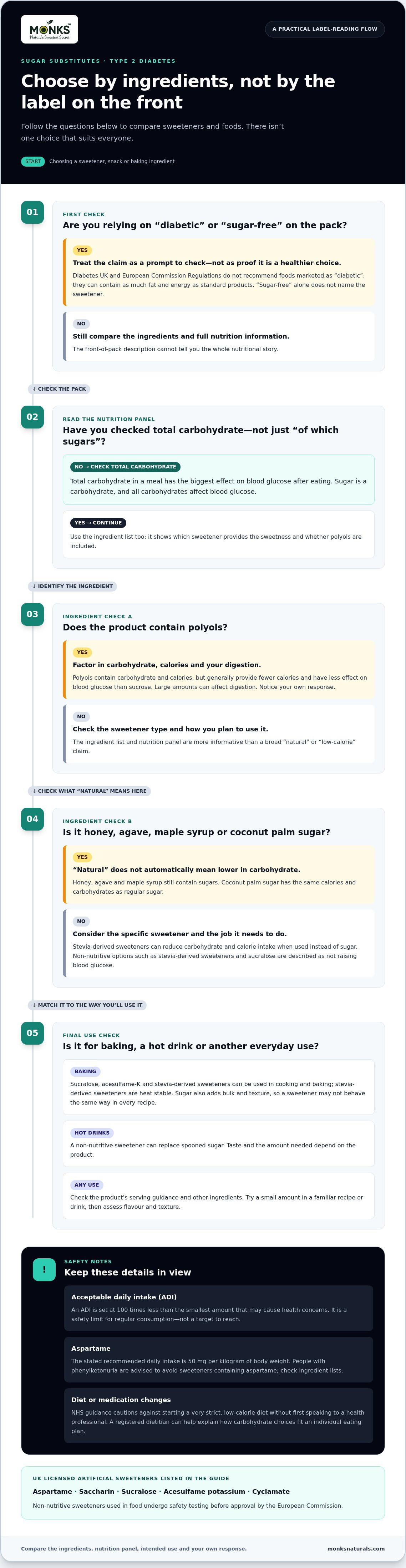
- Look beyond “diabetic” and “sugar-free” labels: check the full ingredients and nutrition information.
- Notice how sugar alcohols affect your digestion, and use your own response to guide your choices.
- Understand why carbohydrate changes and insulin adjustments call for advice from your diabetes healthcare team.
- Compare natural sweeteners by their ingredients, uses and fit with your everyday meals and drinks.
Sweetener safety testing and acceptable daily intake
For people with type 2 diabetes, there isn’t one sweetener that suits everyone. Non-nutritive options such as stevia-derived sweeteners and sucralose can replace sugar with fewer calories or none, and are described as not raising blood glucose. The practical choice depends on the ingredients, how you use the sweetener, and your response to it.
In the UK, aspartame, saccharin, sucralose, acesulfame potassium and cyclamate are licensed artificial sweeteners. Non-nutritive sweeteners used in food undergo safety testing before approval by the European Commission. An acceptable daily intake, or ADI, is set at 100 times less than the smallest amount that may cause health concerns. It is a safety limit for regular consumption, not a target to reach.
For aspartame, the stated recommended daily intake is 50 mg per kilogram of body weight. People with phenylketonuria are advised to avoid sweeteners containing aspartame. Check ingredient lists for the sweetener’s name, especially when choosing drinks, desserts or tabletop products. The name “sugar-free” alone does not tell you which ingredient provides the sweetness.
How do stevia, erythritol, xylitol and sucralose affect blood glucose and HbA1c? Stevia-derived sweeteners and sucralose are non-nutritive options; erythritol is not fully digested, whilst xylitol is a polyol containing calories and carbohydrate. Polyols generally have less effect on blood glucose than sucrose, but the available facts do not establish that any of these sweeteners lowers HbA1c. The British Dietetic Association (BDA) describes HbA1c as average blood glucose over the past two to three months.
Natural does not automatically mean lower in carbohydrate. Honey, agave and maple syrup still contain sugars, while coconut palm sugar has the same calories and carbohydrates as regular sugar. Stevia-derived sweeteners can reduce carbohydrate and calorie intake when used instead of sugar. Compare the ingredient list and nutrition panel rather than relying on a “natural” or “low-calorie” claim.
What are the benefits and risks of artificial and natural sweeteners for people with diabetes? Non-nutritive artificial sweeteners can provide sweetness with fewer calories or none, while some natural alternatives still contribute carbohydrate. The BDA says non-nutritive artificial sweeteners are safe and may be recommended within a usual healthy, balanced dietary pattern. People with phenylketonuria need to pay particular attention to aspartame.
What are NHS and Diabetes UK recommendations on sweeteners for type 2 diabetes? Diabetes UK and European Commission Regulations do not recommend products marketed as “diabetic”, because they can be as high in fat and calories as standard products. NHS guidance also cautions against starting a very strict, low-calorie diet without first speaking to a health professional.
How can people with type 2 diabetes choose and use sweeteners safely? Compare labels, note whether a product contains polyols, and observe your own response. According to the BDA, non-nutritive artificial sweeteners can fit a balanced eating pattern; they are an alternative, not a requirement.
Foods labelled suitable for people with diabetes
A “diabetic” label doesn’t automatically make a food a healthier choice. Look at its ingredients, carbohydrate content and intended use instead.
Polyols in diabetic foods
Polyols are sweeteners that contain carbohydrate and calories, but generally provide fewer calories and have less effect on blood glucose than sucrose. They can appear in products marketed as suitable for people with diabetes, including sweets and biscuits.
That label still doesn’t tell you the whole nutritional story. Diabetes UK and European Commission Regulations do not recommend foods marketed as “diabetic”, because they can contain as much fat and energy as standard products. Read the nutrition panel and ingredients rather than assuming a product is low in calories or carbohydrate.
Polyols can also affect digestion when eaten in large amounts. Their presence is one reason to compare products carefully, especially if you’re choosing a snack to eat regularly.
Choosing foods and reducing sugar
Reducing sugar can help people with diabetes manage blood glucose because sugar is a carbohydrate, and all carbohydrates affect blood glucose. The total carbohydrate in a meal has the biggest effect on blood glucose after eating, so check more than the “of which sugars” figure on a label.
Build everyday meals around foods that suit your dietary needs, and keep sweet treats occasional rather than relying on “diabetic” versions. Diabetes UK says whole fruit is suitable for people with diabetes, and its sugar does not count towards free sugars. Whole fruit is one practical option when you want something sweet.
For drinks, consider gradually using less added sugar or choosing an alternative sweetener. In recipes, reducing sugar can change sweetness and texture, so adjust thoughtfully. A registered dietitian can help you understand how carbohydrate choices fit your individual eating plan.
Sweeteners for baking and hot drinks
Sucralose, acesulfame-K and stevia-derived sweeteners can be used in cooking and baking; stevia-derived sweeteners are heat stable. For hot drinks, a non-nutritive sweetener can replace spooned sugar, but the taste and amount needed depend on the product.
Which sugar substitutes work best for baking and hot drinks? For baking, heat-stable stevia-derived sweeteners, sucralose or acesulfame-K are options. For tea or coffee, choose a sweetener whose taste you enjoy. Sugar also contributes bulk and texture in baking, so a sweetener may not behave like sugar in every recipe.
Try a small amount in a familiar recipe or drink, then assess the flavour and texture. Check the product label for serving guidance and other ingredients. A “sugar-free” claim alone does not mean a food is low in calories, so compare the full nutrition information before making it a regular choice.
Possible digestive effects of sugar alcohols
Sugar alcohols, also called polyols, can sweeten foods with less effect on glucose levels than sucrose. They still contain carbohydrate and calories, so their effect depends partly on the amount consumed. For people with type 2 diabetes, the ingredient list can reveal polyols that a product’s front label makes easy to overlook.
Large amounts of polyols can cause bloating, flatulence and diarrhoea because of their laxative effect. Sorbitol and mannitol are common examples. Consuming over 49 grams of sorbitol can cause a laxative effect in some people; for mannitol, the amount is more than 19 grams. These figures are not a personal target. Smaller amounts can still trouble some people.
Xylitol is another sugar alcohol. It contains approximately two-thirds of the calories of white sugar and has about 60% of its sweetness. Xylitol can still contribute energy, while having less effect on blood glucose than sucrose. Erythritol is not fully digested by the body. Artificial sweeteners such as sucralose are a different category from polyols, so check the specific ingredient rather than grouping all sugar substitutes together.
People respond differently to sugar substitutes. Keep track of the product, amount and digestive response, especially when first adding a food containing polyols. A food diary can help identify whether a particular sweetener or serving size causes discomfort. Read the whole label, too: a product may contain several sweetening ingredients, making total intake less obvious.
How do UK supermarket prices compare for stevia, erythritol, xylitol and sucralose? There is no single like-for-like ranking: price depends on pack size, concentration and format, such as granules, tablets or drops. Compare the unit price and serving guidance on the shelf label, alongside ingredients and suitability for your intended use.
Alcohol intake is another consideration in diabetes care, though it is separate from polyol intake. According to the British Dietetic Association (BDA), people with diabetes should limit alcohol to less than 14 units per week. If drinking up to that amount, spread intake over at least three days and include at least two alcohol-free days per week, as the leaflet advises. These limits apply to alcohol, not sugar alcohols.
Neither a sweetener nor a lower-calorie food automatically helps someone lose weight or manage blood pressure. For day-to-day choices, consider your overall diet and how each product affects you. If carbohydrate intake changes alongside diabetes medication, discuss polyols with your healthcare team, particularly when adjusting insulin.
Seeking professional advice before changing diet or insulin use
Changing carbohydrate intake can alter blood glucose and affect how diabetes medicines work. Before changing your diet or insulin use, speak with a healthcare professional. Discuss your current meals, medication and glucose readings, along with the changes you’re considering, such as replacing sugar or reducing carbohydrate portions.
This matters especially if you take medication that can cause low blood sugar. When restricting carbohydrate, check blood glucose regularly and speak with your healthcare team about reviewing your medication. A sudden change to meals, snacks or sweetened drinks may affect glucose patterns, so explain what you plan to change rather than focusing only on a sweetener such as stevia or aspartame.
There isn’t one eating pattern that suits everyone with type 2 diabetes. The British Dietetic Association (BDA) says people may find it useful to spread carbohydrate throughout the day and reduce the quantity they eat to help control blood glucose. Carbohydrate-containing foods still have a place in the diet; a low-carbohydrate approach should reduce intake without removing those foods entirely.
The BDA says a Mediterranean-style diet has the most evidence for managing glucose levels and overall heart health. Its pattern can include vegetables, whole fruit, pulses, wholegrains and unsaturated fats. A balanced eating pattern may include attention to salt intake and oily fish. These are dietary features to discuss in context, not a prescribed meal plan for every person.
For some people, the question is not simply whether to use sugar or a non-nutritive alternative. The wider meal matters: total carbohydrate has the biggest effect on blood glucose after eating. A healthcare professional can help consider portion size, meal timing, medication and nutritional needs together. This is useful when a change involves several foods, not just sugar in tea or coffee.
The NHS says people with type 2 diabetes should not start a very strict, low-calorie diet without first speaking to a health professional. Such a diet may not suit people taking insulin or other diabetes medicines. If weight loss or carbohydrate restriction is a goal, discuss a realistic approach that keeps essential nutrients in view and accounts for medication-related risks.
Bring practical details to the conversation: the sweetener label, a typical day of meals and any glucose readings you already record. Mention whether you’re considering polyols, reducing snacks or changing portions. A registered dietitian or diabetes healthcare team can help assess your overall eating pattern, rather than treating one ingredient as the whole answer.
Natural sugar substitutes
“Natural” describes an ingredient’s origin, not its effect on blood glucose. Stevia-derived sweeteners are non-nutritive and can reduce carbohydrate and calorie intake when used instead of sugar. Honey, maple syrup and agave are different: they still contribute sugars, even though their glycaemic index differs from refined white sugar.
The best sugar substitute for people with type 2 diabetes in the UK depends on how you’ll use it and what matters in your diet. Stevia-derived sweeteners are 200-300 times sweeter than sucrose, so a small amount can sweeten tea or coffee. They’re heat stable, too, making them an option for cooking and baking. Their concentrated sweetness means they may not replace sugar spoon for spoon.
Honey has a lower glycaemic index and energy value than refined white sugar. Agave and maple syrups also have a lower glycaemic index than regular refined sugar. These comparisons don’t make syrups carbohydrate-free. If you add honey to porridge or maple syrup to a recipe, include them in your overall carbohydrate choices.
Coconut palm sugar is often presented as less refined, but it has the same calories and carbohydrates as regular sugar. A natural-sounding name doesn’t change that comparison. Check the nutrition panel and consider how much you use, rather than relying on words such as “raw”, “natural” or “unrefined”.
Xylitol is a polyol, not a non-nutritive sweetener. It has about 60% of the sweetness of white sugar and approximately two-thirds of its calories. It can still contribute carbohydrate, and larger amounts of polyols may cause digestive discomfort. Portion size and personal tolerance therefore matter.
Match the sweetener to the recipe. Stevia-derived sweeteners suit hot drinks and baking because they’re heat stable; syrups such as honey or maple also add liquid. Try a small amount in a familiar recipe, then assess its flavour and texture. Check the label for other ingredients that may affect the finished dish.
If you’re weighing up the best sugar substitute for people with type 2 diabetes in the UK, compare what each option contributes: sweetness, carbohydrate, calories and, in recipes, bulk or moisture. A substitute may help with reducing sugar, but it doesn’t automatically lower cholesterol or make an entire recipe healthier. Consider the wider ingredients and portions, too.
MONKS: Monkfruit decoction with soluble tapioca fibre Powder
MONKS Monkfruit Powder with soluble tapioca fibre is a spoonable option for sweetening everyday drinks and recipes. It is made using whole-fruit decoction, prepared by gently simmering the fruit using a traditional Chinese method.
Choose the powder when you want a sweetener to spoon into a drink or recipe. Monkfruit Drops offer a liquid alternative, while the MONKS Duo combines both formats. The powder and drops are free from erythritol, maltodextrin and artificial fillers. MONKS has a lighter, cleaner sweetness, so start small and adjust to taste. As with any sweetener, read the label and consider how it fits your food choices and diabetes care.
For a monk fruit sweetener to explore, visit MONKS online.
Make your next choice a simple one
Finding the best sugar substitute for people with type 2 diabetes in the UK is a personal choice, shaped by your tastes, routines and priorities. You don’t need to overhaul every recipe at once. Start with one familiar moment, such as sweetening a morning drink, and consider what would make that small change feel enjoyable and easy to maintain.
Give yourself room to explore. A sweetener that suits your tea may not be your preference for cooking, and choosing differently for each use is practical. Keep your diabetes care plan at the centre of any wider food changes, and bring questions about diet or medication to your healthcare team.
If you’d like support as you explore monk fruit options for your kitchen, contact MONKS for support. Take the next step at your own pace, with choices that feel right for your everyday life.
Frequently Asked Questions
What are sweeteners?
Sweeteners are ingredients used to give foods and drinks a sweet taste. They include sugars such as honey, non-nutritive options such as sucralose, and polyols such as xylitol. These types differ in how they contribute calories and carbohydrate. A tabletop sweetener may be concentrated, while a sweetened yoghurt can contain several ingredients. Read the label to identify the sweetener and understand the whole product.
Should I avoid sugar altogether?
No, you don’t need to remove every source of sugar or carbohydrate from your diet. People with type 2 diabetes need some carbohydrate-containing foods, and whole fruit is suitable, according to Diabetes UK. Focus on the overall amount and pattern of carbohydrate in meals. If you’re considering a major restriction, discuss it with your diabetes healthcare team, particularly if your medication can cause low blood sugar.
How can I replace sugar in my diet?
Start with one regular use, such as sugar in tea, and try gradually reducing the amount or using a sweetener you enjoy. For recipes, consider how sugar affects texture and moisture, not just sweetness. Compare nutrition labels on packaged alternatives, as other ingredients can change the carbohydrate or calorie content. If you’re changing several foods at once, note what you’ve altered and how it fits your eating plan.
I have type 2 diabetes. What can I eat?
You can eat a varied diet that includes vegetables, whole fruit and carbohydrate-containing foods, with portions suited to your needs. Diabetes UK says whole fruit is suitable for people with diabetes, and its sugar does not count towards free sugars. The British Dietetic Association says spreading carbohydrate throughout the day may help control blood glucose. Your medicines, preferences and meal routine all matter when shaping everyday choices.
Is low-calorie sugar better for us?
Not automatically. A low-calorie sweetener may reduce calories when it replaces sugar, but that doesn’t make every food containing it a healthier choice. Products labelled “sugar-free” can still be high in calories, so compare the nutrition panel and ingredients. Consider what you’re sweetening, how often you consume it, and whether the alternative suits your taste and routine. No single sweetener is the best choice for everyone.
Which sugar substitutes are approved for use in UK foods?
Artificial sweeteners licensed for use in the UK include aspartame, saccharin, sucralose, acesulfame potassium and cyclamate. Stevia-derived sweeteners are another non-nutritive alternative used in foods. Check the ingredient list for the specific sweetener rather than relying on terms such as “natural” or “diet”. If you have phenylketonuria, avoid sweeteners containing aspartame, as advised for people with this condition.
Can sugar alcohols such as xylitol and erythritol cause digestive side effects?
Yes. Large amounts of polyols such as xylitol and sorbitol can cause bloating, wind or diarrhoea. Erythritol is not fully digested by the body, and people may respond differently to sugar substitutes. Check ingredient lists, especially on sweets and snack foods, and pay attention to your own digestive response. If you adjust insulin, ask your healthcare team how to count carbohydrate from polyols.
How do UK supermarket prices compare for stevia, erythritol, xylitol and sucralose?
There is no single like-for-like ranking: prices vary by pack size, concentration and format. Compare unit prices and serving guidance alongside ingredients and intended use.


