

A sweetener that looks gentle on paper can still upset your stomach. There isn’t one option that works for everyone: simple sugars are unlikely to cause digestive distress for most people, while sugar alcohols, stevia and luo han guo may cause bloating or gas in some. Monk fruit may suit you, but blends can contain other ingredients, including erythritol.
If sweeteners leave you uncomfortable, look beyond the claims on the front of the pack. The ingredient list and your own response matter: fructose intolerance can also cause symptoms, and sweeteners affect people differently. This guide explains which options may be gentler, how fructose can play a part and what to consider when choosing monk fruit. You’ll have a clearer way to compare sweeteners for everyday drinks and cooking.
Key Takeaways
- Compare ingredient lists, not just the sweetener named on the front of the pack. Blends can include sugar alcohols that may affect digestion.
- Your tolerance matters: the amount of a sugar alcohol that causes bloating or gas can vary from person to person.
- In Great Britain, the Food Standards Agency requires foods or drinks with added polyols making up more than 10% of the product to carry a warning about possible laxative effects from excessive consumption.
- Fructose intolerance can cause digestive symptoms after excess fructose, so consider the sweetener as well as the rest of what you eat and drink.
- Monk fruit products can differ in their ingredients. Learn what to look for when choosing one for your drinks or cooking.
What's the Best Sweetener for Gut Health?
There’s no single sweetener that suits every digestive system. When looking for sweeteners that don't cause bloating and gas, consider the ingredients, amount and your own response.
Sugar alcohols and digestive symptoms
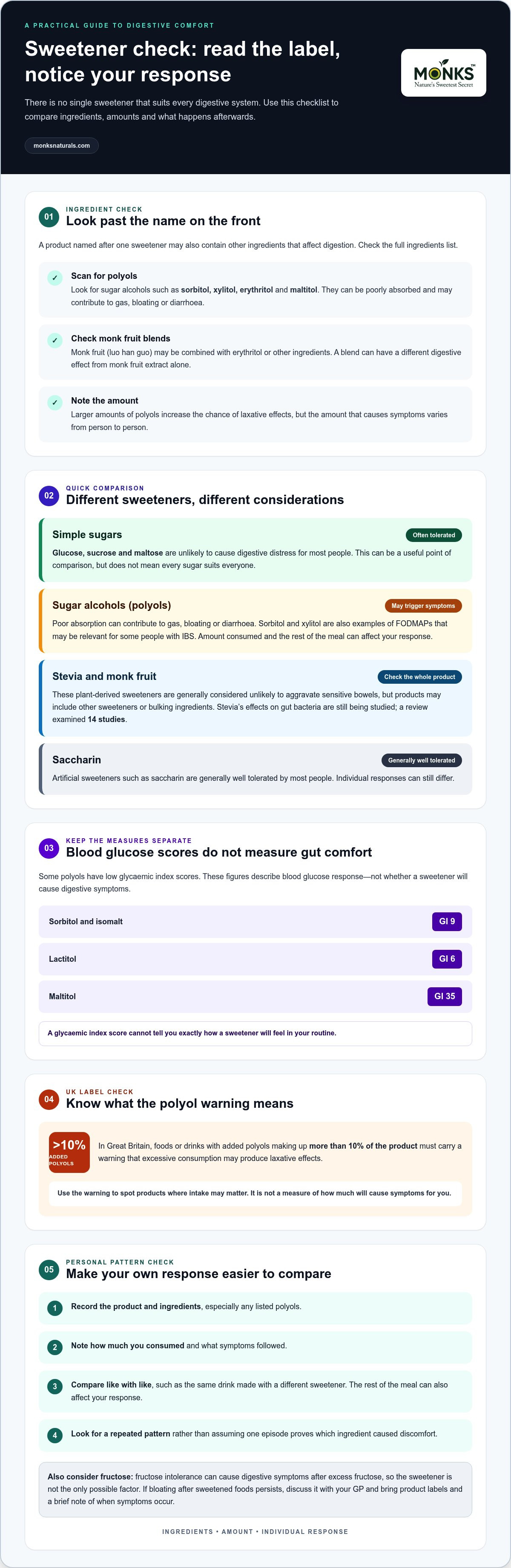
Sugar alcohols, also called polyols, include sorbitol, xylitol, erythritol and maltitol. They can be poorly absorbed and may contribute to gas, bloating or diarrhoea. Larger amounts increase the chance of laxative effects, but the amount that causes symptoms varies between people. So a sweetener that doesn't cause bloating and gas for one person may not suit another.
Some polyols have low glycaemic index scores: sorbitol and isomalt score 9, lactitol scores 6, and maltitol scores 35. These scores describe blood glucose response, not digestive comfort. People with bowel disease may also experience a flare-up of symptoms when using sugar substitutes, so consider digestive effects as well as nutrition information.
Simple sugars and digestive tolerance
Simple sugars include glucose, sucrose and maltose. They’re unlikely to cause digestive distress for most people, which may explain why one sweetened food feels comfortable while another causes symptoms. This doesn’t make every sugar suitable for everyone, but it gives you a useful point of comparison when checking a sweetener’s ingredients.
Artificial sweeteners such as saccharin are generally well tolerated by most people. Glycaemic index and gut tolerance measure different things, so neither can tell you exactly how a sweetener will feel in your routine. Note the product and its ingredients if a particular drink or snack seems to trigger discomfort.
Sweeteners, FODMAPs and IBS symptoms
FODMAPs are fermentable carbohydrates that can contribute to symptoms in some people with IBS. Polyols, including sorbitol and xylitol, are relevant examples: poor absorption can lead to gas, bloating or diarrhoea. The amount consumed and the rest of the meal can affect your response.
There’s no single amount of sugar alcohol that causes symptoms for everyone. Keep a simple record of products containing polyols, how much you consumed and what followed. Comparing notes across similar meals can help you identify a pattern without assuming every sweetener affects your digestion in the same way.
Checking sweeteners on UK food labels
Look for names such as sorbitol, xylitol, erythritol and maltitol in the ingredients list. In Great Britain, according to the Food Standards Agency, foods or drinks in which added polyols make up more than 10% of the product must be labelled to warn that excessive consumption may produce laxative effects. Use this warning to spot products where intake may matter.
If bloating after sweetened foods persists, discuss it with your GP. Bring product labels and a brief note of when symptoms occur. A drink listing sorbitol or a snack listing xylitol can help illustrate the pattern and give the conversation a practical starting point.
What Sweetener Does Not Affect Gut Bacteria?
No sweetener can be described as having no effect on gut bacteria for everyone. Stevia and monk fruit are often considered gentler options, but the full ingredient list and your own response still matter.
Stevia and gut bacteria
Stevia is a plant-derived sweetener, but its effects on gut bacteria are still being studied. A review examined 14 studies on stevia and gut health, showing that this is an area of research rather than a settled, universal answer.
When choosing an alternative, distinguish what is known about stevia itself from the other ingredients in the product. A stevia-sweetened product may also include another sweetener or bulking ingredient. Check the ingredients list, then notice whether the same product repeatedly coincides with bloating or other digestive changes.
Weight management or a lower-sugar eating pattern may influence why someone chooses stevia, but those aims don’t determine how their gut will respond. Vegetables and whole fruits also provide different nutrients and fibres, so a sweetener isn’t a substitute for them.
Monk fruit and stevia
Monk fruit, also called luo han guo, is another plant-derived sweetener. Monk fruit extract and stevia are generally considered unlikely to aggravate sensitive bowels, but that doesn’t mean every product containing them will suit everyone.
The blend can change the digestive picture. Some branded monk fruit sweeteners contain erythritol, a sugar alcohol that may cause gas, bloating or diarrhoea in some people. Read beyond the front label and look for erythritol and other ingredients before choosing a product.
A simple comparison can help: check whether the product lists stevia or monk fruit alone, or combines it with a polyol. Aspartame is a different type of sweetener, and its presence doesn’t tell you whether a product also contains ingredients that may affect digestion.
Stevia and bloating
Stevia itself is not generally expected to aggravate sensitive bowels, but some people report digestive symptoms after consuming products that contain it. The product’s other ingredients, the amount used and the rest of the meal can all affect how comfortable it feels.
Keep a brief food note: record the product, its ingredients and any symptoms afterwards. Compare like with like, such as the same drink made with a different sweetener. This can help you spot a pattern without treating one episode as proof that stevia caused it.
Choose a product with a clear ingredient list if you want to understand what you’re consuming. For a monk fruit-based option, explore monk fruit sweetener choices and compare the listed ingredients with your own tolerance.
Fructose intolerance and digestive symptoms
Fructose intolerance can help explain why some sweet foods cause bloating, wind or diarrhoea. About 30% of people have dietary fructose intolerance, and symptoms can follow excess fructose. That doesn’t mean all fruit or naturally sweet foods cause trouble. The amount consumed and the food’s other ingredients matter.
Fructose is a sugar found naturally in foods, including fruit, and added to some sweeteners. Agave nectar can contain up to 90% fructose, so it may be a notable source for someone sensitive to it. High-fructose corn syrup contains 55% fructose. These examples show why a product’s sweetener source can matter, even when its label sounds natural.
Symptoms after consuming excess fructose can include abdominal discomfort, bloating, gas and diarrhoea. The trigger may be a sweetened drink, a dessert or several fructose-containing ingredients eaten together. One food alone may not explain the pattern. Consider the whole meal and the amount of each ingredient, rather than focusing only on the word “sweetener”.
Check the ingredients list for fructose-containing sweeteners, including agave nectar, and note which foods precede symptoms. Sorbitol is a separate sugar alcohol, not another name for fructose; products can contain both, so record each ingredient rather than treating them as interchangeable. This distinction makes food notes more useful and can help identify which ingredients appear alongside symptoms.
Studies and dietary guidance often discuss fructose in foods and sweeteners, but a natural label doesn’t show how much fructose a serving contains. Compare similar products, such as two breakfast drinks or dessert toppings. Note which contains agave and whether symptoms recur after consuming it. This gives you a clearer comparison than removing several foods at once.
Fructose intolerance is not the same as a general reaction to all sugars or sugar substitutes. Someone who reacts after a high-fructose food may tolerate a different sweetener, while another ingredient in a blend may also affect digestion. Keep a short record of the food, its ingredients, the amount eaten and the symptoms. If symptoms persist, discuss the pattern with your GP.
For everyday choices, use the ingredient list as a practical guide. Look for fructose sources, consider how they fit into the whole meal, and don’t assume “natural” means symptom-free. Comparing similar products can help you understand your own response without unnecessarily removing fruit or other foods from your diet.
Monk fruit sweetener
Monk fruit, also called luo han guo, is a fruit-derived sweetener used in drinks and cooking. Monk fruit sweeteners can be much sweeter than table sugar, so a small amount may provide noticeable sweetness. Descriptions place monk fruit at 250 times sweeter than table sugar, while monk fruit extract is described as 300 times sweeter. These figures refer to different descriptions, not a serving guide.
A plant origin doesn’t automatically predict how your digestion will respond. Monk fruit extract is generally considered well tolerated by most people, but the full recipe matters. Some monk fruit sweeteners contain erythritol, a sugar alcohol that may cause bloating, gas or diarrhoea in some people. The digestive effect may therefore come from the blend rather than the monk fruit itself.
Check the ingredients list, not just the words “monk fruit” on the front. Look for erythritol and other ingredients, especially if you’ve noticed symptoms after sugar-free drinks, desserts or tabletop sweeteners. Recipes differ, so two products labelled with monk fruit can have different ingredients and may feel different to consume.
Monk fruit has a glycaemic index of zero in the research figures for this article. That describes its effect on blood glucose, not whether it causes digestive symptoms. A low glycaemic index doesn’t guarantee comfort, just as a fruit-derived origin doesn’t mean a product will suit everyone.
Monk fruit’s intense sweetness can make it an option for sweetening tea, coffee or a recipe without using the same volume as sugar. Start with a small amount and adjust the taste gradually. This helps you avoid adding more than you need and notice whether a particular product appears to affect your digestion.
Keep the product and amount consistent while observing your response. For example, note whether a monk fruit sweetener in your morning tea is followed by symptoms, then compare it with a drink containing a different blend. Record the ingredients and the wider meal too. This can help distinguish a possible erythritol response from other foods eaten at the same time.
For a digestion-conscious routine, the useful distinction is monk fruit alone versus monk fruit blended with erythritol. Read the label, use only enough for the taste you want and pay attention to recurring patterns. If a product causes discomfort, its ingredients offer a more useful clue than the broad label “natural sweetener”.
Which sweeteners are high in FODMAPs and may trigger IBS symptoms?
For IBS, some sweeteners can contribute to symptoms because they are poorly absorbed and fermented in the gut. Polyols, also called sugar alcohols, are a key group to recognise. Sorbitol and xylitol are examples that may cause gas, bloating or diarrhoea, particularly when intake is high.
FODMAPs are fermentable carbohydrates. For someone with IBS, the effect can depend on the sweetener, the amount consumed and other ingredients in the meal. A sugar-free label doesn’t mean a product is free from polyols. Check the ingredients in chewing gum, sweets, drinks and reduced-sugar desserts.
Look for names such as sorbitol, xylitol and maltitol. These polyols can be poorly absorbed, and larger amounts increase the chance of laxative effects. Erythritol is another sugar alcohol found in some blended sweeteners; note it separately rather than assuming all blends have the same ingredients or digestive effects.
Fructose can also matter. Excess fructose may cause digestive symptoms for people with dietary fructose intolerance, and agave nectar can contain up to 90% fructose. A product may therefore cause discomfort because of fructose, polyols or a combination of ingredients. The ingredient list offers more useful clues than a front-label claim such as “natural” or “sugar-free”.
To spot a possible pattern, record the product, ingredients, amount and symptoms after eating it. For example, compare a drink containing sorbitol with a similar drink that doesn’t list polyols. Keep the rest of the meal as consistent as possible. This makes it easier to notice whether a particular sweetener repeatedly coincides with symptoms.
In Great Britain, foods or drinks with added polyols making up more than 10% of the product must carry a warning that excessive consumption may produce laxative effects, according to the Food Standards Agency. Treat the warning as a useful label cue, not as a personal tolerance threshold. The amount that affects one person can differ from the amount that affects another.
For a sweetener without polyols, compare the ingredients carefully and choose a product suited to how you use it. Explore monk fruit sweetener options and read each product’s ingredient list before adding it to a drink or recipe. If symptoms persist after changing sweeteners, discuss the pattern with your GP.
Higher intakes of sugar alcohols can increase the chance of bloating, gas or diarrhoea, but the amount that causes symptoms varies from person to person.
MONKS: Monkfruit decoction with soluble tapioca fibre Powder
Monkfruit decoction with soluble tapioca fibre Powder offers a spoonable way to sweeten drinks and recipes. It’s made with whole-fruit decoction and soluble tapioca fibre, without erythritol, maltodextrin or fillers. Its ingredients are clear for readers comparing monk fruit blends and looking to avoid erythritol.
MONKS also offers Monkfruit decoction Drops, a liquid option, and THE MONKS SET. Monk fruit may be a useful alternative, but no sweetener can promise a symptom-free experience for everyone. If digestion is a priority, read the ingredients and consider how the product fits your routine.
Visit MONKS online to explore its monk fruit sweeteners.
Make your next sweetener choice with confidence
Finding sweeteners that don't cause bloating and gas starts with a choice you can understand and use consistently. Instead of changing several ingredients at once, choose one product for a familiar drink or recipe. Keep the rest of your routine steady and notice how it suits you. A simple, repeatable choice can make everyday cooking feel less like guesswork.
If monk fruit seems right for you, match the format to your kitchen habits. Powder may suit recipes or spooning into a cup, while drops may work well in drinks. MONKS offers Monkfruit decoction with soluble tapioca fibre Powder, Monkfruit decoction Drops and The Monks Set. Read the ingredients, choose the format that fits and let your own experience guide the next step.
For help exploring the range, contact MONKS for tailored support. A thoughtful change can begin with one small adjustment to a familiar ritual.
Frequently Asked Questions
Are sweeteners safe?
Sweeteners approved for use in Great Britain undergo a rigorous safety assessment before they can be used in food and drink. Safety approval doesn’t mean every option suits every digestive system. When comparing products, consider the ingredients and your own response. People with bowel disease may find that sugar substitutes trigger symptoms, so their existing digestive condition is relevant to their choice.
Does stevia cause bloating like other sweeteners?
Stevia may cause bloating for some people, although it’s generally considered unlikely to aggravate sensitive bowels. Check the full ingredients list: a stevia-sweetened drink or tabletop blend may include other ingredients that affect digestion. If symptoms follow one product, compare its ingredients with another stevia option. This can help you work out whether the blend, rather than stevia alone, may be involved.
How do sweeteners negatively impact the gut?
Some sweeteners can contribute to gas, bloating or diarrhoea through poor absorption and fermentation in the gut. Sugar alcohols such as sorbitol and xylitol are examples. Larger amounts increase the chance of laxative effects, although personal tolerance varies. If symptoms follow a particular food, note its sweetener and other ingredients. Your record may reveal whether the same product or combination recurs.
What are some sweeteners or alternatives that are gut friendly?
Simple sugars such as glucose, sucrose and maltose are unlikely to cause digestive distress for most people. Stevia and monk fruit extract are also generally well tolerated, but blends can contain other ingredients. To find sweeteners that don't cause bloating and gas in your routine, compare ingredient lists and change one thing at a time. Keep familiar meals steady for a clearer comparison.
Which sweeteners are least likely to cause bloating and gas?
There isn’t a universal list of sweeteners that don't cause bloating and gas, because individual responses differ. Simple sugars are unlikely to cause digestive distress for most people, while some tolerate stevia or monk fruit extract well. Look beyond the sweetener named on the front of the pack. For example, a monk fruit blend may include erythritol, which can cause symptoms in some people.
Do stevia, monk fruit and sucralose cause bloating or gas?
Stevia and monk fruit can cause symptoms for some people, although they’re generally considered well tolerated by many. Other ingredients in a blend can also affect digestion, so check the product label. Sucralose is absorbed in the gut at 15%; that fact alone doesn’t predict whether you’ll experience bloating. If a product seems to trigger symptoms, note its ingredients and compare another option.
Can sugar alcohols such as sorbitol, xylitol, erythritol and maltitol cause digestive symptoms?
Yes. Sorbitol, xylitol, erythritol and maltitol can cause bloating, gas or diarrhoea in some people. The amount that triggers symptoms varies, and larger intakes increase the chance of laxative effects. Look for these names in ingredient lists on products such as chewing gum, sweets and drinks. Similar front-of-pack descriptions don’t guarantee similar recipes, so check each product separately.
Are natural sweeteners such as honey, maple syrup and agave likely to cause bloating?
Natural origin doesn’t guarantee digestive comfort. Agave nectar can contain up to 90% fructose, and excess fructose can cause symptoms for people with dietary fructose intolerance. Simple sugars are unlikely to cause digestive distress for most people, but individual responses differ. If honey, maple syrup or agave seems linked to symptoms, record the food and amount, then compare your response across different ingredients.


