

What if the "natural" label on your favourite sweetener is actually hiding a lab-made secret? You want to reduce sugar, yet the alternatives often leave you with a bitter aftertaste, a cooling sensation, or a bloated gut. It's exhausting to scan labels only to find hidden erythritol, synthetic fillers, and industrial solvents lurking behind healthy-looking packaging.
Finding a genuine natural sweetener without chemicals shouldn't feel like a complex chemistry experiment. You deserve a choice that's erythritol-free, filler-free, and kind to your body. This 2026 guide shows you how to identify truly clean, plant-based sweetness by looking past the marketing. We'll explore why the way a plant is processed matters just as much as the plant itself.
We'll compare harsh industrial extracts with traditional decoction, explain how to protect your gut health, and help you master better blood sugar management. It's time to simplify your pantry, reclaim your flavour, and enjoy your daily rituals with confidence.
Key Takeaways
- Identify a truly natural sweetener without chemicals by choosing traditional decoction over industrial, solvent-based extraction.
- Discover how whole-fruit simmering eliminates the bloating, bitter aftertaste, and cooling sensations common in sugar alcohols.
- Master the skill of reading UK food labels to filter out hidden fillers like maltodextrin, dextrose, and vague "natural flavourings."
- Learn how to effortlessly replace sugar in your tea, coffee, and baking for a pure, clean flavour profile.
- Understand the vital difference between chemically-isolated plant extracts and traditional, plant-based sweetness.
Why 'Natural' Doesn't Always Mean a Natural Sweetener Without Chemicals
In 2026, UK food standards have moved towards greater transparency. Yet, the term "natural" remains one of the most misunderstood labels on our supermarket shelves. Many products claim to be plant-based, but their journey from the field to your kitchen tells a different story. A truly natural sweetener without chemicals is defined by its processing, not just its origin.
We often confuse plant-sourced ingredients with chemically-isolated ones. A plant-sourced ingredient remains close to its original form. A chemically-isolated one is stripped down in a lab until only a single molecule remains.
A clean label sweetener avoids synthetic solvents and maintains the integrity of the whole fruit.
UK labels often hide complexity behind simple terms. "Natural flavourings" can involve dozens of laboratory-created compounds. Even E-numbers, which many shoppers avoid, are sometimes replaced with vague descriptions that mask industrial intervention. This lack of transparency makes it harder to choose what's best for your body.
The Problem with Industrial Extraction
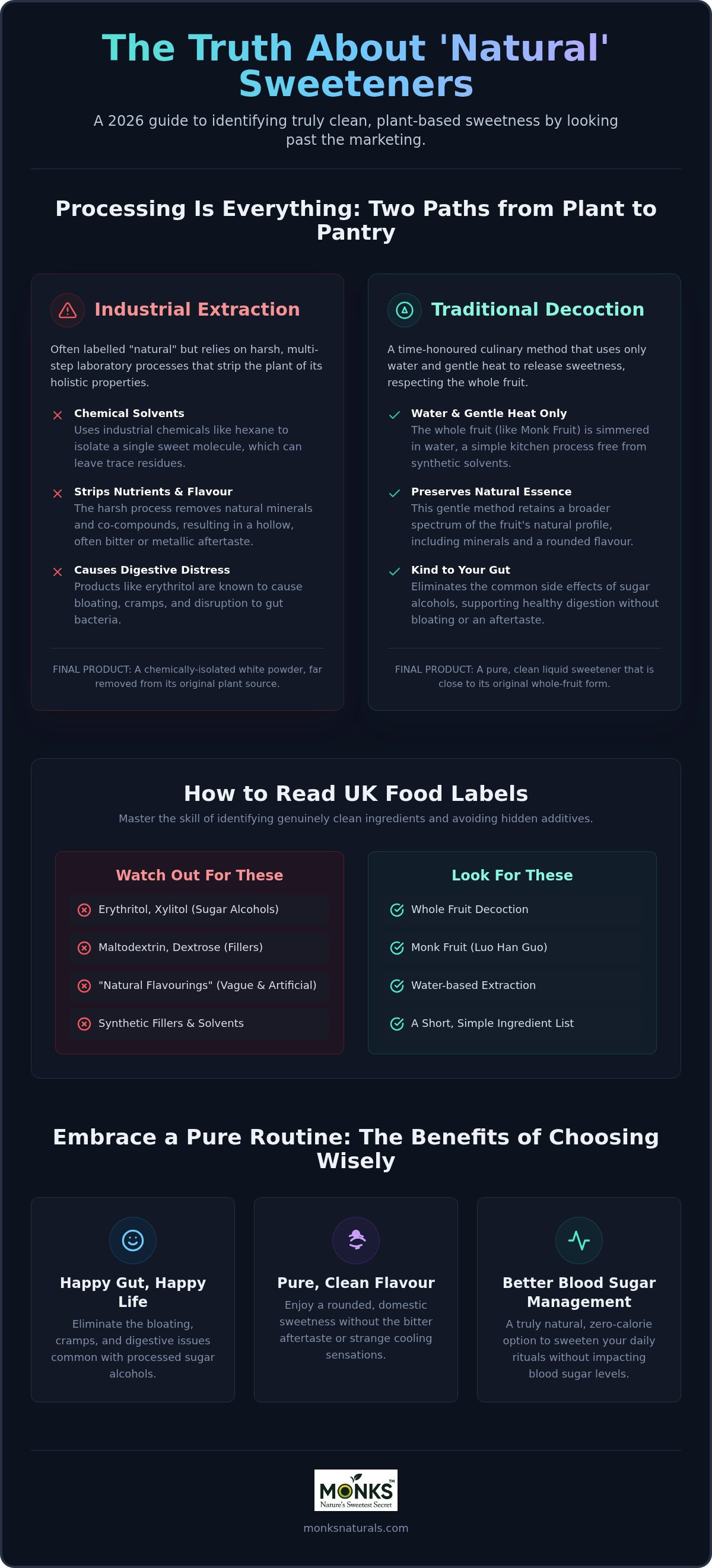
Many popular sweeteners use harsh chemicals like hexane to isolate sweetness. This industrial process is efficient for mass production but leaves behind a hollow product. It strips away the natural minerals, alters the flavour profile, and introduces trace residues. The word "natural" becomes a marketing tool rather than a promise of purity. It's a shortcut that prioritises profit over your well-being. By choosing products that avoid these harsh solvents, you ensure your daily rituals remain truly clean.
Sugar Alcohols: Natural Source, Chemical Process?
Take erythritol as an example. It exists in pears and grapes, but the white powder in your cupboard isn't made by crushing fruit. It's often produced by fermenting corn starch through a multi-step industrial process. Whilst it's technically "plant-based," it's far from a natural sweetener without chemicals in its final form. This heavy processing often leads to common side effects:
- Persistent digestive bloating.
- Unpleasant stomach cramps.
- Disrupted gut bacteria.
These symptoms are your body's way of reacting to a substance it doesn't recognise. When we choose "simmered, not synthesised," we support our digestion and enjoy a cleaner taste. True wellness starts with understanding what's absent from our food. It's about finding products that fit into your health-forward lifestyle without the unwanted side effects of industrial science.
Understanding the Cleanest Extraction Methods: Decoction vs Extracts
The UK health scene is shifting. We're moving away from laboratory-made powders and returning to time-honoured culinary wisdom. Choosing a natural sweetener without chemicals often means looking back at how plants were traditionally prepared. Whilst industrial extracts focus on isolating a single molecule, traditional methods value the integrity of the whole fruit.
Decoction is a simple kitchen process. It involves simmering the whole fruit in water for several hours. This gentle heat releases mogrosides, the sweet compounds found in monk fruit, without the need for high-pressure machinery or synthetic solvents. It's a method that prioritises patience over speed, ensuring the final product remains as close to nature as possible.
What is Monk Fruit Decoction?
Historically known as Luo Han Guo, monk fruit has been a staple in Traditional Chinese Medicine for centuries. It was prized for its cooling properties and clean sweetness. Unlike modern industrial methods that use high-pressure chemical isolation to create a white powder, decoction uses only water and heat. This process respects the fruit’s history and preserves its natural essence. You can learn more about this process in our Monk Fruit Decoction: The Traditional Guide to Clean Sweetening in 2026. By choosing decoction, you're embracing a "simmered, not synthesised" approach to your daily wellness.
The Science of Solvent-Free Sweetness
Water-based extraction is the gold standard for anyone seeking a natural sweetener without chemicals. Industrial extracts often rely on chemical solvents to strip the sweetness from the plant, which can leave a lingering metallic or bitter aftertaste. Decoction avoids this entirely. Because the fruit is simmered whole, the resulting liquid contains a broader spectrum of the plant's natural profile. This leads to a more rounded, domestic flavour that feels familiar rather than artificial.
- Retains the fruit's natural essence and minerals.
- Eliminates the need for hexane or other synthetic solvents.
- Avoids the sharp, chemical aftertaste of pure white extracts.
This traditional approach results in a product that is nutrient-dense and kind to your body. It fits effortlessly into a modern lifestyle, offering a refined way to sweeten your morning tea or coffee. If you're looking for a pure alternative, explore our traditional monk fruit drops for a cleaner, more authentic taste.
Comparing Natural Sweeteners: Flavour, Processing, and Gut Health
Not all plant-based options are created equal. Some leave you with a metallic tang, whilst others cause a rumbly, uncomfortable stomach. When you search for a natural sweetener without chemicals, you're looking for three things: stability, comfort, and flavour. For the millions of people in the UK managing blood sugar or sensitive digestion, these details aren't just preferences. They're essentials.
Most supermarket sweeteners fall into three categories. Each has a different impact on your body and your palate:
- Stevia: High-intensity sweetness, often chemically isolated, frequently contains hidden fillers.
- Erythritol: A sugar alcohol that creates a distinct "cooling" sensation and can cause digestive distress.
- Monk Fruit Decoction: Whole-fruit simmering that remains gut-friendly and maintains a zero glycaemic index.
For UK diabetics, the glycaemic index (GI) is a vital metric. Many "natural" blends use maltodextrin as a filler, which has a GI of 85 to 105. This is actually higher than table sugar, which sits at 65. Choosing a pure decoction ensures your blood sugar remains stable without the hidden spikes caused by industrial bulking agents.
Stevia and the Bitter Aftertaste Debate
Stevia comes from a leaf, but the commercial version is usually Rebaudioside A. This is a chemically isolated compound. In its pure form, it often carries a sharp, licorice-like bitterness. To mask this, brands frequently add dextrose or "natural flavourings." These additions move the product further away from being a natural sweetener without chemicals. It's a compromise that often feels artificial and can disrupt your clean-eating goals.
Erythritol and Gut Health: The Bloating Factor
Have you ever noticed a strange, minty coldness when eating a sugar-free treat? This "cooling effect" happens because erythritol absorbs heat from its surroundings as it dissolves. Whilst it's calorie-free, it isn't always kind to your middle. Because sugar alcohols aren't fully absorbed by the body, they can pull water into the intestines or ferment in the gut. This leads to the all-too-common bloating and discomfort that many health-conscious shoppers recognise.
Choosing an erythritol-free alternative allows you to enjoy your daily tea or coffee without the physical cost. It's about finding a routine that feels as good as it tastes. You can explore the specific benefits of this approach in our detailed comparison of Monk Fruit Decoction vs Extract: Which is the Best Clean Sweetener in 2026?. By prioritising traditional simmering, you're choosing a path that respects your digestion and your health.
How to Identify Truly Clean Ingredients on UK Food Labels
Turn the packet over. The front of the box is for marketing; the back is for the truth. Identifying a natural sweetener without chemicals requires a discerning eye. It's about spotting what's been added to "bulk out" the product. Most shoppers scan for calories, but the ingredient list is where the real story lives. Scan the label. Look for red flags. Avoid the fillers.
Red flag ingredients are easy to find once you know what to look for. Maltodextrin and dextrose are the most common offenders. These are cheap starches that spike blood sugar and disrupt your wellness goals. If you see these, the product isn't truly clean. They're often used to create "spoonable" textures, but this convenience comes at a cost to your health.
The "Spoonable" trap is a common pitfall. Pure plant extracts are hundreds of times sweeter than sugar. They're difficult to measure in a domestic kitchen. To solve this, brands add massive amounts of filler to mimic the volume of sugar. In many cases, "spoonable" simply means "filled with chemicals" or industrial starches. You're often buying a bag of corn-based fillers with only a tiny dusting of actual sweetener.
Spotting the Hidden Fillers
Pure monk fruit is incredibly potent. To create a powder that behaves like sugar, a clean bulking agent is necessary. Most brands choose maltodextrin because it's inexpensive. However, better alternatives exist. Soluble tapioca fibre is a superior choice. It's a gut-friendly prebiotic that provides texture without the insulin spike. It keeps your routine clean and your digestion happy. You can explore the benefits of this pairing in The Ultimate Guide to Monk Fruit with Tapioca Fibre: A Clean British Sweetener.
Decoding "Natural Flavourings" in the UK
The UK Food Standards Agency has specific rules for "natural" labels. These rules are surprisingly broad. A "natural flavouring" only needs to originate from a natural source. It doesn't mean the final compound is chemical-free. It can still be processed with synthetic solvents or combined with hidden carriers. A single-ingredient list is always the gold standard. Choose transparency over marketing jargon. If you don't recognise an ingredient, your body likely won't either. It's time to switch to a cleaner, chemical-free sweetness for your daily rituals.
Embracing a Pure Routine with Traditionally Prepared Monk Fruit
Integrating a natural sweetener without chemicals into your life shouldn't feel like a chore. It's about enhancing the rituals you already love. Whether it's your first cup of Earl Grey or a Sunday afternoon sponge cake, the transition is effortless. Traditional decoction provides a rounded sweetness that complements British palates perfectly. It avoids the sharp, metallic tang of industrial extracts. It simply fits. You don't have to sacrifice flavour to protect your health.
Replacing sugar in your daily routine is a simple way to manage blood sugar without the digestive cost of sugar alcohols. Many people find that once they switch to a simmered monk fruit alternative, the artificial taste of supermarket sweeteners becomes unpalatable. This is because your body recognises the whole-fruit profile. It's a cleaner experience for your taste buds and your gut.
From Morning Coffee to Evening Matcha
Convenience often comes with a chemical cost, but it doesn't have to. Liquid drops offer a portable solution for sweetness on the go. They dissolve instantly in hot or cold drinks, leaving no residue or gritty texture. You can find out more in our Pure Monk Fruit Drops UK: The 2026 Guide to Clean Liquid Sweetening. For home baking, our spoonable powder behaves just like sugar. It provides the bulk needed for traditional recipes whilst keeping your treats keto-friendly and vegan. It's versatile. It's reliable. It's pure.
The MONKS Commitment to Purity
We believe in the "simmered, not synthesised" narrative. This is why we choose traditional decoction for our Monk Fruit Sweetener Powder. By simmering whole fruit, we capture a depth of flavour that industrial labs cannot replicate. Our process respects the fruit's integrity and your body's needs. We've mastered this niche to help you navigate your wellness journey with ease. Our promise is simple and transparent:
- No erythritol or sugar alcohols.
- No maltodextrin or corn-based fillers.
- No synthetic solvents or harsh chemicals.
Choosing a natural sweetener without chemicals is an investment in your long-term wellness. It supports steady energy levels and a happy gut. It allows you to enjoy the sweetness of life without the bloat or the bitterness. Experience the difference of whole-fruit sweetness for yourself at monksnaturals.com. Welcome to a purer way of living.
Reclaiming Your Daily Sweetness
Choosing a cleaner lifestyle shouldn't mean compromising on the simple joys of a morning brew or a home-baked treat. You now have the tools to look past misleading marketing and identify a truly natural sweetener without chemicals by prioritising traditional decoction over industrial extracts. Remember that "simmered, not synthesised" is the gold standard for your gut health and your palate. By avoiding hidden fillers like maltodextrin and the bloating associated with sugar alcohols, you're choosing a path of minimalist clarity.
As the UK's leading monk fruit brand, MONKS is dedicated to this transparent approach. We use clean label soluble tapioca fibre and a strictly erythritol-free formula to ensure every drop and spoonful remains kind to your body. It's time to simplify your pantry and enjoy the ease of better choices that fit effortlessly into your daily routine.
Experience the purity of traditional decoction. Shop the MONKS range today and discover how refined whole-fruit sweetness can be. Your journey toward a more mindful, chemical-free kitchen starts here.
Frequently Asked Questions
Is there a truly natural sweetener that is not processed with chemicals?
Yes, monk fruit decoction is a truly natural sweetener without chemicals because it uses traditional simmering. Unlike industrial extracts that rely on synthetic solvents like hexane, decoction involves only water and whole fruit. This method preserves the plant's integrity and avoids laboratory-made additives. It's a refreshing alternative for anyone tired of scanning labels for hidden industrial processes and seeking a more transparent, culinary approach to their health.
What is the healthiest sugar substitute for the gut?
Monk fruit decoction with soluble tapioca fibre is the healthiest choice for gut stability. Many alternatives use sugar alcohols like erythritol or xylitol, which often cause bloating and digestive distress because they aren't fully absorbed. In contrast, soluble tapioca fibre acts as a prebiotic, feeding beneficial gut bacteria whilst maintaining a zero glycaemic index. It's a gentle, domestic solution that supports your microbiome without the rumbly side effects of industrial polyols.
Why do some natural sweeteners have a chemical aftertaste?
That sharp, metallic or bitter aftertaste usually comes from high-pressure chemical isolation or synthetic solvents. When a plant is stripped down to a single molecule, like Rebaudioside A in stevia, it loses the natural minerals and compounds that round out the flavour. Choosing a decoction-based natural sweetener without chemicals ensures you get a domestic, culinary taste profile. This "simmered, not synthesised" approach keeps your morning rituals tasting authentic, pure, and balanced.
Can I use monk fruit decoction if I am on a keto diet?
Yes, monk fruit decoction is perfectly suited for a keto lifestyle. It contains zero net carbohydrates and does not cause the insulin spikes often associated with sugar or maltodextrin-based fillers. Because it maintains a zero glycaemic index, it helps you stay in ketosis whilst enjoying your favourite treats. It's a clean, plant-based way to manage your macros without relying on the industrial fillers found in many common supermarket keto products.
Is erythritol considered a chemical sweetener?
Whilst erythritol is found in some fruits, the commercial version is an industrially fermented product. Most mass-produced erythritol undergoes a multi-step chemical process to transform corn starch into a white powder. It's often categorised as a sugar alcohol rather than a whole-food sweetener. For those seeking a truly chemical-free routine, avoiding these lab-made polyols is essential to prevent the "cooling" aftertaste and common digestive issues like persistent bloating.
How is monk fruit decoction different from monk fruit extract?
The primary difference lies in the extraction method. Monk fruit extract is typically a concentrated powder made through chemical solvents and high-pressure filtration to isolate mogroside V. Decoction is a traditional simmering process that uses only water to release the fruit's sweetness. This results in a more nutrient-dense product that retains the fruit's natural essence. It feels like a boutique specialist's secret rather than a mass-produced, heavily processed industrial ingredient.
Are there any UK regulations on "natural" sweeteners?
The UK Food Standards Agency regulates how the term "natural" is used on food labels. However, these rules can be broad, allowing ingredients to be called natural as long as they originate from a natural source. This doesn't account for the industrial solvents or high-heat processes used during manufacturing. To find a truly clean option, you must look past the front of the packet and examine the ingredient list for hidden fillers.
What is the best chemical-free sweetener for baking?
Traditionally prepared monk fruit powder with soluble tapioca fibre is the best chemical-free choice for baking. It provides the necessary bulk and texture to mimic sugar without the insulin spike or the metallic tang of stevia. Because it's heat-stable, it won't lose its sweetness in the oven. It allows you to recreate classic British recipes with minimalist clarity, ensuring your home kitchen remains a sanctuary of health and authentic flavour.


