

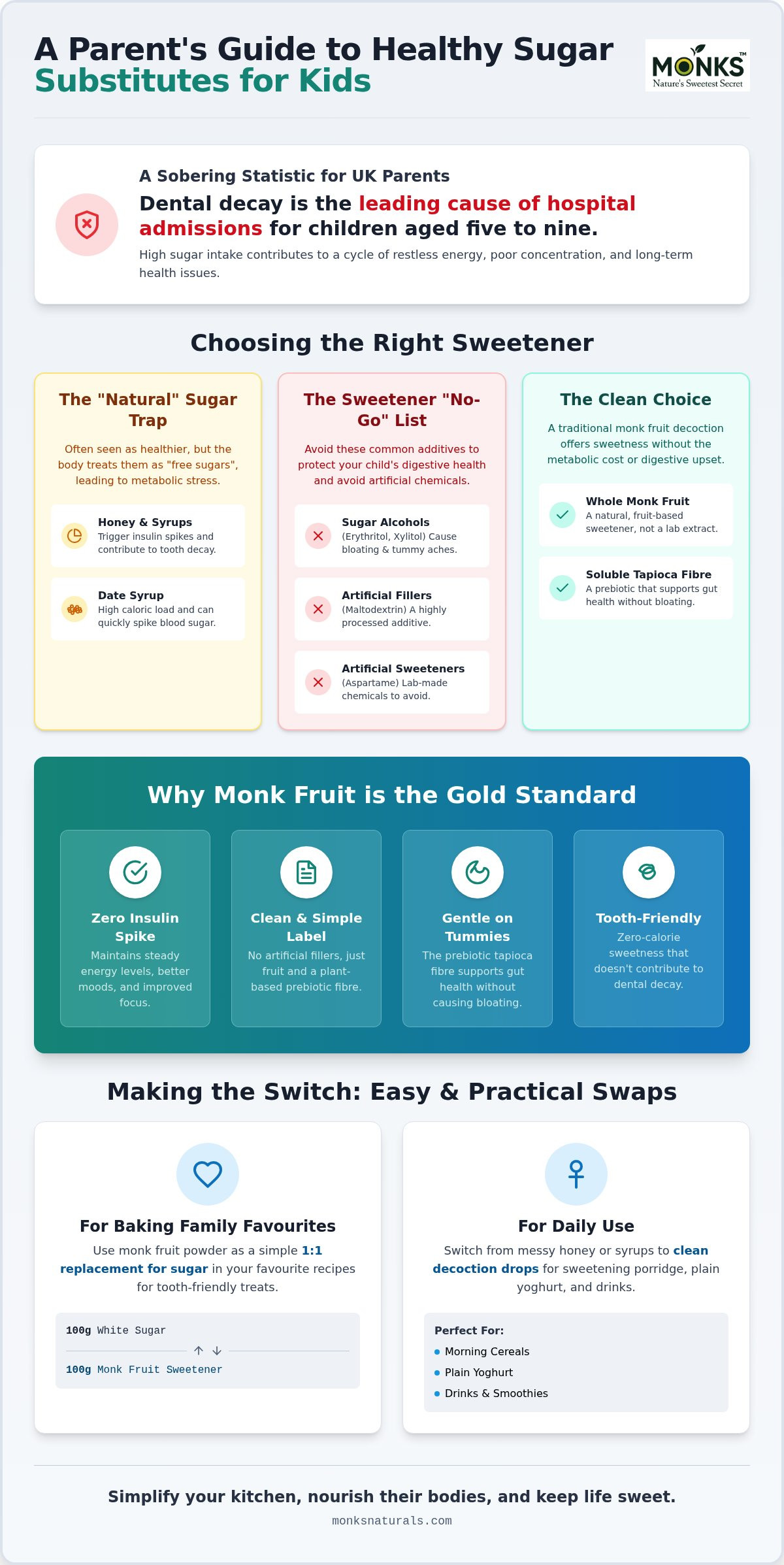
Dental decay is currently the leading cause of hospital admissions for children aged five to nine in the UK. It is a sobering statistic for any parent searching for a truly healthy sugar substitute for kids amongst a sea of hidden ingredients. You want your family to enjoy sweetness without the sugar crashes, the hyperactivity, or the fear of artificial chemicals like aspartame. It is often difficult to feel confident when many alternatives cause digestive upset or leave a bitter aftertaste that fussy eaters quickly reject.
There is a better way to sweeten their day. You can reduce your child’s sugar intake safely using clean, erythritol-free alternatives that actually taste like the real thing. This guide will show you how to use a traditional monk fruit decoction as a simple 1:1 swap in your favourite family recipes. We will explore how to protect their gut health, satisfy their cravings, and make better choices effortless. It is time to simplify your kitchen, nourish their bodies, and keep life sweet.
Key Takeaways
- Identify a healthy sugar substitute for kids that prioritises purity, transparency, and long-term metabolic health.
- Avoid common sugar alcohols like erythritol and xylitol to prevent digestive discomfort, bloating, and tummy aches.
- Master the 1:1 baking swap using monk fruit powder to create tooth-friendly treats that satisfy even the fussiest eaters.
- Switch from honey or syrups to mess-free decoction drops for sweetening porridge, plain yoghurt, and morning cereals.
- Embrace a clean-label approach that excludes maltodextrin, artificial fillers, and lab-isolated extracts for a gut-friendly kitchen.
Why Finding a Healthy Sugar Substitute for Kids Matters
Sugar often hides in plain sight. It shapes how children learn, play, and rest. High intake creates a cycle of restless energy followed by sharp fatigue. This disrupts concentration during school hours and affects evening wind-down routines. Finding a healthy sugar substitute for kids helps break this pattern. It allows for steady energy, better focus, and calmer afternoons.
Understanding the difference between sugars is essential for every parent. Intrinsic sugars occur naturally in whole fruits and milk. Free sugars include anything added to food, alongside the sugars found in fruit juices, honey, and syrups. Reducing free sugars early helps children develop a palate that appreciates subtle, natural flavours. It sets a standard for their future relationship with food.
The Metabolic Impact of Sugar on Growing Bodies
Traditional glucose and fructose cause rapid blood sugar spikes. The body responds with an insulin surge, leading to an inevitable crash. These fluctuations affect mood and behaviour. In the UK, dental decay remains the leading cause of hospital admissions for children aged five to nine. Protecting their teeth starts with reducing acidity and sweetness. Glycemic load represents the total impact of a food portion on a child's blood glucose levels. Low-load snacks prevent the metabolic stress associated with high-sugar diets.
The "Natural" Sugar Trap: Honey, Agave, and Date Syrup
Many parents choose honey or maple syrup, believing they are superior to white sugar. Whilst they contain trace minerals, the body still treats them as free sugars. They trigger a similar insulin response and contribute to tooth decay. Even date syrup carries a high caloric load and can spike blood sugar quickly. Choosing a clean Sugar substitute like monk fruit is a healthy sugar substitute for kids because it provides sweetness without the metabolic cost.
Selecting a refined alternative is about more than just avoiding calories. It is about gut health, stable moods, and long-term habits. You can explore pure options at monksnaturals.com to begin the transition. These small swaps today build the foundation for a healthier lifestyle tomorrow. They make wellness feel like a natural part of your daily ritual.
What is the Best Sugar Alternative for Children?
Choosing the right sweetener for your family requires a careful balance of safety and flavour. A truly healthy sugar substitute for kids must meet three essential criteria. It should have a clean label. It must be gentle on young tummies. It needs to taste like the sugar they are used to. Parents want an option that feels like food, not a chemical experiment. By 2026, monk fruit has emerged as the gold standard for families seeking this balance.
Unlike lab-made options, monk fruit is a small melon-like fruit with a long history of use. Not all monk fruit products are created equal. Most commercial brands use isolated extracts created in a laboratory. These often have a bitter, lingering finish. A traditional decoction method involves simmering the whole fruit to maintain its natural, well-rounded, and familiar sweetness. This process preserves the integrity of the fruit. It avoids the harsh chemical processing often found in Artificial sweeteners and other sugar substitutes.
The Benefits of Monk Fruit for Families
Monk fruit provides zero-calorie sweetness without triggering a rise in insulin. Choosing a healthy sugar substitute for kids like monk fruit allows you to maintain steady moods, consistent energy, and better focus. Parents often prefer it because it is fruit-based rather than synthetic. It fits perfectly into a modern, health-forward lifestyle. For a deeper look at blood sugar balance, see our Natural Low Glycemic Sweetener guide. It is a simple way to protect their metabolic health without sacrificing the treats they love.
Why Soluble Tapioca Fibre is a Parent’s Best Friend
Pure monk fruit is incredibly sweet. This makes it difficult to measure for home baking or Sunday treats. Soluble tapioca fibre solves this problem. It adds the "spoonable" volume needed for a 1:1 swap in your family recipes. This fibre is also a prebiotic. It supports digestive health in young children without the bloating associated with sugar alcohols. It gives the sweetener a familiar mouthfeel and body. This prevents the "thin" or watery taste often found in pure liquid sweeteners. You can explore our clean-label range to see how easy these daily swaps can be.
The Sweetener "No-Go" List: What to Avoid for Kids
Not all sugar alternatives are created equal. Many supermarket snacks labelled "no added sugar" contain ingredients that disrupt a child's delicate system. Maltodextrin is a common filler. Its glycemic index is actually higher than table sugar. This causes the very blood sugar spikes parents try to avoid. Other sweeteners like xylitol create a distracting "cooling effect" in the mouth. This sensation often ruins the flavour of home-baked treats or warm porridge. Finding a truly healthy sugar substitute for kids requires looking closely at the back of the packet.
Hidden chemicals often lurk in school lunchboxes. Sucralose and acesulfame K are frequently added to "diet" yoghurts and fruit pots. These artificial additives can alter a child's perception of sweetness. They make whole fruits taste bland by comparison. Wellness-led parents are increasingly moving away from these synthetic options. They prefer traditional, fruit-based alternatives that respect a child's developing palate.
Erythritol and the Gut Microbiome
Sugar alcohols like erythritol and xylitol are often poorly tolerated by young children. Their bodies cannot fully absorb these compounds. This leads to fermentation in the gut. The result is often bloating, gas, or sudden digestive upset. Checking for an Erythritol-Free Sweetener UK guide is a vital step for any parent. Avoiding these alcohols protects the developing microbiome. It ensures that a healthy sugar substitute for kids doesn't lead to unnecessary tummy aches.
Artificial Sweeteners vs. Natural Decoctions
There is a vast difference between lab-isolated chemicals and traditional methods. Lab-made sweeteners like aspartame are falling out of favour as families question their long-term impact. You may find yourself asking, Are Sugar Substitutes Safe for Kids? whilst browsing the aisles. A whole-fruit decoction offers a cleaner path. By simmering the fruit slowly, the natural essence is preserved without the need for harsh solvents. This traditional simmering method maintains a clean flavour profile. It mimics the rounded sweetness of sugar without the metallic or chemical aftertaste associated with synthetic powders.
Practical Ways to Use Monk Fruit in Your Child’s Routine
Integrating a healthy sugar substitute for kids into a busy household doesn't have to be a chore. It is about small, consistent shifts in your kitchen ritual. These changes allow your family to enjoy familiar flavours whilst supporting their long-term wellness. Success lies in making the transition feel like a discovery rather than a restriction.
Hydration is often an overlooked source of hidden sugar in a child's diet. You can easily create sugar-free lemonade or squash at home by combining sparkling water, fresh citrus, and a few decoction drops. For school lunchboxes, consider reducing sugar in homemade muffins or energy balls. This ensures your children have a steady supply of energy without the afternoon slump often caused by supermarket snacks.
Simple Breakfast Wins
Morning routines set the tone for the day. Liquid decoction drops offer instant, mess-free sweetening for hot cereals like porridge or Weetabix. They blend seamlessly into liquids, unlike honey which can clump in cold milk. You can swap honey on toast for a light drizzle of monk fruit drops or stir them into plain yoghurt with fresh berries for a quick, three-ingredient breakfast bowl.
Family Baking Without the Sugar Crash
Sunday baking is a cherished family ritual. Achieving the right texture without refined sugar is often a challenge for parents. Using Monkfruit decoction with soluble tapioca fibre Powder provides a reliable 1:1 baking swap. Monk fruit is heat-stable, meaning it won't lose its sweetness or develop a bitter aftertaste in the oven.
The addition of soluble tapioca fibre is crucial for maintaining moisture. It helps preserve the soft "chew" in cookies and the light crumb in sponges. This ensures your treats taste like the real thing without the metabolic cost. It is a healthy sugar substitute for kids that respects the culinary standards of your home kitchen. You can browse our full range of clean-label sweeteners to find the perfect match for your family's favourite recipes.
Why MONKS is the Clean Choice for British Families
MONKS represents a fundamental shift in how British families approach sweetness. We focus on transparency. Our mission is to provide a healthy sugar substitute for kids that is fundamentally clean and honest. We avoid the lab-isolated extracts and chemical solvents that dominate the modern market. Instead, we honour a tradition that prioritises the integrity of the whole fruit. This commitment ensures your family enjoys a product that is entirely free from erythritol, maltodextrin, and artificial fillers.
Our approach supports the UK's collective journey toward better metabolic health. By removing the hidden additives often found in "diet" foods, we help parents reclaim control over their family's nutrition. We believe wellness should be simple. It shouldn't feel like a complex lifestyle overhaul or a restrictive chore. It is about making better choices effortless and accessible for every household. It's time to bring purity back to the kitchen table.
From Whole Fruit to Your Kitchen
The secret to our superior flavour lies in the simmering process. We utilise a traditional Chinese decoction method. This involves slow-simmering the whole monk fruit to capture its natural, well-rounded essence. This gentle method preserves the authentic taste that children naturally enjoy. Our powder is specifically formulated to be "spoonable" for easy measurement in your favourite recipes. It integrates perfectly into your daily ritual without the mess or confusion of liquid-only alternatives. For a deeper look at our unique process, read The Ultimate Guide to Monk Fruit with Tapioca Fibre. It explains why this clean-label combination is the premier choice for a healthy sugar substitute for kids in a modern British kitchen.
Join the Clean Sweetening Revolution
Starting your family's journey is effortless with The Monks Set. This curated collection includes both our powder and drops to cover every possible culinary need. We encourage you to take the "Monks Challenge". Try swapping your usual sweeteners for our traditional decoction for just one week. Observe the steady energy levels in your home. Feel the difference in your own morning routine. You can shop the MONKS range today to begin this mindful transition toward purity. Establishing a sugar-free household today builds a foundation of metabolic health that will benefit your children for a lifetime.
Embrace a Sweeter, Cleaner Future for Your Family
Protecting your child’s health starts with the simple choices you make in the kitchen. You now understand why avoiding sugar alcohols and artificial fillers is vital for maintaining a happy, settled tummy. By choosing a traditional fruit decoction, you provide the sweetness they crave without the metabolic stress of refined sugars. Finding a healthy sugar substitute for kids allows you to preserve cherished family rituals whilst prioritising long-term wellness.
Our unique 1:1 baking swap makes it easy to recreate favourite treats without the guesswork. We maintain a traditional fruit decoction method to ensure every drop and spoonful tastes like the real thing. There is no erythritol, no bloating, and no chemical aftertaste. It is just pure, mindful sweetness rooted in nature. You can transform your morning porridge, Sunday cakes, and school lunchboxes with ease. It is time to simplify your pantry and nourish their growing bodies with confidence.
Start your family’s sugar-free journey with the MONKS range and experience the clarity of clean-label living. You have the tools to build a vibrant, sugar-free household that feels completely natural. Keep life sweet, keep it simple, and enjoy the journey together.
Frequently Asked Questions
Is monk fruit sweetener safe for toddlers and young children?
Monk fruit is a safe, plant-based option for toddlers and young children. Unlike artificial sweeteners, our traditional decoction contains no synthetic chemicals or harsh lab-isolated extracts. It provides a clean way to sweeten food without the metabolic spikes of sugar. Health experts suggest prioritising water and plain foods for those under two. This helps avoid developing a strong preference for intense sweetness too early in their life.
Can I use monk fruit powder to replace sugar in my child’s birthday cake?
You can use our monk fruit powder as a direct 1:1 replacement for sugar in birthday cakes. The inclusion of soluble tapioca fibre ensures the sponge maintains its moisture and structure during baking. It is heat-stable and won't lose its sweetness in the oven. This makes it an ideal healthy sugar substitute for kids who want to enjoy celebrations without the typical sugar crash.
Does monk fruit cause bloating or diarrhoea in kids like other sweeteners?
Monk fruit itself does not cause digestive upset. Most digestive issues in sugar-free products come from sugar alcohols like erythritol or xylitol. MONKS products are entirely free from these alcohols. We use soluble tapioca fibre instead. This is a prebiotic that is much gentler on young tummies. This ensures your child can enjoy sweet treats without the discomfort of bloating or sudden digestive distress.
Is monk fruit better for my child’s teeth than honey or sugar?
Monk fruit is significantly better for your child’s teeth because it does not contribute to tooth decay. Sugar and honey provide fuel for the bacteria in the mouth that produce acid and erode enamel. Monk fruit is non-cariogenic, meaning it won't feed those bacteria. Switching to a tooth-friendly sweetener is a practical step toward reducing the risk of cavities and hospital admissions for dental issues.
At what age can I introduce sugar substitutes to my child’s diet?
Current UK guidelines suggest avoiding both sugar and sweeteners for children under two years old. This period is critical for establishing a preference for unsweetened, whole foods. After this age, monk fruit can be introduced as an occasional substitute within a balanced diet. It serves as a mindful way to manage sweetness whilst ensuring your child doesn't become overly reliant on high-glucose snacks and drinks.
How much monk fruit sweetener can a child safely consume daily?
There is no specific UK-mandated limit for monk fruit, but moderation is always the best approach for a child’s diet. Regulatory bodies have reviewed monk fruit extracts and found them safe for general consumption. Using it to replace sugar in one or two daily snacks or drinks is a sensible way to stay within healthy bounds whilst providing a healthy sugar substitute for kids.
Will my child notice the taste difference if I swap sugar for monk fruit?
Most children won't notice a significant difference because our traditional decoction method preserves a rounded, natural sweetness. Unlike lab-isolated extracts or stevia, it doesn't have a bitter or metallic aftertaste. The soluble tapioca fibre in our powder also provides a familiar mouthfeel. This makes it much easier to satisfy fussy eaters who might otherwise reject "diet" versions of their favourite home-baked treats or cereals.
Is monk fruit considered a "natural" food according to UK standards?
Monk fruit is a plant-based, fruit-derived sweetener categorised as a safe food additive in the UK. MONKS goes further by using a traditional simmering process rather than chemical extraction. This keeps the product closer to its whole-fruit origin. It fits perfectly into a clean-label lifestyle for parents who want to avoid ultra-processed ingredients whilst still enjoying a touch of sweetness in their daily routine.


