

That "natural" pouch in your kitchen cupboard might be hiding a laboratory secret. You've likely swapped sugar for a keto sweetener UK shops promote, only to deal with a bitter aftertaste, strange cooling sensations, or uncomfortable bloating. It's exhausting to scrutinise every label for hidden maltodextrin while just trying to enjoy your favourite morning tea. You want a choice that's simple, pure, and kind to your body.
We agree that your wellness routine shouldn't feel like a chemistry experiment. This 2026 guide promises to reveal the cleanest zero-calorie natural sweeteners available in the UK and show you exactly how to identify the fillers lurking in your favourite alternatives. We'll compare stevia, erythritol, and monk fruit decoctions to help you find a label that's clear, honest, and easy. You'll learn how to avoid artificial chemicals, understand the latest 2026 food standards, and finally find a sweetener that fits your lifestyle. It's time to stir, sip, and enjoy a better way to sweeten your daily rituals.
Key Takeaways
- Identify hidden fillers like maltodextrin that compromise your health goals. Learn to read labels with confidence and clarity to avoid hidden glycemic spikes.
- Find the ideal keto sweetener UK kitchens need to prevent the bloating often caused by sugar alcohols. Prioritise digestive comfort without sacrificing the sweetness you love.
- Compare the potency of monk fruit and stevia against traditional table sugar. Understand the science of plant-based molecules to better replicate your favourite recipes.
- Master the art of sugar conversion for every culinary need. Know exactly when to reach for liquid drops in your tea or spoonable powders for home baking.
- Uncover why traditional monk fruit decoction offers a cleaner, more rounded flavour. Choose mindful preparation methods that value purity over harsh chemical extraction.
What is a Zero Calorie Natural Sweetener?
A zero-calorie natural sweetener is a plant-derived compound that delivers sweetness without a metabolic footprint. Unlike traditional carbohydrates, these botanical molecules pass through the body without triggering an insulin response or adding to your energy intake. They represent a sophisticated shift toward purity and transparency in our daily diets. For those searching for a clean keto sweetener UK markets provide, the priority has moved from simple calorie reduction to ingredient integrity. We now look for sweetness that supports our health goals rather than complicating them.
Distinguishing between "natural" and "artificial" is essential for a mindful kitchen. A synthetic sugar substitute like aspartame or acesulfame-K is a laboratory creation designed to mimic sweetness. Natural high-intensity sweeteners are different; they are found in the leaves, fruits, and roots of plants. The sweetening power comes from specific active agents: steviol glycosides in stevia and mogrosides in monk fruit. These compounds are often hundreds of times sweeter than table sugar. They allow for a light, airy sweetness that remains grounded in nature.
The Evolution of Sugar Alternatives in the UK
The British journey with sugar alternatives began with industrial saccharin. It was a functional solution, but it often lacked the warmth and flavour of real food. By 2026, the landscape has transformed entirely. We've moved toward gut-health-conscious choices that respect our internal biology. Modern consumers are stepping away from sucralose and aspartame in favour of plant-based options that offer a more rounded profile. This evolution reflects a broader wellness trend: the desire for ingredients that are minimally processed, easily understood, and traditionally prepared. We want sweetness that feels domestic, wholesome, and refined.
Regulatory Standards and Safety
Safety and clarity guide the UK's approach to food labelling. The Food Standards Agency (FSA) ensures that every sweetener undergoes a thorough safety assessment before reaching our cupboards. A significant milestone occurred in June 2024 when non-concentrated monk fruit decoctions were reclassified, moving them away from "novel food" restrictions. This allows for wider access to traditional, water-extracted sweetness. When you see "Zero Calorie" on a UK label, it confirms a product has no significant glycemic impact. For diabetics and keto followers, this non-glycemic response is vital. It ensures that your morning tea or home-baked treats won't disrupt your blood sugar levels or metabolic state.
The Science of Natural Sweetness: How Plants Sweeten
Your tongue's sweet receptors don't actually require sugar to send a signal to your brain. They respond to specific molecular shapes. When you choose a clean keto sweetener UK shops provide, these plant molecules bind to your receptors and trigger a sweet sensation without any glucose. The truth about sweeteners is that their safety and metabolic impact depend heavily on how these molecules are retrieved from the original plant source.
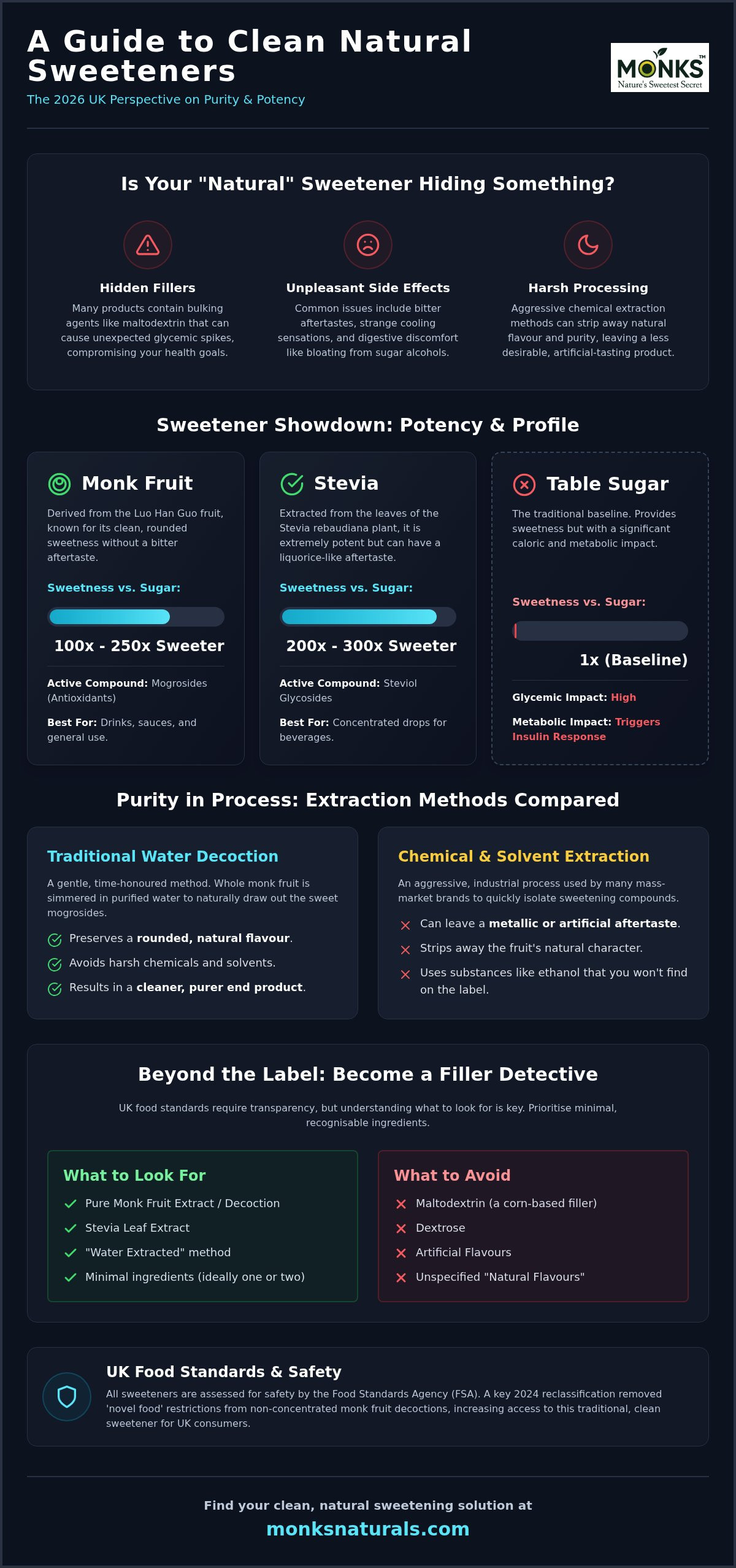
Stevia and monk fruit are remarkably potent compared to traditional white sugar. Stevia is typically 200 to 300 times sweeter than table sugar, whilst monk fruit ranges from 100 to 250 times sweeter. This high intensity means you only need a tiny amount to achieve the same sweetness as a full spoonful of sugar. It allows for a minimalist approach to sweetening that doesn't overwhelm your daily routine with unnecessary volume.
Extraction methods vary significantly across the industry. Many mass-market brands use chemical solvents or ethanol to isolate specific sweet compounds. This aggressive approach can leave behind a metallic or artificial note that lingers on the palate. In contrast, traditional water decoction uses gentle heat and time to draw out the sweetness naturally. Mogrosides are the antioxidant-rich compounds found in monk fruit.
Monk Fruit (Luo Han Guo): The Ancient Decoction
The traditional Chinese method involves gently simmering whole monk fruit in water. This slow, mindful process creates a decoction that maintains a complex, rounded flavour profile. Isolation methods often strip away the fruit's natural character, but simmering preserves it. This technique avoids the harsh chemical processing found in many modern alternatives. You can explore this process further in our Monk Fruit Decoction: The Traditional Guide.
Stevia: The Leaf-Based Powerhouse
Stevia comes from the leaves of the Stevia rebaudiana plant. Its sweetness is derived from steviol glycosides extracted through a multi-step process. A common complaint with lower-quality stevia is a lingering bitter or liquorice-like aftertaste. This often happens when the extraction focuses solely on certain glycosides that don't play well with our taste buds. In coffee or tea, monk fruit often provides a cleaner finish than stevia, which can sometimes clash with the natural tannins in your brew. For a more balanced morning ritual, consider trying a pure monk fruit alternative that avoids these bitter notes.
Beyond the Label: Identifying Fillers and Additives
Your favourite keto sweetener UK choice might be hiding a laboratory secret. Because high-intensity extracts like monk fruit and stevia are hundreds of times sweeter than sugar, you only need a tiny amount for your tea. To make these products "spoonable" for baking, manufacturers add bulk. Often, the active sweetener makes up less than 1% of the pouch. The rest is filler. Whilst the front of the pack promises nature, the back often reveals a different story of refined processing and synthetic shortcuts.
Maltodextrin is one of the most common culprits. It is a highly processed starch with a glycemic index that often exceeds table sugar. For anyone on a ketogenic diet, this hidden carbohydrate is a metabolic trap. It can trigger insulin spikes, stall fat burning, and quietly kick you out of ketosis. It is a functional shortcut used to reduce costs, but it compromises the very health goals you are trying to reach.
Erythritol is another frequent addition used to create volume. Whilst it is a sugar alcohol, many users find its "cooling effect" distracting. It creates a strange, cold sensation on the tongue that clashes with warm coffee or delicate bakes. For many, the issues are deeper than taste; erythritol is often linked to digestive bloating and discomfort. We prefer using soluble tapioca fibre as a carrier. It acts as a clean, gut-friendly alternative that provides a natural mouthfeel without the chemical aftertaste or the digestive distress. It keeps your routine simple, comfortable, and pure.
The Erythritol Debate in 2026
Consumer preferences in the UK have shifted significantly. In 2026, mindful shoppers are moving away from sugar alcohols in favour of more traditional preparations. They want sweetness that feels domestic and gentle on the system. Prioritising an Erythritol-Free Sweetener UK has become a primary goal for those who value digestive ease. It is about choosing a refined secret over a mass-market compromise.
Hidden Sugars to Avoid
Learning to read the fine print is your best defence. Always look for dextrose or maltodextrin on the ingredient list. These are essentially sugars in disguise, used as bulking agents to mimic the texture of granulated sugar. They have no place in a truly clean lifestyle. Look for Approved additives and E numbers that align with transparent, clean-label standards. A premium choice should be free from hidden glycemic loads, focusing instead on minimalist purity and honest ingredients.
Practical Resource: How to Use Natural Sweeteners
Finding the right keto sweetener UK for your kitchen requires a simple shift in mindset. You're moving from bulk-heavy sugar to high-intensity botanical extracts. Because pure monk fruit decoction is significantly sweeter than table sugar, your measurements will change. Most spoonable powders are designed to match sugar volume, whilst liquid drops offer a concentrated burst. Always check the specific packaging for the ideal ratio to ensure your tea or cake remains perfectly balanced. Start with a small amount and adjust to your personal preference.
Choosing the right format is essential for the best experience. Liquid drops are the preferred choice for beverages because they dissolve instantly without leaving a grainy residue or cloudy appearance. Spoonable powders, often blended with soluble tapioca fibre, provide the necessary volume for home baking and domestic cooking. Monk fruit maintains stability at high temperatures, ensuring the sweetness doesn't degrade or turn bitter in the oven, making it an essential keto sweetener UK bakers can rely on for consistent results.
Sweetening Your Morning Ritual
Your morning Earl Grey or artisan coffee deserves a sweetener that respects the brew. Liquid drops allow for precise sweetness control, drop by drop, without altering the delicate flavour profile of the tea leaves. Unlike some mass-market alternatives, a clean decoction won't leave a film on the surface of your drink or a lingering chemical aftertaste. It integrates seamlessly into your ritual, providing a rounded sweetness that feels entirely natural. It's a refined secret that transforms your first cup of the day into a mindful moment of wellness.
The Keto Baker’s Toolkit
Achieving the perfect texture in a British sponge cake without real sugar is a delicate art. Sugar provides more than sweetness; it adds moisture, aeration, and structure. When you've switched to a plant-based alternative, you must maintain this moisture balance by adjusting your wet ingredients or adding a touch more fat. Combining monk fruit with almond or coconut flour helps create a tender crumb that feels familiar and satisfying. You can find deeper insights in our Natural Low Glycemic Sweetener Guide. Experiment with different flour blends to find the centre of your perfect bake.
Ready to elevate your kitchen? Browse the MONKS collection to find your perfect daily companion.
Why Monk Fruit Decoction is the Premier Resource
MONKS stands as the UK leader in traditional monk fruit decoction. We don't just provide an alternative; we curate a better ritual for your kitchen. Most mass-market products rely on lab-isolated extracts that strip away the fruit's character. We choose a different path. By simmering whole fruit gently, we maintain a rounded, natural flavour that feels domestic, wholesome, and refined. It is the premier keto sweetener UK choice for those who value quality over quantity. Think of it as a refined secret shared between those who prioritise wellness and purity.
Our spoonable powder uses soluble tapioca fibre as a clean, gut-friendly carrier. This acts as a refined secret, replacing the harsh chemical fillers found in many "natural" alternatives. It provides the necessary volume for baking whilst ensuring a smooth, natural mouthfeel. For anyone seeking a keto sweetener UK option that prioritises digestive comfort, MONKS is the definitive erythritol-free solution. We focus on what is absent. No bloating. No cooling sensation. No chemical aftertaste. Just pure, honest sweetness that fits effortlessly into your daily routine.
A Commitment to Purity
Our philosophy is built on what we exclude. We use no maltodextrin, no artificial fillers, and no lab-isolated chemicals. This "Clean Label" commitment is essential for long-term health and mindful weight management. It ensures your body isn't processing hidden starches that can disrupt ketosis or spike blood sugar levels. For those navigating specific health needs, our Monk Fruit Sweetener for Diabetics guide offers deeper insight into maintaining metabolic balance. We act as your friendly, expert guide in a world of confusing labels.
Where to Find Clean Monk Fruit in the UK
Finding a premium sugar alternative should be effortless and transparent. You can access our freshest batches directly through our website, ensuring you receive the highest quality decoction available. For added convenience, our full range is also available on the MONKS Amazon Store. Whether you are baking a traditional sponge or sweetening your morning tea, we help you integrate better choices without the stress. Refine your habits. Simplify your kitchen. Explore the MONKS range today and experience the difference of traditional preparation.
Embracing a Purer Sweetness in 2026
You now have the clarity to navigate the complex world of sugar alternatives with ease. By identifying hidden fillers and understanding the value of traditional simmering, you've taken a significant step toward a more mindful lifestyle. Choosing a clean keto sweetener UK kitchens can trust means looking beyond the glossy marketing and into the heart of the preparation method. It's about prioritising your long-term wellness whilst enjoying the domestic rituals you love.
MONKS offers a refined secret for your daily routine. As a UK-based wellness brand, we focus on what's absent: no erythritol, no bloating, and no artificial shortcuts. Our traditional decoction process ensures a superior taste that feels entirely natural. It's time to simplify your kitchen and enjoy sweetness that respects your body and your goals. Discover the Clean Sweetness of MONKS Monk Fruit and start your journey toward a clearer, healthier habit today. You deserve a sweetness that's as honest as your intentions.
Frequently Asked Questions
Is a zero-calorie natural sweetener safe for daily use?
Yes, plant-derived sweeteners like monk fruit are considered safe for daily consumption. They provide sweetness without the metabolic impact of sugar. Most health-conscious individuals use them to reduce calorie intake and manage blood glucose levels. Always prioritise clean-label options that exclude artificial fillers or synthetic additives. These botanical choices support a balanced lifestyle, allowing you to enjoy your daily rituals without the negative effects of traditional refined sugar.
Can monk fruit sweetener be used by people with diabetes?
Monk fruit is an excellent choice for those managing diabetes because it has a zero glycemic index. It doesn't trigger insulin spikes or raise blood sugar levels. This makes it a reliable keto sweetener UK residents can use to maintain metabolic stability. By replacing sugar with monk fruit decoctions, you can enjoy sweet flavours in your tea, coffee, and home baking without compromising your glucose management or long-term health goals.
How much monk fruit powder equals one teaspoon of sugar?
Pure monk fruit is roughly 100 to 250 times sweeter than table sugar, so the ratio depends on the blend. For a spoonable powder using soluble tapioca fibre, the ratio is often 1:1 for ease of use. This means one teaspoon of monk fruit powder provides the same sweetness as one teaspoon of sugar. Always check your specific product packaging. This simple conversion makes it easy to adapt your favourite British recipes for a healthier lifestyle.
What happens if I use too much erythritol-based sweetener?
Excessive consumption of erythritol often leads to digestive discomfort, including bloating, gas, and a laxative effect. Many people also find the "cooling effect" on the tongue to be quite distracting in warm drinks. To avoid these issues, many UK consumers are switching to erythritol-free alternatives. Choosing a traditional monk fruit decoction allows you to enjoy sweetness without the gastric distress or the strange, cold sensation associated with mass-market sugar alcohols.
Is monk fruit a "Novel Food" in the UK?
As of June 2024, non-concentrated, aqueous decoctions of monk fruit are no longer classified as "novel foods" in the UK. They are authorised for use as ingredients in food and beverages without pre-market authorisation. However, highly concentrated extracts isolating specific mogrosides still require FSA approval. This regulatory shift has made traditional, water-simmered monk fruit more accessible for those seeking a pure, plant-based way to sweeten their daily routines and domestic recipes.
Can I use liquid monk fruit drops in my tea or coffee?
Liquid monk fruit drops are perfect for sweetening hot beverages like tea and coffee. They dissolve instantly, leave no residue, and provide a clean sweetness. You only need a few drops to achieve your desired taste level. This format offers precise control and is incredibly convenient for a busy lifestyle. Because it's a pure decoction, it respects the delicate flavour of your favourite Earl Grey or artisan coffee beans.
Does monk fruit have a bitter aftertaste like stevia?
Monk fruit typically provides a much cleaner, more rounded sweetness compared to stevia. It lacks the metallic or liquorice-like bitter aftertaste that many people find unpleasant in lower-quality stevia products. This is especially true for traditional decoctions made by simmering the whole fruit. It offers a domestic, wholesome flavour profile that integrates seamlessly into your morning tea or home-baked treats without clashing with other ingredients in your recipe.
Is tapioca fibre keto-friendly?
Soluble tapioca fibre is considered keto-friendly because it is a resistant dextrin that isn't fully digested. It provides a clean, gut-friendly carrier for a keto sweetener UK powder without causing significant blood sugar spikes. It's an excellent alternative to maltodextrin, which is a high-glycemic carbohydrate. Using tapioca fibre helps maintain the texture of your bakes whilst supporting your ketogenic goals. It's a mindful choice for those who value digestive health and metabolic purity.


