

What if the secret to consistent energy isn't about willpower, but about a smarter type of sweetness? We all recognise the familiar cycle of a sugar high followed by a heavy, foggy crash. You want to feel vibrant, light, and focused. However, many find that traditional "diet" swaps often leave a bitter chemical taste or cause uncomfortable bloating. This guide reveals how to cut down on sugar without noticing by using pure, whole-fruit alternatives that truly satisfy your cravings. It is about quiet discovery rather than loud restriction.
You deserve to manage your weight and energy levels without a constant sense of deprivation. By 2026, the global sugar reduction market is expected to reach $20.1 billion as more people seek out clean labels. You will learn how to maintain stable energy whilst enjoying the comforting flavours of your favourite treats. We will explore the benefits of traditional monk fruit decoctions, easy daily rituals, and why avoiding erythritol is essential for a happy gut. Discover how to refine your routine, nourish your body, and reclaim your natural vitality with ease.
Key Takeaways
- Master the NHS guideline of 30g per day by learning to distinguish between free sugars and those found naturally in whole fruit and milk.
- Discover how to cut down on sugar without noticing by applying the "Half-Spoon" method to your morning tea or switching to clean decoction drops.
- Avoid the "Savoury Trap" by identifying hidden sugars and common aliases like barley malt or fruit juice concentrate in everyday staples.
- Maintain perfect texture in your home baking by replacing refined sugar with moisture-rich fruit purees and prebiotic fibre powders.
- Choose traditional whole-fruit decoctions over lab-isolated extracts to enjoy a pure sweetness that is free from erythritol and artificial fillers.
The Stealth Approach: Why Small Swaps Beat Cold Turkey
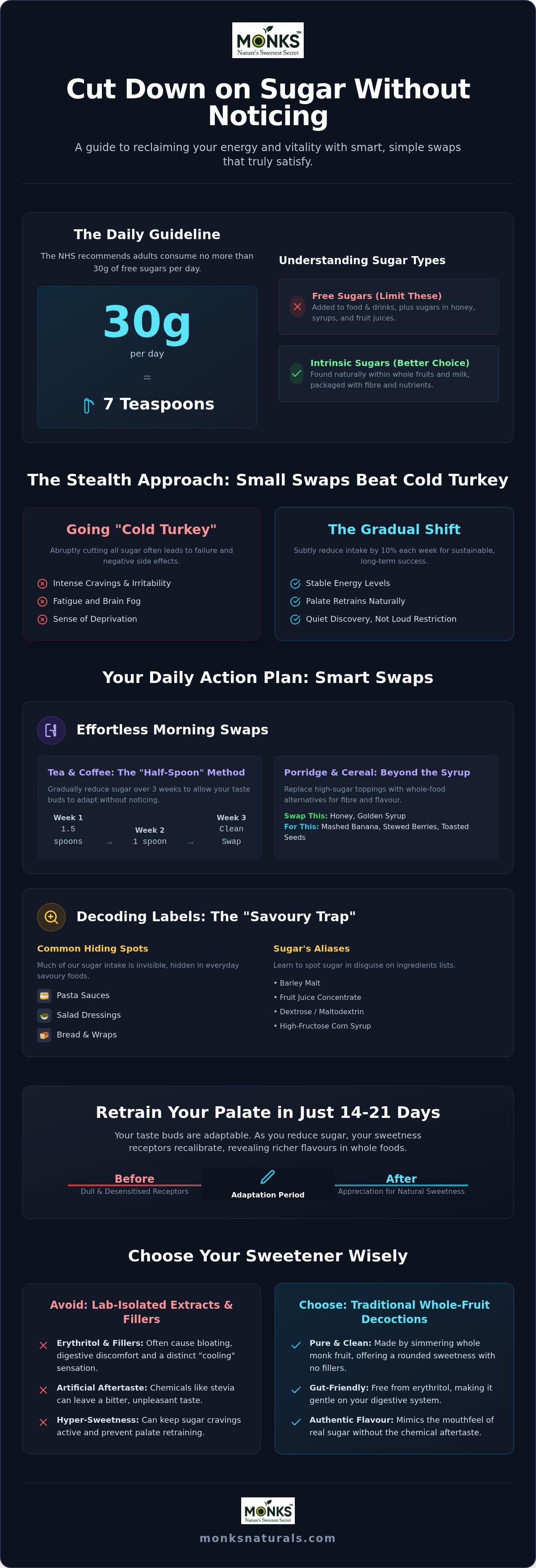
Understanding what you are eating is the first step toward better health. Free sugars are the ones added to snacks, drinks, and cereals, or those found naturally in honey and syrups. These differ from the intrinsic sugars found in whole fruit and milk, which come packaged with fibre and nutrients. The UK NHS suggests a daily limit of 30g for adults, which equals roughly seven teaspoons. Most of us consume far more, often without realising it.
The most effective way to change is through a stealthy, gradual shift. Learning how to cut down on sugar without noticing involves reducing your intake by just 10% each week. This subtle transition prevents the irritability and fatigue associated with "going cold turkey." A sugar crash is the metabolic dip that occurs after your body overproduces insulin to handle a sugar spike, resulting in a distinct afternoon slump in focus and energy.
Understanding the 5% Rule in the British Diet
The British Heart Foundation supports the goal that free sugars should make up only 5% of your total daily energy. In practical terms, this is a very small margin. Much of our sugar intake is "invisible," tucked away in savoury items like pasta sauces, salad dressings, and bread. These hidden additions trick your brain into wanting more without providing the sensory satisfaction of a dessert. Small, mindful swaps help you reclaim this 5% without feeling restricted. It is about choosing quality over quantity.
Palate Retraining: How Your Taste Buds Adapt
Your sense of taste is not fixed. It is a flexible system that adapts to your environment. When you consume high-sugar foods regularly, your sweetness receptors become dull and desensitised. It typically takes between fourteen and twenty-one days for your palate to recalibrate. Once it does, you will find new joy in simple flavours:
- The earthy sweetness of roasted root vegetables.
- The creamy, subtle notes of raw cashews.
- The bright, floral profile of a crisp apple.
Be wary of artificial "diet" sweeteners. These chemicals offer a hyper-sweet sensation that is often hundreds of times stronger than table sugar. They keep your cravings active and prevent your taste buds from ever truly recovering. Choosing a pure, traditional alternative like a monk fruit decoction allows your body to heal, reset, and thrive.
Effortless Morning Swaps: Tea, Coffee, and Porridge
Morning rituals set the tone for your entire day. For many, this begins with a comforting cup of tea or coffee, often accompanied by a bowl of porridge. These habits are deeply ingrained, making them the perfect starting point for a stealthy lifestyle shift. Learning how to cut down on sugar without noticing is easiest when you start with your first cup of the day. By making minor adjustments to these repetitive actions, you create a cumulative effect that stabilises your energy before you even leave the house.
The Tea and Coffee Transition
The "Half-Spoon" method is a classic British approach to palate retraining. If you usually take two sugars in your builder’s tea, reduce it to one and a half for one week. In the second week, move to a single spoonful. By the third week, your taste buds will have adapted, allowing you to swap the remaining sugar for a cleaner alternative. Liquid sweeteners are far superior to granules for this transition. They integrate instantly into hot drinks, providing a consistent flavour without the gritty residue often found at the bottom of the mug.
Many people avoid sweeteners because of the chemical aftertaste of stevia or the "cooling" sensation caused by erythritol blends. A traditional Monkfruit decoction Drops solution offers a different experience. Because it is made by simmering the whole fruit, the sweetness is rounded and deep, mimicking the mouthfeel of real sugar. You can also use aromatic enhancers to trick your brain. A pinch of cinnamon or a drop of pure vanilla extract provides a sensory "sweetness" that satisfies the palate without affecting blood glucose levels. You can explore the purity of our decoction drops to see how effortlessly they blend into your morning ritual.
Porridge and Cereal: Beyond the Syrup
Porridge is a nutritional powerhouse, but it is often undermined by a heavy drizzle of honey or golden syrup. These additions cause the very insulin spikes you are trying to avoid. Instead, try upgrading your bowl with natural, fruit-based sweetness. Mashed bananas or stewed berries provide moisture and flavour whilst keeping the glycaemic load lower than refined syrups. Adding texture is another clever way to distract the senses. A handful of toasted walnuts, pumpkin seeds, or chia seeds provides a satisfying crunch that makes the reduction in sugar feel like an upgrade rather than a loss.
For those who prefer a more traditional sweetness, using a Monkfruit decoction with soluble tapioca fibre Powder is an excellent choice. This powder dissolves beautifully into warm oats and provides the added benefit of prebiotic fibre to support gut health. This same principle applies to yoghurt. Most "fruit-flavoured" pots are high in added sugars. Switching to plain, natural yoghurt and adding your own decoction allows you to control the sweetness whilst enjoying a much cleaner ingredient list. These small, deliberate choices ensure you stay full and focused until lunch.
Decoding Labels: Finding Hidden Sugars in Savoury Staples
Mastering how to cut down on sugar without noticing requires becoming a detective in the supermarket aisles. Whilst we expect sweetness in a biscuit, we rarely anticipate it in a loaf of bread or a jar of marinara sauce. This is the "Savoury Trap." Manufacturers often use sugar to balance acidity or extend shelf life in products that should, by all rights, be salty or tangy. By identifying these hidden sources, you can eliminate a significant portion of your daily intake without changing your dessert habits at all.
Sugar hides behind many names on UK packaging. If you see these ingredients near the top of the list, the product is likely a sugar bomb in disguise:
- Barley malt: Often found in cereals and breads to add a rich, toasted flavour.
- Dextrose: A simple sugar frequently used in processed meats and savoury snacks.
- Fruit juice concentrate: A common "natural" sweetener used to keep labels looking clean whilst still spiking blood sugar.
The UK traffic light system is your most reliable ally. Look for the "Rule of 5" to keep your choices safe. If a product contains more than 22.5g of total sugar per 100g, it receives a red label. Aim for green or amber options, which stay below 5g per 100g. Be particularly wary of marketing buzzwords. When fat is removed to meet "low fat" marketing claims, sugar is almost always added to restore the lost flavour and texture.
The Condiment Culprits: Ketchup and BBQ Sauce
Standard tomato ketchup is often one-third sugar. A single tablespoon can contain a full teaspoon of the white stuff. BBQ sauces are frequently even more concentrated. You can create a stealthy alternative at home by mixing tomato paste with apple cider vinegar, smoked paprika, and a few drops of monk fruit decoction. This provides the tang and richness you crave without the metabolic crash. Remember that "No Added Sugar" labels on condiments often hide high concentrations of fructose from fruit pastes, which still impact your insulin levels.
Bread and Ready Meals
Supermarket sliced white bread is a surprising source of sweetness, often containing 3g to 5g of sugar per 100g to help the dough rise quickly and brown evenly. Switching to authentic sourdough or granary options reduces the glycaemic load and eliminates the need for added sweeteners. Similarly, "healthy" ready meals and pre-packaged soups often use sugar to mask the dull flavours of mass-production. Always check the back of the pack for dextrose or syrups. Choosing whole, single-ingredient foods is the ultimate way to ensure your savoury meals remain truly savoury.
The Baking Revolution: Reducing Sugar Without Losing Texture
Sugar in baking is a multitasker. It provides bulk, retains moisture, and creates that tender crumb we all love. Most 1:1 replacements fail because they only address sweetness, leaving the cake dry or brittle. When considering how to cut down on sugar without noticing, you must replace the function, not just the flavour. Using fruit purees like unsweetened applesauce or mashed banana provides the necessary hydration whilst allowing you to reduce refined sugar by up to half.
The real secret to a successful sponge lies in soluble tapioca fibre. This plant-based ingredient mimics the mouthfeel of sugar, ensuring your cakes stay soft and moist. It acts as a prebiotic carrier, adding nutritional value to your weekend treats. For a deeper dive into this unique ingredient, read The Ultimate Guide to Monk Fruit with Tapioca Fibre. It's about refining your craft rather than sacrificing your favourite recipes.
The Science of Sugar in Baking
Baking involves the Maillard reaction. This is the chemical process that creates golden-brown crusts and complex flavours. Traditional sugar facilitates this, but many sweeteners don't. Erythritol-based blends often result in a "gritty" texture or a strange "cold" aftertaste that ruins the experience. Using a Monkfruit decoction powder avoids these pitfalls. It provides a clean sweetness that holds its structure at high temperatures, allowing you to achieve a perfect bake every time. You can upgrade your pantry with our baking-grade powder to transform your kitchen into a healthier space.
Stealth Desserts for the Family
You can easily reduce sugar in classic British desserts like crumbles and pies. Focus on sweetening the fruit filling with monk fruit drops and leave the pastry savoury. This creates a sophisticated balance that most people prefer. The "Dark Chocolate Hack" is another effective strategy. Move from 30% milk chocolate to 70% dark cocoa over several weeks. Your palate will adapt to the richer, less sugary profile. For a final touch, make a zero-sugar custard using rich egg yolks, double cream, and a few drops of monk fruit. It's a simple, wholesome way to finish a meal without the metabolic spike. This is how to cut down on sugar without noticing whilst still enjoying the traditions you love.
Traditional Wisdom Meets Modern Health: Why Monk Fruit Wins
Monk fruit, known traditionally as Luo Han Guo, is a small green melon native to the remote mountains of the East. It has been used for centuries by Buddhist monks for its clean, intense sweetness and restorative properties. Today, it stands as a cornerstone for anyone learning how to cut down on sugar without noticing. Unlike modern refined sugar, this ancient fruit offers a way to satisfy your sweet tooth without compromising your metabolic health.
The method of preparation is what sets a true sugar alternative apart. Most commercial products use lab-isolated chemical extracts or harsh processing. In contrast, a traditional decoction is made by gently simmering the whole fruit to capture its natural essence. This process avoids the "cooling" aftertaste often associated with erythritol and maintains a flavour profile that is remarkably close to table sugar. For a deeper understanding of this process, see Monk Fruit Decoction: The Traditional Guide to Clean Sweetening. This approach is ideal for those managing diabetes or following a keto lifestyle because it has a zero glycaemic index. It provides sweetness without the spike.
Clean Label Sweetening
True wellness is as much about what you exclude as what you include. Many mass-market sweeteners rely on fillers and artificial additives that disrupt your internal balance. To maintain a clean routine, you should avoid:
- Maltodextrin: A high-glycaemic filler that can spike blood sugar more than table sugar itself.
- Aspartame: A synthetic sweetener often criticised for its lingering chemical aftertaste.
- Sucralose: An artificial compound that may negatively impact your gut microbiome.
MONKS prioritises a "whole food" philosophy. By using soluble tapioca fibre as a prebiotic carrier, we support your gut health whilst providing a functional texture for your recipes. This ensures your body feels as good as your food tastes. It is a transparent, minimalist approach to daily nutrition that respects your body's natural processes.
How to Get Started with MONKS
Integrating better choices into your life should be effortless. If you are focused on your morning tea or coffee, the Monkfruit decoction Drops offer a seamless swap that integrates instantly. For those who enjoy creating in the kitchen, the Monkfruit decoction with soluble tapioca fibre Powder is the perfect companion for biscuits and sponges. If you want to transform your entire pantry at once, The Monks Set provides a comprehensive toolkit to help you master how to cut down on sugar without noticing. Start your journey today with a single, simple swap. Reclaim your energy, nourish your body, and enjoy the quiet discovery of a life without the sugar crash.
Reclaim Your Natural Vitality
Reducing sugar doesn't have to feel like a sacrifice. By embracing the stealth approach, you've learned that small, incremental changes are the most sustainable path to long-term health. You now have the tools to identify hidden sugars, upgrade your morning rituals, and refine your favourite recipes. Mastering how to cut down on sugar without noticing is simply a matter of choosing cleaner ingredients that respect your body's natural rhythm.
Traditional wisdom provides the ultimate solution. A whole-fruit decoction offers a pure sweetness that is free from erythritol, maltodextrin, and artificial fillers. With the added benefit of prebiotic tapioca fibre for gut health, you can enjoy the flavours you love whilst maintaining stable energy levels. It's a refined secret that transforms your daily habits into acts of quiet wellness.
Explore the MONKS range of clean, natural sweeteners today and discover how effortless a sugar-free lifestyle can be. Your journey toward a more vibrant, balanced you begins with a single, mindful choice.
Frequently Asked Questions
Is it possible to give up sugar without having withdrawal symptoms?
Yes, you can avoid the typical irritability and headaches by adopting a gradual reduction strategy. The "stealth" method involves lowering your intake by 10% each week. This subtle shift allows your brain and metabolism to adapt without the shock of total deprivation. By focusing on how to cut down on sugar without noticing, you prevent the intense cravings that usually lead to relapse. It is about patience rather than immediate restriction.
Will I lose weight if I cut down on sugar but keep my calories the same?
Reducing sugar often leads to weight loss even if calorie counts remain stable. This happens because sugar triggers a high insulin response, which signals your body to store fat. When you lower your sugar intake, your insulin levels drop, allowing your body to access stored fat for energy. This metabolic shift improves your body composition and reduces bloating. It is a more sustainable way to manage weight without feeling hungry or deprived.
What is the best natural sugar alternative that doesn’t taste bitter?
Traditional monk fruit decoction is widely considered the best natural alternative because it lacks the bitter aftertaste of stevia. Unlike lab-isolated extracts, the decoction process involves simmering the whole fruit to create a rounded, clean sweetness. It also avoids the strange "cooling" sensation found in erythritol blends. This makes it a superior choice for those who want a premium taste that feels almost identical to table sugar in tea, coffee, and baking.
Can children safely use monk fruit instead of sugar?
Monk fruit is a safe, plant-based alternative for children. Current 2026 dietary guidelines recommend zero added sugars for children under the age of two to protect their developing palates. Using a natural decoction helps children enjoy sweetness without the energy spikes and crashes associated with refined sucrose. It is a clean-label choice that supports stable behaviour and long-term health. Always consult your paediatrician if you have specific concerns about your child's nutritional requirements.
Does cutting out sugar help with skin clarity and inflammation?
Cutting out sugar significantly improves skin clarity by reducing systemic inflammation. High sugar intake leads to a process called glycation, where sugar molecules attach to collagen, making skin less elastic and more prone to ageing. Lowering sugar also stabilises the hormones that often trigger breakouts and redness. Many people notice a brighter, more even complexion within a few weeks of reducing their intake. It is a natural way to support a healthy, youthful glow.
How do I know if a product has hidden sugar if it says "unsweetened"?
A label saying "unsweetened" only means no sugar was added during the manufacturing process. The product may still contain high levels of natural sugars from ingredients like fruit juice concentrate or malt. You must check the ingredient list for aliases such as barley malt, dextrose, or rice syrup. This is a vital part of learning how to cut down on sugar without noticing in your daily shop. Always prioritise whole, single-ingredient foods to be certain.
Is honey a healthy alternative to refined white sugar?
Whilst honey contains some nutrients, the NHS still classifies it as a "free sugar" that impacts your health in the same way as white sugar. It causes similar insulin spikes and contributes to your 30g daily limit. For those seeking metabolic stability, honey is not a suitable substitute for refined sugar. Monk fruit decoction is a better alternative because it provides sweetness with a zero glycaemic index, keeping your energy levels perfectly flat.
How long does it take for your taste buds to change after reducing sugar?
It typically takes between fourteen and twenty-one days for your taste buds to undergo a complete reset. During this three-week window, your sweetness receptors become more sensitive. You will soon begin to notice the subtle, natural sweetness in foods like roasted carrots, raw almonds, and fresh berries. This transition is the key to a lifestyle change that feels effortless. Once your palate adapts, the hyper-sweet taste of processed snacks often becomes unappealing and overwhelming.


