

The sweet secret of the Luohan fruit has finally moved out of the regulatory shadows and into the light. If you've ever asked, is monkfruit a novel food? you've likely met a wall of conflicting information. It's frustrating to seek a clean, bloat-free alternative to erythritol only to be met with confusing legal jargon. You want clarity, purity, and honesty. You deserve a sweetener that fits your routine without the digestive drama or the legal doubt.
Following a landmark High Court ruling in March 2024, the landscape for natural sweeteners has shifted. This guide provides the definitive answer to the current UK status of this ancient fruit. We'll explain the June 2024 FSA U-turn that finally validates traditional, whole-fruit preparation methods. You'll discover the vital difference between non-selective aqueous decoctions and lab-isolated extracts. We'll show you how to find a clean-label option that is safe, legal, and truly nourishing. It's time to simplify your pantry, support your health, and enjoy the effortless sweetness you've been searching for.
Key Takeaways
- Confirm the 2024 FSA ruling that makes monk fruit decoction legal for sale across the UK.
- Learn why the answer to "is monkfruit a novel food?" changed after a landmark High Court decision.
- Master the difference between traditional aqueous decoctions and restricted extracts to ensure your kitchen stays compliant.
- Spot clean-label sweeteners that are free from erythritol, maltodextrin, and synthetic fillers.
- Explore a traditional simmering method that offers purity, clarity, and wellness without the compromise.
Is Monk Fruit Legal in the UK? The 2026 Status Update
Yes, monk fruit decoction is legal for sale in the UK. This simple confirmation follows years of regulatory uncertainty that left British shoppers and manufacturers in a state of flux. For a long time, the answer to the question, is monkfruit a novel food? depended on how the product was made. The confusion stemmed from the distinction between the whole fruit, known scientifically as Siraitia grosvenorii, and the highly processed extracts used as food additives.
The "novel food" designation acted as a barrier for decades. It suggested that there was no significant history of consumption in the UK or EU before May 1997. This label caused fear, restricted imports, and limited choices for those seeking natural, sugar-free alternatives. It forced consumers to choose between synthetic sweeteners or imported products with questionable legal standing.
The 2024 FSA U-Turn Explained
The regulatory landscape changed dramatically in 2024. In March of that year, a High Court ruling challenged the previous stance of the Food Standards Agency (FSA). By June 2024, the FSA officially reclassified monk fruit decoctions. They determined that traditional, non-selective aqueous decoctions are not novel. This method involves simmering the whole dried fruit in water, creating a simple infusion, a broth, or a concentrated liquid.
This decision acknowledges the long history of the fruit's use in traditional practices. It separates simple simmering from highly purified, lab-isolated mogroside extracts, which remain under strict novel food restrictions. As of 2026, non-selective aqueous monk fruit decoctions are fully authorised for sale and consumption across the United Kingdom.
Why You See Monk Fruit on UK Shelves Now
This legal clarity unlocked a wave of innovation. Previously, monk fruit was a rare find, often tucked away in specialist import shops or sold with confusing disclaimers. Now, it is a staple for health-conscious shoppers looking for clean labels. The ruling allows UK-based companies to move beyond the lab and back to the kitchen, focusing on traditional preparation over chemical isolation.
Brands like MONKS have led this transition by focusing on the exact simmering methods the FSA now recognises. By choosing traditional decoctions over synthetic blends, these innovators provide a product that is transparent, compliant, and pure. You can now enjoy the benefits of this ancient fruit without worrying about unauthorised ingredients or hidden additives. The market has shifted from confusion to confidence, making it easier to integrate better choices into your daily ritual, morning routine, and home cooking.
Understanding Novel Food Regulations: Why Monk Fruit Was Restricted
In the UK, the "novel food" label acts as a vital safety net for consumers. It applies to any ingredient or substance that wasn't consumed to a significant degree within the UK or European Union before May 1997. For several years, this specific classification left many health-conscious shoppers asking, is monkfruit a novel food? The Food Standards Agency (FSA) uses this status to ensure that new entries into the British diet don't carry hidden risks. It isn't a permanent ban, but rather a requirement for rigorous proof of safety before a product is authorised for the general market.
Regulators focused their scrutiny heavily on mogrosides, the natural compounds that give the fruit its intense, calorie-free sweetness. While these are natural, highly concentrated versions created through industrial processing don't have the same historical record as the whole fruit. This distinction is vital for gut health. Many "novel" sweeteners on the market rely on chemical isolation, which often leads to the bloating and digestive discomfort associated with common alternatives like erythritol. By maintaining high standards, the FSA aims to protect us from substances that might disrupt our internal balance.
The Safety Assessment Process
The FSA evaluates every new ingredient for potential toxins, allergens, and long-term effects on human behaviour and health. A novel food isn't necessarily dangerous; it's simply unproven in a Western context. Even though monk fruit has been a staple in Asian wellness for centuries, the UK required specific, documented evidence of its traditional use here. The High Court rules later clarified that the FSA had overlooked key evidence regarding traditional preparations. This assessment process prioritises consumer protection, ensuring that every authorised ingredient is stable, pure, and safe for daily ritual.
The Problem with Lab-Isolated Extracts
Processing methods change everything in the eyes of the law. Selective extraction uses solvents to pull out specific sweet molecules, creating a white powder that looks nothing like the original fruit. Regulators view these as "new" substances because the concentration is so high. This is why the question, is monkfruit a novel food? remains so nuanced. Whole-food simmering, or decoction, is different. It keeps the fruit's natural profile and fibres intact. This traditional approach avoids the need for the artificial fillers and sugar alcohols that often disrupt your digestive system. By choosing a pure monk fruit decoction, you bypass the complexity of lab-made extracts for a simpler, more transparent sweetener that fits effortlessly into your lifestyle.
The FSA Ruling: Why Monk Fruit Decoction is No Longer 'Novel'
"Non-selective aqueous decoction" is a technical mouthful for a very simple, domestic process. Aqueous means water. Decoction means simmering. Non-selective means the process doesn't cherry-pick specific compounds while discarding others. In short, it's the result of simmering the whole dried fruit in water, just as it's been done for generations. This method keeps the fruit's natural composition intact, including its beneficial fibres and minerals. It's a culinary ritual, not a chemical experiment.
By June 2024, the FSA recognised that this traditional simmering method is fundamentally different from industrial extraction. This distinction is why the question, is monkfruit a novel food? now has a clear, two-part answer. While highly purified extracts are still awaiting full authorisation, the traditional decoction is officially "not novel" and fully legal for use in the UK. This ruling brings the UK into alignment with the European Commission, which reached a similar conclusion in October 2024. It provides a legal pathway for brands to offer sweetness without compromising on purity or safety.
Decoction vs. Extraction: A Crucial Difference
Understanding the difference between these two processes is essential for anyone seeking a clean-label sweetener. Extraction often involves chemical solvents like ethanol or macroporous resins to isolate mogroside V, the sweetest part of the fruit. This creates a white, powdery substance that is hundreds of times sweeter than sugar but stripped of its whole-food context. The FSA views these isolates as "novel" because they don't represent a food that has been historically consumed in the UK.
Decoction, however, is a gentle, water-based process. It's a kitchen-friendly method that respects the integrity of the fruit. Because the final liquid or powder retains the broader profile of the whole fruit, the FSA considers it a traditional food ingredient rather than a concentrated additive. This "whole food" approach is why decoctions are easier on your digestive system and free from the chemical aftertaste found in many lab-isolated alternatives. It's about maintaining balance rather than chasing intensity.
What This Means for UK Food Labels
As you browse the wellness aisles, look for transparency on the ingredient list. A legal, compliant product will often be listed as "Monk Fruit Decoction" or "Concentrated Monk Fruit Infusion." These terms are a hallmark of a brand that values traditional methods over industrial shortcuts. If a label simply says "Monk Fruit Extract" or "Mogrosides," it may still be navigating the complex novel food authorisation process or hiding behind synthetic fillers.
Choosing a product listed as a decoction ensures you are getting a sweetener that meets the latest UK safety standards. It represents a shift towards cleaner, more recognisable ingredients that support a mindful lifestyle. For a deeper look at how this process works, explore our Monk Fruit Decoction Pillar. It's the perfect way to ensure your morning coffee or home baking remains pure, legal, and delicious.
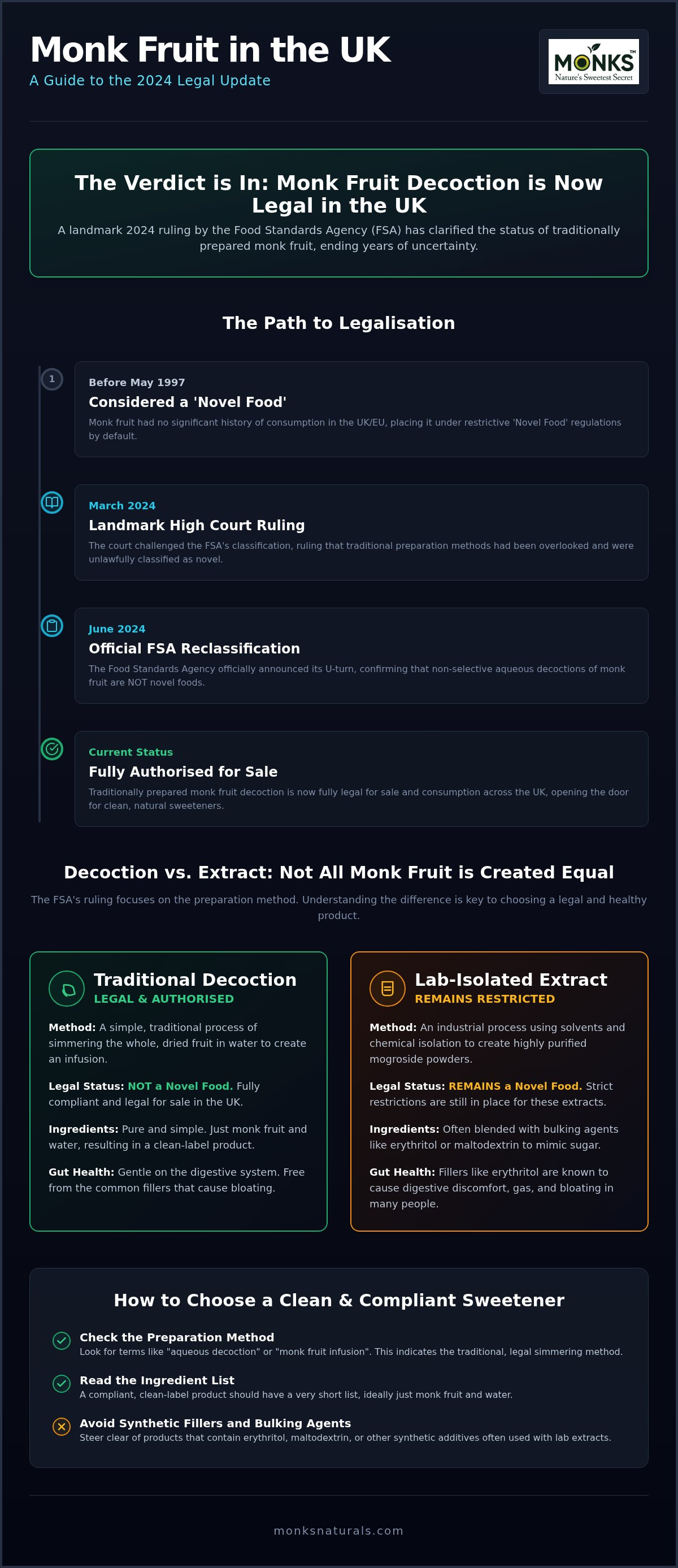
Decoction vs Extract: Choosing Safe and Legal Sweeteners
The label on your sweetener should tell a story of simplicity. When navigating the wellness aisle, asking is monkfruit a novel food? is the first step toward a cleaner pantry. The answer depends heavily on what else is in the bag. Many products on UK shelves use the name "monk fruit" as a marketing shield for cheap, industrial fillers. These blends often hide erythritol or maltodextrin. They prioritise profit over purity. Choosing a pure decoction ensures you receive a cleaner taste. There is no synthetic cooling sensation. There is no bitter chemical finish. You get a gentle, rounded sweetness that respects your palate, your health, and your morning coffee.
Pure decoctions offer a depth of flavour that extracts cannot match. The traditional simmering process preserves the fruit's natural essence. This results in a sweetness that feels domestic and familiar. It's the difference between a home-cooked meal and a lab-made meal replacement. By choosing whole-food decoctions, you support sustainable farming and traditional expertise. You are choosing transparency over hype. This mindful approach helps you avoid the confusion surrounding the question, is monkfruit a novel food? by sticking to what is traditionally proven and legally authorised.
The Erythritol Issue
Sugar alcohols like erythritol are the silent cause of many digestive woes. They are notorious for causing bloating, gas, and sudden discomfort. Many "novel" monk fruit products are actually 99% erythritol. The monk fruit is merely a dusting for the label. At MONKS, we believe in a better way. We provide a gut-friendly alternative that is entirely free from sugar alcohols. No bloating. No fillers. No compromise. It's a mindful choice for a modern lifestyle. It's about feeling light and energised rather than heavy and uncomfortable.
A Checklist for British Shoppers
Shopping for clean ingredients requires a keen eye. Use this simple checklist to ensure your sweetener is both legal and nourishing:
- Look for "non-selective decoction" or "whole fruit infusion" on the ingredients list.
- Avoid any product listing "mogroside V" as the primary ingredient.
- Seek out soluble tapioca fibre as a clean, gut-friendly bulking agent.
Check the back of the pack. If you see a long list of unpronounceable chemicals, put it back. Minimally processed sweeteners are better for the planet and better for your body. They require less industrial intervention and fewer synthetic additives. It's about returning to the source and honouring the fruit's natural state. Ready to simplify your routine? Choose a compliant monk fruit decoction that puts your wellness first.
MONKS: Leading the Way with Traditional, Compliant Monk Fruit
Whilst much of the industry was entangled in legal debates, MONKS chose a different path. We focused on the kitchen rather than the lab. We anticipated that the answer to the question, is monkfruit a novel food? would eventually rest on the integrity of the preparation method. By committing to the traditional Chinese method of simmering whole fruit, we ensured our products were ready for the 2024 FSA ruling long before it was announced. This foresight has established us as the UK’s leading specialist in authorised, clean-label monk fruit decoction. We don't just follow regulations. We lead with transparency, purity, and expertise.
Choosing a British brand means you value clarity over hype. We operate as a mindful innovator, acting as your expert guide in a previously confusing regulatory space. Our presence in the UK ensures that every product you buy meets the highest national standards for safety and quality. There are no hidden imports. There are no vague ingredient lists. You receive a refined, premium sweetener that integrates effortlessly into your lifestyle. It's about making better choices without the complexity. It's about trust.
The MONKS Difference: Purity in Every Drop
Our process is defined by what we leave out. Every product in our range is erythritol-free, maltodextrin-free, and filler-free. By maintaining the "whole fruit" profile, we deliver a balanced sweetness that respects your body’s natural rhythm. You won't experience the artificial "cooling" effect or the digestive bloating common with sugar alcohols. Our Monkfruit decoction Drops and spoonable powder provide a rounded, domestic flavour that feels familiar and comforting. They are the perfect keto-friendly choice for those who refuse to compromise on gut health or taste. Use them to elevate your daily rituals:
- Stir into your morning coffee for a clean start.
- Whisk into herbal tea for a gentle, soothing sweetness.
- Fold into home baking to create nourishing, sugar-free treats.
Where to Buy Legal Monk Fruit in the UK
Finding a compliant, high-quality sweetener shouldn't be a chore. We’ve made our range accessible across the UK to help you navigate the market with ease. You can purchase our products directly through monksnaturals.com to explore our full collection, including The Monks Set. For those who prefer the convenience of familiar platforms, you can also shop our range on Amazon UK. We believe in providing the tools for a better routine, which is why we’ve published our Ultimate Guide to Monk Fruit with Tapioca Fibre. This resource explains why our powder is the gold standard for clean sweetening. Embrace the change. Discover the secret. Enjoy the sweetness you've been waiting for.
Embrace a Purer Path to Sweetness
The regulatory fog has finally lifted. You now have the clarity to choose a sweetener that aligns with your values and your wellness goals. By understanding that traditional decoctions are fully authorised, you can ignore the noise and focus on what truly matters: purity. The answer to is monkfruit a novel food? is now a definitive no for whole-fruit simmering. This shift validates the ancient Chinese heritage of the Luohan fruit and ensures you can enjoy its benefits without legal doubt or digestive distress.
Choosing a sweetener shouldn't feel like a complex lifestyle overhaul. You can avoid the bloating of erythritol and the clinical nature of lab-made extracts. By selecting a traditional, FSA-compliant decoction, you support your gut health, your daily rituals, and your home cooking. It's time to simplify your pantry with a product that is transparent, legal, and wholesome. Switch to the UK’s cleanest sugar alternative, shop MONKS today.
Enjoy the effortless ease of better choices. Your morning coffee, home baking, and wellness routine deserve the refined secret of pure monk fruit. It's the simple change your body has been waiting for.
Frequently Asked Questions
Is monk fruit sweetener safe for long-term consumption?
Yes, monk fruit has a documented history of use spanning centuries in traditional practices. The FSA's 2024 reclassification of decoctions acknowledges this long-standing safety record. Unlike synthetic sweeteners, a pure decoction avoids chemical additives and fillers. It supports your wellness goals without the digestive side effects often found in sugar alcohols. It is a stable, natural choice for your daily tea or home cooking.
Can I buy pure monk fruit on Amazon in the UK?
Yes, you can purchase compliant monk fruit decoction products on Amazon UK. It is important to check the ingredients list to ensure you are buying a pure product rather than a blend. Look for "monk fruit decoction" or "concentrated monk fruit infusion" to ensure it meets the latest UK safety standards. Avoid listings that contain erythritol or maltodextrin if you want to maintain a clean, bloat-free diet.
What is the difference between monk fruit decoction and extract?
The difference lies in the processing method and the resulting chemical profile. A decoction is a whole-fruit infusion made by simmering the fruit in water, which keeps the natural fibres and minerals intact. An extract is a highly purified isolate, often created using solvents to concentrate specific mogrosides. This distinction is why the question, is monkfruit a novel food? has different answers depending on the specific manufacturing process used.
Why was monk fruit previously considered a novel food?
It was classified as novel because regulators initially believed there was no significant history of consumption in the UK or EU before 1997. This status acted as a safety precaution until sufficient evidence of traditional use was provided. The 2024 High Court ruling found that the FSA had incorrectly classified decoctions. This decision cleared the way for traditional preparation methods to be recognised as safe and authorised for the British market.
Is monk fruit legal for use in commercial baking in the UK?
Yes, monk fruit decoction is authorised for use as an ingredient in commercial food and beverage products. This allows bakeries and manufacturers to use it as a natural, low-calorie sweetener. Because it is heat-stable, it performs well in ovens and maintains its sweetness without a bitter aftertaste. It is an ideal solution for businesses looking to offer clean-label, keto-friendly treats that comply with current Food Standards Agency regulations.
Does monk fruit raise blood sugar or insulin levels?
No, pure monk fruit decoction has a glycaemic index of zero and does not trigger an insulin response. This makes it an excellent choice for individuals managing diabetes or following a ketogenic lifestyle. The sweet compounds, known as mogrosides, are metabolised differently than sugar. They provide intense sweetness without the calorie load or the blood sugar spikes associated with honey, maple syrup, or traditional cane sugar.
Is monk fruit authorized for use in the European Union (EU)?
Yes, the European Commission determined in October 2024 that monk fruit decoctions are not considered novel foods. This decision aligns the EU's regulatory stance with the UK's 2024 ruling. It ensures that consumers across Europe can access traditional, whole-fruit preparations legally. However, highly purified extracts still require specific authorisation under the EU's novel food regulations. This harmonisation makes it easier for brands to offer consistent, high-quality products.
How does monk fruit decoction compare to stevia in taste?
Many people find that monk fruit decoction offers a cleaner, more rounded sweetness compared to the sometimes bitter or metallic aftertaste of stevia. It has a domestic, fruity profile that blends seamlessly into coffee and baking. Whilst stevia is a popular natural choice, monk fruit doesn't require the same level of masking agents. It provides a more familiar sweet sensation that feels closer to traditional sugar without the calories or the chemical finish.


